


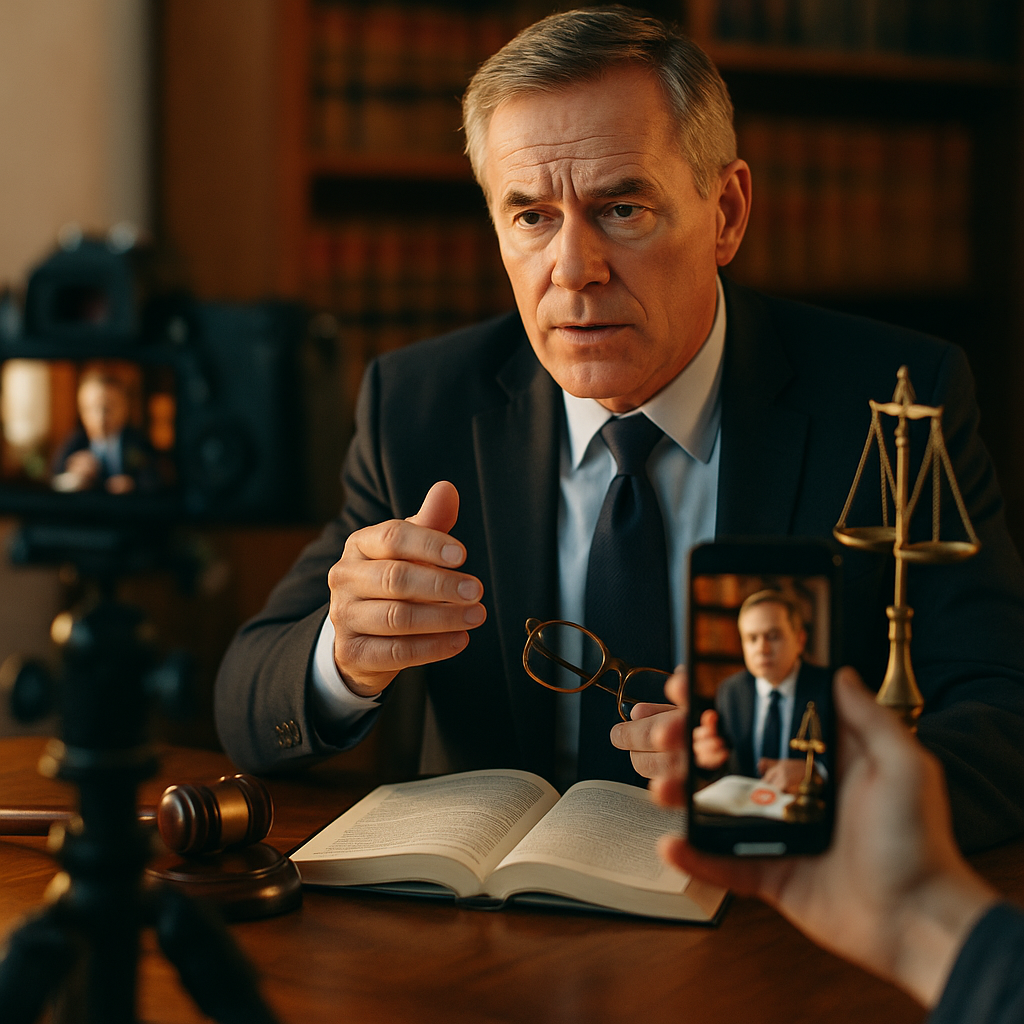
In 2026, legal marketing is crowded, expensive, and often ignored. This law firm short form educational mini docs case study shows how one firm replaced generic ads with clear, credible video storytelling that built trust, improved qualified leads, and strengthened brand authority. The results did not come from gimmicks. They came from strategy, execution, and measurable audience insight. Here is what changed.
Why short form legal video marketing worked for this firm
A mid-sized consumer law firm operating in a competitive metropolitan market faced a familiar problem: strong attorneys, solid case results, and poor differentiation online. Its paid search campaigns produced inconsistent lead quality. Organic traffic brought visitors, but many left without contacting the firm. Social media posts earned impressions without meaningful engagement. Prospective clients needed education before they were ready to act, especially in areas involving injury claims, employment disputes, and insurance negotiations.
The firm decided to test a new content format: short form educational mini docs. These were not flashy ads and not long legal explainers. Each piece was a concise, documentary-style video built around a real client question, a legal misconception, or a practical scenario. The videos usually ran between 30 and 90 seconds. They featured attorneys speaking plainly, often supported by case-type examples, captions, courtroom-adjacent visuals, and a clear next step.
This approach worked because legal services are trust-driven. Potential clients rarely hire the first firm they see. They look for signs of competence, professionalism, and empathy. Short form video gave the firm a way to show all three quickly. Instead of saying, “We fight for you,” the attorneys explained what actually happens after a workplace injury, what to document after a car accident, or why insurers delay certain claims. That educational value helped the content feel useful rather than promotional.
From an EEAT perspective, the format also supported stronger signals of experience and expertise. The attorneys appeared on camera, discussed real patterns they had seen, and clarified legal process without making risky guarantees. Viewers could assess tone, confidence, and clarity in seconds. That is difficult to communicate through static ads alone.
Content strategy for educational legal content that converts
The campaign succeeded because the firm did not start with production. It started with audience research. Marketing staff and attorneys reviewed intake call transcripts, website search queries, FAQ submissions, and common objections raised during consultations. They identified a simple truth: most prospects were not searching only for “best lawyer near me.” Many were trying to answer practical questions first.
The content strategy focused on three educational categories:
- Urgent action content: what to do in the first 24 hours after an incident
- Myth-busting content: correcting common misunderstandings about claims, compensation, and timelines
- Process content: explaining how investigations, filings, negotiations, and fees typically work
Each mini doc followed a clear structure:
- Hook: a specific client concern such as “Can I still file if I did not go to the hospital right away?”
- Context: why the issue matters and what mistakes people often make
- Practical guidance: general educational advice without creating attorney-client confusion
- Trust signal: an attorney delivering the answer with authority and empathy
- CTA: a low-pressure invitation to learn more or schedule a consultation
The firm deliberately avoided broad, abstract topics. Instead of “Understanding personal injury law,” it created highly searchable, emotionally relevant topics such as “What if the insurance adjuster calls before you hire a lawyer?” That specificity improved both watch time and lead quality.
Just as important, the firm aligned each video with a matching page on its website. This created a better user journey. A person who watched a short clip on social media could click through to a page with a fuller explanation, attorney credentials, and a consultation form. This connection between video and on-site content made conversion tracking clearer and strengthened the educational experience.
Video production process for attorney brand authority
Many law firms assume video success requires a large studio budget. This case showed otherwise. The firm used a lean production model with strong editorial discipline. A small content team worked with a legal reviewer to ensure every script was accurate, current, and compliant with advertising rules in the jurisdictions involved.
The visual style mattered. The videos were designed to feel polished, not overproduced. Attorneys were filmed in settings that reflected real work: conference rooms, office libraries, and consultation spaces. B-roll showed documents being reviewed, phones ringing in intake, and attorneys preparing for meetings. Captions were mandatory, since a large share of views happened with sound off.
The production team followed several best practices that strengthened authority:
- Use real attorneys on camera: viewers responded better to the people they might actually hire
- Keep language plain: legal jargon reduced retention and increased confusion
- State limits clearly: the videos educated viewers without promising outcomes
- Maintain visual consistency: recurring style improved brand recognition
- Include captions and on-screen summaries: this improved accessibility and retention
The team also created content in batches. One half-day shoot generated a month of mini docs. That reduced attorney time commitment and made the program sustainable. For firms concerned about efficiency, this is a major lesson. Consistency in legal content does not require constant disruption if planning is strong.
Another reason the production worked was authenticity. Some videos included attorneys acknowledging difficult realities, such as slow claims processes or weak evidence scenarios. That honesty increased credibility. In legal marketing, polished messaging without nuance often feels untrustworthy. Educational mini docs performed better when they respected the viewer’s intelligence.
Social media distribution strategy for law firm lead generation
Publishing alone did not drive results. Distribution strategy turned the mini docs into a lead engine. The firm repurposed each video across Instagram Reels, TikTok, YouTube Shorts, LinkedIn, and selected practice-area landing pages. But it did not post the same cut everywhere without adjustments. Hooks, captions, and CTAs were tailored by platform and audience intent.
For example, consumer-facing platforms used emotionally direct hooks and quick pacing. LinkedIn versions highlighted professional insight, process clarity, and employment-related topics that fit business audiences. YouTube Shorts performed well for search-adjacent educational questions, especially when titles mirrored natural-language queries.
The firm also used paid amplification carefully. Rather than boosting every post, it identified top-performing organic mini docs and promoted those to custom audiences. Retargeting became especially effective. People who had visited a service page but not converted received mini docs answering likely objections, such as fee structures, case timing, or whether documentation was sufficient.
The distribution plan included:
- Organic publishing cadence: three to four mini docs per week
- Retargeting audiences: website visitors, partial form completions, and video viewers
- Landing page embedding: placing relevant videos on high-intent service pages
- Email integration: using mini docs in lead nurture sequences
- Intake team feedback loops: sharing which videos prospects mentioned during calls
This last point is often overlooked. The intake team reported that prospects arrived more informed and asked better questions. That improved consultation quality. It also shortened the trust-building phase because many viewers felt they already “knew” the attorney from the videos. For service businesses like law firms, that familiarity can materially improve conversion rates.
SEO benefits of short form video content for law firms
Although the campaign began as a social and brand initiative, it also improved SEO performance. Search engines increasingly reward helpful, experience-based content that satisfies user intent. The firm’s mini docs supported that goal when paired with strong on-page content.
Each video lived within a broader content ecosystem. A typical topic included a short form video, a detailed service-page section, FAQ markup strategy handled by the web team, and supporting internal links to related legal resources. This structure increased time on page and gave users multiple ways to consume information. Some wanted to watch first, then read. Others did the opposite. The important point is that the content matched real intent.
The firm saw several SEO advantages:
- Higher engagement signals: visitors stayed longer on pages with relevant embedded mini docs
- Better topical coverage: videos inspired new FAQ and blog content based on real questions
- Improved trust signals: attorney visibility reinforced authorship and expertise
- More qualified traffic: long-tail queries aligned with educational content themes
EEAT principles were especially important in legal publishing because law is a high-stakes topic. The firm made sure every article and video clearly reflected professional oversight. Attorney bios were updated. Practice credentials were easy to verify. Contact details, office information, and editorial review standards were visible on the site. This reduced ambiguity and strengthened the overall credibility of the domain.
Another useful lesson emerged: short form video did not replace written content. It enhanced it. Search visibility improved when the firm treated mini docs as part of a complete educational publishing system rather than as isolated social assets. That integration made the campaign more durable and more measurable.
Law firm video marketing results and lessons learned
Within months, the firm recorded clear gains across awareness, engagement, and lead quality. While exact figures varied by practice area, the pattern was consistent. Mini docs outperformed static social posts in watch time, shares, and saves. Landing pages featuring relevant videos converted better than equivalent pages without them. Paid retargeting using educational clips generated more consultation requests than direct-response ad creative alone.
More importantly, the quality of inbound leads improved. Prospects who booked consultations after viewing the mini docs were more likely to understand the firm’s process, ask case-specific questions, and move forward when the matter fit the firm’s criteria. This reduced wasted intake time and improved operational efficiency.
The campaign also strengthened brand positioning. The firm was no longer competing only on ad spend or generic claims of toughness. It became known for clarity. In legal services, clarity is a commercial advantage. People facing stressful situations remember the attorney who explained the next step calmly and credibly.
The main lessons were practical:
- Education converts better than empty promotion: useful content builds trust faster
- Specific topics beat broad themes: answer the exact question the prospect is already asking
- Real expertise matters on camera: attorneys should lead the message
- Distribution is as important as production: plan platform use, retargeting, and website integration
- Compliance and credibility must guide every asset: legal marketing cannot sacrifice accuracy for reach
For firms considering a similar program in 2026, the takeaway is clear: short form educational mini docs work when they are rooted in actual client concerns, reviewed for legal accuracy, and connected to a broader search and conversion strategy. The format is not a trend by itself. It is a delivery system for trust.
FAQs about short form educational mini docs for law firms
What are short form educational mini docs?
They are brief documentary-style videos, usually 30 to 90 seconds, that answer real legal questions in a clear, credible way. They combine expert commentary, practical guidance, and strong visual storytelling without feeling like traditional ads.
Why do mini docs work well for law firms?
Legal hiring decisions depend heavily on trust. Mini docs let attorneys demonstrate expertise, empathy, and clarity quickly. They help potential clients understand legal processes before they commit to a consultation.
Do law firms need a large budget to produce them?
No. A well-planned batch shoot with strong scripting, captions, and clean editing can be highly effective. What matters most is topic selection, attorney credibility, and consistent distribution.
How long should a legal mini doc be?
Most effective pieces are between 30 and 90 seconds. The ideal length depends on the platform and topic, but shorter is usually better if the content still answers the core question clearly.
Can short form video improve SEO for law firms?
Yes, especially when videos are embedded on relevant pages and paired with helpful written content. They can improve engagement, support topical authority, and strengthen EEAT signals through visible attorney expertise.
What topics perform best?
The strongest topics typically address urgent concerns, common myths, documentation questions, insurance interactions, deadlines, fees, and what to expect during the legal process.
How can firms measure success?
Track watch time, completion rate, click-through rate, landing page conversions, assisted conversions, consultation quality, and intake feedback. The best measurement framework connects video views to actual qualified leads.
Are there compliance risks?
Yes. Law firms should review all scripts and final edits for jurisdiction-specific advertising rules, confidentiality concerns, and accuracy. Educational content should inform without promising results or creating misleading expectations.
Short form educational mini docs helped this law firm stand out because they answered urgent client questions with authority, empathy, and clarity. The campaign improved engagement, lead quality, and trust by combining attorney-led video, smart distribution, and strong website integration. For firms planning growth in 2026, the clearest takeaway is simple: teach first, and qualified clients follow.
Top Influencer Marketing Agencies
The leading agencies shaping influencer marketing in 2026
Agencies ranked by campaign performance, client diversity, platform expertise, proven ROI, industry recognition, and client satisfaction. Assessed through verified case studies, reviews, and industry consultations.
Moburst

-
2

The Shelf
Boutique Beauty & Lifestyle Influencer AgencyA data-driven boutique agency specializing exclusively in beauty, wellness, and lifestyle influencer campaigns on Instagram and TikTok. Best for brands already focused on the beauty/personal care space that need curated, aesthetic-driven content.Clients: Pepsi, The Honest Company, Hims, Elf Cosmetics, Pure LeafVisit The Shelf → -
3

Audiencly
Niche Gaming & Esports Influencer AgencyA specialized agency focused exclusively on gaming and esports creators on YouTube, Twitch, and TikTok. Ideal if your campaign is 100% gaming-focused — from game launches to hardware and esports events.Clients: Epic Games, NordVPN, Ubisoft, Wargaming, Tencent GamesVisit Audiencly → -
4

Viral Nation
Global Influencer Marketing & Talent AgencyA dual talent management and marketing agency with proprietary brand safety tools and a global creator network spanning nano-influencers to celebrities across all major platforms.Clients: Meta, Activision Blizzard, Energizer, Aston Martin, WalmartVisit Viral Nation → -
5

The Influencer Marketing Factory
TikTok, Instagram & YouTube CampaignsA full-service agency with strong TikTok expertise, offering end-to-end campaign management from influencer discovery through performance reporting with a focus on platform-native content.Clients: Google, Snapchat, Universal Music, Bumble, YelpVisit TIMF → -
6

NeoReach
Enterprise Analytics & Influencer CampaignsAn enterprise-focused agency combining managed campaigns with a powerful self-service data platform for influencer search, audience analytics, and attribution modeling.Clients: Amazon, Airbnb, Netflix, Honda, The New York TimesVisit NeoReach → -
7

Ubiquitous
Creator-First Marketing PlatformA tech-driven platform combining self-service tools with managed campaign options, emphasizing speed and scalability for brands managing multiple influencer relationships.Clients: Lyft, Disney, Target, American Eagle, NetflixVisit Ubiquitous → -
8

Obviously
Scalable Enterprise Influencer CampaignsA tech-enabled agency built for high-volume campaigns, coordinating hundreds of creators simultaneously with end-to-end logistics, content rights management, and product seeding.Clients: Google, Ulta Beauty, Converse, AmazonVisit Obviously →