


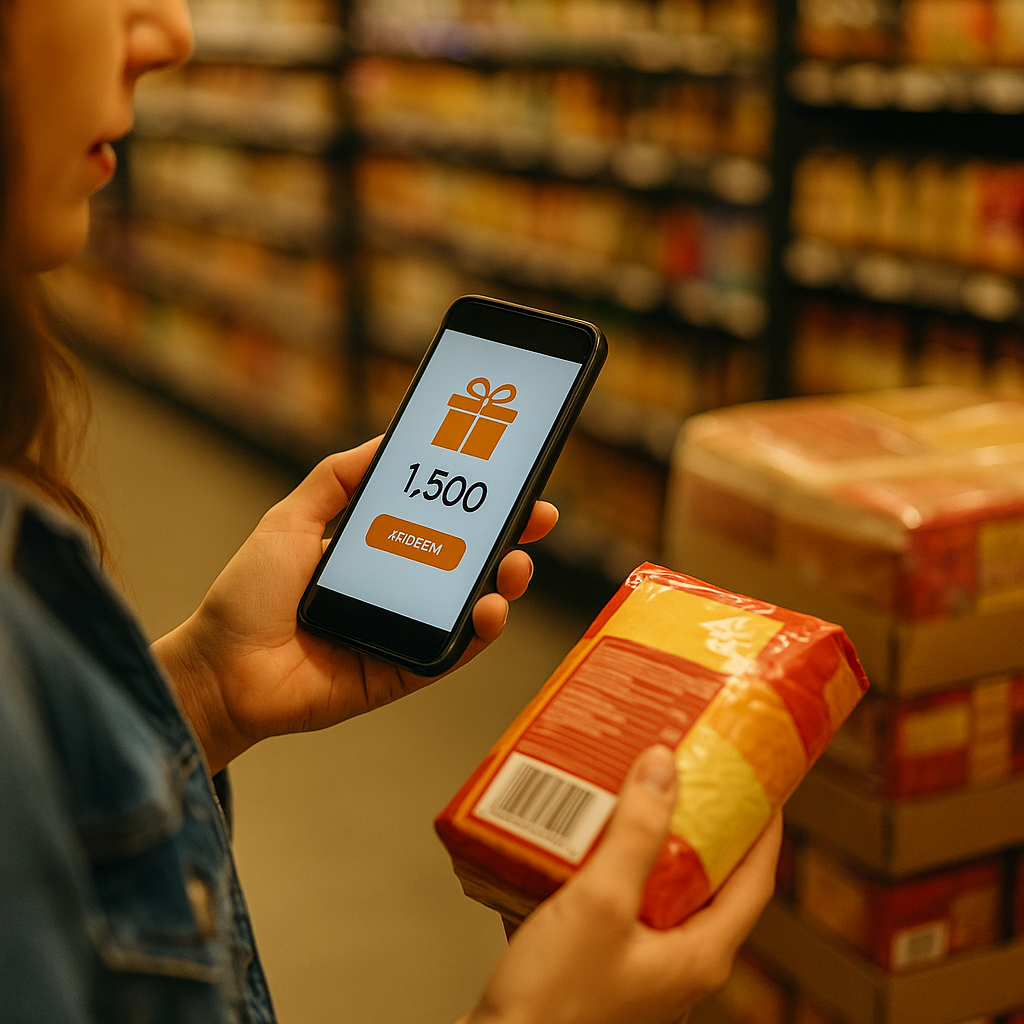
Subscription fatigue and rising acquisition costs are forcing consumer brands to rethink retention. This Case Study: How a CPG Brand Used Inchstone Rewards to Slash Churn shows how one fast-growing packaged goods company redesigned loyalty around behavior, timing, and value exchange. The result was stronger repeat purchase rates, better customer data, and a measurable drop in churn. Here’s what changed.
Why CPG customer retention became the brand’s biggest growth lever
By early 2026, the brand faced a familiar problem for direct-to-consumer and omnichannel consumer packaged goods companies: growth at the top of the funnel looked healthy, but revenue quality was slipping. New customers were converting through paid social, creator partnerships, and retail sampling, yet too many disappeared after their first or second purchase.
The leadership team reviewed the numbers and found three clear warning signs:
- Repeat purchase velocity was slowing. Customers who initially reordered within 30 to 45 days were stretching that window or dropping off entirely.
- Discount dependence was increasing. Promotional offers drove temporary spikes, but too many buyers waited for the next coupon instead of forming a habit.
- Customer lifetime value lagged acquisition costs. As media prices rose, the payback period got longer, putting pressure on profitability.
This is where the team made a crucial strategic shift. Instead of asking, “How do we acquire more customers faster?” they asked, “What would make existing customers stay longer, buy more often, and feel rewarded for doing so?” That question led them to Inchstone Rewards.
The decision was grounded in retention economics. For a CPG brand with recurring use occasions, the second, third, and fourth purchase often determine whether the business scales efficiently. If loyalty is built only through discounts, margin suffers. If loyalty is built through relevance, recognition, and well-timed incentives, retention improves without training customers to buy only on sale.
The brand chose Inchstone Rewards because it could support milestone-based engagement rather than a one-size-fits-all points model. That mattered because their customers did not all behave the same way. Some shopped monthly, some stocked up quarterly, and some bought across several product lines with different replenishment cycles. A rigid loyalty setup would have missed those nuances.
How Inchstone Rewards fit the brand’s churn-reduction strategy
Inchstone Rewards was not treated as a cosmetic loyalty add-on. The brand deployed it as a retention system tied to customer behavior, product cadence, and known churn moments. The approach was practical: identify where customers disengaged, then create incremental milestones that made continued participation feel natural and worthwhile.
The implementation focused on three principles.
First, make progress visible. Customers were more likely to stay engaged when they could clearly see what action would unlock the next reward. Instead of abstract accumulation, Inchstone Rewards emphasized milestones such as second purchase completion, category exploration, subscription continuation, bundle adoption, and review submission.
Second, reward profitable behaviors. The brand did not want to over-incentivize low-value activity. Rewards were attached to actions that historically correlated with longer-term retention, including cross-category purchases, replenishment on schedule, and participation in personalized reorder flows.
Third, intervene before churn happened. Rather than sending win-back emails after customers lapsed, the team used reward triggers to engage customers as they approached likely drop-off windows. This changed the retention timeline from reactive to preventive.
Operationally, the brand integrated Inchstone Rewards with its ecommerce platform, CRM, email and SMS tools, and customer analytics environment. That allowed the loyalty logic to update in near real time. If a customer reached a milestone, messaging reflected it immediately. If a high-risk segment delayed a reorder, the system could offer a tailored path back before the customer fully churned.
This alignment between loyalty and lifecycle marketing is what made the program credible. Customers were not just earning generic perks. They were receiving relevant recognition at moments that matched how they actually used the product.
The loyalty program for CPG brands the team actually built
Many loyalty programs fail because they are too broad, too complex, or too disconnected from product behavior. This brand avoided that by designing Inchstone Rewards around a small number of high-impact customer actions.
The program included the following building blocks:
- Second-purchase milestone. The team knew the second order was the strongest early predictor of retention. Customers received a meaningful reward after completing it, not just a token number of points.
- Replenishment nudges tied to usage windows. Rewards were offered when customers reordered within a target timeframe based on typical consumption patterns.
- Category expansion incentives. Customers who added a complementary product line unlocked extra value, helping the brand increase basket depth and reduce single-product dependence.
- Subscription save moments. If a subscriber showed signals of cancellation risk, the program presented milestone-based reasons to continue rather than relying only on discounting.
- Advocacy actions. Reviews, referrals, and user-generated content earned rewards, but only after the customer had shown actual product engagement.
The structure sounds simple, and that is exactly the point. The team intentionally kept the reward system easy to understand. Customers did not need to study a rulebook. They could see what to do next and why it mattered.
Just as important, the rewards themselves were calibrated carefully. The brand used a mix of product credits, exclusive bundles, early access opportunities, and occasional experiential perks. This mattered because not every customer responds best to a discount. Some are more motivated by convenience, status, or access.
The team also segmented communication by customer type. First-time buyers saw education and onboarding tied to the second-purchase milestone. Loyal repeat buyers saw recognition and category exploration offers. At-risk customers saw friction-reducing reminders and retention-based rewards. This made the program feel less like a blunt instrument and more like a personalized experience.
From an EEAT standpoint, this approach reflects real-world marketing discipline. Effective loyalty design starts with customer behavior analysis, not guesswork. It requires clear hypotheses, measurable milestones, and a willingness to refine reward economics over time. The brand’s retention team, ecommerce operators, and analytics leads worked together to ensure each incentive could be tied back to business outcomes.
What the churn reduction case study revealed after launch
The first ninety days after launch gave the brand enough signal to assess whether Inchstone Rewards was driving behavior change. It was. The strongest performance gains appeared in the segments where rewards aligned closely with natural reorder patterns.
The brand observed several key outcomes:
- Lower churn among first-time buyers. Customers exposed to the second-purchase milestone converted to repeat buyers at a meaningfully higher rate than comparable cohorts before launch.
- Improved reorder timing. More customers repurchased within the ideal usage window, reducing the likelihood that they would lapse and switch to competitors.
- Higher average order value in engaged cohorts. Category expansion incentives increased basket size without relying on broad sitewide discounts.
- Stronger retention among near-risk subscribers. Save flows tied to milestones outperformed generic cancellation offers.
Most importantly, churn dropped enough to materially improve the economics of customer acquisition. While the exact percentage varied by cohort, the brand described the result internally as a step change rather than a marginal improvement. That distinction matters. A small optimization can help quarterly performance. A structural reduction in churn changes how aggressively a brand can invest in growth.
The team also discovered something often overlooked in loyalty conversations: customer data quality improved. As more users engaged with reviews, referrals, quiz flows, and category purchases, the brand gained richer first-party signals. That improved personalization across channels, creating a feedback loop that supported even better retention messaging.
There were also lessons. Not every reward mechanic performed equally well. Some incentives that looked attractive in planning delivered little incremental lift. Others worked best only in narrow segments. Because the team measured performance at the cohort level, they were able to refine the program quickly instead of assuming every loyalty feature added value.
This is one of the strongest practical takeaways for operators: churn reduction is not achieved by launching a loyalty program and hoping for the best. It comes from disciplined testing, fast iteration, and careful alignment between customer motivation and commercial goals.
Best practices for subscription churn in CPG and repeat purchase behavior
Although this brand’s results were specific to its category and customer base, the case offers broader lessons for CPG operators in 2026. Churn is rarely a single-channel problem, and retention is rarely solved by one tactic alone. Inchstone Rewards worked because it was connected to a larger operating model.
Here are the best practices the case makes clear:
- Map churn moments before designing rewards. Identify where customers stall: after the first order, before replenishment, before subscription renewal, or after a negative support experience.
- Design incentives around behavior that predicts lifetime value. Reward actions that historically lead to stickier customers, not vanity engagement.
- Keep the value exchange easy to understand. Confusing programs create friction. Clear milestones build momentum.
- Use loyalty data to improve lifecycle messaging. Rewards should not live in a silo. They should inform email, SMS, onsite personalization, and customer service.
- Protect margin through targeted value. Offer the right incentive to the right segment instead of defaulting to broad discounts.
- Measure by cohort, not just aggregate performance. A loyalty program may work extremely well for one segment and poorly for another. Cohort analysis reveals the difference.
Another important point is organizational readiness. The brand’s success depended on cross-functional execution. Marketing owned messaging, ecommerce handled implementation, analytics validated impact, and finance monitored reward economics. Without that alignment, even a strong platform can underperform.
For brands wondering whether loyalty can help in retail-heavy environments, the answer is yes, but the design must account for channel realities. If a customer buys in both retail and direct channels, the reward system should still reinforce brand engagement, education, and replenishment reminders. A modern loyalty strategy should strengthen the customer relationship, not just the checkout event.
How to evaluate customer loyalty software for measurable retention gains
If you are considering a platform like Inchstone Rewards, the most useful question is not “Does it have points, tiers, and referrals?” The right question is “Can it help us reduce churn in the customer moments that matter most?”
When evaluating customer loyalty software, look for these capabilities:
- Behavior-based milestone creation so rewards can reflect actual purchase patterns.
- Lifecycle integration with email, SMS, CRM, and ecommerce systems.
- Real-time or near-real-time triggering to avoid delayed or irrelevant communication.
- Segment-level reporting that shows impact on retention, reorder rate, and lifetime value.
- Flexible reward structures beyond simple discounting.
- Operational usability so internal teams can adjust logic without constant engineering support.
The brand in this case benefited because it treated software selection as a business model decision, not just a martech purchase. The team evaluated whether the platform could support the retention levers that mattered to their category. That is the standard other CPG brands should use as well.
If the goal is to slash churn, choose a system that makes customer progress visible, aligns incentives with profitable behaviors, and gives your team enough insight to improve over time. Loyalty should be accountable to outcomes. When it is, it becomes one of the most efficient growth investments available to a CPG brand.
FAQs about Inchstone Rewards and CPG churn reduction
What is Inchstone Rewards?
Inchstone Rewards is a loyalty and retention solution that helps brands create milestone-based incentives tied to customer behavior. In this case, it was used to improve repeat purchase rates, support subscription retention, and reduce churn through better-timed engagement.
Why is churn such a major issue for CPG brands?
CPG brands often face high acquisition costs, heavy competition, and low switching friction. If customers do not repurchase quickly or consistently, profitability suffers. Reducing churn improves customer lifetime value and makes growth more sustainable.
How is a milestone-based loyalty program different from a standard points program?
A milestone-based program rewards specific actions that matter to retention, such as completing a second purchase or reordering on time. Standard points systems can work, but they are often less effective if they do not reflect the brand’s actual customer journey.
Can loyalty reduce churn without hurting margins?
Yes, if rewards are tied to profitable behaviors and targeted to the right customers. The goal is not constant discounting. It is creating value that encourages retention, larger baskets, and stronger engagement over time.
What metrics should brands track after launching a loyalty program?
Track repeat purchase rate, time to second purchase, reorder cadence, churn rate, subscription retention, average order value, customer lifetime value, and cohort-level performance. These metrics show whether the program is changing meaningful behavior.
How long does it take to see results from a churn-focused loyalty program?
Many brands can see early directional signals within one to three purchase cycles, depending on product usage frequency. Stronger conclusions usually require cohort tracking over a longer retention window.
Is this approach only for subscription brands?
No. It works for both subscription and non-subscription CPG brands. The key is to align rewards with the natural replenishment cycle, category expansion opportunities, and customer behaviors that predict long-term value.
The clearest lesson from this case is simple: loyalty works when it is engineered for retention, not just engagement. By using Inchstone Rewards to guide customers toward valuable milestones, the brand reduced churn, improved repeat purchase behavior, and strengthened unit economics. For CPG teams in 2026, the takeaway is practical: build rewards around customer behavior, measure relentlessly, and optimize for lifetime value.
Top Influencer Marketing Agencies
The leading agencies shaping influencer marketing in 2026
Agencies ranked by campaign performance, client diversity, platform expertise, proven ROI, industry recognition, and client satisfaction. Assessed through verified case studies, reviews, and industry consultations.
Moburst

-
2

The Shelf
Boutique Beauty & Lifestyle Influencer AgencyA data-driven boutique agency specializing exclusively in beauty, wellness, and lifestyle influencer campaigns on Instagram and TikTok. Best for brands already focused on the beauty/personal care space that need curated, aesthetic-driven content.Clients: Pepsi, The Honest Company, Hims, Elf Cosmetics, Pure LeafVisit The Shelf → -
3

Audiencly
Niche Gaming & Esports Influencer AgencyA specialized agency focused exclusively on gaming and esports creators on YouTube, Twitch, and TikTok. Ideal if your campaign is 100% gaming-focused — from game launches to hardware and esports events.Clients: Epic Games, NordVPN, Ubisoft, Wargaming, Tencent GamesVisit Audiencly → -
4

Viral Nation
Global Influencer Marketing & Talent AgencyA dual talent management and marketing agency with proprietary brand safety tools and a global creator network spanning nano-influencers to celebrities across all major platforms.Clients: Meta, Activision Blizzard, Energizer, Aston Martin, WalmartVisit Viral Nation → -
5

The Influencer Marketing Factory
TikTok, Instagram & YouTube CampaignsA full-service agency with strong TikTok expertise, offering end-to-end campaign management from influencer discovery through performance reporting with a focus on platform-native content.Clients: Google, Snapchat, Universal Music, Bumble, YelpVisit TIMF → -
6

NeoReach
Enterprise Analytics & Influencer CampaignsAn enterprise-focused agency combining managed campaigns with a powerful self-service data platform for influencer search, audience analytics, and attribution modeling.Clients: Amazon, Airbnb, Netflix, Honda, The New York TimesVisit NeoReach → -
7

Ubiquitous
Creator-First Marketing PlatformA tech-driven platform combining self-service tools with managed campaign options, emphasizing speed and scalability for brands managing multiple influencer relationships.Clients: Lyft, Disney, Target, American Eagle, NetflixVisit Ubiquitous → -
8

Obviously
Scalable Enterprise Influencer CampaignsA tech-enabled agency built for high-volume campaigns, coordinating hundreds of creators simultaneously with end-to-end logistics, content rights management, and product seeding.Clients: Google, Ulta Beauty, Converse, AmazonVisit Obviously →