


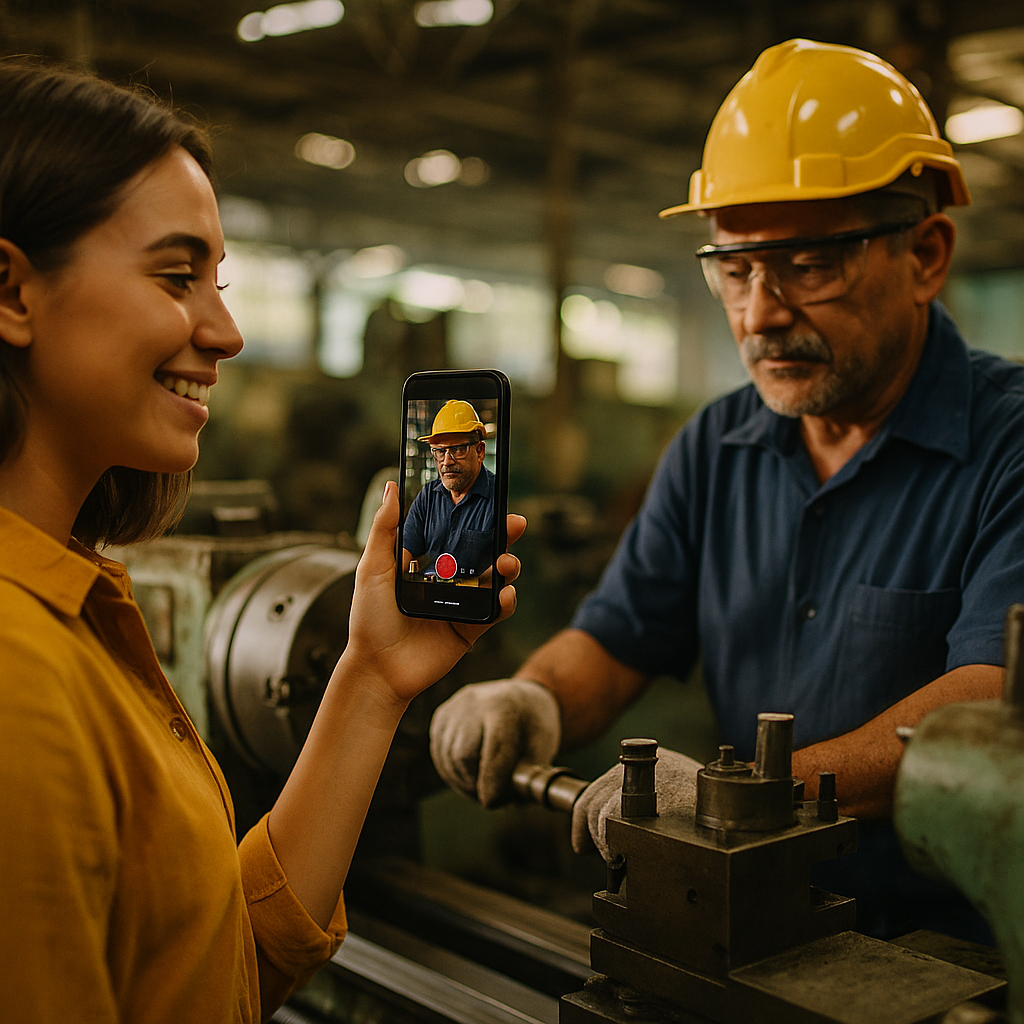
TikTok recruiting for manufacturing is no longer a novelty in 2026. For specialized roles, it can outperform traditional job boards by showing real work, real people, and real career paths in seconds. This case study explains how one manufacturing firm used the platform to attract qualified talent, reduce friction, and strengthen employer brand where younger technicians already spend time online.
Why TikTok recruiting for manufacturing became a practical hiring channel
A mid-sized industrial components manufacturer in the U.S. faced a familiar problem: it needed CNC machinists, maintenance technicians, quality specialists, and shift supervisors, but local talent pools were thin and job board performance had stalled. The company had solid pay, modern equipment, and a strong safety record, yet candidates often assumed manufacturing meant outdated facilities, repetitive work, and limited growth.
The leadership team did not start with TikTok because it was trendy. They started because their recruiting data showed three clear issues:
- Low awareness: many potential candidates had never heard of the company.
- Wrong perception: candidates misunderstood what modern manufacturing jobs looked like.
- Weak engagement: traditional postings generated clicks, but too few qualified applications.
TikTok offered something job boards could not: a fast, visual way to show the workplace, the technology, and the people behind the roles. That mattered for specialized recruiting, where candidates often want proof of shop conditions, tools, training quality, and advancement opportunities before applying.
The company also recognized a demographic reality in 2026. Early-career and mid-career skilled workers increasingly research employers across social platforms, not just search engines and job sites. Even experienced tradespeople now expect authentic video content that answers practical questions quickly: What machines do you use? What does the shift look like? How clean is the floor? What is the team culture? Is overtime mandatory?
By treating TikTok as both an awareness and consideration channel, the firm gave candidates enough context to self-qualify before entering the application process.
Employer branding on TikTok: the strategy behind the case study
The company did not simply post job ads in video form. It built a recruiting strategy around candidate intent and employer branding. The talent acquisition lead partnered with operations, plant managers, and two respected employees from the shop floor to create a content plan rooted in actual candidate questions.
The strategy centered on five content pillars:
- Day-in-the-life videos: short clips following machinists, maintenance techs, and inspectors through real tasks.
- Equipment spotlights: videos showing advanced CNC machines, robotics, calibration tools, and quality systems.
- Career path stories: employee interviews about promotions, certifications, and cross-training.
- Workplace realities: clear explanations of shifts, safety practices, PPE, scheduling, and benefits.
- Application guidance: direct answers about qualifications, interview expectations, and onboarding.
This approach aligned with EEAT principles. The videos demonstrated experience by featuring actual employees and the real facility. They built expertise by letting supervisors and technicians explain tools, standards, and processes in plain language. They strengthened authoritativeness because the content came directly from people doing the work. And they increased trustworthiness by avoiding polished claims that could not be backed up in the plant.
The recruiting team also set clear rules. No misleading footage. No exaggerated pay statements. No bait-and-switch about schedules. Every recruiting claim had to match the actual employee experience. That discipline mattered because highly skilled candidates leave quickly if they sense a mismatch between online messaging and the job itself.
The company then mapped content to hiring stages:
- Top of funnel: awareness videos about modern manufacturing and company culture.
- Mid funnel: role-specific clips about tasks, technology, and required skills.
- Bottom of funnel: application explainers, recruiter Q&As, and interview tips.
Instead of chasing viral entertainment, the team focused on relevance. A video with fewer views but stronger local technician engagement was considered more valuable than a broad post attracting the wrong audience.
Specialized recruiting tactics that attracted qualified manufacturing candidates
The breakthrough came from how precisely the firm matched TikTok content to specialized roles. Manufacturing recruiting fails when every opening is treated the same. A CNC machinist, a maintenance mechanic, and a quality engineer respond to different signals. The company built role-specific creative for each priority job family.
For CNC machinists, the content emphasized tolerances, machine types, programming environment, part complexity, and setup expectations. For maintenance technicians, it highlighted troubleshooting, predictive maintenance tools, electrical and mechanical systems, and the mix of planned versus emergency work. For quality professionals, videos covered metrology tools, documentation standards, and how the quality team worked with production.
Several tactics produced especially strong results:
- Geo-targeted organic and paid distribution: the company focused on a commutable radius around the plant, nearby technical colleges, and neighboring counties with relevant industrial labor pools.
- Employee creators: trusted team members became the face of the channel, increasing credibility and lowering production costs.
- Strong first three seconds: videos opened with a machine in motion, a technician solving a problem, or a direct question such as “Want to see what a clean CNC shop actually looks like?”
- Clear compensation context: where allowed, the company addressed pay ranges, shift differentials, tuition support, and certification reimbursement.
- Low-friction application paths: every post directed viewers to a mobile-friendly landing page with short forms and role-specific FAQs.
The company also used comments strategically. Recruiters and plant leaders answered practical questions under videos, often within hours. This turned the comment section into a live recruiting resource. Questions about steel-toed boots, overtime, training timelines, and prior experience were answered publicly, which reduced candidate uncertainty and improved conversion.
Another smart move was acknowledging objections directly. One video addressed noise levels and showed hearing protection protocols. Another explained how new hires were trained before being fully independent. This candor made the content more credible than generic employer branding.
Importantly, TikTok did not replace other channels. It strengthened them. Candidates who first saw the company on TikTok later searched the brand, visited the careers site, and completed applications after comparing options. The social content created familiarity before formal recruiting outreach began.
Recruitment marketing metrics: what the manufacturing firm measured and improved
The firm treated TikTok like a measurable recruiting engine, not just a content experiment. Before launch, it established baseline metrics from job boards, referral programs, and the careers site. Then it tracked both platform engagement and downstream hiring outcomes.
The most useful metrics were:
- Qualified apply rate: percentage of applicants meeting minimum role requirements.
- Cost per qualified applicant: total media and production spend divided by qualified candidates.
- Interview-to-offer ratio: a signal of candidate fit and screening quality.
- Offer acceptance rate: whether the employer brand matched candidate expectations.
- Time to fill for specialized roles: especially machinist and maintenance openings.
- Source-assisted conversions: applicants who discovered the company on TikTok but converted later through search, direct traffic, or recruiter contact.
Within one quarter, the recruiting team identified patterns. Videos featuring actual employees consistently outperformed recruiter-only videos for qualified applications. Clips showing advanced equipment improved interest from higher-skill candidates. Posts that explained training and growth paths increased engagement among technical school students and career changers with adjacent experience.
The company also noticed that broad reach metrics could mislead. A high-view video about “life in manufacturing” generated awareness but fewer immediate applicants. A narrower video about five-axis machining produced fewer views yet more qualified leads. That insight helped the team optimize budget toward intent-rich content.
Application completion improved after the company shortened mobile forms and embedded answers to common objections on landing pages. Many manufacturing candidates browse on phones during breaks or after shifts. If the process is too long, they drop off. By reducing form fields, clarifying requirements, and adding concise benefit details, the firm lifted completion rates without sacrificing candidate quality.
Retention was another metric worth watching. The company tracked whether TikTok-sourced hires stayed past key milestones. This matters because a flashy channel is only useful if it delivers people who understand the job and remain engaged. In this case, retention improved because the content gave a realistic preview of the environment before candidates applied.
Manufacturing hiring challenges: lessons learned from execution
The campaign worked, but not because TikTok is a universal solution. The company had to adapt quickly to several manufacturing hiring challenges.
First, compliance and safety review slowed production. Filming on a shop floor requires clear rules around proprietary processes, customer confidentiality, and safe camera placement. The firm solved this by creating a simple review workflow involving operations, HR, and legal. That prevented delays and reduced risk.
Second, authenticity beat polish. Early videos that looked too scripted underperformed. Candidates responded better to straightforward clips shot in real production settings with practical explanations. The takeaway was simple: in specialized recruiting, credibility matters more than cinematic style.
Third, plant leadership had to participate. Recruiters alone could not answer all technical questions. When supervisors and experienced operators joined videos or comment threads, candidate trust increased. Specialized talent wants evidence that leadership understands the craft.
Fourth, not every role fit the same creative approach. Entry-level operator content could be broader and more educational. Skilled trades and engineering roles required greater detail. The firm learned to segment content by skill level rather than posting generic “we’re hiring” messages.
Fifth, speed mattered after interest was generated. Social content can create intent quickly, but if recruiters take days to follow up, momentum disappears. The company introduced service-level targets for response times, pre-screen scheduling, and interview feedback. Better process discipline turned attention into hires.
The broader lesson is that TikTok can help manufacturing employers compete for scarce talent when it is integrated into a sound hiring system. It cannot fix unclear compensation, poor management, or a broken application experience. But it can make a strong employment offer visible to the right people in a compelling format.
Social media recruiting in 2026: a repeatable playbook for manufacturers
By the end of the case study period, the manufacturer had built a repeatable model for social media recruiting. It did not rely on luck, virality, or one charismatic employee. It relied on operational consistency.
Manufacturers looking to replicate the approach can use this playbook:
- Start with role economics. Focus first on the hardest-to-fill, highest-impact positions.
- Audit candidate questions. Use recruiter notes, interview feedback, and plant manager input to identify what candidates need to know.
- Show the real environment. Let candidates see machines, workflows, safety standards, and team interactions.
- Use credible voices. Feature employees, supervisors, and technical leaders whenever possible.
- Build mobile-first conversion paths. Make landing pages short, clear, and role specific.
- Track quality, not vanity. Measure qualified applies, interview rates, retention, and time to fill.
- Respond fast. Treat social leads with the same urgency as warm referrals.
For manufacturers, the strategic advantage is not just reach. It is narrative control. Instead of letting outdated stereotypes define industrial careers, companies can present a direct, evidence-based picture of their workplace. That is especially powerful in specialized recruiting, where trust, clarity, and proof drive candidate action.
In 2026, candidates expect employers to communicate in formats that fit their daily media habits. Manufacturing firms that meet that expectation without sacrificing honesty can expand awareness, improve applicant quality, and compete more effectively for specialized talent.
FAQs about TikTok recruiting for manufacturing
Is TikTok really useful for recruiting skilled manufacturing workers?
Yes, if the strategy is role specific. TikTok works best when it shows real equipment, real employees, and clear job expectations. Skilled candidates want proof of working conditions, technology, and advancement opportunities before applying.
What manufacturing roles are best suited to TikTok recruiting?
CNC machinists, maintenance technicians, quality specialists, welders, automation technicians, and early-career engineers tend to respond well. These roles benefit from visual demonstrations of tools, processes, and facility standards.
How often should a manufacturing company post recruiting content?
Consistency matters more than volume. A practical starting point is two to four quality posts per week, supported by quick comment responses and periodic paid promotion for hard-to-fill roles.
Should manufacturing employers use paid TikTok ads for recruiting?
Usually, yes. Organic content builds credibility, while paid distribution helps reach local and role-relevant audiences faster. The best results often come from boosting proven organic posts rather than launching ad creative from scratch.
How do you keep manufacturing recruiting videos compliant and safe?
Create a review process for safety, confidentiality, and brand accuracy. Train anyone filming on approved zones, PPE rules, and restricted information. Keep claims about pay, shifts, and requirements accurate and current.
Can TikTok recruiting reduce time to fill in manufacturing?
It can, especially for roles where awareness and misperception are major barriers. However, gains depend on a fast follow-up process, mobile-friendly applications, and realistic job previews that help candidates self-qualify.
What KPIs matter most for TikTok recruiting in manufacturing?
Focus on qualified apply rate, cost per qualified applicant, interview-to-offer ratio, offer acceptance rate, retention, and time to fill. Views and likes matter less unless they contribute to hiring outcomes.
Do smaller manufacturers need an in-house production team?
No. Many successful recruiting videos are simple, employee-led clips filmed on a phone with good lighting, clear audio, and a useful message. Authenticity usually outperforms heavy production in this category.
TikTok gave this manufacturing firm a practical way to reach specialized candidates by showing the truth of the workplace instead of describing it in generic job ads. The success came from authenticity, role-specific content, and disciplined measurement. For manufacturers in 2026, the clear takeaway is simple: use short-form video to reduce uncertainty, prove credibility, and speed up qualified hiring.
Top Influencer Marketing Agencies
The leading agencies shaping influencer marketing in 2026
Agencies ranked by campaign performance, client diversity, platform expertise, proven ROI, industry recognition, and client satisfaction. Assessed through verified case studies, reviews, and industry consultations.
Moburst

-
2

The Shelf
Boutique Beauty & Lifestyle Influencer AgencyA data-driven boutique agency specializing exclusively in beauty, wellness, and lifestyle influencer campaigns on Instagram and TikTok. Best for brands already focused on the beauty/personal care space that need curated, aesthetic-driven content.Clients: Pepsi, The Honest Company, Hims, Elf Cosmetics, Pure LeafVisit The Shelf → -
3

Audiencly
Niche Gaming & Esports Influencer AgencyA specialized agency focused exclusively on gaming and esports creators on YouTube, Twitch, and TikTok. Ideal if your campaign is 100% gaming-focused — from game launches to hardware and esports events.Clients: Epic Games, NordVPN, Ubisoft, Wargaming, Tencent GamesVisit Audiencly → -
4

Viral Nation
Global Influencer Marketing & Talent AgencyA dual talent management and marketing agency with proprietary brand safety tools and a global creator network spanning nano-influencers to celebrities across all major platforms.Clients: Meta, Activision Blizzard, Energizer, Aston Martin, WalmartVisit Viral Nation → -
5

The Influencer Marketing Factory
TikTok, Instagram & YouTube CampaignsA full-service agency with strong TikTok expertise, offering end-to-end campaign management from influencer discovery through performance reporting with a focus on platform-native content.Clients: Google, Snapchat, Universal Music, Bumble, YelpVisit TIMF → -
6

NeoReach
Enterprise Analytics & Influencer CampaignsAn enterprise-focused agency combining managed campaigns with a powerful self-service data platform for influencer search, audience analytics, and attribution modeling.Clients: Amazon, Airbnb, Netflix, Honda, The New York TimesVisit NeoReach → -
7

Ubiquitous
Creator-First Marketing PlatformA tech-driven platform combining self-service tools with managed campaign options, emphasizing speed and scalability for brands managing multiple influencer relationships.Clients: Lyft, Disney, Target, American Eagle, NetflixVisit Ubiquitous → -
8

Obviously
Scalable Enterprise Influencer CampaignsA tech-enabled agency built for high-volume campaigns, coordinating hundreds of creators simultaneously with end-to-end logistics, content rights management, and product seeding.Clients: Google, Ulta Beauty, Converse, AmazonVisit Obviously →