


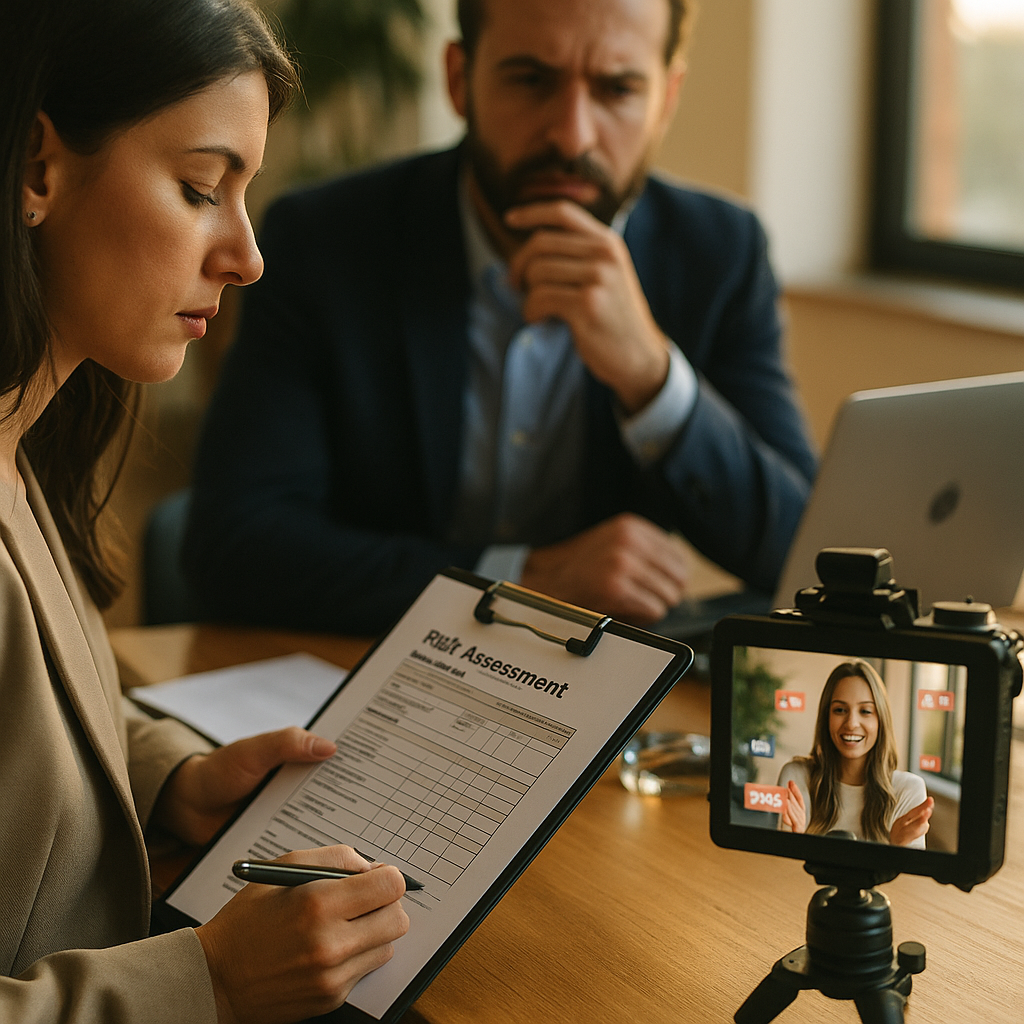
One Rogue Post Away From a Seven-Figure Problem
A 2024 study by the Association of National Advertisers found that 75% of large brands now run at least one high-volume experiential creator campaign per year — events where hundreds or thousands of creators attend, post, and generate content in real time. Here’s the uncomfortable math: when you invite 500 unvetted creators to an activation, you’re not running a marketing campaign. You’re running a mass creator program risk management operation with marketing attached. The legal exposure is enormous, the insurance gaps are real, and most brands don’t discover either until something goes wrong.
Why Traditional Vetting Breaks Down at Scale
Let’s be direct. If you’re activating 50 creators, you can review every feed, run background checks, and negotiate individual contracts. At 500 or 5,000? That model collapses. Micro-influencer and nano-influencer activations, brand festivals, pop-up experiences, product seeding at scale — these programs inherently accept that individual creator behavior cannot be pre-screened. The question isn’t whether someone will post something problematic. It’s when, and whether your legal structure contains the blast radius.
The risks compound in ways most marketing teams don’t model. A creator uses a copyrighted song in their recap video. Another makes an unsubstantiated health claim about your product. A third films a minor without parental consent. A fourth posts content that violates FTC disclosure requirements. Each incident creates separate liability threads — copyright infringement, regulatory violation, privacy breach, defamation — and they often happen simultaneously across dozens of platforms.
At scale, creator risk isn’t about preventing bad behavior. It’s about building legal and operational infrastructure that limits your brand’s exposure when bad behavior inevitably occurs.
This is the mindset shift. Stop thinking about vetting. Start thinking about containment.
The Legal Framework You Need Before Doors Open
Every mass creator program needs three legal layers: a participation agreement, a content rights structure, and a regulatory compliance wrapper. Skip any one of them and you’re exposed.
Participation agreements are your first line of defense. These aren’t traditional influencer contracts with negotiated deliverables and usage terms. They’re standardized terms of participation that every attending creator must accept — digitally, before they receive credentials or enter the event space. The agreement should cover:
- Assumption of risk and liability limitations
- FTC disclosure requirements with specific language mandates (e.g., #ad or #sponsored must appear in every post referencing the brand)
- Prohibited content categories (hate speech, competitor promotion, unsubstantiated claims)
- Consent to be filmed and photographed by the brand and other attendees
- Indemnification clauses that shift liability for creator-generated IP violations back to the creator
- Right to demand takedown of any content that violates the agreement
A critical nuance: participation agreements must be enforceable in the jurisdictions where your creators reside. If you’re running a global activation, that means cross-border contract clauses that account for varying consumer protection and data privacy regimes. A single boilerplate governed by Delaware law won’t protect you when a UK-based creator violates ICO data regulations.
Content rights structures need particular care at this scale. You have two realistic options: a broad license grant or a post-event rights acquisition model. The broad license — where creators grant the brand perpetual, worldwide, royalty-free rights to all content created at the event — is simpler to administer but increasingly resisted by creators and their management. The post-event model lets creators retain ownership while giving the brand a limited window (typically 30-90 days) to request usage rights for specific assets, with compensation terms pre-defined in the participation agreement.
Neither model solves the music copyright liability problem. If a creator uses a licensed track in their content and you later amplify that content, you may inherit the licensing obligation. Your participation agreement must explicitly prohibit the use of copyrighted music unless the brand provides a pre-cleared soundtrack — and even then, you need monitoring.
Insurance: The Coverage Gaps Nobody Talks About
Most brand marketing teams assume their general liability policy or event insurance covers creator activations. It almost certainly doesn’t — at least not adequately.
Standard commercial general liability (CGL) policies typically exclude intellectual property infringement, which is the single highest-probability risk in mass creator programs. Media liability or errors and omissions (E&O) policies may cover some IP claims, but they often contain exclusions for user-generated content or content created by non-employees. Event cancellation insurance won’t cover the reputational damage from a creator’s viral racist tirade posted from your branded activation.
Here’s what your insurance stack should include for a high-volume creator event:
- Event-specific media liability coverage that explicitly includes UGC and creator-generated content
- Cyber liability insurance covering data breaches from creator registration systems and any first-party data collected at the event
- Third-party IP infringement coverage with sub-limits adequate for mass content output
- Crisis management and PR response coverage — increasingly available as standalone riders from insurers like Beazley and Hiscox
- Workers’ compensation or contractor injury coverage if creators are performing physical activities
Ask your broker one question: “If 200 creators post content from our event that infringes a third party’s copyright, and we amplify 20 of those posts, are we covered?” If they hesitate, your coverage has gaps.
Budget 2-4% of total campaign spend on insurance for mass creator programs. It sounds steep until you compare it to the cost of a single copyright trolling campaign targeting your amplified UGC library.
FTC Compliance at Scale Is an Ops Problem, Not a Legal One
The FTC’s endorsement guidelines don’t care about the operational difficulty of monitoring 500 creators. If your brand provides material consideration — free products, travel, VIP access, payment — every creator who posts must disclose the relationship. Period.
At scale, compliance becomes an engineering and workflow challenge. You need:
- Pre-event disclosure training — short, mandatory video briefings delivered digitally before credentials are issued
- On-site signage and reminders at every activation touchpoint reinforcing disclosure requirements
- Automated post-event monitoring using tools like CreatorIQ, Traackr, or GRIN to scan tagged content for missing disclosures
- A rapid-response takedown protocol for non-compliant posts, with escalation paths defined before the event
Brands that direct creator content — providing scripts, shot lists, or specific messaging — face elevated FTC liability for brand-directed content. The more creative control you exert, the more the FTC views you as responsible for the output. In mass programs where you can’t control output, the irony is that your liability may actually be lower — but only if you can demonstrate good-faith compliance systems. Document everything. Compliance theater that’s never documented is worse than useless.
For a comprehensive compliance scoring approach, review FTC compliance scoring frameworks that quantify your exposure before, during, and after an activation.
Content Moderation and Takedown Infrastructure
Here’s what separates brands that survive creator program crises from those that don’t: pre-built content moderation infrastructure.
You need a real-time monitoring war room during any mass creator activation. Not metaphorically. Literally. A team with social listening tools (Brandwatch, Sprinklr, or Sprout Social) actively watching tagged content as it’s published. You need pre-drafted takedown request templates for every major platform, with legal review completed before the event. You need escalation criteria that define exactly which content types trigger which response levels — from a polite DM requesting disclosure edits to an emergency legal takedown.
The content moderation playbook should also address amplification decisions. Many brands run into trouble not from creator posts themselves, but from the act of reposting, sharing, or boosting creator content that contains violations. Your event governance framework should include a mandatory review gate between raw creator output and any brand amplification — even a simple repost on Stories.
One often-overlooked dimension: creators who attend your event and post negative content. Your participation agreement can prohibit certain categories of content (defamation, IP infringement), but attempting to contractually prohibit negative opinions is both legally questionable and a PR disaster waiting to happen. Build your framework around containing genuine violations, not suppressing honest criticism.
The Post-Event Audit Nobody Wants to Do
Within 14 days of any mass creator activation, run a comprehensive content audit. Every piece of tagged content should be reviewed for disclosure compliance, IP violations, brand safety issues, and rights status. This isn’t optional. It’s the evidence trail that demonstrates good faith if the FTC, a copyright holder, or a plaintiff’s attorney comes calling six months later.
Archive everything — including content that’s been deleted. Screenshot and timestamp. If you used an influencer marketing platform to manage registrations, export complete data sets and store them per your document retention policy.
The audit will also reveal patterns that improve your next program: Which disclosure formats had the highest compliance rates? Which activation zones generated the most IP-risky content? Where did your moderation team catch issues fastest? These operational learnings are worth as much as the campaign results themselves.
Your next step: Before greenlighting your next high-volume creator activation, assemble your legal, insurance, and marketing ops leads for a single 90-minute session to map your current coverage against the framework above. Every gap you identify now is a crisis you prevent later.
FAQs
What is mass creator program risk management?
Mass creator program risk management is the practice of establishing legal frameworks, insurance coverage, content rights structures, and operational safeguards to protect brands when running high-volume experiential campaigns where individual creator behavior cannot be pre-screened or fully controlled.
Do brands need special insurance for large-scale creator events?
Yes. Standard commercial general liability and event insurance policies typically exclude intellectual property infringement and user-generated content risks. Brands should secure event-specific media liability coverage, cyber liability insurance, third-party IP infringement coverage, and crisis management riders.
How can brands enforce FTC disclosure compliance at scale?
Brands should implement mandatory pre-event disclosure training, on-site signage reinforcing requirements, automated post-event monitoring using influencer marketing platforms, and rapid-response takedown protocols for non-compliant content. Documenting all compliance efforts is essential for demonstrating good faith.
What should a creator participation agreement include for experiential events?
A participation agreement should cover liability limitations, FTC disclosure mandates with specific language requirements, prohibited content categories, consent to be filmed, indemnification clauses for IP violations, and the brand’s right to demand content takedowns. It must be enforceable in relevant jurisdictions.
Who owns content created by influencers at branded events?
Ownership depends on the content rights structure in the participation agreement. Brands typically either secure a broad license granting perpetual usage rights or use a post-event acquisition model where creators retain ownership and brands request usage rights for specific assets within a defined window.
Top Influencer Marketing Agencies
The leading agencies shaping influencer marketing in 2026
Agencies ranked by campaign performance, client diversity, platform expertise, proven ROI, industry recognition, and client satisfaction. Assessed through verified case studies, reviews, and industry consultations.
Moburst

-
2

The Shelf
Boutique Beauty & Lifestyle Influencer AgencyA data-driven boutique agency specializing exclusively in beauty, wellness, and lifestyle influencer campaigns on Instagram and TikTok. Best for brands already focused on the beauty/personal care space that need curated, aesthetic-driven content.Clients: Pepsi, The Honest Company, Hims, Elf Cosmetics, Pure LeafVisit The Shelf → -
3

Audiencly
Niche Gaming & Esports Influencer AgencyA specialized agency focused exclusively on gaming and esports creators on YouTube, Twitch, and TikTok. Ideal if your campaign is 100% gaming-focused — from game launches to hardware and esports events.Clients: Epic Games, NordVPN, Ubisoft, Wargaming, Tencent GamesVisit Audiencly → -
4

Viral Nation
Global Influencer Marketing & Talent AgencyA dual talent management and marketing agency with proprietary brand safety tools and a global creator network spanning nano-influencers to celebrities across all major platforms.Clients: Meta, Activision Blizzard, Energizer, Aston Martin, WalmartVisit Viral Nation → -
5

The Influencer Marketing Factory
TikTok, Instagram & YouTube CampaignsA full-service agency with strong TikTok expertise, offering end-to-end campaign management from influencer discovery through performance reporting with a focus on platform-native content.Clients: Google, Snapchat, Universal Music, Bumble, YelpVisit TIMF → -
6

NeoReach
Enterprise Analytics & Influencer CampaignsAn enterprise-focused agency combining managed campaigns with a powerful self-service data platform for influencer search, audience analytics, and attribution modeling.Clients: Amazon, Airbnb, Netflix, Honda, The New York TimesVisit NeoReach → -
7

Ubiquitous
Creator-First Marketing PlatformA tech-driven platform combining self-service tools with managed campaign options, emphasizing speed and scalability for brands managing multiple influencer relationships.Clients: Lyft, Disney, Target, American Eagle, NetflixVisit Ubiquitous → -
8

Obviously
Scalable Enterprise Influencer CampaignsA tech-enabled agency built for high-volume campaigns, coordinating hundreds of creators simultaneously with end-to-end logistics, content rights management, and product seeding.Clients: Google, Ulta Beauty, Converse, AmazonVisit Obviously →