


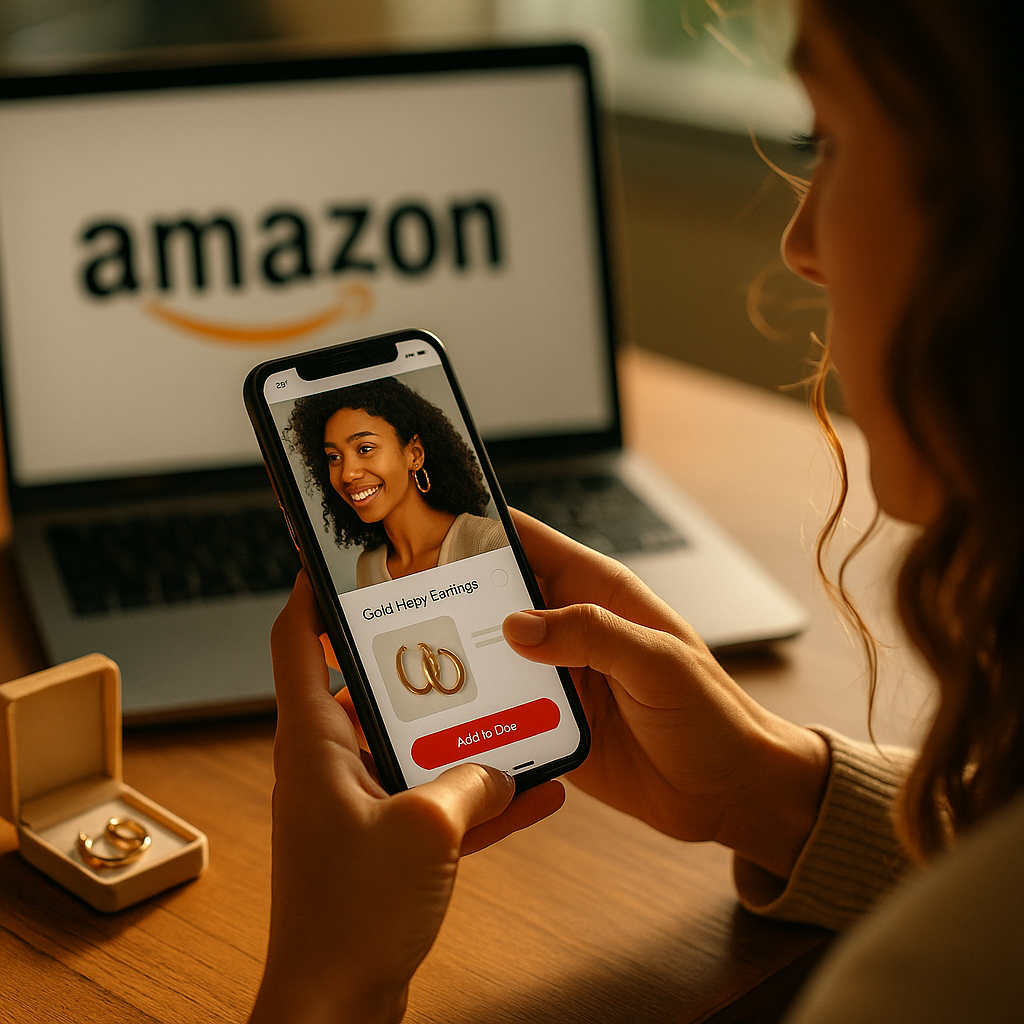
Newell Brands moved roughly 40% of its creator-driven traffic through shoppable product pages in a single fiscal cycle — without relying on a DTC-native infrastructure. If a legacy CPG house running dozens of SKUs across hardware, housewares, and baby gear can do that, what’s stopping your brand from applying the same Amazon creator commerce integration logic to your own commerce stack?
The Model Worth Stealing (And Why It Isn’t Amazon-Exclusive)
Newell Brands — the parent behind Rubbermaid, Sharpie, Coleman, and Graco — built a creator commerce program that routes influencer content directly into shoppable product pages, using Amazon’s affiliate and storefront infrastructure as the connective tissue. The genius isn’t the platform. It’s the architecture: creator content as the top-of-funnel entry point, a frictionless product page as the conversion layer, and attribution data flowing back into the media plan.
That architecture is fully portable. Amazon is one possible landing surface. Your DTC site is another. Shopify, Salesforce Commerce Cloud, BigCommerce — all viable. The question most brand teams get wrong is assuming the Newell model requires Amazon. It doesn’t. It requires discipline around the conversion layer.
The core insight from Newell’s playbook isn’t “use Amazon.” It’s “treat every creator-driven click as a qualified lead entering a conversion funnel you own and optimize.”
Why DTC Brands Are Losing Creator Traffic They’re Already Paying For
Here’s the gap most influencer programs leave open: brands invest in creator content, drive meaningful traffic, then dump it onto a homepage or a generic category page with no contextual relevance to what the creator just said. Conversion rates crater. ROAS looks mediocre. The program gets deprioritized.
The underlying problem isn’t the creator. It’s the landing experience.
According to HubSpot research, personalized landing pages convert at two to five times the rate of generic ones. When a creator’s audience has just watched a 90-second unboxing video, they arrive at your product page primed — product-aware, emotionally engaged, and close to purchase intent. If the page doesn’t mirror the creator’s framing, that intent dissipates fast.
Amazon solves this partly by default. Its product pages are stripped-down and transactional. But your DTC product pages can be better — if you build them for creator traffic specifically.
What “Creator-Optimized Product Pages” Actually Means
This isn’t about slapping a creator’s face on a landing page. It’s about structural alignment between the content a creator publishes and the page a buyer lands on. Four elements matter most:
- Message match: The headline, hero image, and opening copy should echo the creator’s narrative. If the creator positioned your cookware as “the only pan that survives a college kitchen,” your page needs to lean into durability and simplicity — not your brand’s full feature matrix.
- Social proof scoped to the creator’s audience: Pull reviews and UGC that resonate with the demographic that creator reaches. A 22-year-old first-apartment buyer doesn’t need the same proof points as a 45-year-old home renovator.
- Friction reduction: One clear CTA. Minimal navigation. Guest checkout. Mobile-first layout. Every additional click between landing and purchase is a conversion leak.
- UTM and pixel alignment: Every creator-specific URL needs to carry parameters that feed back into your attribution stack — whether that’s Triple Whale, Northbeam, or a custom GA4 build.
If you’re running creator programs at scale, tools like eMarketer’s commerce media reports consistently show that brands with dedicated creator landing pages outperform those routing to generic PDPs by 30–60% on conversion rate metrics.
Building the Routing Infrastructure
The operational piece is where most DTC teams underinvest. Routing creator traffic properly requires three things working together:
1. Creator-specific URLs. Each creator gets a unique link — ideally a clean vanity URL that redirects through your tracking stack. This isn’t just for attribution; it also lets you A/B test landing page variants by creator tier or content type.
2. Dynamic landing page capabilities. Platforms like Replo, Shogun, or Unbounce integrate directly with Shopify and let you spin up creator-specific PDPs without engineering resources. You can clone a base template, adjust messaging for each campaign, and publish in hours.
3. A post-click measurement framework. Know what you’re optimizing for before you launch. Add-to-cart rate, checkout initiation rate, and purchase conversion rate are the three metrics that tell you whether your page is working. ROAS alone isn’t diagnostic enough.
For brands managing complex creator rosters, the briefing layer matters too. If creators don’t understand what page they’re sending traffic to and why it looks the way it does, their CTAs will be vague. TikTok creator briefs for consideration-phase buyers offer a useful template for how to communicate the conversion context to creators without overcomplicating their content.
Applying This to Non-Amazon Brand Architecture
Let’s make this concrete. You’re a DTC skincare brand. No Amazon presence. Your creator program runs across Instagram Reels and YouTube Shorts. Here’s how you apply the Newell model:
- Map your creator roster to product lines, not brand awareness goals. Each creator is assigned a specific SKU or bundle, not a general brand brief. Their content drives to a page built for that SKU.
- Build a conversion-optimized PDP for each hero product in your creator program. Not 40 pages. Maybe six. Prioritize the products with the highest margin and the strongest creator storytelling potential.
- Route all creator traffic through those pages with creator-specific UTMs. No exceptions. No “just link to the homepage this one time.”
- Create a feedback loop. Weekly review of add-to-cart rates by creator. Monthly revision of underperforming pages. Quarterly creator performance reviews tied to actual conversion data, not just reach or engagement.
The same logic applies whether you’re on Shopify or a custom commerce build. The platform is secondary. The discipline is primary.
It’s also worth connecting this to your broader paid strategy. Paid-first sponsorship models are now the baseline expectation for creator commerce — organic reach alone won’t move product, and your landing page infrastructure needs to be built for the amplified traffic that paid distribution brings, not just the organic trickle.
Most DTC brands are paying for creator reach they’re not capturing. The conversion gap isn’t a creative problem — it’s a product page infrastructure problem.
The Attribution Question You Need to Answer First
Before you build a single creator landing page, resolve your attribution model. Last-click attribution will undervalue creator content — most creator-driven buyers will touch a retargeting ad or branded search before converting, and last-click will credit that touchpoint instead.
Use a multi-touch or data-driven attribution model. Northbeam and Triple Whale both offer creator-level attribution that integrates with Shopify and major commerce platforms. Google’s support documentation on GA4’s data-driven attribution model is a reasonable starting point if you’re not ready for a third-party tool.
If you’re running creator programs across multiple platforms simultaneously, your YouTube partnership ROI tracking and your TikTok conversion tracking need to feed into a unified dashboard — not live in separate channel silos where no one can compare cost-per-acquisition across creator tiers.
Compliance and FTC Alignment
One operational consideration that gets skipped in the architecture conversation: every creator link, every shoppable integration, every storefront built around affiliate routing needs to be compliant with FTC disclosure requirements. Creator-specific landing pages with commission structures are affiliate arrangements, and the disclosure obligations apply regardless of whether you’re on Amazon or your own DTC stack.
Build disclosure language into your creator briefs as a non-negotiable. Your legal exposure doesn’t decrease because you’re running this through Shopify instead of Amazon Associates.
For brands managing creator programs across markets, platform-specific compliance layers compound this — particularly in the EU, where EU regulations are already reshaping creator reach in ways that affect how your shoppable content gets distributed.
Your Next Move
Audit your top five creator partnerships from the last 90 days. Pull the landing pages those creators drove traffic to. If none of them were creator-specific, conversion-optimized PDPs, you’ve identified your biggest ROI gap — and it has nothing to do with which creators you’re working with.
—
Frequently Asked Questions
Do I need an Amazon presence to use the Newell Brands shoppable influencer model?
No. The Newell Brands model is built on routing creator-driven traffic into high-converting product pages. Amazon is one possible infrastructure for that, but the same architecture works on Shopify, BigCommerce, Salesforce Commerce Cloud, or any custom DTC build. The core requirement is a conversion-optimized product page with proper attribution tracking — not a specific retail platform.
What makes a product page “creator-optimized” versus a standard PDP?
A creator-optimized product page maintains message match with the creator’s content, surfaces social proof relevant to that creator’s audience demographic, minimizes navigation distractions, and uses a single clear CTA. It also carries creator-specific UTM parameters to feed attribution data back into your media planning stack. Standard PDPs are built for all traffic; creator-optimized pages are built for the primed, intent-rich audience a specific creator delivers.
Which tools can DTC brands use to build creator-specific landing pages without engineering resources?
Replo, Shogun, and Unbounce all integrate directly with Shopify and allow marketing teams to build and publish creator-specific landing pages without developer involvement. These tools support A/B testing, dynamic content, and UTM parameter passthrough, which are the operational requirements for a functioning creator commerce routing system.
How should attribution be set up for creator-driven DTC commerce?
Last-click attribution systematically undervalues creator content because buyers typically touch a retargeting ad or branded search before converting. Brands should use multi-touch or data-driven attribution. Northbeam and Triple Whale are purpose-built for DTC creator attribution and integrate with major commerce platforms. At minimum, GA4’s data-driven attribution model offers a free starting point before committing to a paid tool.
Are there FTC compliance obligations when using creator-specific affiliate links on a DTC site?
Yes. Creator-specific links tied to commission structures are affiliate arrangements regardless of the platform. FTC disclosure requirements apply whether the creator is linking to an Amazon storefront or a brand’s own DTC product page. Disclosure language should be included in every creator brief as a non-negotiable contractual requirement, not an afterthought added at campaign launch.
Top Influencer Marketing Agencies
The leading agencies shaping influencer marketing in 2026
Agencies ranked by campaign performance, client diversity, platform expertise, proven ROI, industry recognition, and client satisfaction. Assessed through verified case studies, reviews, and industry consultations.
Moburst

-
2

The Shelf
Boutique Beauty & Lifestyle Influencer AgencyA data-driven boutique agency specializing exclusively in beauty, wellness, and lifestyle influencer campaigns on Instagram and TikTok. Best for brands already focused on the beauty/personal care space that need curated, aesthetic-driven content.Clients: Pepsi, The Honest Company, Hims, Elf Cosmetics, Pure LeafVisit The Shelf → -
3

Audiencly
Niche Gaming & Esports Influencer AgencyA specialized agency focused exclusively on gaming and esports creators on YouTube, Twitch, and TikTok. Ideal if your campaign is 100% gaming-focused — from game launches to hardware and esports events.Clients: Epic Games, NordVPN, Ubisoft, Wargaming, Tencent GamesVisit Audiencly → -
4

Viral Nation
Global Influencer Marketing & Talent AgencyA dual talent management and marketing agency with proprietary brand safety tools and a global creator network spanning nano-influencers to celebrities across all major platforms.Clients: Meta, Activision Blizzard, Energizer, Aston Martin, WalmartVisit Viral Nation → -
5

The Influencer Marketing Factory
TikTok, Instagram & YouTube CampaignsA full-service agency with strong TikTok expertise, offering end-to-end campaign management from influencer discovery through performance reporting with a focus on platform-native content.Clients: Google, Snapchat, Universal Music, Bumble, YelpVisit TIMF → -
6

NeoReach
Enterprise Analytics & Influencer CampaignsAn enterprise-focused agency combining managed campaigns with a powerful self-service data platform for influencer search, audience analytics, and attribution modeling.Clients: Amazon, Airbnb, Netflix, Honda, The New York TimesVisit NeoReach → -
7

Ubiquitous
Creator-First Marketing PlatformA tech-driven platform combining self-service tools with managed campaign options, emphasizing speed and scalability for brands managing multiple influencer relationships.Clients: Lyft, Disney, Target, American Eagle, NetflixVisit Ubiquitous → -
8

Obviously
Scalable Enterprise Influencer CampaignsA tech-enabled agency built for high-volume campaigns, coordinating hundreds of creators simultaneously with end-to-end logistics, content rights management, and product seeding.Clients: Google, Ulta Beauty, Converse, AmazonVisit Obviously →