


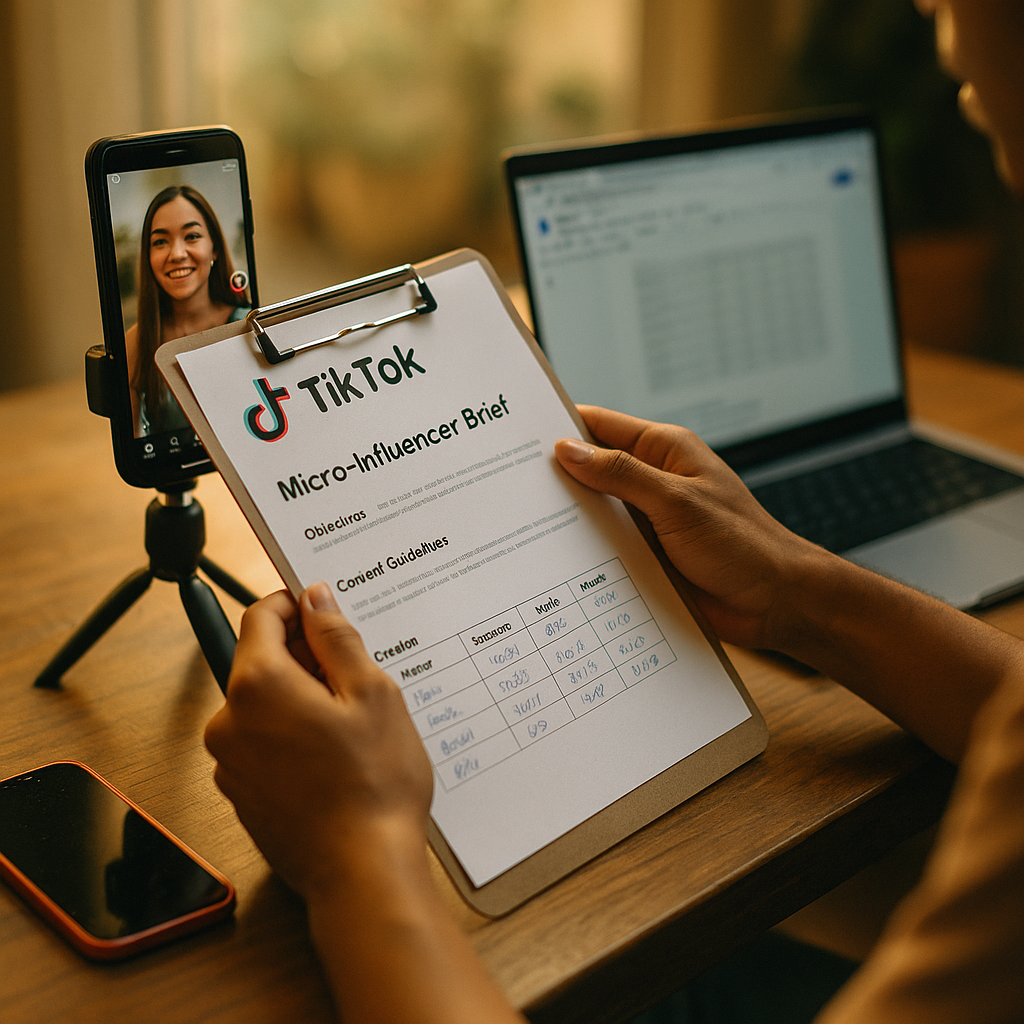
Most Brands Are Briefing TikTok Creators Wrong
Brands spending five figures on TikTok micro-creator programs are leaving their biggest distribution lever untouched. The platform’s recommendation engine can deliver a 10,000-follower creator’s content to 2 million highly specific viewers — but only if the content structure signals the right metadata, watch behavior, and engagement pattern from the first three seconds. That’s not a creator problem. That’s a brief problem.
The TikTok long-tail amplification strategy isn’t about virality in the traditional sense. It’s about precision reach into under-served niche audiences who are already primed to buy but haven’t been served relevant content yet. The For You Page algorithm actively hunts for these pockets of unmet intent. Your brief should help creators feed it exactly what it needs.
Why Niche Audiences Are TikTok’s Hidden Distribution Advantage
TikTok’s recommendation engine doesn’t prioritize follower counts the way Instagram’s did for most of the last decade. It clusters content by interest graphs, not social graphs. That distinction is operationally significant. A micro-creator with 8,000 followers in the competitive cycling niche can outperform a 500,000-follower generalist if the content structure aligns with the signals the algorithm uses to classify and distribute video.
This is why micro-creator seeding for niche ROI has become a serious budget allocation strategy, not a low-cost experiment. The math works differently here: instead of paying for reach and hoping for relevance, you’re engineering relevance and receiving reach as the outcome.
TikTok’s interest graph means that briefing creators on content structure is more important than briefing them on follower growth tactics. Relevance signals drive distribution. Distribution drives ROI.
Under-served niches — think specialty food, adaptive fitness, B2B SaaS tools for specific job functions, or sustainable building materials — have a compounding advantage. The algorithm is actively searching for content to serve these cohorts because supply is thin relative to demonstrated demand signals. A well-structured video drops into that gap and gets amplified disproportionately. Brands that understand this stop treating micro-creators as “affordable alternatives” and start treating them as precision instruments.
The Content Structures Your Brief Must Specify
Most creator briefs cover talking points, brand guidelines, and disclosure requirements. Almost none of them specify content structure at the signal level. That’s the gap. Here’s what your brief needs to address explicitly:
- Hook architecture (0-2 seconds): The first frame and first spoken word must create a pattern interrupt specific to the niche. “If you’ve ever struggled with X” spoken directly to a narrow psychographic will generate higher completion rates among that cohort than a broad hook aimed at everyone. Higher completion rates in a specific cluster tell the algorithm exactly where to send the content next.
- Niche keyword verbalization: TikTok’s auto-caption system transcribes audio and uses it for content classification. Brief your creators to speak the exact search terms your target audience uses, not branded language. “Gluten-free sourdough starter” outperforms “our artisan blend” every time.
- Mid-video re-engagement triggers: Script a secondary hook at the 8-12 second mark. Viewers who almost drop off but re-engage send a powerful positive signal. A question, a visual twist, or a counterintuitive claim at that moment resets the watch curve.
- Comment-seeding prompts: The brief should specify an explicit question or controversy prompt in the final three seconds. Comments are a stronger distribution signal than likes. Teach creators to end with “Drop your answer below” tied to something the niche actually debates.
- Caption keyword layering: The first 100 characters of a TikTok caption are indexed. Brief creators on a specific phrase hierarchy: primary niche term first, secondary modifier second, call-to-action third. This isn’t organic-sounding, so show creators an example of how to write it naturally.
For brands running TikTok Shop integrations, these structural elements become even more critical because the algorithm weighs content-to-purchase correlation when deciding how aggressively to distribute. See how consideration-phase briefs for TikTok Shop can be structured to capture mid-funnel intent specifically.
Briefing for Signal Stacking, Not Just Content Quality
Signal stacking is the practice of designing a single piece of content to generate multiple positive algorithmic signals simultaneously. Most brands optimize for one: view count. Sophisticated programs optimize for the full stack.
The signals that compound for niche amplification are: watch-through rate, save rate, share rate (especially shares outside the app to messaging), comment volume, and profile visits following a view. Each of these tells the algorithm something different about the content’s value, and each triggers a different distribution behavior.
Your brief should specify the primary signal target for each piece of content based on funnel stage. A creator introducing the brand to a cold niche audience should optimize for saves and profile visits (awareness signals). A creator targeting warm retargeting clusters should optimize for comments and shares (consideration signals). For purchase-focused content, briefs built for impulse conversion use a different structural sequence entirely.
This isn’t theoretical. TikTok for Business has published guidance on how creator content outperforms standard ad formats in specific signal categories. The gap between a creator video that earns 4% save rate versus 0.4% isn’t luck — it’s brief quality.
How to Select the Right Micro-Creator for Niche Amplification
Creator selection for long-tail amplification is a different discipline from creator selection for brand-fit or aesthetics. You’re recruiting based on audience cluster purity, not follower demographics alone.
Use TikTok Creator Marketplace or third-party tools like Modash or Upfluence to filter for creators whose comment sections show consistent niche vocabulary. A creator in the home automation space whose comments contain brand names, technical jargon, and DIY project mentions has a high-purity audience. A creator with generic comments (“love this!” and emoji strings) has a diluted audience regardless of niche label.
Audience cluster purity also predicts how the algorithm will extend distribution. If a creator’s content has historically been served to a tight interest cluster, new content from that creator gets a headstart on distribution within that same cluster. That’s the algorithmic equity you’re paying for — not their follower count.
One underused qualification criterion: check the creator’s “following” feed behavior, not just their posting history. Creators who actively engage with the same niche content they produce tend to have stronger interest-graph alignment than those who only post without consuming. Modash’s audience authenticity scores and Sprout Social’s engagement analysis can surface this signal at scale.
Compliance, Disclosure, and the Reach Penalty Brands Ignore
There’s a persistent myth in some creator teams that FTC disclosure language hurts organic reach. The data doesn’t support this, but poor disclosure implementation does create real risk. The FTC’s updated endorsement guidelines require clear and conspicuous disclosure for paid partnerships, and TikTok’s native “Paid Partnership” label is specifically designed to satisfy this without requiring verbal disclosure that breaks content flow.
What actually does suppress reach: disclosure language buried in captions below the fold, verbal disclaimers that disrupt the hook window, or hashtag disclosures (#ad buried in a string of 15 hashtags). Brief creators on exactly where and how to disclose. It’s a brand risk issue, not a creator creativity issue. If you’re operating in EU markets, the regulatory landscape is more complex — EU digital regulations have added compliance layers that directly affect organic distribution mechanics on TikTok.
The FTC disclosure conversation shouldn’t live only in the legal review step. It belongs in the brief itself, with exact placement instructions, so creators aren’t making compliance decisions on set.
Measuring Long-Tail Amplification: The Metrics That Actually Matter
Standard influencer reporting (impressions, reach, engagement rate) doesn’t capture the compounding value of long-tail niche amplification. You need a different measurement layer.
Track non-follower reach percentage as the primary amplification metric. TikTok analytics shows what percentage of views came from non-followers. For micro-creators targeting under-served niches, this number should exceed 60% on successful content. If it’s below 40%, the content structure failed to trigger distribution beyond the existing audience.
Secondary metrics: new follower conversion rate (how many viewers are moved to follow the creator after viewing, signaling audience cluster expansion), saved video rate, and for TikTok Shop campaigns, attributed GMV within 7-day click windows. Tools like eMarketer’s creator commerce benchmarks provide category-level baselines for comparison.
Also monitor the creator’s next 3-5 videos after your campaign. If your brief produced a high-performing piece, the algorithm grants temporary distribution elevation to subsequent content from that creator. That halo effect has real value for ongoing creator relationships. It’s a reason to brief for structural quality once rather than churn through low-effort activations repeatedly.
For brands building more sophisticated attribution, the measurement principles used in consideration-to-purchase creator frameworks provide a defensible model for connecting creator content signals to downstream conversion data.
One more tool worth building into your reporting stack: Statista’s social media engagement benchmarks give you category-specific context for evaluating whether your niche amplification results are genuinely above market or just average performance mislabeled as success.
Build your brief template around these measurement targets, not as an afterthought but as the design constraint that shapes every structural decision. When a creator knows you’re measuring non-follower reach specifically, they’ll make different choices in the edit suite.
Your Next Move
Pull your last three TikTok creator briefs and audit them against the signal-stacking framework above. If none of them specify hook architecture, verbalized keywords, or primary signal targets by funnel stage, you have the answer to why your micro-creator results have been inconsistent. Rewrite one brief using these structural parameters, run a single creator test with 5-7 videos, and let non-follower reach percentage tell you whether the algorithm is responding before you scale budget.
Frequently Asked Questions
What is long-tail amplification on TikTok and why does it matter for brands?
Long-tail amplification refers to TikTok’s recommendation engine distributing content to highly specific, under-served niche audiences far beyond a creator’s existing follower base. It matters for brands because it enables precision reach into high-intent niche cohorts without requiring massive creator audiences or large paid media budgets. The algorithm actively seeks content to fill gaps in niche interest clusters, making well-structured micro-creator content disproportionately cost-effective.
How should a creator brief differ for niche TikTok audiences versus broad campaigns?
Niche-focused briefs must specify content structure at the signal level: hook architecture targeting a narrow psychographic, verbalized niche keywords for audio transcription indexing, mid-video re-engagement triggers, and comment-seeding prompts tied to niche debates. Broad campaign briefs typically focus on brand messaging and aesthetic. Niche briefs prioritize algorithmic signal generation and audience cluster purity over general brand awareness.
What is audience cluster purity and how do you evaluate it before selecting a creator?
Audience cluster purity describes how consistently a creator’s actual audience belongs to a single, defined interest group rather than a diluted general audience. You evaluate it by reviewing comment section vocabulary, checking for niche-specific brand mentions and technical language, and using tools like Modash or Upfluence to analyze audience authenticity scores. High-purity clusters give the algorithm a clear signal about where to distribute new content from that creator.
Does using TikTok’s Paid Partnership label hurt organic reach for creator content?
No. TikTok’s native Paid Partnership label is designed to satisfy FTC disclosure requirements without disrupting content flow or suppressing distribution. What actually reduces reach is poorly placed disclosure language, verbal disclaimers placed within the critical hook window, or hashtag disclosures buried in long caption strings. Brands should specify exact disclosure placement in the brief itself to prevent creators from making compliance decisions independently during production.
What metrics should brands track to measure long-tail niche amplification success?
The primary metric is non-follower reach percentage, which should exceed 60% on well-performing niche content. Secondary metrics include saved video rate, new follower conversion rate, and for TikTok Shop campaigns, 7-day attributed GMV. Standard vanity metrics like total impressions or engagement rate are insufficient because they don’t capture the compounding distribution value that niche amplification generates through the recommendation engine.
Top Influencer Marketing Agencies
The leading agencies shaping influencer marketing in 2026
Agencies ranked by campaign performance, client diversity, platform expertise, proven ROI, industry recognition, and client satisfaction. Assessed through verified case studies, reviews, and industry consultations.
Moburst

-
2

The Shelf
Boutique Beauty & Lifestyle Influencer AgencyA data-driven boutique agency specializing exclusively in beauty, wellness, and lifestyle influencer campaigns on Instagram and TikTok. Best for brands already focused on the beauty/personal care space that need curated, aesthetic-driven content.Clients: Pepsi, The Honest Company, Hims, Elf Cosmetics, Pure LeafVisit The Shelf → -
3

Audiencly
Niche Gaming & Esports Influencer AgencyA specialized agency focused exclusively on gaming and esports creators on YouTube, Twitch, and TikTok. Ideal if your campaign is 100% gaming-focused — from game launches to hardware and esports events.Clients: Epic Games, NordVPN, Ubisoft, Wargaming, Tencent GamesVisit Audiencly → -
4

Viral Nation
Global Influencer Marketing & Talent AgencyA dual talent management and marketing agency with proprietary brand safety tools and a global creator network spanning nano-influencers to celebrities across all major platforms.Clients: Meta, Activision Blizzard, Energizer, Aston Martin, WalmartVisit Viral Nation → -
5

The Influencer Marketing Factory
TikTok, Instagram & YouTube CampaignsA full-service agency with strong TikTok expertise, offering end-to-end campaign management from influencer discovery through performance reporting with a focus on platform-native content.Clients: Google, Snapchat, Universal Music, Bumble, YelpVisit TIMF → -
6

NeoReach
Enterprise Analytics & Influencer CampaignsAn enterprise-focused agency combining managed campaigns with a powerful self-service data platform for influencer search, audience analytics, and attribution modeling.Clients: Amazon, Airbnb, Netflix, Honda, The New York TimesVisit NeoReach → -
7

Ubiquitous
Creator-First Marketing PlatformA tech-driven platform combining self-service tools with managed campaign options, emphasizing speed and scalability for brands managing multiple influencer relationships.Clients: Lyft, Disney, Target, American Eagle, NetflixVisit Ubiquitous → -
8

Obviously
Scalable Enterprise Influencer CampaignsA tech-enabled agency built for high-volume campaigns, coordinating hundreds of creators simultaneously with end-to-end logistics, content rights management, and product seeding.Clients: Google, Ulta Beauty, Converse, AmazonVisit Obviously →