


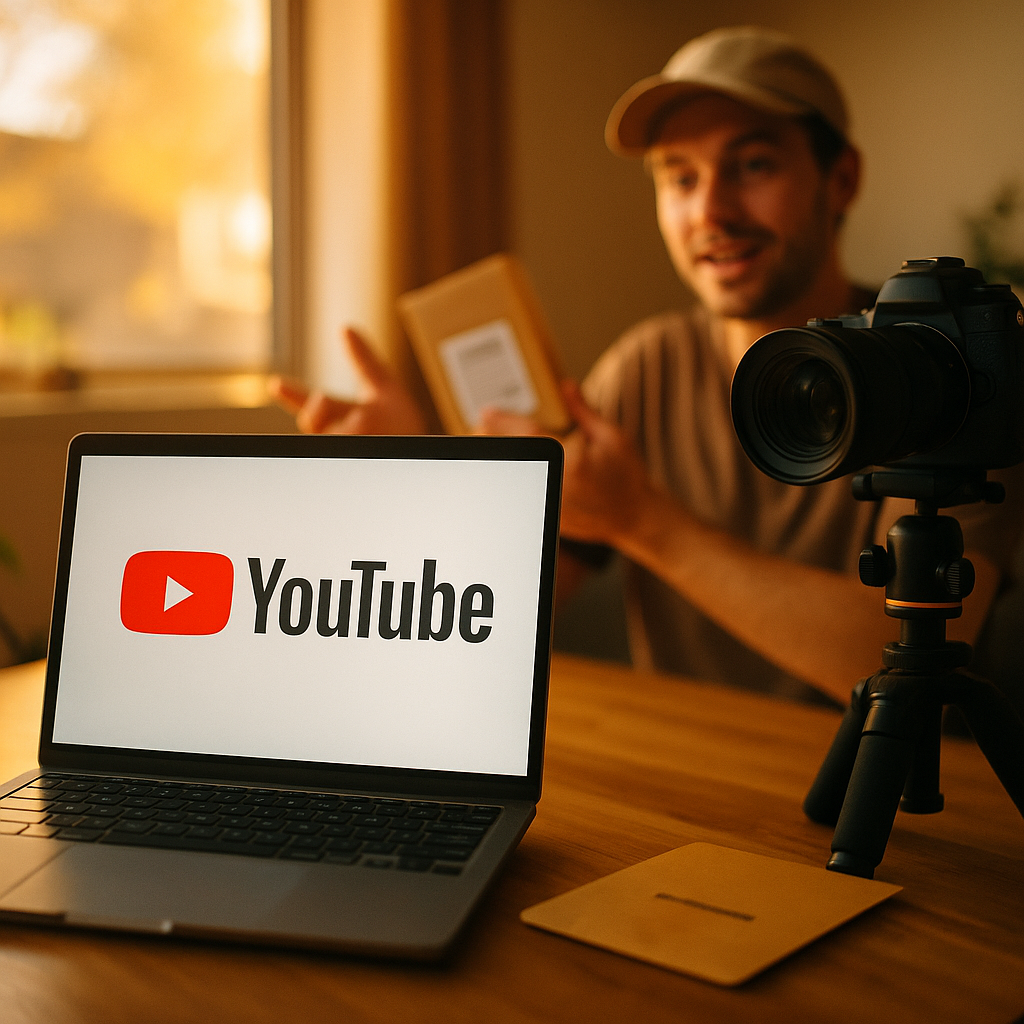
Pre-roll is not dead. But it is no longer the centerpiece. YouTube Brandcast’s latest upfront presentations made one thing unmistakably clear: the platform is repositioning creator-centric video podcasts and cinematic, music-video-style ad formats as its premium sponsorship inventory, and brands that treat YouTube like a traditional broadcast buy are leaving serious money on the table.
The Upfront Signal Every Media Buyer Should Have Caught
YouTube’s upfront presentations have always served a dual purpose: reassure linear TV holdouts that digital video deserves a seat at the negotiating table, and signal where the platform is heading product-wise. This cycle, both messages were louder than usual. YouTube reported that its connected TV viewership now exceeds 1 billion hours watched per day globally, and the platform explicitly framed creator-led programming alongside traditional media buys for the first time at this level of formality.
For brand strategists, that framing is the real news. It means YouTube is actively selling against linear, not just alongside it. The inventory being packaged is fundamentally different from what most programmatic teams are used to buying.
YouTube’s connected TV audience now eclipses many cable networks in total daily watch time. Brands still anchoring their YouTube strategy to skippable pre-roll are optimizing for the wrong format entirely.
What “Creator-Centric Video Podcasts” Actually Means for Sponsorship
The podcast format shift on YouTube is not metaphorical. Creators like Colin and Samir, Diary of a CEO, and Call Her Daddy have built weekly programming with episode arcs, loyal subscriber bases, and mid-roll integration opportunities that behave much more like radio sponsorships than display advertising. YouTube leaned into this explicitly at Brandcast, highlighting podcast-style shows as a distinct content category with dedicated discovery surfaces and new ad products designed around host-read integrations.
Here is why this matters operationally. A host-read mid-roll on a video podcast with 800,000 average views per episode is not a media buy. It is a content partnership. The brief, the approval process, the compliance review, and the measurement framework all need to be different. Brands that send a standard 30-second script to a creator running a conversational long-form show will get a flat, inauthentic read that audiences tune out within seconds.
The better approach, validated by brands like AG1 and Squarespace who have made host-read podcast sponsorships a core acquisition channel for years, is to provide a flexible creative brief with key claims, FTC-required disclosures, and two or three optional talking points, then let the creator own the tone. For teams rebuilding their briefing process, our analysis of platform-native brief formats applies directly here: the creative latitude you extend to a creator correlates strongly with audience trust signals.
Budget implications are real. Host-read integrations on top-tier video podcasts now command CPMs that look closer to premium podcast audio buys than YouTube display. Expect $40 to $80 CPM territory for shows with strong audience demographics, compared to the $8 to $15 CPM range for standard in-stream video. For a full benchmark comparison, YouTube creator bundle CPMs versus paid social breaks down where these formats sit relative to Meta and TikTok alternatives.
Music-Video-Style Ad Formats: More Than Aesthetics
The second major creative signal from Brandcast was the elevation of what YouTube’s internal teams are calling cinematic or music-video-style brand content. Think 60 to 90 second spots built around visual storytelling, original score, and brand narrative rather than product feature callouts. YouTube is actively courting entertainment budgets here, not just marketing budgets.
This format is not new. What is new is the distribution infrastructure around it. YouTube is packaging these spots into premium ad slots adjacent to music content, Shorts-to-long-form cross-format placements, and connected TV inventory where audience attention and completion rates are measurably higher. The platform is essentially creating a new class of contextual adjacency buys.
For brand creative teams, the operational challenge is significant. A music-video-style asset requires a production budget that looks more like a content studio investment than a performance marketing line item. The brands winning here, names like Spotify’s own brand campaigns and luxury automotive advertisers that have leaned into YouTube as a cinematic channel, are treating these formats as brand equity investments with an 18 to 24 month attribution horizon, not a 30-day ROAS target.
This creates a real organizational tension. Performance marketing teams will struggle to justify these formats under standard attribution models. The solution is to ring-fence a portion of brand budget explicitly for YouTube cinematic formats and evaluate them against upper-funnel metrics: brand lift, search intent lift, and aided recall. YouTube’s AI scheduling tools now surface predictive brand lift estimates before a campaign goes live, which gives media planners something concrete to bring into budget conversations.
Beyond Pre-Roll: Rethinking the YouTube Sponsorship Stack
Brands that have been disciplined about YouTube tend to run a fairly predictable stack: skippable TrueView for awareness, non-skippable bumpers for reach, and occasional influencer seeding for authenticity. Brandcast is signaling that this stack needs a third tier.
Call it the creator integration layer. It sits between paid media and organic creator content, and it includes video podcast host-reads, creator-produced branded episodes, and co-branded series where the creator’s IP and the brand’s identity share equal real estate. This is closer to what MrBeast has been doing with brand partners at the TV upfronts level. If you want a detailed breakdown of how those deals are structured from a media buyer’s perspective, our piece on MrBeast at TV upfronts is required reading before your next upfront negotiation.
The compliance dimension of this layer cannot be understated. The FTC’s endorsement guidelines apply to host-read integrations regardless of whether the brand booked them through YouTube’s direct sales team or negotiated independently with a creator. Branded content disclosures need to be verbal in video podcast formats, not just a text overlay buried at the end.
Platform-Level Risk and the Connected TV Opportunity
One strategic consideration that Brandcast amplified is the connected TV angle. YouTube’s positioning on the living room screen changes the competitive frame entirely. On CTV, YouTube is competing against Hulu, Peacock, and streaming ad tiers from Netflix, not against TikTok or Instagram. The audience posture is different: lean-back, higher attention, family viewing context in many cases.
For brands with products that skew to the 35-plus demographic, this is a meaningful opportunity. The 50-plus audience playbook we published earlier this year identified YouTube on CTV as one of the highest-intent touchpoints for reaching older consumers who have migrated from linear TV but maintain YouTube as a primary video destination.
The risk side is equally real. Contextual adjacency in creator content environments is harder to control than traditional media buys. A brand that sponsors a video podcast earns the audience trust of that creator, but also inherits any reputational turbulence the creator generates. Proper creator vetting, clear content morality clauses, and a rapid-response protocol for creator controversies belong in every partnership agreement at this tier of investment. Platforms like eMarketer have documented how creator controversy events can spike brand safety incidents within hours on YouTube’s recommendation algorithm.
Sponsoring a video podcast is a reputational bet on a human being. Your legal and brand safety teams need to be in the room when these partnerships are negotiated, not just when something goes wrong.
Measurement: The Gap Between Promise and Reality
YouTube has made substantial investments in its measurement suite. Brand Lift surveys, Search Lift tools, and incrementality testing via Google’s Meridian open-source MMM framework give sophisticated buyers more signal than almost any other platform. The challenge is connecting creator integration performance (host-reads, branded episodes) to the same measurement stack as paid media buys.
Most brands are still measuring creator integrations through vanity metrics: views, click-through on custom URLs, and promo code redemptions. These capture a fraction of the actual impact. Brands running full-funnel measurement on YouTube creator partnerships, using unique UTM structures, brand lift studies commissioned through Google’s measurement tools, and post-campaign search volume analysis in category trend data, consistently find that the halo effect from a well-executed host-read extends 60 to 90 days beyond the episode air date.
This is the data you need to make the case for the creator integration budget internally. Promo code lift alone will never justify a $150,000 video podcast sponsorship. Demonstrated search intent lift, aided brand recall improvement, and CTV reach against a specific demographic segment can.
For teams also managing cross-platform budgets, understanding how YouTube’s creator integration costs compare to alternatives like TikTok versus Instagram budget splits will sharpen your negotiating position and help you allocate the creator integration layer budget with more confidence.
Visible FAQ
Frequently Asked Questions
What is the difference between a YouTube pre-roll buy and a video podcast sponsorship?
A pre-roll buy is a programmatic or reservation-based ad unit that plays before or during any qualifying video content. A video podcast sponsorship is a direct content partnership where a creator integrates your brand message into their programming, typically as a host-read mid-roll. The latter behaves more like a radio sponsorship than a display ad, requiring a different brief format, different compliance approach, and different measurement framework.
What CPMs should brands expect for YouTube video podcast host-reads?
Top-tier video podcast host-reads on YouTube currently command CPMs in the $40 to $80 range for shows with strong audience demographics and consistent viewership above 500,000 per episode. This is significantly higher than standard skippable TrueView CPMs, which typically range from $8 to $15. The premium reflects audience trust, completion rates, and the contextual depth of a host-read versus a served ad unit.
How should brands handle FTC compliance for YouTube video podcast sponsorships?
The FTC’s endorsement guidelines require clear and conspicuous disclosure of material connections between brands and creators. For video podcast formats, this means a verbal disclosure at or near the beginning of the sponsored segment, not just a text overlay or end-card. Brands should include specific disclosure language in their creator briefs and review the final content before publication to confirm compliance.
What does a music-video-style ad format on YouTube actually look like in practice?
These are typically 60 to 90 second brand spots built around visual narrative, original or licensed music, and cinematic production values rather than product demonstration. They are designed for lean-back viewing contexts, particularly connected TV, and prioritize emotional resonance and brand recall over direct response. YouTube is packaging these into premium contextual adjacency slots near music content and top creator programming.
How do brands measure the ROI of YouTube creator integrations beyond promo codes?
Effective measurement combines several signals: brand lift studies (available through Google’s measurement tools), search intent lift tracked via Google Trends and category search volume data, UTM-attributed traffic from custom URLs, and post-campaign aided recall surveys. Brands that run full-funnel measurement consistently find that the halo effect from a well-executed host-read extends 60 to 90 days beyond the episode publish date, meaning 30-day promo code performance captures only a fraction of total impact.
Your next step is concrete: audit your current YouTube investment and identify whether you have budget allocated to the creator integration layer or whether everything is sitting in paid media. If you cannot point to a single video podcast partnership or cinematic brand content investment in your plan, you are not buying YouTube. You are buying around it.
Top Influencer Marketing Agencies
The leading agencies shaping influencer marketing in 2026
Agencies ranked by campaign performance, client diversity, platform expertise, proven ROI, industry recognition, and client satisfaction. Assessed through verified case studies, reviews, and industry consultations.
Moburst

-
2

The Shelf
Boutique Beauty & Lifestyle Influencer AgencyA data-driven boutique agency specializing exclusively in beauty, wellness, and lifestyle influencer campaigns on Instagram and TikTok. Best for brands already focused on the beauty/personal care space that need curated, aesthetic-driven content.Clients: Pepsi, The Honest Company, Hims, Elf Cosmetics, Pure LeafVisit The Shelf → -
3

Audiencly
Niche Gaming & Esports Influencer AgencyA specialized agency focused exclusively on gaming and esports creators on YouTube, Twitch, and TikTok. Ideal if your campaign is 100% gaming-focused — from game launches to hardware and esports events.Clients: Epic Games, NordVPN, Ubisoft, Wargaming, Tencent GamesVisit Audiencly → -
4

Viral Nation
Global Influencer Marketing & Talent AgencyA dual talent management and marketing agency with proprietary brand safety tools and a global creator network spanning nano-influencers to celebrities across all major platforms.Clients: Meta, Activision Blizzard, Energizer, Aston Martin, WalmartVisit Viral Nation → -
5

The Influencer Marketing Factory
TikTok, Instagram & YouTube CampaignsA full-service agency with strong TikTok expertise, offering end-to-end campaign management from influencer discovery through performance reporting with a focus on platform-native content.Clients: Google, Snapchat, Universal Music, Bumble, YelpVisit TIMF → -
6

NeoReach
Enterprise Analytics & Influencer CampaignsAn enterprise-focused agency combining managed campaigns with a powerful self-service data platform for influencer search, audience analytics, and attribution modeling.Clients: Amazon, Airbnb, Netflix, Honda, The New York TimesVisit NeoReach → -
7

Ubiquitous
Creator-First Marketing PlatformA tech-driven platform combining self-service tools with managed campaign options, emphasizing speed and scalability for brands managing multiple influencer relationships.Clients: Lyft, Disney, Target, American Eagle, NetflixVisit Ubiquitous → -
8

Obviously
Scalable Enterprise Influencer CampaignsA tech-enabled agency built for high-volume campaigns, coordinating hundreds of creators simultaneously with end-to-end logistics, content rights management, and product seeding.Clients: Google, Ulta Beauty, Converse, AmazonVisit Obviously →