


One Company. Two CMOs. A Signal Every Brand Strategist Should Read.
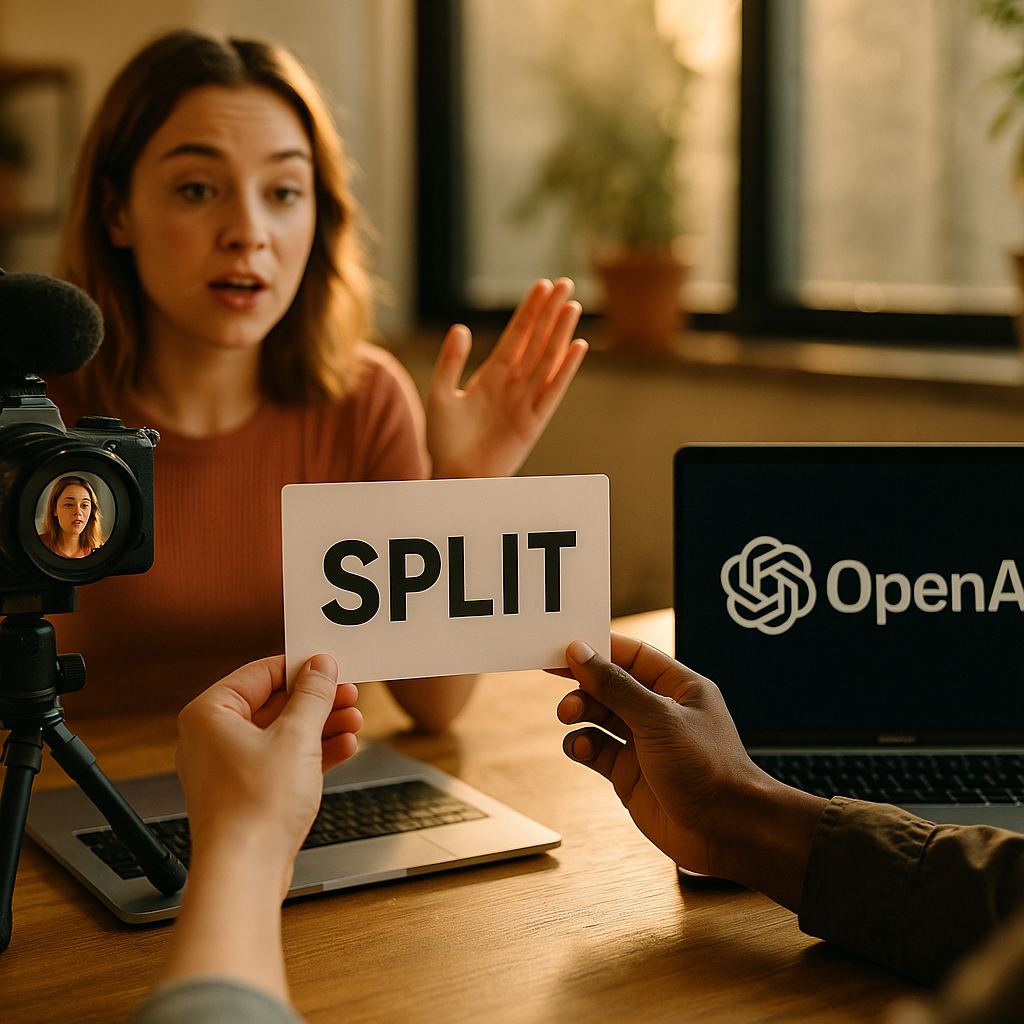
When a company appoints two Chief Marketing Officers simultaneously, that is not an org-chart accident. It is a structural confession about how fundamentally different two audiences have become. OpenAI’s decision to split its marketing leadership into distinct consumer and enterprise functions is one of the clearest signals yet that AI organizations are maturing beyond the “one-size-fits-all” go-to-market model — and it has direct implications for how brands should architect their creator partnership and AI advertising relationships.
Why the Dual-CMO Structure Matters Beyond OpenAI
OpenAI is not a startup wrestling with headcount decisions. It is arguably the most closely watched technology company in the world. When it publicly separates the function of marketing into a consumer-facing role and an enterprise-facing role, it is acknowledging something that brand leaders in adjacent categories have quietly known for years: the buying journey, the trust triggers, the content requirements, and the creator relationships needed to reach a developer or a CFO are categorically different from those needed to reach a curious consumer downloading ChatGPT on a Tuesday afternoon.
The structural logic here applies well beyond AI companies. Any brand with a meaningful B2B segment and a consumer segment is likely operating with a creator strategy designed for one audience and hoping it stretches to cover both. It rarely does.
The dual-CMO model is not an HR innovation. It is a strategic admission that audience bifurcation has become too significant to manage through a single marketing lens — and creator strategy must follow the same split.
Consider how this plays out in practice. A SaaS brand selling productivity tools might use YouTube creators to build awareness among individual users while simultaneously running LinkedIn thought leadership and hosted webinar content for procurement teams. These are not variations of the same campaign. They are different disciplines requiring different creator profiles, different compliance frameworks, and different measurement frameworks entirely.
Creator Partnerships in a Bifurcated Marketing Structure
For brand marketers managing influencer programs, the OpenAI model should prompt an immediate audit of roster architecture. The critical question is not “who are our creators?” but rather “which creators are mapped to which audience segment, and do we have distinct briefs, KPIs, and contractual structures for each?”
Consumer-facing creator programs prioritize reach, authenticity, and entertainment value. The metrics are engagement rate, content saves, share velocity, and downstream conversion from affiliate or discount code tracking. The creator profile skews toward relatability and category authority with general audiences. Think a personal finance creator on TikTok who explains a product in 45 seconds, not a whitepaper author.
Enterprise-facing creator programs are a different discipline entirely. Here, the value is in credibility transfer. A CISO, a VP of Engineering, or a Chief Procurement Officer is not moved by a lifestyle influencer. They respond to peer validation: a recognized practitioner who has used your product in a real operational context and can speak to implementation specifics. The creator profile here might be a former enterprise architect with 40,000 LinkedIn followers and a podcast that gets downloaded inside corporate firewalls. Reach is not the primary metric. Authority and audience quality are.
This distinction is already reshaping creator contract negotiations at sophisticated brands. Enterprise-oriented creator deals increasingly include longer exclusivity windows, specific use-case restrictions, and requirements for the creator to participate in sales enablement content like case study interviews or demo co-presentations. Consumer creator deals, by contrast, prioritize content volume and platform-native format flexibility.
AI Advertising Relationships Need the Same Structural Discipline
The dual-CMO model also signals a maturation in how AI tools are procured and deployed within marketing functions. Most brands are currently operating with an ad-hoc approach to AI advertising: one team experiments with Meta Advantage+ for consumer campaigns, another team manually runs LinkedIn campaigns for enterprise leads, and nobody has a unified view of how AI-generated or AI-optimized spend is being allocated across the two audiences.
As generative AI becomes embedded in every major ad platform — from Google’s Performance Max to Meta’s AI-driven creative tools to emerging placements inside AI search interfaces — the risk of letting a single undifferentiated strategy govern both consumer and enterprise spend becomes financially meaningful. The procurement and governance frameworks for AI ad spend are not mature enough at most brands to handle audience bifurcation at scale.
According to eMarketer, AI-driven ad placements are projected to represent a significant and growing share of total digital ad spend. The challenge is that the optimization signals these platforms use — purchase intent, engagement behavior, lookalike audience construction — are calibrated for consumer behavior patterns. Enterprise buying behavior follows a completely different decision-making timeline, often spanning weeks or months across a buying committee rather than a single-session conversion.
What Structural Separation Actually Looks Like in Practice
Brands that move first on this structural split will gain measurable operational advantages. Here is what the architecture looks like in practice:
- Separate creator rosters with distinct qualification criteria. Consumer creators are evaluated on audience demographics, platform-native performance, and cultural fit. Enterprise creators are evaluated on professional credibility, audience composition (percentage in target job function), and content depth capability. Tools like Sprout Social and dedicated influencer platforms can help segment roster management, though enterprise creator tracking often requires custom CRM integration.
- Distinct brief templates and compliance workflows. Consumer briefs optimize for platform-native authenticity. Enterprise briefs require accuracy review, legal approval for any claims about enterprise functionality, and often involve product teams in the content review cycle.
- Separate budget lines and measurement frameworks. Consumer creator spend is measured against reach, CPE, and revenue attribution through affiliate tracking. Enterprise creator spend is measured against pipeline influence, lead quality scoring, and sales cycle acceleration — metrics that require your marketing team to work in close coordination with sales ops.
- AI ad platform segmentation. Consumer AI ad campaigns run through platforms optimized for behavioral targeting. Enterprise campaigns require intent-based platforms like LinkedIn Campaign Manager or category-specific B2B display networks with account-based targeting capabilities.
The maturity stage of your AI investment will directly influence which of these structural changes you can implement immediately and which require a longer runway. Brands in early AI adoption stages should prioritize separating creator briefs and measurement frameworks first — it costs nothing and improves program clarity immediately.
The Creator Economy Implications Are Already Playing Out
The broader creator economy is already bifurcating in ways that validate this structural argument. Niche, high-authority creators with smaller but highly qualified audiences are commanding significant premium rates because brands are discovering that a 50,000-follower creator who speaks exclusively to senior IT decision-makers is worth more to an enterprise software brand than a 2-million-follower generalist. This is not a hypothesis. The VC investment patterns in creator platforms are following this exact bifurcation, with capital flowing toward vertically specialized creator ecosystems.
At the same time, consumer creator programs are scaling through volume and efficiency, with brands leaning on platform consolidation to manage larger rosters with fewer full-time staff. These are diverging operational models, not minor variations on a single theme.
Enterprise creator programs are not just consumer programs with a narrower audience. They are a fundamentally different discipline requiring different creator profiles, different content standards, and different success metrics.
Brands that recognize this early will build structural advantages in both segments. Those that continue to treat creator strategy as a monolithic function will find themselves progressively outperformed by competitors who have built the right roster architecture for each audience.
The AI component adds another layer of urgency. As creator content becomes a signal in generative AI recommendations, the type of content your enterprise creators produce will influence whether your brand gets cited in AI-generated responses to B2B queries. Consumer creator content drives engagement metrics. Enterprise creator content increasingly drives AI discoverability for high-intent professional queries. These are separate strategic objectives requiring separate investment logic.
For brands that also need to think about how AI search is reshaping discovery more broadly, the measurement frameworks for AI search visibility are evolving rapidly and should be mapped to your enterprise creator program from the start, not retrofitted later.
The practical next step: map your current creator roster against your audience segments this week, identify where the same creators are being asked to serve fundamentally different audiences, and build the brief and measurement separation before your next program cycle begins. The structural rethink does not require a new headcount. It requires a new framework.
Frequently Asked Questions
What is the OpenAI dual-CMO model?
OpenAI’s dual-CMO model refers to the company’s decision to separate its marketing leadership into two distinct roles: one focused on consumer-facing marketing (driving adoption of products like ChatGPT among individual users) and one focused on enterprise marketing (targeting businesses, procurement teams, and technical decision-makers). The structural split reflects the recognition that these two audiences require fundamentally different strategies, messaging, channels, and creator relationships.
How should brands restructure their creator programs in response to audience bifurcation?
Brands should audit their existing creator rosters and separate creators into consumer-facing and enterprise-facing categories with distinct briefs, KPIs, and contractual structures. Consumer creator programs should optimize for reach, engagement, and platform-native authenticity. Enterprise creator programs should prioritize professional credibility, audience quality (by job title and function), content depth, and alignment with sales enablement goals. Budget allocation, measurement frameworks, and compliance workflows should be separated accordingly.
Why is enterprise creator marketing different from consumer influencer marketing?
Enterprise creator marketing targets professional decision-makers who are part of a buying committee with long sales cycles, multiple stakeholders, and high scrutiny of vendor claims. The creator profiles that resonate with this audience are practitioners with demonstrated domain expertise and professional credibility, not lifestyle influencers with mass reach. The content formats, accuracy requirements, legal review processes, and success metrics are categorically different from consumer influencer campaigns.
How does AI advertising strategy need to change for bifurcated audiences?
Consumer AI advertising campaigns can leverage behavioral targeting and algorithmic optimization on platforms like Meta and Google, where purchase signals are available and conversion cycles are short. Enterprise AI advertising requires intent-based targeting, account-based marketing approaches, and platforms like LinkedIn that allow targeting by job title, company size, and professional function. Brands should maintain separate budget lines, platform strategies, and measurement frameworks for each audience segment rather than relying on a single AI-optimized campaign structure.
What metrics should brands use to measure enterprise creator program performance?
Enterprise creator programs should be measured against pipeline influence (how many qualified leads interacted with creator content before entering the sales funnel), lead quality scores, sales cycle length for creator-influenced leads versus uninfluenced leads, and content engagement by target job function. These metrics require close coordination between marketing operations and sales operations teams, and typically need CRM integration to track accurately. Reach and engagement rate alone are insufficient proxies for enterprise creator program value.
Top Influencer Marketing Agencies
The leading agencies shaping influencer marketing in 2026
Agencies ranked by campaign performance, client diversity, platform expertise, proven ROI, industry recognition, and client satisfaction. Assessed through verified case studies, reviews, and industry consultations.
Moburst

-
2

The Shelf
Boutique Beauty & Lifestyle Influencer AgencyA data-driven boutique agency specializing exclusively in beauty, wellness, and lifestyle influencer campaigns on Instagram and TikTok. Best for brands already focused on the beauty/personal care space that need curated, aesthetic-driven content.Clients: Pepsi, The Honest Company, Hims, Elf Cosmetics, Pure LeafVisit The Shelf → -
3

Audiencly
Niche Gaming & Esports Influencer AgencyA specialized agency focused exclusively on gaming and esports creators on YouTube, Twitch, and TikTok. Ideal if your campaign is 100% gaming-focused — from game launches to hardware and esports events.Clients: Epic Games, NordVPN, Ubisoft, Wargaming, Tencent GamesVisit Audiencly → -
4

Viral Nation
Global Influencer Marketing & Talent AgencyA dual talent management and marketing agency with proprietary brand safety tools and a global creator network spanning nano-influencers to celebrities across all major platforms.Clients: Meta, Activision Blizzard, Energizer, Aston Martin, WalmartVisit Viral Nation → -
5

The Influencer Marketing Factory
TikTok, Instagram & YouTube CampaignsA full-service agency with strong TikTok expertise, offering end-to-end campaign management from influencer discovery through performance reporting with a focus on platform-native content.Clients: Google, Snapchat, Universal Music, Bumble, YelpVisit TIMF → -
6

NeoReach
Enterprise Analytics & Influencer CampaignsAn enterprise-focused agency combining managed campaigns with a powerful self-service data platform for influencer search, audience analytics, and attribution modeling.Clients: Amazon, Airbnb, Netflix, Honda, The New York TimesVisit NeoReach → -
7

Ubiquitous
Creator-First Marketing PlatformA tech-driven platform combining self-service tools with managed campaign options, emphasizing speed and scalability for brands managing multiple influencer relationships.Clients: Lyft, Disney, Target, American Eagle, NetflixVisit Ubiquitous → -
8

Obviously
Scalable Enterprise Influencer CampaignsA tech-enabled agency built for high-volume campaigns, coordinating hundreds of creators simultaneously with end-to-end logistics, content rights management, and product seeding.Clients: Google, Ulta Beauty, Converse, AmazonVisit Obviously →