


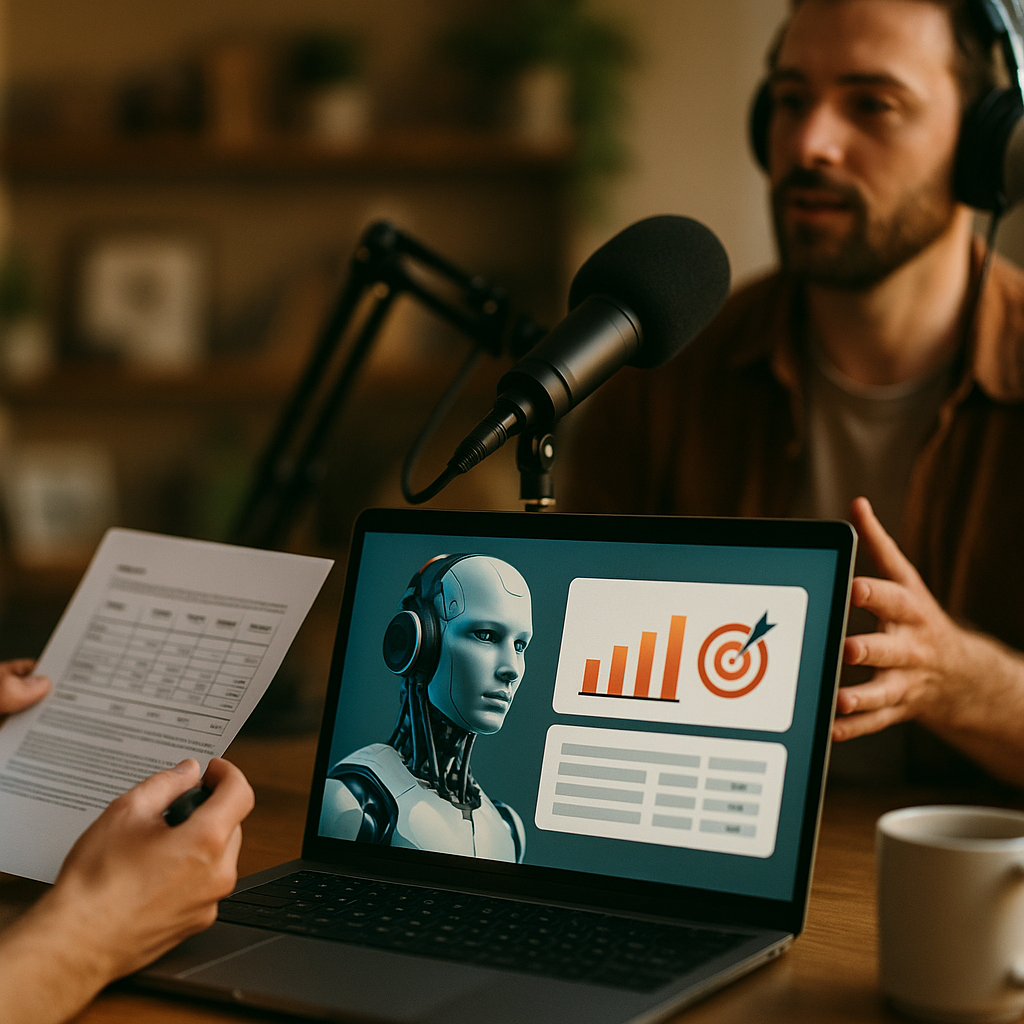
Sponsorship Briefs Are Overdue for a Rebuild
Video podcasts with AI-generated chapters, dynamic ad insertion, and automated clip repurposing are no longer an experimental format. They are a buying category, and the brands still using static sponsorship briefs designed for pre-roll or a 60-second host-read are leaving measurable performance on the table. The AI-enhanced video podcast format has quietly rewritten what a sponsorship should specify, what a CPM should reflect, and how audience targeting gets defined before a deal is signed.
What “AI-Enhanced” Actually Means in This Context
The phrase gets thrown around loosely, so let’s be precise. An AI-enhanced video podcast typically combines three operational layers that are now standard among top-tier creator shows on YouTube, Spotify Video, and RSS-distributed audio feeds.
Chapter generation uses transcript-based AI (Descript, Riverside, Podcastle) to auto-segment long-form recordings into navigable sections, each with metadata, timestamps, and SEO-readable titles. Dynamic ad insertion (DAI) uses programmatic systems like Megaphone, ART19, or Spotify’s own DAI infrastructure to serve sponsor messages contextually by chapter topic, listener geography, or device type, rather than hard-baking a single read into the file. Clip repurposing uses tools like Opus Clip, Munch, or custom creator workflows to pull the highest-engagement moments, auto-caption them, and redistribute them as Shorts, Reels, or TikToks, each carrying its own sponsorship integration potential.
Those three layers are not cosmetic upgrades. They fundamentally change the unit economics of a sponsorship deal.
When a single recording session produces a full episode, 12 AI-generated clips, and chapter-level ad placements across dynamic inventory, a brand is not buying one impression event. It is buying a content distribution system that compounds reach over weeks.
How This Breaks the Standard Sponsorship Brief
Most sponsorship briefs in active use were designed around a single deliverable: one episode, one host-read, one set of talking points. The brief might specify pre-roll, mid-roll, or post-roll placement and request a vanity URL or promo code. That model assumes a static asset with predictable reach at time of publish.
AI-enhanced formats destroy that assumption. Consider what a brand team actually needs to specify now.
- Chapter placement rights: Which chapters can carry a sponsor mention, and does the brand get exclusivity within topic-adjacent chapters? A cybersecurity brand sponsoring a tech podcast wants placement in the “AI tools” chapter, not the “celebrity news” segment that somehow made it into the same episode.
- DAI geography and device parameters: If Megaphone is serving your ad dynamically, can you restrict to U.S. listeners only? Can you exclude impressions on smart speakers where CTA completion is near zero?
- Clip repurposing rights and brand safety scope: When Opus Clip generates 15 derivative assets from one episode, which clips can feature your branded segment? Does the creator need approval rights before a clip with your product mention goes live on TikTok?
- Host-read consistency across formats: The 90-second mid-roll read will get trimmed to 8 seconds in a Reel. What mandatory brand message survives that compression? What visual super (text overlay) appears on the short-form version?
None of these specs exist in legacy brief templates. If you are still using a brief that does not address them, you are not managing the format. You are hoping the creator manages it for you.
For a practical framework on brief architecture for emerging formats, video podcast sponsorship strategy is a useful starting reference, and the specifics around hybrid format compliance are covered in hybrid video-podcast sponsorship briefs.
Audience Targeting Standards Are Changing
DAI changes targeting from a blunt instrument to a surgical one, but only if brands demand the right data upfront. The legacy standard was show-level demographics: “This podcast reaches adults 25-44, skewing male, interested in personal finance.” That data was pulled from a Spotify for Podcasters dashboard screenshot and presented in a media kit.
AI-enhanced shows can now deliver chapter-level engagement data, listener re-engagement rates by ad position, and geographic breakdowns by episode cluster. IAB podcast measurement guidelines have moved toward verified download and listen-through standards, and platforms like Spotify now offer advertisers audience segment matching through their Ad Analytics suite. The implication: brands should require chapter-level engagement reports, not just total episode downloads, as part of any pre-buy due diligence.
For shows distributing AI-generated clips to short-form platforms, the audience targeting conversation also has to include platform-specific performance. A clip that generates 400,000 views on TikTok does not automatically represent 400,000 impressions that match the brand’s target demo. The clip audience and the podcast subscriber base are often different cohorts. Your brief needs to specify which audience you are paying for and require the creator to report on both separately.
This connects directly to how AI podcast sponsorships and attribution standards are evolving, particularly as attribution across DAI and short-form clips requires multi-touch tracking rather than last-click promo codes.
CPM Benchmarking in an AI-Enhanced World
Standard podcast CPMs have historically ranged from $18 to $50 per thousand downloads, with host-read mid-rolls commanding the premium end. Those benchmarks made sense when you were buying a single audio asset. They are inadequate for pricing a format that generates compounding inventory.
Here is what brands are now wrestling with: if an AI-enhanced show produces a 90-minute episode plus 15 clips that collectively earn 2 million views across platforms over 30 days, what CPM framework applies? The episode itself might reach 80,000 downloads. The clips might drive 1.9 million additional impressions. Paying a flat host-read CPM against the 80,000 downloads alone radically underprices the deal for the creator and leaves the brand without contractual rights to the clip distribution.
The smarter approach emerging from forward-thinking buyers involves tiered CPM structures:
- Base CPM: Applied to verified episode downloads or streams, consistent with IAB-certified measurement.
- Clip impression CPM: A lower rate (typically $4 to $12) applied to verified short-form views from AI-repurposed clips, given lighter brand integration and shorter attention windows.
- Chapter placement premium: A flat fee or CPM uplift for exclusivity within specific topic chapters, particularly relevant for B2B brands targeting niche professional audiences.
For a direct benchmark comparison, video podcast CPM vs. YouTube pre-roll breaks down how host-read value stacks against programmatic alternatives. And AI podcast sponsorship CPMs address how hybrid formats are shifting rate card norms specifically.
On the measurement side, eMarketer data shows digital audio ad spend continuing to grow as podcast video formats attract cross-platform budgets that previously went to YouTube pre-roll. The competitive pressure is real, and CPM norms will continue moving upward for shows that can verify multi-platform reach with clean attribution.
Brands that build tiered CPM logic into their brief templates now will have negotiating clarity when every mid-tier creator show is offering “AI-powered content suites” by end of year. Get ahead of the rate card confusion before it hits your Q4 planning cycle.
What FTC and Brand Safety Rules Apply to AI-Generated Clips
This is the question most brand teams are not asking loudly enough. When an AI tool auto-generates a clip that includes a host-read brand mention and publishes it to TikTok with auto-generated captions, who is responsible for ensuring the disclosure is visible and compliant?
The FTC’s endorsement guidelines require material connections to be clearly disclosed in each individual piece of content, not just in the parent episode. An auto-published Reel with a buried caption and no visible disclosure is a liability, regardless of whether a human reviewed it before publishing. Brands need explicit contract language specifying that any AI-repurposed clip carrying a brand mention must include a FTC-compliant disclosure in both the caption and, for video clips, as a visible text overlay in the first five seconds.
Repurposing workflows using tools like Opus Clip can be configured to append standard disclosure text, but this has to be contractually required, not assumed. Brand safety parameters for clip distribution also need to specify platform-level restrictions: if your brand cannot appear adjacent to certain content categories on TikTok, that restriction must flow downstream to every auto-generated clip, not just the original episode.
For brands building out short-form content rights frameworks, creator content repurposing strategy covers the operational standards for multi-platform distribution from single shoots, which maps closely to the clip repurposing challenge here.
Rebuilding Your Brief Template: Where to Start
You do not need to rebuild from scratch. You need to add four sections to whatever brief template you are currently using.
First, add a format inventory section that lists every deliverable the AI workflow will produce: episode, chapters, clips, short-form assets, audiogram, and any SEO article generated from the transcript. Assign brand usage rights and approval requirements to each.
Second, add a DAI specifications block that defines geography, device type exclusions, contextual targeting parameters, and the creator’s DAI platform (Megaphone, ART19, etc.) so your ad ops team can coordinate tracking pixels or prefix URLs.
Third, add a clip brand safety protocol that specifies disclosure requirements, content category restrictions, and the approval window before AI-generated clips go live.
Fourth, add a tiered measurement framework that separates episode metrics from clip metrics and defines what constitutes a verified impression for each tier.
Audit your current brief against those four additions. Whatever is missing is your compliance gap.
FAQs
What is dynamic ad insertion in a video podcast, and why does it matter for sponsors?
Dynamic ad insertion (DAI) allows sponsor messages to be served programmatically at specific points in a podcast episode based on listener data such as geography, device type, or listening context. Rather than hard-baking a single ad read into the audio file, DAI lets brands target specific audience segments and update creative without re-recording. For sponsors, this means more precise audience matching, the ability to run time-sensitive offers, and better reporting on who actually heard the ad.
How should CPM benchmarks change for AI-enhanced podcast formats?
Traditional podcast CPMs are calculated against episode downloads. AI-enhanced formats generate additional inventory through AI-repurposed short-form clips and chapter-level placements. Brands should negotiate tiered CPM structures: a standard rate for verified episode downloads, a lower rate for short-form clip impressions, and a potential premium for chapter-level contextual placement. Paying a single flat CPM against downloads alone will either overpay for limited reach or underpay for a creator delivering multi-platform distribution.
Who is responsible for FTC disclosure on AI-generated clips that feature a brand mention?
Both the creator and the brand share responsibility. FTC guidelines require clear disclosure in each individual piece of content, not just the parent episode. Brands must include explicit contract language requiring FTC-compliant disclosure text and visible overlays in every AI-repurposed clip that carries a brand integration. Relying on the creator’s workflow to handle this automatically, without contractual specification, creates compliance risk for the sponsoring brand.
What should a sponsorship brief include for AI-repurposed clip rights?
The brief should specify which AI-generated clips may feature the brand mention, what disclosure requirements apply to each, whether the brand has an approval window before clips are published, which platforms clips can be distributed on, and what brand safety restrictions apply at the platform level. These rights should be itemized separately from the primary episode deliverable, with clear timelines and sign-off processes for each asset type.
How do chapter-level placements affect audience targeting for B2B sponsors?
Chapter-level placements allow B2B brands to buy adjacency to specific topic segments rather than sponsoring an entire episode that may cover unrelated subjects. A fintech brand, for example, can target placement exclusively within the “payments infrastructure” chapter of a broad tech show. This improves contextual relevance and reduces wasted impressions. It also requires brands to define target chapter categories in the brief and confirm the creator’s AI chapter generation tool produces consistent, topic-accurate segmentation.
Top Influencer Marketing Agencies
The leading agencies shaping influencer marketing in 2026
Agencies ranked by campaign performance, client diversity, platform expertise, proven ROI, industry recognition, and client satisfaction. Assessed through verified case studies, reviews, and industry consultations.
Moburst

-
2

The Shelf
Boutique Beauty & Lifestyle Influencer AgencyA data-driven boutique agency specializing exclusively in beauty, wellness, and lifestyle influencer campaigns on Instagram and TikTok. Best for brands already focused on the beauty/personal care space that need curated, aesthetic-driven content.Clients: Pepsi, The Honest Company, Hims, Elf Cosmetics, Pure LeafVisit The Shelf → -
3

Audiencly
Niche Gaming & Esports Influencer AgencyA specialized agency focused exclusively on gaming and esports creators on YouTube, Twitch, and TikTok. Ideal if your campaign is 100% gaming-focused — from game launches to hardware and esports events.Clients: Epic Games, NordVPN, Ubisoft, Wargaming, Tencent GamesVisit Audiencly → -
4

Viral Nation
Global Influencer Marketing & Talent AgencyA dual talent management and marketing agency with proprietary brand safety tools and a global creator network spanning nano-influencers to celebrities across all major platforms.Clients: Meta, Activision Blizzard, Energizer, Aston Martin, WalmartVisit Viral Nation → -
5

The Influencer Marketing Factory
TikTok, Instagram & YouTube CampaignsA full-service agency with strong TikTok expertise, offering end-to-end campaign management from influencer discovery through performance reporting with a focus on platform-native content.Clients: Google, Snapchat, Universal Music, Bumble, YelpVisit TIMF → -
6

NeoReach
Enterprise Analytics & Influencer CampaignsAn enterprise-focused agency combining managed campaigns with a powerful self-service data platform for influencer search, audience analytics, and attribution modeling.Clients: Amazon, Airbnb, Netflix, Honda, The New York TimesVisit NeoReach → -
7

Ubiquitous
Creator-First Marketing PlatformA tech-driven platform combining self-service tools with managed campaign options, emphasizing speed and scalability for brands managing multiple influencer relationships.Clients: Lyft, Disney, Target, American Eagle, NetflixVisit Ubiquitous → -
8

Obviously
Scalable Enterprise Influencer CampaignsA tech-enabled agency built for high-volume campaigns, coordinating hundreds of creators simultaneously with end-to-end logistics, content rights management, and product seeding.Clients: Google, Ulta Beauty, Converse, AmazonVisit Obviously →