


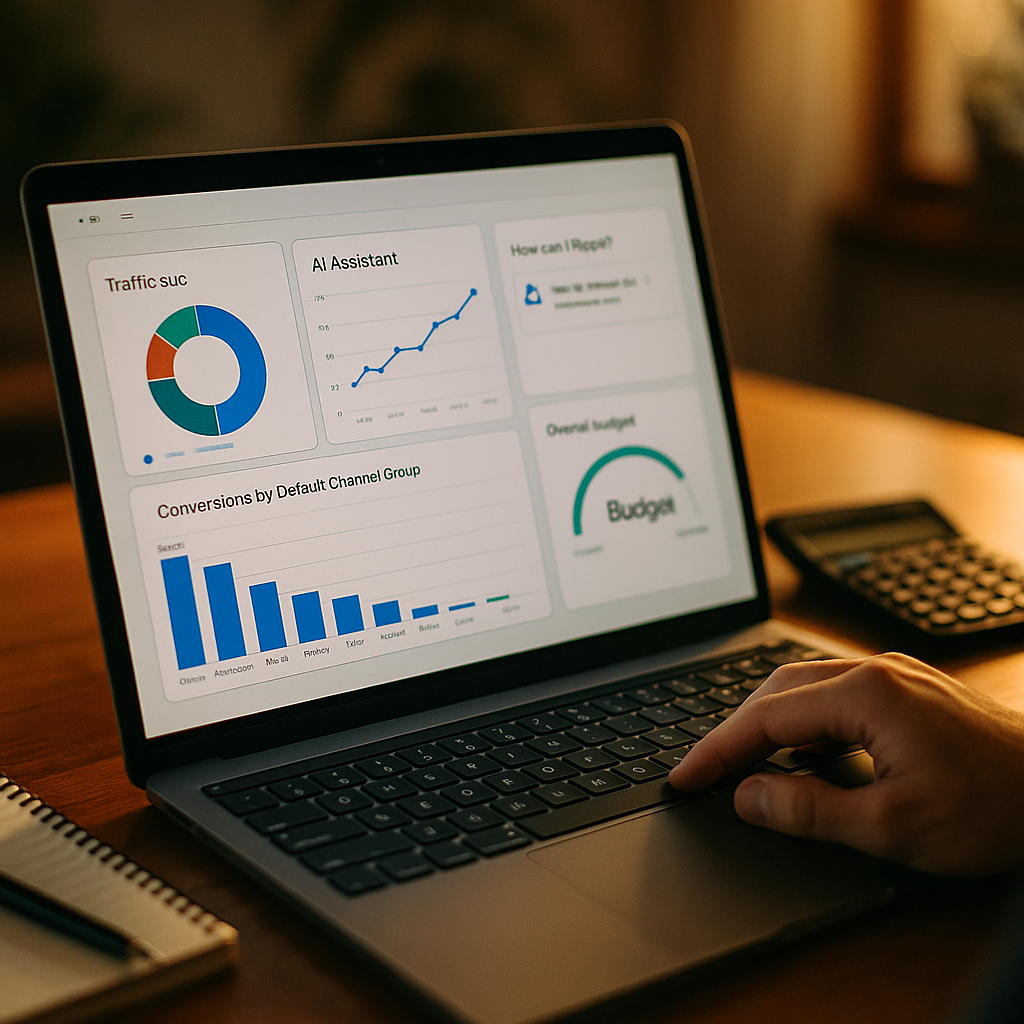
AI Referral Traffic Is Real — And Most Brands Are Flying Blind
ChatGPT, Gemini, Perplexity, and Copilot are now sending measurable referral traffic to brand websites. According to Statista, AI assistant usage among adults has grown sharply year-over-year, and attribution data from multiple analytics teams confirms that generative engine sessions are converting at rates that rival — and in some categories, beat — branded paid search. The question is no longer whether AI referral traffic matters. It is whether your GA4 configuration is actually capturing it.
Most setups are not. Default channel groupings in GA4 lump AI assistant traffic into “Direct” or misclassify it as “Referral,” making it invisible for budget decisions. That gap is a serious measurement risk for any brand running an influencer or content program with visibility goals tied to generative search.
What the New AI Assistant Channel Actually Is
Google introduced a dedicated AI Assistant channel grouping in GA4’s default channel definitions. When configured correctly, it segments sessions originating from AI tools like ChatGPT (chat.openai.com), Gemini (gemini.google.com), Perplexity (perplexity.ai), Microsoft Copilot (copilot.microsoft.com), and Claude (claude.ai) into a named channel rather than letting them bleed into catch-all buckets.
The practical upside is significant. Instead of wondering whether your content strategy is generating AI citations that convert, you get a distinct session cohort with its own engagement metrics, conversion paths, and revenue attribution. For brands running generative search optimization (GSO) programs, this is the measurement layer that closes the loop.
Our detailed walkthrough on GA4 AI channel attribution covers the technical configuration steps. But the setup is only half the problem. The harder challenge is knowing what to do with the data once you have it.
Configuring the Channel: A Practical Step-by-Step
Start in GA4’s Admin panel. Navigate to Data Settings, then Channel Groups. You will find either Google’s default AI Assistant channel already present (if your property was updated post-rollout) or you will need to create a custom channel group rule.
For a custom rule, set the condition to match sessions where Session Source contains any of the following: chat.openai.com, perplexity.ai, gemini.google.com, copilot.microsoft.com, claude.ai, you.com, or bing.com/chat. Label this group “AI Assistant.” If you are seeing significant traffic from newer tools — Grok from xAI has started appearing in referral logs — add those source domains as they emerge.
A few things to watch:
- Some AI tools strip referrer headers, meaning sessions arrive with no source. Those will still land in “Direct.” You cannot fix this with channel rules alone.
- UTM parameters appended to links shared inside AI-generated responses are rare but not zero. If you are running paid placements inside AI surfaces (a small but growing format), ensure those campaigns use utm_medium=ai-assistant to preserve attribution.
- Apply the new channel group to your existing Explorations reports so you can backfill comparisons with historical data. GA4 applies channel rules retroactively to existing data within the lookback window.
Validate the setup by cross-referencing your GA4 Acquisition reports against server-side logs or a tool like Cloudflare Analytics. If the session volumes roughly align, your configuration is working.
AI referral sessions that arrive with clear source attribution consistently show lower bounce rates and higher pages-per-session than generic organic traffic — suggesting users arriving from generative engine recommendations arrive with stronger contextual intent.
Comparing Generative Engine Sessions Against Your Organic Baseline
Once the AI Assistant channel is live and accumulating 30 or more days of clean data, run a side-by-side comparison against your organic search baseline. Use GA4’s Exploration module with a free-form report. Set rows to Channel Grouping, and pull in these metrics: Sessions, Engaged Sessions, Engagement Rate, Average Session Duration, Events per Session, and your primary conversion event (purchase, lead form, demo request).
What you are looking for is not raw volume — AI referral traffic will almost certainly be smaller than organic search — but intent quality signals. Specifically:
- Engagement rate above 60% suggests the AI tool recommended your content in a context that matched user intent well.
- Conversion rate parity or better versus branded organic is the green light for increasing content investment targeting AI citation.
- High session duration with low conversion often signals a product-consideration phase. These users need retargeting, not a different acquisition strategy.
Segment further by landing page. AI tools tend to cite specific pages — comparison guides, ingredient explainers, expert roundups — rather than homepages. Knowing which pages are driving AI referral sessions tells you exactly where to concentrate your content team’s optimization energy. For brands already running GSO scoring on creator content, this data becomes a feedback loop: pages scoring high for AI readiness should show up in your AI referral acquisition reports.
Intent Quality and What It Means for Budget Allocation
Here is where most brands make the wrong call. They see small AI referral session counts and deprioritize optimization efforts. That is a category error. AI assistant sessions are self-selecting for intent. A user who asks Perplexity “what is the best creatine supplement for endurance athletes” and clicks through to your product page has already been filtered through a recommendation layer. That is a fundamentally different session than someone clicking a generic organic result for “best supplements.”
The smart allocation move is to treat AI referral traffic like high-intent paid search: measure cost-per-acquisition against it, not just volume. Calculate what you spend on content, influencer partnerships, and technical SEO that contributes to AI citations, then divide by conversions attributed to the AI Assistant channel. If your CPA from AI referral sessions is lower than your blended paid search CPA, you have a clear case for reallocating budget toward content and creator programs optimized for generative engine visibility.
Attribution tools are catching up here. Viant’s AI attribution signals and similar platforms are beginning to connect creator content performance to downstream generative engine citations. That linkage — from creator post to AI recommendation to site session to purchase — is the unified measurement story that CMOs need to make the case internally.
Also worth assessing: whether your influencer content library is structured for LLM discoverability. There is a direct line between how well your content library is audited for LLM citations and whether AI tools surface your brand in relevant queries. GA4’s AI channel data tells you the outcome; the content audit tells you the input.
Practical Spend Scenarios by Intent Tier
Not all AI referral sessions carry the same weight. Build a simple tier framework:
- Tier 1 (High Intent): Sessions landing on product pages, pricing pages, or “best X for Y” comparison content with conversion rates above your organic average. Allocate more content production budget here. These pages are your AI citation anchors.
- Tier 2 (Mid Intent): Sessions landing on educational or category content with high engagement but low direct conversion. Invest in retargeting sequences for these users. Do not abandon the content — strengthen the internal linking toward Tier 1 pages.
- Tier 3 (Low Intent or Ambiguous): Sessions with high bounce rates from AI sources. Audit these landing pages against the prompts that likely generated the citation. The content may be winning AI recommendations for queries that are too far from purchase intent.
For brands operating complex creator programs, connecting this tiered view to your broader unified attribution model for paid and organic content is the natural next step. It prevents siloed decision-making where the influencer team optimizes for reach while the SEO team optimizes for AI citations, and no one is tracking the same conversion goal.
Google’s own GA4 documentation is the authoritative reference for channel rule syntax and lookback window settings. Cross-referencing with HubSpot’s attribution guides can help if you are syncing GA4 data into a CRM conversion workflow.
The brands gaining ground on AI referral attribution are not spending more — they are measuring smarter. A correctly configured GA4 AI Assistant channel costs nothing to implement and can redirect thousands in misallocated spend within a single reporting quarter.
One final note on data hygiene: review your referral exclusion list in GA4 to ensure none of the AI tool domains are accidentally excluded. It is a common misconfiguration that silently routes valid AI sessions into Direct traffic. Check the list under Admin, Data Streams, More Tagging Settings, List Unwanted Referrals. eMarketer research consistently shows that marketers undercount referral-driven conversions due to tagging gaps — AI traffic is the newest version of that perennial problem.
Start with the GA4 configuration this week. Pull a 60-day AI Assistant channel report. Compare CPA against your paid search baseline. The data will tell you exactly where to move budget.
Frequently Asked Questions
What is the AI Assistant channel in GA4, and when was it introduced?
Google added a default AI Assistant channel grouping to GA4’s channel definitions to help brands segment traffic arriving from generative AI tools like ChatGPT, Gemini, Perplexity, and Microsoft Copilot. It allows marketers to separate these sessions from organic, direct, and generic referral buckets for cleaner attribution analysis.
Which AI platforms are included in the AI Assistant channel grouping?
The primary sources to include are chat.openai.com (ChatGPT), perplexity.ai, gemini.google.com, copilot.microsoft.com, claude.ai, and you.com. As new AI tools gain traction, marketers should monitor their referral source reports and add new domains to the custom channel rule accordingly.
Why is AI referral traffic sometimes showing up as Direct in GA4?
Many AI assistants strip HTTP referrer headers before passing users to external sites, which causes sessions to arrive with no source information and default to Direct. This is a known limitation. Server-side logging and UTM-tagged links within AI-generated content are partial workarounds, but some dark traffic from AI tools is currently unavoidable.
How should brands compare AI assistant sessions against organic search performance?
Use GA4’s Exploration module to build a free-form report segmented by channel grouping. Compare engagement rate, average session duration, events per session, and primary conversion rate. The goal is to assess intent quality, not raw session volume. AI referral sessions that convert at or above your branded organic rate signal high-value acquisition worth increased content investment.
How does AI referral traffic connect to influencer content strategy?
Creator-produced content — particularly long-form reviews, comparison guides, and expert-voice articles — is frequently cited by generative AI tools answering product-related queries. Brands that audit their influencer content for LLM citation readiness and track which pages drive AI assistant referral sessions can build a direct feedback loop between creator output and generative engine acquisition.
Should AI referral traffic influence influencer and content budget allocation?
Yes, especially if AI assistant sessions show lower CPA than paid search. Brands should calculate a fully-loaded cost per acquisition for content and creator spend that contributes to AI citations, then compare it against paid channel CPAs. If AI referral CPA is competitive, it justifies shifting incremental budget toward content formats and creator partnerships that generate AI-visible coverage.
Top Influencer Marketing Agencies
The leading agencies shaping influencer marketing in 2026
Agencies ranked by campaign performance, client diversity, platform expertise, proven ROI, industry recognition, and client satisfaction. Assessed through verified case studies, reviews, and industry consultations.
Moburst

-
2

The Shelf
Boutique Beauty & Lifestyle Influencer AgencyA data-driven boutique agency specializing exclusively in beauty, wellness, and lifestyle influencer campaigns on Instagram and TikTok. Best for brands already focused on the beauty/personal care space that need curated, aesthetic-driven content.Clients: Pepsi, The Honest Company, Hims, Elf Cosmetics, Pure LeafVisit The Shelf → -
3

Audiencly
Niche Gaming & Esports Influencer AgencyA specialized agency focused exclusively on gaming and esports creators on YouTube, Twitch, and TikTok. Ideal if your campaign is 100% gaming-focused — from game launches to hardware and esports events.Clients: Epic Games, NordVPN, Ubisoft, Wargaming, Tencent GamesVisit Audiencly → -
4

Viral Nation
Global Influencer Marketing & Talent AgencyA dual talent management and marketing agency with proprietary brand safety tools and a global creator network spanning nano-influencers to celebrities across all major platforms.Clients: Meta, Activision Blizzard, Energizer, Aston Martin, WalmartVisit Viral Nation → -
5

The Influencer Marketing Factory
TikTok, Instagram & YouTube CampaignsA full-service agency with strong TikTok expertise, offering end-to-end campaign management from influencer discovery through performance reporting with a focus on platform-native content.Clients: Google, Snapchat, Universal Music, Bumble, YelpVisit TIMF → -
6

NeoReach
Enterprise Analytics & Influencer CampaignsAn enterprise-focused agency combining managed campaigns with a powerful self-service data platform for influencer search, audience analytics, and attribution modeling.Clients: Amazon, Airbnb, Netflix, Honda, The New York TimesVisit NeoReach → -
7

Ubiquitous
Creator-First Marketing PlatformA tech-driven platform combining self-service tools with managed campaign options, emphasizing speed and scalability for brands managing multiple influencer relationships.Clients: Lyft, Disney, Target, American Eagle, NetflixVisit Ubiquitous → -
8

Obviously
Scalable Enterprise Influencer CampaignsA tech-enabled agency built for high-volume campaigns, coordinating hundreds of creators simultaneously with end-to-end logistics, content rights management, and product seeding.Clients: Google, Ulta Beauty, Converse, AmazonVisit Obviously →