


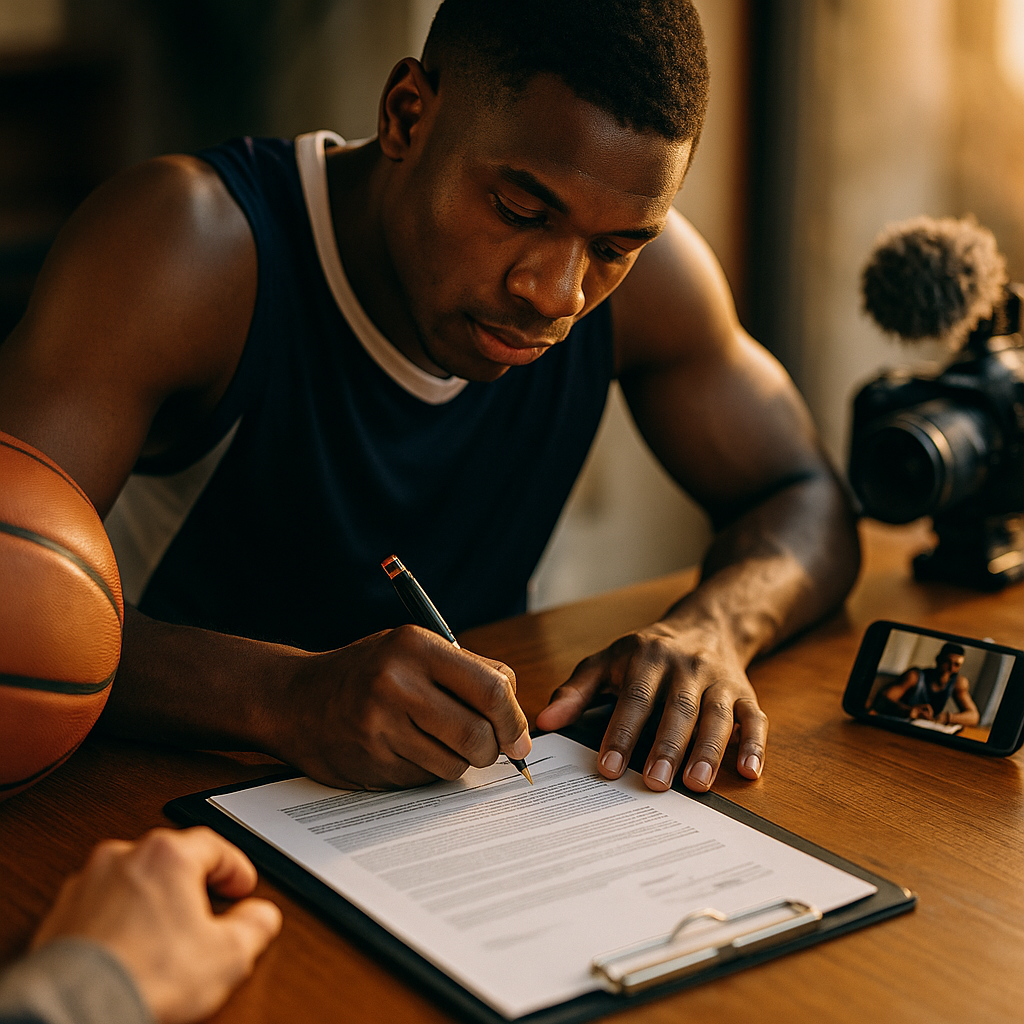
Brands licensing a centralized athlete creator collective are making a structural bet that most legal teams aren’t equipped to underwrite. A single poorly scoped network agreement can expose you to content rights conflicts across dozens of players simultaneously — and the FTC won’t care that you thought the network handled disclosure.
Why Collective Deals Break Differently Than Individual Talent Contracts
When you sign one athlete, the risk surface is contained. One NIL holder, one social footprint, one set of competing brand relationships to audit. When you license a collective — think a basketball training network, a track-and-field creator pod, or a multi-sport athlete group built around a specific demographic — the risk multiplies in ways most brand teams don’t model before signing.
The core problem: collective agreements create the illusion of simplicity. One contract, one invoice, one point of contact. But underneath that clean facade sits a web of individual player rights, overlapping platform terms, league rules (especially relevant given structures like MLB Players Inc. creator network rights), and FTC obligations that the umbrella agreement may not actually address at the player level.
Brands that treat a collective deal like a media buy — pay the fee, receive the posts — are the ones that end up in disputes over who actually owned the content rights they thought they’d licensed.
Content Rights: Who Owns What After the Campaign Ends
This is where collective contracts most frequently collapse. A brand negotiates usage rights with the collective entity, but the underlying IP often belongs to individual athletes. If the collective’s operating agreement doesn’t include a proper rights assignment from each player to the entity, your license is built on a foundation that doesn’t legally exist.
Your contract needs to explicitly address four rights layers:
- Name, image, and likeness (NIL) rights at the individual player level, not just the collective entity
- Platform-specific usage rights — a TikTok video, an Instagram Reel, and a YouTube Short are functionally different assets requiring separate scoping
- Derivative content rights, including whether you can use AI tools to remix or adapt the content (a gap most contracts still miss — see the broader issue of AI remix clauses brands need to address)
- Archival and republication rights post-campaign, including paid amplification via dark posts or whitelisting
Demand a rights chain of title as a contract exhibit. Every athlete in the collective should have a documented assignment of their NIL and content rights to the collective entity for the specific scope of your campaign. Without it, you’re relying on trust, not law.
If the collective can’t produce individual NIL assignments from each player within 10 business days of your due diligence request, treat that as a structural red flag — not a paperwork delay.
Exclusivity Windows: Where Brands Routinely Overpay and Under-Protect
Exclusivity in a collective agreement operates on three planes, and conflating them is expensive.
Category exclusivity prevents any player in the collective from endorsing a direct competitor during your window. This is the standard ask, but the definition of “category” is where the real negotiation lives. A sports nutrition brand needs to define whether “category” means protein supplements broadly, or specifically their core SKU set. Vague category language gets exploited.
Platform exclusivity is increasingly relevant in the era of platform-native content deals. If you’re paying for exclusive TikTok content, your agreement should specify whether athletes are restricted from organic competitor mentions on that platform, or only from paid brand content. These are different things.
Collective-vs-individual exclusivity is the clause most brands forget entirely. Your agreement might lock the collective entity, but individual players may have pre-existing personal endorsement deals that sit outside the collective’s scope. You need an exhibit disclosing every player’s active brand relationships at signing, with a rep-and-warranty that none conflict with your campaign.
Window duration matters too. Sports seasonality creates natural pressure: a collective built around March Madness talent has a compressed activation window, which means your exclusivity period needs pre-season and post-season buffers built in, not just coverage during the tournament run itself.
Revenue Share Structures That Align Incentives
Flat fees for collectives are the lazy option. They work, but they don’t create the performance incentives that make athlete creator content actually perform. A layered revenue share model is more operationally complex, but the ROI improvement is measurable when structured correctly.
A workable framework looks like this: a base guarantee paid to the collective entity on contract execution, a performance tier triggered by aggregate reach or engagement benchmarks across the collective’s combined output, and an individual incentive layer that flows specific bonuses to players who hit personal content milestones. That last element is critical — it gives individual athletes a financial reason to prioritize your brand even within a collective structure where attention gets divided.
When structuring the collective’s internal revenue distribution, request a copy of the collective’s distribution formula as a contract exhibit. You’re not managing their finances, but you need to know whether the revenue share model creates perverse incentives. If 80% of the payout flows to three marquee players and the remaining 12 athletes see minimal compensation, your content volume commitments from the full roster become unreliable.
For brands working through intermediary agencies, also review how creator program governance after agency consolidation affects fee transparency and revenue pass-through.
FTC Disclosure in a Multi-Player Environment
The FTC’s endorsement guidelines don’t recognize “we’re a collective” as a disclosure structure. Every individual piece of sponsored content requires individual disclosure. That means if 15 athletes post about your brand on the same day as part of a coordinated campaign, each post needs its own #ad or #sponsored disclosure — properly labeled, not buried, not abbreviated.
The operational risk here is real. Collectives often manage posting schedules loosely, relying on informal instructions rather than enforced compliance protocols. Your contract needs to mandate disclosure at the individual post level, require a pre-posting compliance review for each athlete’s content, and establish financial penalties for missed disclosures.
Don’t assume the collective will handle this. Recent FTC referral patterns make clear that brands bear liability when their athletes fail to disclose, regardless of what the intermediary agreed to do. Build your own disclosure audit process into the campaign workflow. Require screenshots of live posts with visible disclosures as a deliverable condition for payment release.
Also worth noting: if any content involves AI-generated visuals, voiceovers, or synthetic elements, the FTC’s dual disclosure rules for AI and influencer campaigns layer on top of standard endorsement disclosure requirements. Collective agreements that don’t address AI-assisted content are leaving a compliance gap that is increasingly being examined.
Disclosure failures in a 20-player collective can generate 20 separate FTC violation triggers from a single poorly managed campaign day. Compliance infrastructure isn’t optional at this scale.
Contract Audit Provisions and Termination Rights
Collective agreements need audit rights that go deeper than standard influencer contracts. You should be able to verify that individual athletes are actually members of the collective at the time of posting (roster changes happen), that the revenue distribution is operating as disclosed, and that no undisclosed brand relationships have emerged since signing.
Termination clauses require player-level granularity. If one athlete in the collective creates a brand safety incident, you need a mechanism to remove that individual from your campaign without unwinding the entire collective agreement. Include a player substitution right with defined conditions, rather than relying on a general termination clause that forces an all-or-nothing decision.
Brands that have gone through M&A or agency consolidation already know how messy inherited contracts can be. A proactive creator contract audit framework applied before the collective agreement executes saves significant remediation cost later. Build the audit provision into the initial deal, not as an afterthought.
One last structural element that often gets skipped: a morality clause that covers the collective entity itself, not just individual players. If the collective’s leadership faces legal or reputational issues, your brand shouldn’t be contractually trapped in a partnership with a damaged entity. Define what constitutes grounds for collective-level termination with the same specificity you’d apply to individual talent.
For campaigns that include cross-border athlete creators, EU Digital Services Act requirements create additional disclosure and platform obligations worth addressing in the master agreement before any European-market content is activated.
What a Defensible Collective Agreement Actually Contains
Pull your next collective contract against this checklist before legal review:
- Individual NIL assignments from each athlete to the collective entity, attached as exhibits
- Explicit content rights scope covering platform, format, AI adaptation, and post-campaign usage
- Category exclusivity with defined brand category, specific SKU scope, and carve-outs for pre-existing deals
- Platform exclusivity parameters distinguishing paid from organic content
- Layered compensation with base fee, performance tiers, and individual incentive mechanics
- Collective revenue distribution formula as a contract exhibit
- Per-post FTC disclosure mandate with financial penalties for noncompliance
- Player-level audit rights covering membership verification and brand relationship disclosure
- Individual player removal rights without full contract termination
- Collective-entity morality clause with defined termination triggers
Run your contract draft against the FTC endorsement guidance directly. Then have a sports law specialist review the NIL rights chain before execution, not after your first content deliverable is live.
Frequently Asked Questions
What’s the biggest legal risk in a collective athlete creator agreement?
The most common failure point is content rights ownership. Brands often license rights from the collective entity without verifying that individual athletes have properly assigned their NIL and content rights to that entity. If those assignments don’t exist, the brand’s license may be legally unenforceable.
Does the FTC hold brands responsible for athlete disclosure failures in a collective campaign?
Yes. The FTC’s endorsement guidelines apply at the individual post level. Brands cannot delegate disclosure compliance entirely to the collective and remain protected. If an athlete fails to disclose, the brand that benefited from the promotion bears liability exposure, regardless of what the collective contract required.
How should exclusivity be scoped in a multi-player collective deal?
Exclusivity should be defined on three levels: category exclusivity (competitor brands in your defined product category), platform exclusivity (whether restrictions apply to organic content or only paid/branded posts), and individual-vs-collective scope (ensuring pre-existing personal endorsements are disclosed and do not conflict with your campaign).
What revenue share model works best for athlete collectives?
A layered structure works best for ROI alignment: a guaranteed base fee paid to the collective entity at signing, a performance tier triggered by aggregate engagement or reach benchmarks, and individual athlete bonuses for hitting specific content milestones. This model gives both the collective and individual players financial incentives to prioritize campaign performance.
Can a brand terminate a single athlete from a collective deal without ending the whole agreement?
Only if the contract explicitly provides for it. Brands should negotiate a player removal or substitution clause that allows them to exclude a specific athlete from campaign deliverables in response to brand safety issues, without triggering a full contract termination. Generic termination clauses typically don’t provide this granularity.
Do AI-generated content clauses apply to athlete collective agreements?
Yes. If any campaign content involves AI-assisted visuals, voiceovers, or synthetic elements, FTC dual disclosure requirements for AI-generated content apply on top of standard endorsement disclosure rules. Collective agreements should explicitly define whether athletes are permitted to use AI tools in their content and what additional disclosure obligations that creates.
Top Influencer Marketing Agencies
The leading agencies shaping influencer marketing in 2026
Agencies ranked by campaign performance, client diversity, platform expertise, proven ROI, industry recognition, and client satisfaction. Assessed through verified case studies, reviews, and industry consultations.
Moburst

-
2

The Shelf
Boutique Beauty & Lifestyle Influencer AgencyA data-driven boutique agency specializing exclusively in beauty, wellness, and lifestyle influencer campaigns on Instagram and TikTok. Best for brands already focused on the beauty/personal care space that need curated, aesthetic-driven content.Clients: Pepsi, The Honest Company, Hims, Elf Cosmetics, Pure LeafVisit The Shelf → -
3

Audiencly
Niche Gaming & Esports Influencer AgencyA specialized agency focused exclusively on gaming and esports creators on YouTube, Twitch, and TikTok. Ideal if your campaign is 100% gaming-focused — from game launches to hardware and esports events.Clients: Epic Games, NordVPN, Ubisoft, Wargaming, Tencent GamesVisit Audiencly → -
4

Viral Nation
Global Influencer Marketing & Talent AgencyA dual talent management and marketing agency with proprietary brand safety tools and a global creator network spanning nano-influencers to celebrities across all major platforms.Clients: Meta, Activision Blizzard, Energizer, Aston Martin, WalmartVisit Viral Nation → -
5

The Influencer Marketing Factory
TikTok, Instagram & YouTube CampaignsA full-service agency with strong TikTok expertise, offering end-to-end campaign management from influencer discovery through performance reporting with a focus on platform-native content.Clients: Google, Snapchat, Universal Music, Bumble, YelpVisit TIMF → -
6

NeoReach
Enterprise Analytics & Influencer CampaignsAn enterprise-focused agency combining managed campaigns with a powerful self-service data platform for influencer search, audience analytics, and attribution modeling.Clients: Amazon, Airbnb, Netflix, Honda, The New York TimesVisit NeoReach → -
7

Ubiquitous
Creator-First Marketing PlatformA tech-driven platform combining self-service tools with managed campaign options, emphasizing speed and scalability for brands managing multiple influencer relationships.Clients: Lyft, Disney, Target, American Eagle, NetflixVisit Ubiquitous → -
8

Obviously
Scalable Enterprise Influencer CampaignsA tech-enabled agency built for high-volume campaigns, coordinating hundreds of creators simultaneously with end-to-end logistics, content rights management, and product seeding.Clients: Google, Ulta Beauty, Converse, AmazonVisit Obviously →