


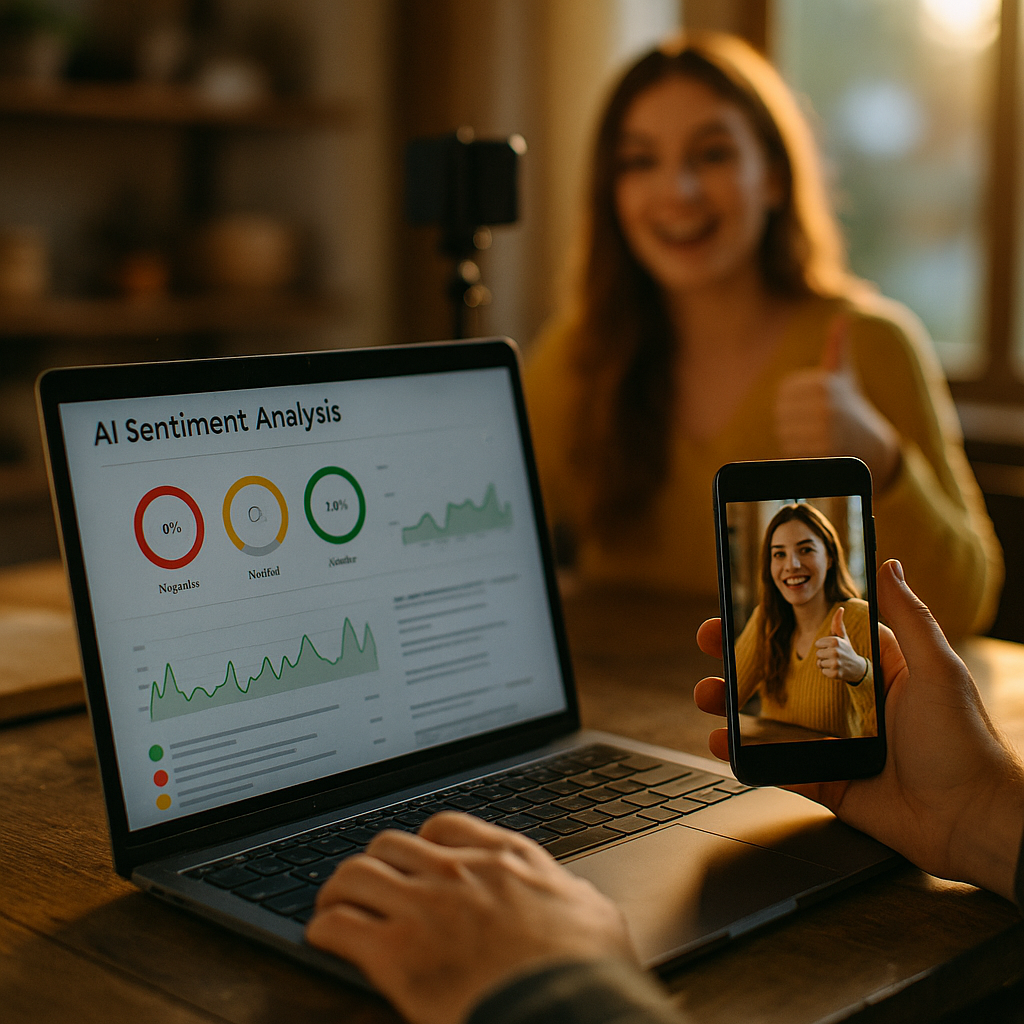
Most Brands Are Still Flying Blind Mid-Campaign
Nearly 60% of brand marketers report that their influencer measurement strategy is still primarily post-campaign, according to data from Sprout Social. That means decisions about creative pivots, creator reassignment, and budget reallocation happen after the damage is done. Real-time audience perception data changes that equation entirely — and the brands evaluating AI-powered sentiment platforms right now are building a structural advantage over those waiting for end-of-flight reports.
Why Post-Campaign Measurement Is a Risk Management Failure
Think about what actually happens during a 90-day sponsorship flight. A creator posts on day 12. The comment section trends negative around a messaging angle you approved three weeks ago. Your brand safety team flags it on day 30 when the campaign recap lands. By then, that content has generated 4 million impressions, been reshared across Reddit, and the sentiment has already baked into search autocomplete suggestions tied to your brand name.
Post-campaign reporting is not measurement. It is an autopsy.
The shift toward live creative adaptation requires infrastructure that most brand teams haven’t built yet. It means having sentiment signals feeding back into the campaign management layer fast enough to actually change something: the creator brief, the caption, the call-to-action, or in serious cases, the activation itself. This is the operational gap that a new category of AI-powered sentiment platforms is positioning to close.
Post-campaign reporting tells you what went wrong. Real-time sentiment infrastructure tells you while you can still fix it. That operational gap is now a competitive differentiator.
What “Real-Time” Actually Means at the Platform Level
Not all platforms using the phrase “real-time” are operating on the same latency. This matters enormously when you’re evaluating vendors.
True real-time sentiment analysis in creator campaign contexts typically means comment and reply ingestion within minutes of publication, NLP-processed sentiment scoring within one to four hours, and brand-attributable signal clustering (separating reactions to your product claim versus the creator’s personal commentary) within the same business day. Platforms like Talkwalker, Brandwatch, and Sprinklr have moved meaningfully in this direction, but their out-of-the-box configurations are often tuned for owned media monitoring rather than paid creator activations. The distinction matters operationally.
When you’re evaluating a platform specifically for creator campaign management, ask three direct questions: How is sentiment scored at the creator content level versus the brand account level? Can the system distinguish between organic conversation and creator-seeded conversation? And what is the actual latency between a comment event and an actionable alert landing in your team’s workflow?
The Signal Taxonomy Your Evaluation Should Cover
AI sentiment platforms surface many signal types, but not all of them translate into creative adaptation decisions. For influencer campaign management specifically, the signals worth building evaluation criteria around fall into four categories.
- Audience reception signals: Comment sentiment ratios, reply thread tone, save/share behavior relative to like volume. These indicate whether the audience is absorbing the message or reacting against it.
- Creator credibility signals: Shifts in how the creator’s own community perceives their authenticity around your category. A creator who suddenly attracts criticism for “selling out” represents a brand adjacency risk, not just a creator performance issue.
- Competitive displacement signals: Are audience members in your creator’s comment section naming competitor products? Sentiment platforms with social listening breadth can surface category-level conversation happening within your creator’s audience ecosystem.
- Regulatory and compliance signals: Disclosure language, claims compliance, and FTC-adjacent language patterns. Platforms like FTC guidelines have become increasingly specific about what constitutes adequate disclosure, and AI monitoring can flag non-compliant language patterns before they become a legal exposure.
The brands getting value from real-time sentiment infrastructure are the ones who’ve pre-mapped which signal types connect to which decision triggers. Without that mapping, you’re just consuming dashboards.
Live Creative Adaptation: What It Requires Operationally
Here’s the honest part that platform vendors don’t emphasize enough: real-time sentiment data is only as useful as the speed of your internal decision-making loop. A platform that surfaces a negative sentiment spike at 9 AM is useless if your brand approval process takes 72 hours to authorize a brief revision.
Brands that have operationalized live creative adaptation successfully have typically done three structural things. First, they’ve designated a real-time response owner — a specific person or small team with pre-authorized decision rights to adjust creator briefs within defined parameters without escalation. Second, they’ve built response playbooks in advance: if sentiment around claim X drops below threshold Y, the creator is authorized to post a clarifying story or shift to an alternative talking point from an approved message bank. Third, they’ve negotiated flexibility provisions directly into creator contracts, which is an area where creator contract structures are still catching up to operational needs.
That last point is significant. Most standard influencer contracts specify deliverables, usage rights, and exclusivity. Very few include provisions for mid-flight brief amendments triggered by performance data. If your legal templates don’t accommodate this, your real-time data infrastructure has nowhere to plug in.
Evaluating AI Sentiment Platforms: A Decision Framework
When your team sits down to evaluate platforms, structure the vendor conversation around capability tiers rather than feature lists. The questions below are designed to separate platforms built for creator-specific campaign management from those retrofitted from broader social listening tools.
- Creator-level segmentation: Can the platform isolate sentiment signals by individual creator rather than aggregating at the campaign or hashtag level? Creator-level granularity is non-negotiable for activation decisions.
- Platform coverage breadth: Does the platform ingest data from TikTok, YouTube, Instagram Reels, and Twitch natively? Creator activations span platforms, and cross-platform sentiment discrepancies are often more informative than single-platform scores.
- Custom taxonomy configuration: Can your team define brand-specific sentiment categories (e.g., “price sensitivity,” “sustainability skepticism”) beyond the default positive/negative/neutral classifications?
- Workflow integration: Does the platform connect to your existing project management or creator relationship management tools? Sentiment alerts that require a separate login to access are alerts that get ignored.
- Explainability of AI outputs: Can the platform show why a piece of content was scored as negative? Black-box scoring creates compliance risk and erodes internal trust in the data.
The AI platform signals worth acting on are the ones your team can trace back to a source and a rationale. Explainability isn’t a nice-to-have; it’s what makes the data defensible in a budget review.
Brands that pre-map sentiment signals to specific decision triggers extract operational value from real-time data. Brands that don’t are just buying more expensive dashboards.
What the Broader Creator Economy Shift Means for This Investment
This isn’t a standalone tool evaluation. It sits inside a larger structural shift in how sophisticated brands are managing creator programs. As creator economy professionalization accelerates, the expectation from both sides of the partnership is moving toward data-informed collaboration rather than one-directional brief compliance.
Creators who partner with brands operating real-time sentiment infrastructure often report that the relationship feels more collaborative. When a brand can say “your audience is responding negatively to the pricing framing in the second half of your video, here’s alternative language that tested better,” that’s a useful signal for the creator too. It improves content performance and protects their credibility.
The scale of investment in this infrastructure is also shifting. With the creator economy’s $480B trajectory pressuring brands to demonstrate measurable returns, real-time sentiment capability is increasingly framed not as a monitoring cost but as a risk-mitigation and yield-optimization asset. That reframing matters when you’re making the internal budget case.
For teams thinking about sequencing ROI across AI and creator spend, sentiment platform investment belongs in the measurement infrastructure layer, not the media spend layer. Categorize it correctly and the internal approval path becomes significantly cleaner.
The analytical standards underpinning this work are also maturing fast. Reviewing creator platform analytics standards should be part of any vendor evaluation process, particularly as consolidation brings new data-sharing norms into play.
Start with one active flight. Pick a campaign where you have enough creator volume and content cadence to generate meaningful signal. Deploy a sentiment platform with a 30-day pilot scope, pre-map three specific signal-to-decision triggers, and measure whether your team actually acted on the data. That pilot result is your business case for full deployment, and it’s the only honest way to evaluate whether the platform fits your operational reality. External benchmarks from sources like eMarketer and Statista can help contextualize your pilot metrics against industry baselines.
Frequently Asked Questions
What is real-time audience perception data in influencer marketing?
Real-time audience perception data refers to continuously updated sentiment signals collected from social media comments, shares, and engagement behaviors as creator content is published during an active campaign. Unlike post-campaign reports, this data is processed and surfaced quickly enough to inform live decisions about creator briefs, messaging pivots, and content strategy adjustments within the same sponsorship flight.
How do AI sentiment platforms differ from standard social listening tools for creator campaigns?
Standard social listening tools are typically configured for brand account monitoring and aggregate campaign-level data. AI sentiment platforms purpose-built for creator campaigns offer creator-level signal segmentation, faster ingestion latency, and the ability to distinguish between audience reactions to brand messaging versus reactions to the creator’s organic content — a distinction that’s operationally critical for sponsorship management decisions.
What should brands look for when evaluating AI sentiment platforms for influencer programs?
Key evaluation criteria include creator-level segmentation capability, cross-platform data coverage (TikTok, YouTube, Instagram, Twitch), custom sentiment taxonomy configuration, workflow integration with existing creator management tools, and AI output explainability. Platforms that cannot explain why content was scored a particular way create compliance risk and erode internal confidence in the data.
How quickly can brands realistically adapt creative during an active sponsorship flight?
Adaptation speed depends on both the platform’s data latency and the brand’s internal decision-making structure. Brands that have operationalized live creative adaptation successfully typically maintain a designated response owner with pre-authorized brief amendment rights, a pre-approved message bank for creators to draw from, and contract provisions that permit mid-flight brief revisions based on performance data.
Is real-time sentiment monitoring worth the investment for smaller influencer budgets?
For programs with limited creator volume or infrequent content cadence, full-scale real-time sentiment infrastructure may not generate enough signal density to justify enterprise platform costs. A practical approach for smaller programs is to deploy a pilot on highest-stakes activations first, use platforms with tiered pricing that scales to campaign size, and prioritize compliance signal monitoring (FTC disclosure flagging) as a baseline use case before expanding to full sentiment scoring.
Top Influencer Marketing Agencies
The leading agencies shaping influencer marketing in 2026
Agencies ranked by campaign performance, client diversity, platform expertise, proven ROI, industry recognition, and client satisfaction. Assessed through verified case studies, reviews, and industry consultations.
Moburst

-
2

The Shelf
Boutique Beauty & Lifestyle Influencer AgencyA data-driven boutique agency specializing exclusively in beauty, wellness, and lifestyle influencer campaigns on Instagram and TikTok. Best for brands already focused on the beauty/personal care space that need curated, aesthetic-driven content.Clients: Pepsi, The Honest Company, Hims, Elf Cosmetics, Pure LeafVisit The Shelf → -
3

Audiencly
Niche Gaming & Esports Influencer AgencyA specialized agency focused exclusively on gaming and esports creators on YouTube, Twitch, and TikTok. Ideal if your campaign is 100% gaming-focused — from game launches to hardware and esports events.Clients: Epic Games, NordVPN, Ubisoft, Wargaming, Tencent GamesVisit Audiencly → -
4

Viral Nation
Global Influencer Marketing & Talent AgencyA dual talent management and marketing agency with proprietary brand safety tools and a global creator network spanning nano-influencers to celebrities across all major platforms.Clients: Meta, Activision Blizzard, Energizer, Aston Martin, WalmartVisit Viral Nation → -
5

The Influencer Marketing Factory
TikTok, Instagram & YouTube CampaignsA full-service agency with strong TikTok expertise, offering end-to-end campaign management from influencer discovery through performance reporting with a focus on platform-native content.Clients: Google, Snapchat, Universal Music, Bumble, YelpVisit TIMF → -
6

NeoReach
Enterprise Analytics & Influencer CampaignsAn enterprise-focused agency combining managed campaigns with a powerful self-service data platform for influencer search, audience analytics, and attribution modeling.Clients: Amazon, Airbnb, Netflix, Honda, The New York TimesVisit NeoReach → -
7

Ubiquitous
Creator-First Marketing PlatformA tech-driven platform combining self-service tools with managed campaign options, emphasizing speed and scalability for brands managing multiple influencer relationships.Clients: Lyft, Disney, Target, American Eagle, NetflixVisit Ubiquitous → -
8

Obviously
Scalable Enterprise Influencer CampaignsA tech-enabled agency built for high-volume campaigns, coordinating hundreds of creators simultaneously with end-to-end logistics, content rights management, and product seeding.Clients: Google, Ulta Beauty, Converse, AmazonVisit Obviously →