


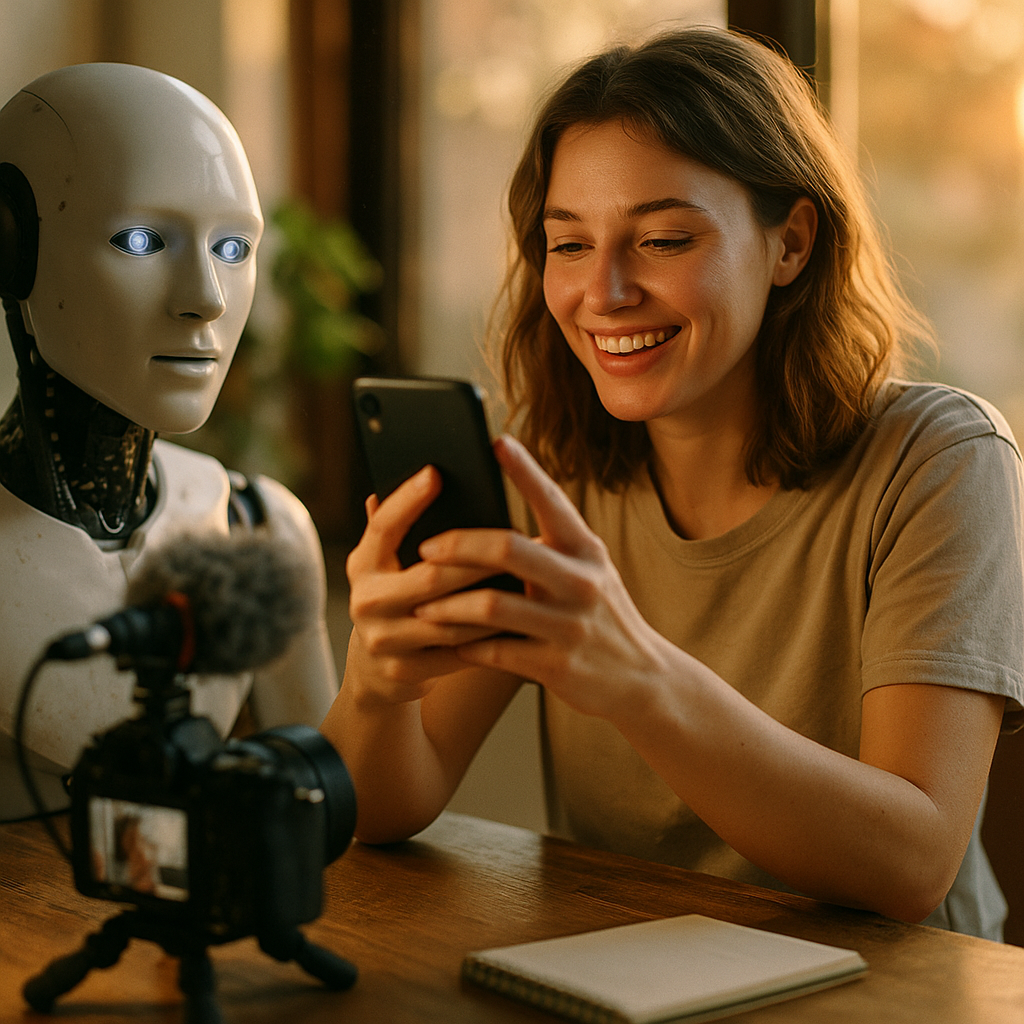
Sixty-two percent of consumers say they can detect AI-generated content in sponsored posts, and nearly half say detection reduces their purchase intent. If your influencer program is optimizing for production volume without a defined automation threshold, you are quietly eroding the two assets that make creator marketing work: audience trust and algorithmic preference. This is the automation-authenticity equilibrium problem, and it deserves a serious operational answer.
Why This Problem Is Getting Harder to Ignore
The creator economy has matured into a procurement category. Brands are running 50, 100, sometimes 500 concurrent creator partnerships. At that scale, manual production workflows break. AI tools fill the gap: scripting assistants, auto-captioning, synthetic voiceover, AI-edited B-roll, generated thumbnails, templated brief systems. Each tool, individually, seems like a reasonable efficiency gain. Collectively, they can hollow out the thing you actually paid for.
Platform recommendation algorithms are the mechanism that makes this consequential. TikTok’s For You page, YouTube’s discovery engine, and Instagram’s Explore surface have all shifted toward engagement-quality signals, not just engagement volume. Watch time completion, saves, shares, and comment sentiment matter more than raw likes. A polished, AI-assembled video that feels slightly off-brand for the creator generates passive consumption at best. The algorithm reads that as weak interest. Your sponsored content gets deprioritized, not because the production quality was low, but because the native authenticity signals that trigger active engagement were absent.
The algorithm does not reward production quality. It rewards the behavioral signal that a real human, speaking in their own voice about something they actually care about, generates in their audience. AI tools that compromise that signal cut into your distribution before you ever measure reach.
This is not a soft brand-safety concern. It is a performance problem with a measurable cost.
The Four Automation Layers (and Where Each One Starts to Hurt)
Not all automation carries equal authenticity risk. It helps to break the production stack into discrete layers.
Layer 1: Pre-production tooling. AI brief generators, audience insight platforms, creator vetting tools. Risk: very low. None of this appears in the final content. Brands should automate here aggressively. Tools like Grin, Aspire, and Modash have embedded AI into discovery and brief workflows without touching creator voice.
Layer 2: Structural content scaffolding. AI-generated script outlines, talking points, suggested hooks. Risk: low to moderate. The key distinction is whether the creator actively rewrites the scaffold in their own language or simply reads it. A scaffold that gets rewritten is a creative prompt. A scaffold that gets read verbatim is a brand script in disguise, and audiences notice.
Layer 3: Post-production automation. Auto-captions, AI jump-cut editing, generated B-roll, synthetic music. Risk: moderate to high depending on platform and format. For YouTube long-form, clean AI-assisted editing is largely invisible and acceptable. For TikTok and Instagram Reels, where raw and slightly imperfect formats outperform polished ones, heavy AI post-production can create an aesthetic mismatch that kills native feel. The AI video production lift data from NemoVideo shows engagement gains are real, but those gains appear in product-demo contexts, not lifestyle or personality-driven content.
Layer 4: Synthetic persona or voice replacement. AI avatars, cloned creator voices, fully generated scripts read cold. Risk: high. This is the category that has triggered FTC scrutiny and audience backlash in equal measure. FTC guidelines on endorsement authenticity apply here directly. Using a creator’s likeness or voice via AI without explicit disclosure is already a compliance exposure. More practically, audiences who follow a creator for their personality will not accept a synthetic substitute for long.
What the Algorithms Are Actually Measuring
It is worth being specific here, because “authenticity” can feel like an unmeasurable brand value. The algorithmic proxies for it are not abstract at all.
TikTok’s internal ranking documentation (referenced across multiple industry leaks and confirmed through creator behavior analysis) weights comment volume and comment specificity heavily. A post that generates 200 comments saying “love this” performs worse than one generating 80 comments that reference specific moments in the video. The latter signals that people actually watched, processed, and responded. Over-scripted, AI-assembled content consistently underperforms on this metric because it does not create those “moment” triggers.
YouTube’s system favors click-through rate combined with session extension. Creators who have built genuine audience relationships drive viewers deeper into their catalog after a sponsored video. That downstream session value is exactly what YouTube rewards with distribution priority. Brands that treat creator partnerships as pure reach vehicles and over-engineer the content accordingly often find that sponsored posts underperform organic benchmarks by 30 to 50 percent on watch time. That gap is your authenticity tax.
For more on how AI platform signals are reshaping content prioritization, the operational implications go well beyond creator content alone.
Defining Your Brand’s Threshold
The equilibrium point is not universal. It varies by platform, creator type, audience demographic, and content format. But there is a practical framework for setting your threshold.
Start with a baseline audit. Pull engagement rate, comment specificity, and save rate for each creator’s organic content over the prior 90 days. Then pull the same metrics for their sponsored content. The gap between those two numbers is your current authenticity tax. If sponsored content is performing within 15 percent of organic benchmarks, your production process is likely calibrated correctly. If the gap is 30 percent or more, you have an over-automation or over-scripting problem regardless of whether AI is the cause.
Next, map your automation tools against the four layers above. Identify which layer each tool operates in and whether your current usage is in the risk zone for your primary platform. A brand running TikTok campaigns with heavy Layer 3 automation should run controlled creative tests: one batch with full AI post-production, one with minimal post-production, holding all other variables constant. The performance delta will tell you more than any vendor case study.
Finally, build creator autonomy into your contracts. This is an operational point that gets undervalued. Creator contract structures that grant final creative approval rights to the creator, while specifying brand guardrails rather than prescriptive scripts, consistently produce higher engagement than fully brand-controlled briefs. The contract is where you institutionalize the equilibrium, not just the creative brief.
Brands that write creative autonomy into contracts rather than just creative briefs see measurably better sponsored content performance, because the creator has skin in the quality game, not just a deliverable to file.
The Operational Case for Restraint
There is a budget argument here that CFOs will find compelling. Over-automated creator content that gets deprioritized by algorithms requires paid amplification to compensate for the organic distribution loss. You end up paying twice: once for the creator fee, once for the boost. Amplification spend parity is already a structural budget pressure. Adding a self-inflicted organic distribution penalty on top of it is an avoidable cost.
The brands doing this well in the current environment are using AI to reduce the operational overhead around creators, not within creator content itself. Automated reporting, AI-assisted influencer identification, sentiment monitoring (tools like Brandwatch and real-time AI sentiment platforms are useful here), contract automation. These efficiencies are genuine and carry near-zero authenticity risk. That is where the automation budget belongs.
Creator content production, particularly the creative brief execution and the actual recording, should remain as creator-led as operationally possible. The efficiency gain from automating that layer is marginal compared to the distribution and trust cost of getting it wrong.
The AI task displacement framework for creator program staffing offers a useful lens here: automate tasks, not creative judgment. That distinction is precisely the threshold brands need to operationalize across their influencer programs.
For brands managing significant creator program scale, understanding how creator infrastructure and brand power interact with production decisions is also worth revisiting. The infrastructure layer and the content layer need to be governed separately.
Run the authenticity audit on your current campaigns this quarter. The gap between your creators’ organic and sponsored performance benchmarks is the single most actionable number your program should be optimizing against right now.
FAQs
What is the automation-authenticity equilibrium in creator marketing?
It refers to the operational balance brands must maintain between using AI tools to improve production efficiency and preserving the platform-native authenticity signals (natural creator voice, genuine reactions, unscripted moments) that drive both audience trust and algorithmic distribution priority. Over-automating past this threshold results in content that performs below organic benchmarks and requires expensive paid amplification to compensate.
Which AI automation layers carry the highest authenticity risk for sponsored content?
Synthetic persona and voice replacement (Layer 4) carries the highest risk, followed by heavy AI post-production for platforms like TikTok and Instagram Reels where raw, native aesthetics outperform polished formats (Layer 3). Pre-production tooling and structural content scaffolding carry lower risk as long as creators actively rewrite AI-generated prompts in their own voice.
How do platform algorithms penalize over-automated creator content?
TikTok, YouTube, and Instagram all weight engagement quality signals over raw volume. Metrics like comment specificity, saves, watch time completion, and session extension indicate genuine audience engagement. Over-scripted or AI-assembled content typically generates passive consumption rather than active responses, which algorithms interpret as weak audience interest and respond to with reduced organic distribution.
How should brands measure whether their creator content is over-automated?
Compare engagement rate, comment specificity, and save rate between a creator’s organic posts and their sponsored posts over a rolling 90-day window. A gap of 15 percent or less suggests the production process is well-calibrated. A gap of 30 percent or more indicates an over-automation or over-scripting problem that is costing organic reach and potentially requiring paid amplification to compensate.
Are there FTC compliance implications for AI-generated creator content?
Yes. The FTC’s endorsement guidelines apply to AI-generated or AI-assisted content, particularly synthetic persona creation, cloned voices, and AI avatars used in sponsored posts without disclosure. Brands using a creator’s likeness or voice through AI tools without explicit contractual permission and audience disclosure face both regulatory and reputational risk.
Where should brands focus AI automation in influencer programs to minimize authenticity risk?
The lowest-risk, highest-value automation targets are operational and analytical: AI-assisted creator discovery and vetting, automated reporting and performance dashboards, real-time sentiment monitoring, and contract workflow automation. These tools reduce overhead without touching the creative execution layer where authenticity signals are generated.
Top Influencer Marketing Agencies
The leading agencies shaping influencer marketing in 2026
Agencies ranked by campaign performance, client diversity, platform expertise, proven ROI, industry recognition, and client satisfaction. Assessed through verified case studies, reviews, and industry consultations.
Moburst

-
2

The Shelf
Boutique Beauty & Lifestyle Influencer AgencyA data-driven boutique agency specializing exclusively in beauty, wellness, and lifestyle influencer campaigns on Instagram and TikTok. Best for brands already focused on the beauty/personal care space that need curated, aesthetic-driven content.Clients: Pepsi, The Honest Company, Hims, Elf Cosmetics, Pure LeafVisit The Shelf → -
3

Audiencly
Niche Gaming & Esports Influencer AgencyA specialized agency focused exclusively on gaming and esports creators on YouTube, Twitch, and TikTok. Ideal if your campaign is 100% gaming-focused — from game launches to hardware and esports events.Clients: Epic Games, NordVPN, Ubisoft, Wargaming, Tencent GamesVisit Audiencly → -
4

Viral Nation
Global Influencer Marketing & Talent AgencyA dual talent management and marketing agency with proprietary brand safety tools and a global creator network spanning nano-influencers to celebrities across all major platforms.Clients: Meta, Activision Blizzard, Energizer, Aston Martin, WalmartVisit Viral Nation → -
5

The Influencer Marketing Factory
TikTok, Instagram & YouTube CampaignsA full-service agency with strong TikTok expertise, offering end-to-end campaign management from influencer discovery through performance reporting with a focus on platform-native content.Clients: Google, Snapchat, Universal Music, Bumble, YelpVisit TIMF → -
6

NeoReach
Enterprise Analytics & Influencer CampaignsAn enterprise-focused agency combining managed campaigns with a powerful self-service data platform for influencer search, audience analytics, and attribution modeling.Clients: Amazon, Airbnb, Netflix, Honda, The New York TimesVisit NeoReach → -
7

Ubiquitous
Creator-First Marketing PlatformA tech-driven platform combining self-service tools with managed campaign options, emphasizing speed and scalability for brands managing multiple influencer relationships.Clients: Lyft, Disney, Target, American Eagle, NetflixVisit Ubiquitous → -
8

Obviously
Scalable Enterprise Influencer CampaignsA tech-enabled agency built for high-volume campaigns, coordinating hundreds of creators simultaneously with end-to-end logistics, content rights management, and product seeding.Clients: Google, Ulta Beauty, Converse, AmazonVisit Obviously →