


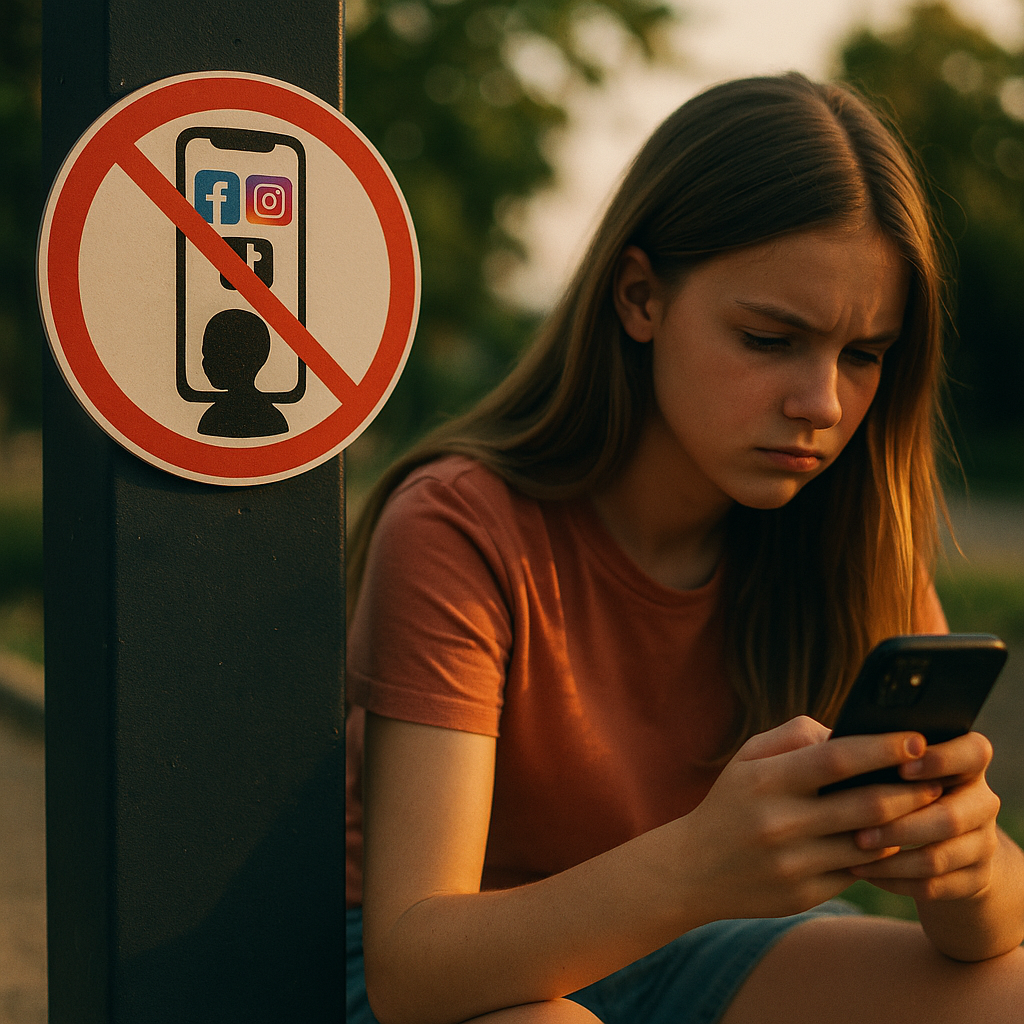
Roughly 9 million UK accounts belonging to users under 16 are now in regulatory crosshairs. Prime Minister Starmer’s announcement of a statutory under-16 social media ban, targeting implementation before spring 2027, isn’t a future problem. For brand teams running influencer programs with any UK youth-adjacent audience, the compliance clock is already running on the UK social media ban for under-16s.
What the Starmer Announcement Actually Says (And What It Doesn’t)
The proposal follows Australia’s lead. Starmer’s government has signalled intent to legislate a hard age restriction preventing under-16s from holding social media accounts, with enforcement obligations falling primarily on platforms rather than individual users. That distinction matters enormously for brands.
Platforms including Meta, TikTok, Snapchat, and YouTube would be required to implement age verification mechanisms robust enough to satisfy Ofcom scrutiny. Failure to comply exposes platforms to fines scaled to global turnover. The ICO’s existing framework under the Age Appropriate Design Code already established the regulatory appetite for this direction. This legislation is the next gear.
What the announcement does not do: it doesn’t immediately kill youth-adjacent marketing. What it does is shift the risk calculus. Brands that continue building campaign architecture assuming a 13-17 audience on TikTok, Instagram Reels, or YouTube Shorts are building on a foundation that will be legally excavated within 12 to 18 months.
Campaign Architecture: The Structural Rethink Required Now
Most influencer programs are built around audience demographics, not account demographics. That gap is about to become a compliance liability.
Under the current model, a brand can run an Instagram campaign targeting 18-24 year olds and accept that 15% of the creator’s actual audience may skew younger. Post-legislation, platforms will theoretically have removed those under-16 accounts. But “theoretically” is doing a lot of work there. Age verification at scale is imperfect. Regulatory bodies know this. Which means the enforcement lens will shift toward brand-side due diligence: did your campaign architecture reasonably anticipate and mitigate youth exposure?
Brands that can demonstrate proactive audience age-gating in their campaign briefs, creator contracts, and platform targeting settings will have a materially stronger compliance posture when Ofcom scrutiny arrives.
Practically, this means several structural changes to campaign architecture. First, audience verification requirements in creator briefs need to be updated now. Require creators to export demographic breakdowns from native platform analytics before campaign activation, with a documented threshold (18+ audience share of 85% or above is a reasonable starting standard). Second, paid media targeting on Meta and TikTok should be audited for any interest or lookalike segments that over-index toward youth demographics. Third, any UK-specific campaign brief should carry an explicit “youth audience exclusion” documentation trail.
For brands investing heavily in short-form video, the Gen Alpha compliance frameworks that were built for US regulatory contexts are now directly applicable to UK planning. The structural logic transfers even where the specific legislation differs.
Creator Targeting: Who You Brief Changes Significantly
The creator selection question becomes more nuanced than just “does this creator appeal to teens?”
Consider the family content vertical. Parenting creators, family vloggers, and “kidfluencer” adjacent accounts have built audiences that are inherently multigenerational. A creator with 800,000 followers whose content features their children will have a material percentage of under-16 followers. Post-ban, the platform may reduce that cohort through enforcement. But the content positioning will remain youth-resonant. Brands need a documented rationale for why that creator is appropriate for a given campaign, especially for categories like food, gaming, financial services, or fashion that are historically scrutinised under children’s advertising rules.
The Meta minor safety rules already signal where platform-level enforcement is heading. Creator targeting decisions made today should be tested against where platform policies will likely sit in 18 months, not where they sit today.
Gaming brands face a particularly compressed timeline. The 16-24 demographic is the core addressable market for many gaming titles, and the UK youth gaming audience has historically been reached through YouTube and TikTok creator campaigns. Those programs need audience segmentation surgery, not light-touch adjustment.
Contract Language: The Clause Gap You Cannot Leave Open
Most influencer contracts currently in circulation don’t contain any UK age verification compliance clause. That’s not a theoretical risk. It’s an active exposure.
The principle that matters here: if a creator publishes sponsored content that reaches a demonstrably under-16 audience in the UK after the legislative commencement date, and the brand’s contract contains no requirement for the creator to have taken reasonable steps to prevent that exposure, the brand’s indemnification position is weak. Ofcom won’t necessarily come for the brand directly, but the reputational and regulatory adjacency risk is real, particularly for regulated sectors like finance, gambling-adjacent products, alcohol, and supplement brands.
Contracts need a new clause category: audience age compliance representations. This should require creators to warrant that their UK audience composition meets a defined 18+ threshold, to notify the brand of any material change to that composition, and to cooperate with post-campaign audience audits. Pair this with a termination right if the representation proves materially incorrect.
For broader context on tightening contract language across compliance dimensions, the framework for brand safety contract caps and partnership agreement clauses provides a useful structural model that can be adapted for age compliance purposes.
The Youth-Adjacent Problem: When Your Brand Isn’t Targeting Teens But Your Creator Is
Here’s where many brand teams will stumble. The compliance logic isn’t purely about intent. It’s about proximity.
A protein supplement brand targeting 20-30 year old gym-goers may brief a fitness creator whose audience skews 16-24. The brand team isn’t thinking about teens. But 17-year-old gym beginners are watching that content. The UK’s regulatory environment, shaped by both the Online Safety Act and now this forthcoming age restriction legislation, doesn’t give brands a clean pass because the core target was adults.
The social commerce privacy compliance frameworks already developed for TikTok, Meta, and LinkedIn provide a useful template for documenting youth exposure mitigation, particularly around data handling. The same documentation logic applies to age-compliance planning.
Brands in sectors already subject to the CAP Code’s scheduling and content restrictions around children have compliance muscle memory for this. Brands that have historically operated outside those guardrails need to build that muscle quickly.
Platform-Side Enforcement and What It Means for Media Budgets
Platforms will bear the primary enforcement burden. That has a second-order effect on media planning that brand teams are underestimating.
If TikTok and Instagram are required to implement stringent age verification, two things happen. First, verified adult audience pools become more clearly defined and potentially more valuable for precision targeting. Second, the unverified or loosely verified edge of the addressable audience shrinks. Net effect: CPMs in verified adult demographic segments will likely increase as demand concentrates. Media budgets built on current CPM benchmarks for UK youth-adjacent audiences need stress-testing now.
Refer to the EU DSA framework as a parallel case study. When the DSA imposed algorithmic transparency obligations, platform ad inventory pricing shifted measurably in affected segments. The UK’s age restriction legislation will create a comparable structural pricing event in youth-adjacent inventory.
Brands running performance-based creator compensation models should review how those models interact with a potentially shrinking UK youth addressable pool. If conversion targets were calibrated against a blended audience that included under-16s, those targets become unrealistic without adjustment.
Media planners who reprice UK influencer campaign CPM expectations before enforcement begins will avoid a painful budget conversation after it does.
Compliance Planning: The Pre-Spring-2027 Audit Checklist
The window between now and legislative commencement is not a grace period. It’s an opportunity to build infrastructure. Here’s the operational priority stack:
- Audit existing creator roster for UK audience age composition. Flag any creator where the UK 13-17 cohort exceeds 10% of total UK audience.
- Update master service agreements to include audience age representation warranties and UK compliance cooperation clauses.
- Review paid amplification settings on Meta Ads Manager and TikTok Ads to confirm no UK age-excluded targeting segments are active.
- Document campaign brief exclusions explicitly: every UK brief should carry a line confirming the campaign is not designed to reach under-16s and listing the steps taken to mitigate that exposure.
- Engage legal counsel familiar with both the Online Safety Act and ICO enforcement practice to review your current influencer marketing compliance framework before legislative commencement.
- Monitor platform enforcement announcements from Meta, TikTok, Snapchat, and YouTube. Their verification mechanisms will define the practical compliance landscape.
For teams with existing compliance infrastructure built around FTC disclosure rules or EU DSA obligations, the EU DSA compliance playbook provides a structural template that adapts well to UK context.
Start the creator roster audit this quarter. Every week of delay compresses the remediation window before the legislation’s operational date.
FAQs
What does the UK social media ban for under-16s mean for brands running influencer campaigns?
It means brands need to proactively document that their UK influencer campaigns are not designed to reach under-16s. This includes updating creator briefs, contract language, and platform targeting settings to demonstrate reasonable youth exposure mitigation. Enforcement falls primarily on platforms, but brand-side due diligence will be scrutinised in regulated sectors and by Ofcom in complaint-driven investigations.
When is the UK under-16 social media ban expected to take effect?
The Starmer government has indicated a target of before spring 2027. The exact legislative commencement date depends on parliamentary progress, but brand teams should treat 18 months as the planning horizon and begin compliance infrastructure work immediately rather than waiting for a firm date.
Does the ban affect brand campaigns that aren’t specifically targeting teenagers?
Yes. The compliance obligation isn’t purely about intent. Brands whose campaigns are youth-adjacent — fitness, gaming, fashion, food, and music-related categories — need to document mitigation steps even if the core target demographic is 18-plus. Regulatory scrutiny focuses on proximity to youth audiences, not just explicit targeting decisions.
What contract clauses should brands add to address UK age compliance?
Contracts should include an audience age representation warranty requiring creators to confirm their UK audience meets a defined 18-plus composition threshold (85% or above is a reasonable baseline), a notification obligation if that composition changes materially, a cooperation clause for post-campaign audience audits, and a termination right triggered by material breach of the age representation.
Will the under-16 ban affect CPMs and media budgets for UK influencer campaigns?
Almost certainly. As platforms implement age verification and under-16 accounts are removed or restricted from verified adult audiences, the addressable pool in youth-adjacent segments will shift. Verified adult inventory is likely to see CPM increases. Media budgets calibrated against current youth-blended UK CPM benchmarks should be stress-tested and adjusted ahead of enforcement.
How does this interact with existing UK children’s advertising regulations?
The legislation operates alongside, not instead of, existing CAP Code rules governing advertising to children, ICO Age Appropriate Design Code obligations, and Online Safety Act requirements. Brands should treat this as a new compliance layer that reinforces and extends existing obligations rather than replacing them.
Top Influencer Marketing Agencies
The leading agencies shaping influencer marketing in 2026
Agencies ranked by campaign performance, client diversity, platform expertise, proven ROI, industry recognition, and client satisfaction. Assessed through verified case studies, reviews, and industry consultations.
Moburst

-
2

The Shelf
Boutique Beauty & Lifestyle Influencer AgencyA data-driven boutique agency specializing exclusively in beauty, wellness, and lifestyle influencer campaigns on Instagram and TikTok. Best for brands already focused on the beauty/personal care space that need curated, aesthetic-driven content.Clients: Pepsi, The Honest Company, Hims, Elf Cosmetics, Pure LeafVisit The Shelf → -
3

Audiencly
Niche Gaming & Esports Influencer AgencyA specialized agency focused exclusively on gaming and esports creators on YouTube, Twitch, and TikTok. Ideal if your campaign is 100% gaming-focused — from game launches to hardware and esports events.Clients: Epic Games, NordVPN, Ubisoft, Wargaming, Tencent GamesVisit Audiencly → -
4

Viral Nation
Global Influencer Marketing & Talent AgencyA dual talent management and marketing agency with proprietary brand safety tools and a global creator network spanning nano-influencers to celebrities across all major platforms.Clients: Meta, Activision Blizzard, Energizer, Aston Martin, WalmartVisit Viral Nation → -
5

The Influencer Marketing Factory
TikTok, Instagram & YouTube CampaignsA full-service agency with strong TikTok expertise, offering end-to-end campaign management from influencer discovery through performance reporting with a focus on platform-native content.Clients: Google, Snapchat, Universal Music, Bumble, YelpVisit TIMF → -
6

NeoReach
Enterprise Analytics & Influencer CampaignsAn enterprise-focused agency combining managed campaigns with a powerful self-service data platform for influencer search, audience analytics, and attribution modeling.Clients: Amazon, Airbnb, Netflix, Honda, The New York TimesVisit NeoReach → -
7

Ubiquitous
Creator-First Marketing PlatformA tech-driven platform combining self-service tools with managed campaign options, emphasizing speed and scalability for brands managing multiple influencer relationships.Clients: Lyft, Disney, Target, American Eagle, NetflixVisit Ubiquitous → -
8

Obviously
Scalable Enterprise Influencer CampaignsA tech-enabled agency built for high-volume campaigns, coordinating hundreds of creators simultaneously with end-to-end logistics, content rights management, and product seeding.Clients: Google, Ulta Beauty, Converse, AmazonVisit Obviously →