


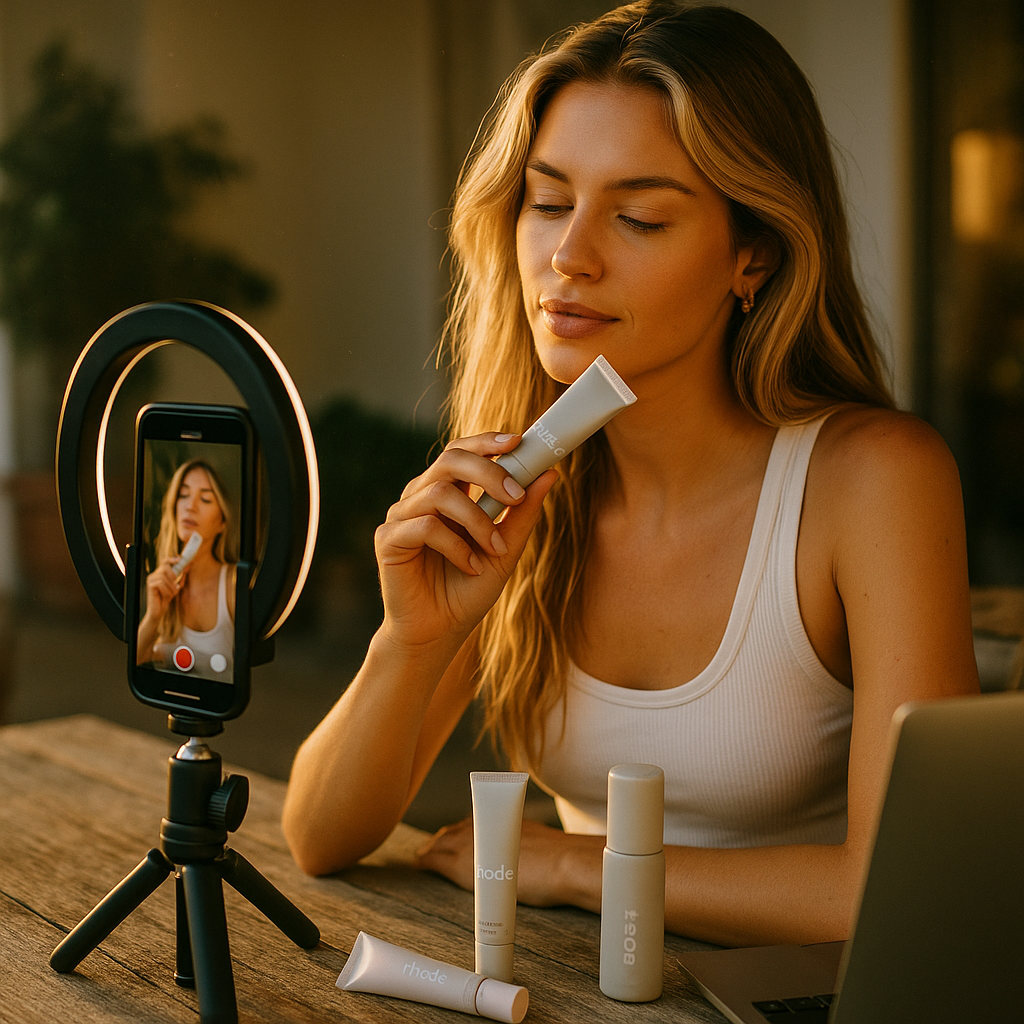
One Campaign, Three Revenue Levers
Most influencer activations optimize for one metric. Rhode’s seasonal Creator Camp pulls three at once: earned media volume, pre-launch waitlist conversion, and direct social commerce sales. That’s not an accident. It’s architecture.
Rhode’s Creator Camp model has become one of the most studied frameworks in beauty marketing because it treats a multi-day immersive event not as a PR stunt, but as a full-funnel commercial engine. If your brand still treats influencer retreats as reputation plays rather than revenue plays, this breakdown will reframe how you think about the entire format.
What the Creator Camp Model Actually Is
At its core, Rhode’s Creator Camp is a curated, multi-day residential experience where a small cohort of creators, typically 8 to 15 people, are immersed in the brand’s world ahead of a product launch. The setting is intentional: pastoral, aesthetically consistent with Rhode’s “glazed skin” visual identity, and designed to produce organic content without a shot list.
That last detail matters enormously. Rhode does not hand creators a creative brief with required deliverables. Instead, the environment itself becomes the brief. Activities, textures, meals, lighting, and even the physical product packaging are curated to invite content creation naturally. The result is content that reads as earned, not paid, even when creators hold disclosure obligations under FTC guidelines.
The creator cohort is deliberately mixed. Rhode typically includes a combination of mega-creators with 5M+ followings, mid-tier creators in the 300K to 1M range, and micro-creators under 100K who hold disproportionate credibility in niche beauty communities. This tiered roster structure is not accidental: it mirrors the mid-tier creator model that has consistently outperformed celebrity-only approaches on ROI benchmarks.
The Earned Media Engine: Scarcity as Amplification
Rhode limits camp attendance deliberately. Scarcity is a feature, not a logistics constraint.
When only 12 creators are at Camp and their combined audiences watch the experience unfold in real time across TikTok, Instagram Reels, and YouTube Shorts, two things happen simultaneously. First, the content volume is manageable enough that each post gets genuine algorithmic oxygen because Rhode’s audience isn’t saturated by 40 identical posts on the same day. Second, the exclusivity generates social envy inside creator communities, which drives organic commentary, reaction content, and earned media from creators who weren’t invited.
Exclusivity isn’t just a brand positioning tool — it’s an earned media multiplier. When creators who weren’t at the event start posting “I wish I was there” or reaction content, Rhode gets amplification it didn’t pay for.
According to Sprout Social research, user-generated content and peer commentary consistently generate 4 to 8 times higher engagement rates than brand-owned content. Rhode’s Camp model systematically manufactures that dynamic by making the event feel culturally significant rather than commercially transactional.
For brand strategists benchmarking this approach, compare it to how J.Crew’s seasonal creator camp used a similar immersive model to generate measurable seasonal sales lift, or how the Benihana creator campaign drove a 34% reservation lift through experiential-first activations.
Waitlist Demand: The Pre-Launch Conversion Play
Rhode consistently launches products into waitlists, not open shelves. Creator Camp is the mechanism that fills those waitlists before a product technically exists in market.
Here’s how the sequencing works. Creators arrive at Camp 3 to 5 weeks before a product launch. They experience and document the product in an aspirational setting. Content begins surfacing organically across platforms over the Camp weekend. Rhode’s brand team seeds supporting content, behind-the-scenes snippets from Hailey Bieber, and “coming soon” product pages simultaneously. Audiences who discover the product through creator content land on a waitlist page rather than an add-to-cart button.
This is a deliberate conversion architecture. The waitlist serves three commercial functions: it captures first-party email data, it creates perceived scarcity that increases purchase intent, and it gives Rhode a pre-qualified buyer list to retarget with a direct purchase email the moment inventory goes live. HubSpot data consistently shows that email conversion rates from pre-qualified waitlists outperform cold traffic by 3 to 5 times.
The Camp creates the desire. The waitlist captures it. The launch converts it. Three distinct commercial moments compressed into a single 30-day campaign window.
Social Commerce Conversion: Native Content That Sells
The third revenue lever is where many brands miss the execution detail.
Rhode doesn’t just seed content and hope creators remember to link. The brand invests in ensuring that Creator Camp content is built for platform-native commerce from the start. Creators are briefed on product SKUs, they’re given affiliate structures through platforms like TikTok Shop, and their content is formatted to support swipe-up links, product tags, and shoppable stickers depending on the platform.
The result is content that operates as both editorial and storefront simultaneously. A 45-second TikTok of a creator applying Rhode’s Peptide Glazing Fluid at a golden-hour breakfast table is a lifestyle post, a product review, and a shoppable moment in the same frame. This mirrors the conversion strategy documented in Ulta Beauty’s TikTok Shop approach, where native creator content consistently outperformed brand-produced ads on direct conversion metrics.
The eMarketer social commerce forecast places creator-driven shoppable content as the highest-growth acquisition channel in beauty and personal care. Rhode has positioned its Camp model to capture that channel at launch timing, when product discovery intent and social buzz peak simultaneously.
The Operational Framework Behind the Aesthetic
Let’s be direct about what makes this replicable. It’s not Hailey Bieber’s celebrity. It’s the operational model underneath.
Rhode runs Camp on a seasonal cadence, typically two to three times per year, aligned to product launch windows. This cadence creates predictability for creators, who begin treating Camp invitations as a cultural event rather than a one-off brand trip. It also creates media rhythm for consumers, who learn to watch for Camp content as a signal that something new is coming.
- Cohort size discipline: Cap attendance at 15 or fewer. More creators dilute the exclusivity signal and create content saturation.
- Environment-as-brief: Design the physical space to generate content naturally. Don’t hand creators shot lists.
- Tiered roster architecture: Mix reach tiers intentionally. Mega-creators generate volume; micro-creators generate credibility.
- Pre-launch waitlist integration: Content and commerce infrastructure must be live before Camp content publishes.
- Affiliate and shoppable tagging: Every creator needs a clear path to trackable conversion, not just brand awareness.
The brief architecture underlying this model shares DNA with campaign briefs that win at Cannes: they define the commercial outcome first and let the creative environment serve that outcome, rather than treating creativity as the end goal.
Rhode’s Camp isn’t a PR event with a sales bonus. It’s a conversion funnel wearing the costume of an experience. That’s the reframe brands need to make.
What Brand Strategists Should Take From This
The Rhode Creator Camp model works because it collapses three traditionally siloed marketing functions into a single coordinated activation: PR (earned media), CRM (waitlist capture), and performance (social commerce conversion). Most brand structures keep these functions in separate teams with separate budgets and separate success metrics. Rhode treats them as one machine.
If your brand is planning an influencer retreat, experiential activation, or creator seeding program in the next two quarters, the question to pressure-test internally is this: how many revenue levers does this activation touch simultaneously? If the answer is one, the model needs redesign before the budget gets committed.
Start by mapping your launch calendar against a creator experience window. Build the waitlist infrastructure before the experience goes live. And choose your creator cohort by tier mix, not just reach.
Frequently Asked Questions
What is Rhode’s Creator Camp model?
Rhode’s Creator Camp is a curated, multi-day immersive brand experience where a small cohort of creators (typically 8 to 15) are invited to a designed environment before a product launch. The experience is structured to generate organic-feeling content across TikTok, Instagram, and YouTube while simultaneously building pre-launch waitlist demand and driving social commerce conversion through affiliate and shoppable tagging frameworks.
How does Rhode use Creator Camp to drive waitlist demand?
Rhode sequences Camp content to publish 3 to 5 weeks before a product launch, directing audience traffic to a waitlist page rather than a live product URL. This approach captures first-party email data, manufactures perceived scarcity, and creates a pre-qualified buyer list that Rhode retargets with direct purchase access when inventory goes live.
What creator tier mix does Rhode use for Camp?
Rhode deliberately mixes creator tiers: mega-creators (5M+ followers) for reach and earned media volume, mid-tier creators (300K to 1M) for engagement depth, and micro-creators (under 100K) for niche credibility and community trust. This tiered approach ensures the campaign operates across multiple audience segments and generates both broad awareness and high-conversion community content.
Can brands without celebrity founders replicate the Creator Camp model?
Yes. The model’s core mechanics (cohort size discipline, environment-as-brief design, tiered creator selection, waitlist integration, and shoppable content architecture) are fully replicable without a celebrity founder. What makes the model work is operational structure, not star power. Brands like J.Crew have demonstrated that seasonal creator camp models generate measurable sales lift independent of founder celebrity.
How does Rhode measure ROI from Creator Camp activations?
Rhode tracks three primary metrics: earned media value from organic and creator-published content, waitlist conversion rate (email captures to purchases), and social commerce conversion via affiliate links and TikTok Shop attribution. The multi-metric approach is critical because measuring only one lever (e.g., EMV or reach) will undervalue the campaign’s actual commercial impact.
How often does Rhode run Creator Camp?
Rhode runs Creator Camp on a seasonal cadence, typically two to three activations per year, aligned to key product launch windows. This predictability trains both creator and consumer audiences to treat Camp content as a signal of upcoming product news, which compounds earned media value over successive campaign cycles.
Top Influencer Marketing Agencies
The leading agencies shaping influencer marketing in 2026
Agencies ranked by campaign performance, client diversity, platform expertise, proven ROI, industry recognition, and client satisfaction. Assessed through verified case studies, reviews, and industry consultations.
Moburst

-
2

The Shelf
Boutique Beauty & Lifestyle Influencer AgencyA data-driven boutique agency specializing exclusively in beauty, wellness, and lifestyle influencer campaigns on Instagram and TikTok. Best for brands already focused on the beauty/personal care space that need curated, aesthetic-driven content.Clients: Pepsi, The Honest Company, Hims, Elf Cosmetics, Pure LeafVisit The Shelf → -
3

Audiencly
Niche Gaming & Esports Influencer AgencyA specialized agency focused exclusively on gaming and esports creators on YouTube, Twitch, and TikTok. Ideal if your campaign is 100% gaming-focused — from game launches to hardware and esports events.Clients: Epic Games, NordVPN, Ubisoft, Wargaming, Tencent GamesVisit Audiencly → -
4

Viral Nation
Global Influencer Marketing & Talent AgencyA dual talent management and marketing agency with proprietary brand safety tools and a global creator network spanning nano-influencers to celebrities across all major platforms.Clients: Meta, Activision Blizzard, Energizer, Aston Martin, WalmartVisit Viral Nation → -
5

The Influencer Marketing Factory
TikTok, Instagram & YouTube CampaignsA full-service agency with strong TikTok expertise, offering end-to-end campaign management from influencer discovery through performance reporting with a focus on platform-native content.Clients: Google, Snapchat, Universal Music, Bumble, YelpVisit TIMF → -
6

NeoReach
Enterprise Analytics & Influencer CampaignsAn enterprise-focused agency combining managed campaigns with a powerful self-service data platform for influencer search, audience analytics, and attribution modeling.Clients: Amazon, Airbnb, Netflix, Honda, The New York TimesVisit NeoReach → -
7

Ubiquitous
Creator-First Marketing PlatformA tech-driven platform combining self-service tools with managed campaign options, emphasizing speed and scalability for brands managing multiple influencer relationships.Clients: Lyft, Disney, Target, American Eagle, NetflixVisit Ubiquitous → -
8

Obviously
Scalable Enterprise Influencer CampaignsA tech-enabled agency built for high-volume campaigns, coordinating hundreds of creators simultaneously with end-to-end logistics, content rights management, and product seeding.Clients: Google, Ulta Beauty, Converse, AmazonVisit Obviously →