


When Your CRM Starts Sounding Like a Creator
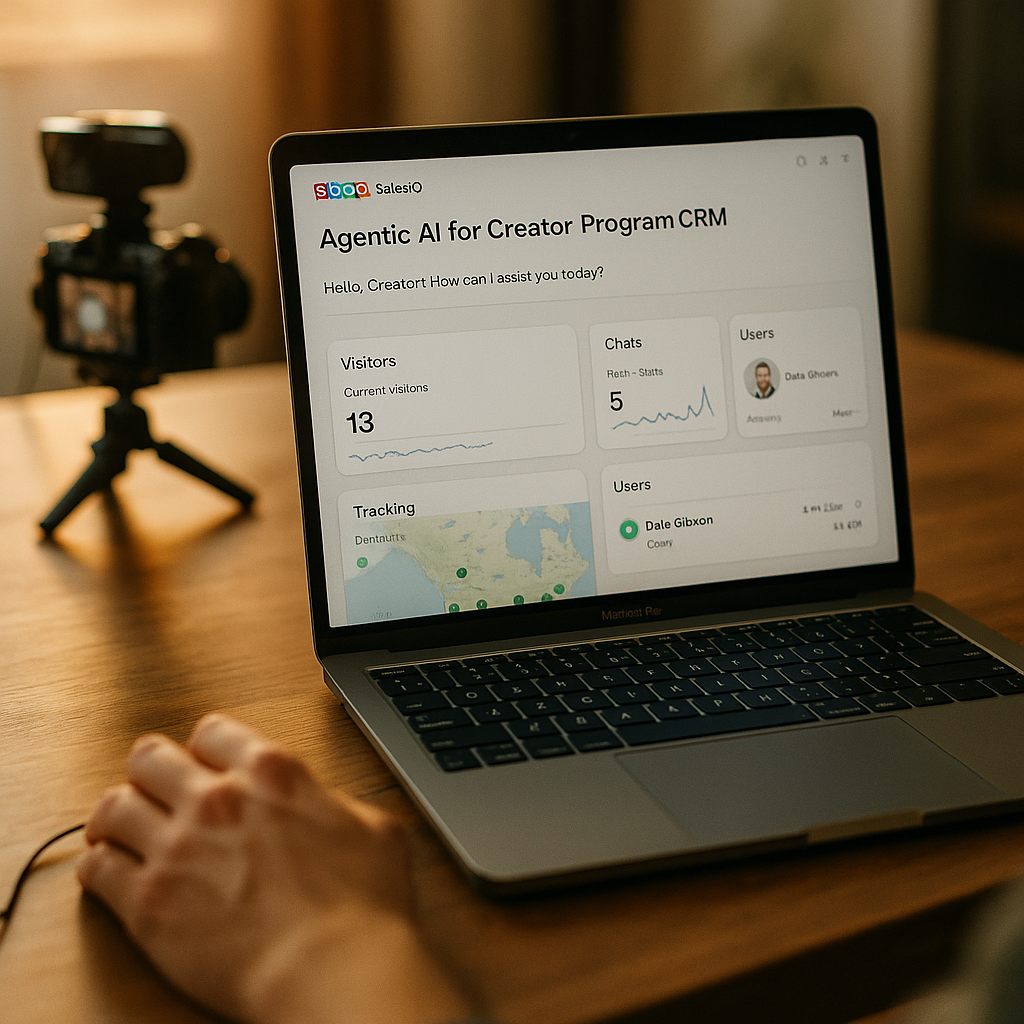
What happens when the chatbot handling your customer support pipeline already knows which influencer drove that visitor to your site? That convergence is no longer hypothetical. Zoho SalesIQ agentic intelligence is positioning itself squarely at the intersection of conversational AI, creator program CRM, and marketing automation, and brands evaluating their martech stack need a clear-eyed framework before committing.
The Blurred Line Is a Strategic Decision, Not a Feature
Most enterprise brands still run their influencer program CRM and customer support infrastructure in parallel silos. One system tracks creator deliverables, contracts, and content calendars. The other handles inbound customer conversations. These two systems share data maybe once a quarter, usually in a spreadsheet someone emails to someone else.
Agentic AI platforms like Zoho SalesIQ are challenging that architecture directly. The promise: a single conversational layer that can recognize a visitor referred by a specific creator, personalize the support interaction accordingly, route the lead intelligently, and log the entire exchange back into your creator attribution pipeline. For brands running mid-to-large ambassador or affiliate programs, that’s not a marginal efficiency gain. It’s a structural rethink of how influencer-driven traffic gets converted and measured.
Brands that unify creator attribution data with live customer conversations reduce lead-to-close latency significantly. The operational case for merging these systems is no longer theoretical, it’s a competitive gap.
Before you get excited, understand what “agentic” actually means here. An agentic AI doesn’t just respond to prompts. It takes initiative: monitoring triggers, spawning subtasks, and completing multi-step workflows without waiting for human instruction. In SalesIQ’s context, that means the system can proactively engage a site visitor who arrived via a TikTok creator’s link, pull contextual data from that creator’s campaign brief, and route the conversation to a specialized sales rep with relevant talking points already loaded. That’s a meaningfully different capability from a standard chatbot builder.
What “Empathetic Conversational AI” Actually Means for Creator Programs
Zoho has leaned into the term “empathetic AI” to describe Zia, its underlying intelligence layer inside SalesIQ. The framing matters. Empathetic in this context means the system is designed to adapt tone, pacing, and response depth based on behavioral signals rather than just keyword triggers. A visitor who lands from a fitness creator’s unboxing video and immediately clicks on a product page gets a different conversational experience than someone who arrives via a paid search ad and bounces to the FAQ.
For brands managing ambassador programs with distinct creator audience segments, this kind of audience-aware conversation routing has real operational value. You’re not just capturing leads. You’re preserving the creator’s brand voice through the post-click experience. That continuity matters for conversion. It also matters for how you credit the creator in your attribution model.
The practical question is whether SalesIQ’s empathy layer is actually that sophisticated at scale, or whether it’s more of a rules-based decision tree with better copy. The honest answer: it depends heavily on how much behavioral data you’ve fed the system, how well your UTM and identity resolution infrastructure is set up, and whether your creator program CRM is actually integrated or just connected via a surface-level API. For a deeper look at how CRM lead-to-close uplift works in creator attribution contexts, the data suggests setup quality matters as much as the platform itself.
Evaluation Framework: Five Questions That Actually Matter
If you’re a brand strategist or marketing ops leader running a formal vendor evaluation, here’s where to focus:
- Creator UTM Persistence: Does SalesIQ maintain creator-specific UTM parameters throughout the full conversation flow, including handoffs between bot and human agent? Many platforms drop attribution data at the moment of escalation. That’s a material gap if you’re paying creators on performance.
- CRM Bidirectionality: Can the system write back to your existing influencer CRM (Grin, Aspire, Upfluence, or a custom Salesforce build) in real time, or does it require batch syncs? Agentic AI loses most of its value if there’s a 24-hour lag in the data loop.
- Identity Resolution Depth: When a user interacts with a creator’s content across TikTok and then lands on your site via Instagram, does SalesIQ’s identity graph stitch those sessions together? Most mid-market platforms don’t. Understanding where your identity graph vendor coverage ends and SalesIQ’s begins is critical due diligence.
- Compliance Architecture: Empathetic AI that personalizes interactions based on behavioral data creates real GDPR and CCPA exposure. Ask Zoho directly how SalesIQ handles data residency, consent capture at the conversation level, and data retention policies. The FTC’s disclosure guidelines also apply when AI-driven conversations are connected to influencer-referred traffic, a nuance many legal teams haven’t caught up with yet.
- Total Cost of Ownership vs. Point Solutions: SalesIQ’s pricing scales with operator seats and conversation volume. For brands already paying for a dedicated influencer platform and a separate customer support tool, the consolidation math needs to be run carefully. Factor in implementation, training, and the inevitable custom development work required to make integrations production-ready.
Where SalesIQ Competes and Where It Doesn’t
Zoho SalesIQ is genuinely strong in mid-market use cases where budget constraints make a unified platform more attractive than best-of-breed point solutions. Its native integration with the broader Zoho CRM ecosystem is a legitimate advantage if your brand already runs on Zoho infrastructure. For enterprise teams running complex, multi-tier creator programs across five or more platforms simultaneously, the limitations become more visible. For a direct comparison of how it stacks up against Adobe’s enterprise-grade tooling, the Adobe CX Enterprise comparison is worth reading before you finalize your vendor shortlist.
The agentic intelligence layer is real, but it’s most effective when constrained to well-defined workflows. Fully autonomous creator onboarding, compliance checks, and commission dispute resolution are not yet where this platform reliably delivers without human oversight. Frame it as intelligent automation with guardrails, not autonomous AI.
Evaluating SalesIQ for creator CRM is ultimately an architecture question, not a features question. If your data infrastructure can support the integration, the conversational AI layer becomes genuinely powerful. If it can’t, you’re buying a sophisticated chatbot at enterprise pricing.
Brands serious about creator program automation should also evaluate whether SalesIQ’s agentic layer can replace or reduce reliance on separate workflow tools like Zapier or Make for creator onboarding sequences. In many implementations, it can, but only after significant configuration work upfront.
The Integration Reality Check
Here’s what vendors understate: integration is where agentic AI projects go to die. SalesIQ’s REST API is well-documented and the Zoho developer ecosystem is mature. But connecting it to your creator commerce attribution stack (typically involving GA4, a CDP, and a creator platform) requires dedicated engineering resources. Assume six to ten weeks of scoped development work for a production-ready build, not the three to five days implied in most sales decks.
For brands already using GA4 as a central measurement layer, reviewing how your GA4 channel attribution is configured before adding SalesIQ to the mix will save significant rework. Misaligned channel groupings are the most common reason creator-driven conversations fail to attribute correctly downstream.
Also worth evaluating: how SalesIQ handles agentic CDP capabilities relative to your existing customer data infrastructure. If you’re running a legacy CDP, the data handshake between SalesIQ’s conversation layer and your audience segments may require middleware that adds both cost and latency.
External research from Gartner consistently shows that AI-driven customer engagement projects fail most often at the data integration layer, not the AI layer itself. That finding is especially relevant for creator program use cases where attribution chains are already fragile.
Before signing any SalesIQ contract, run a proof-of-concept on a single creator campaign with clearly defined UTMs, a controlled audience segment, and a defined conversion event. Measure attribution accuracy against your existing baseline. That single test will tell you more than any vendor demo. For broader context on how to structure that evaluation, the AI martech evaluation framework provides a useful problem-definition methodology. You can also benchmark your findings against eMarketer’s research on AI-driven conversion rates in influencer-driven retail funnels.
Your immediate next step: Map your current creator-to-conversion data flow before you evaluate any agentic CRM platform. If you can’t trace a creator referral through to a closed deal in your existing stack, adding SalesIQ won’t fix that gap. It will inherit it.
FAQs
What is Zoho SalesIQ agentic intelligence and how does it differ from standard chatbots?
Zoho SalesIQ agentic intelligence refers to its AI layer (powered by Zia) that can take proactive, multi-step actions without waiting for human prompts. Unlike standard rule-based chatbots that respond to keywords, agentic AI monitors behavioral triggers, spawns workflows, routes leads, and logs interactions back into CRM systems autonomously. In creator program contexts, this means it can recognize influencer-referred traffic, personalize the conversation accordingly, and update attribution data in real time.
Can SalesIQ replace a dedicated influencer CRM platform?
Not entirely, for most enterprise brands. SalesIQ is strong at managing the post-click customer conversation layer and can integrate with creator attribution pipelines. However, it lacks the native creator discovery, contract management, content approval, and compliance tracking features found in dedicated influencer platforms like Grin, Aspire, or Upfluence. It works best as a complementary layer that handles conversion-stage interactions, not as a full replacement for creator relationship management tools.
How does SalesIQ handle GDPR and CCPA compliance for influencer-driven conversations?
SalesIQ includes consent management features at the conversation level and supports data residency configurations within the Zoho infrastructure. However, brands must configure these settings intentionally. When AI-personalized conversations are tied to influencer-referred traffic, there are additional disclosure obligations under FTC guidelines. Legal and compliance teams should review both the platform’s default data retention policies and how behavioral data collected during bot interactions is stored, used, and deleted on request.
What integration work is realistically required to connect SalesIQ to a creator attribution stack?
A production-ready integration connecting SalesIQ to a GA4 measurement layer, a CDP, and a creator platform typically requires six to ten weeks of engineering work. The REST API is well-documented, but custom middleware is often needed to maintain UTM parameter persistence through conversation handoffs and to write attribution data back to creator platforms in real time. Brands should budget for this development work explicitly and validate the integration with a controlled proof-of-concept before full deployment.
Is SalesIQ’s empathetic AI feature genuinely audience-aware or primarily rules-based?
The honest answer is that it operates on a spectrum. The system adapts tone and routing based on behavioral signals (pages visited, referral source, session depth), which is meaningfully more sophisticated than keyword triggers. However, the quality of personalization scales directly with the richness of the data you feed it. Brands with well-structured UTM taxonomies, integrated CDPs, and clean audience segmentation will see genuinely adaptive conversations. Brands with fragmented data infrastructure will largely experience sophisticated rule-based routing with better copy.
Top Influencer Marketing Agencies
The leading agencies shaping influencer marketing in 2026
Agencies ranked by campaign performance, client diversity, platform expertise, proven ROI, industry recognition, and client satisfaction. Assessed through verified case studies, reviews, and industry consultations.
Moburst

-
2

The Shelf
Boutique Beauty & Lifestyle Influencer AgencyA data-driven boutique agency specializing exclusively in beauty, wellness, and lifestyle influencer campaigns on Instagram and TikTok. Best for brands already focused on the beauty/personal care space that need curated, aesthetic-driven content.Clients: Pepsi, The Honest Company, Hims, Elf Cosmetics, Pure LeafVisit The Shelf → -
3

Audiencly
Niche Gaming & Esports Influencer AgencyA specialized agency focused exclusively on gaming and esports creators on YouTube, Twitch, and TikTok. Ideal if your campaign is 100% gaming-focused — from game launches to hardware and esports events.Clients: Epic Games, NordVPN, Ubisoft, Wargaming, Tencent GamesVisit Audiencly → -
4

Viral Nation
Global Influencer Marketing & Talent AgencyA dual talent management and marketing agency with proprietary brand safety tools and a global creator network spanning nano-influencers to celebrities across all major platforms.Clients: Meta, Activision Blizzard, Energizer, Aston Martin, WalmartVisit Viral Nation → -
5

The Influencer Marketing Factory
TikTok, Instagram & YouTube CampaignsA full-service agency with strong TikTok expertise, offering end-to-end campaign management from influencer discovery through performance reporting with a focus on platform-native content.Clients: Google, Snapchat, Universal Music, Bumble, YelpVisit TIMF → -
6

NeoReach
Enterprise Analytics & Influencer CampaignsAn enterprise-focused agency combining managed campaigns with a powerful self-service data platform for influencer search, audience analytics, and attribution modeling.Clients: Amazon, Airbnb, Netflix, Honda, The New York TimesVisit NeoReach → -
7

Ubiquitous
Creator-First Marketing PlatformA tech-driven platform combining self-service tools with managed campaign options, emphasizing speed and scalability for brands managing multiple influencer relationships.Clients: Lyft, Disney, Target, American Eagle, NetflixVisit Ubiquitous → -
8

Obviously
Scalable Enterprise Influencer CampaignsA tech-enabled agency built for high-volume campaigns, coordinating hundreds of creators simultaneously with end-to-end logistics, content rights management, and product seeding.Clients: Google, Ulta Beauty, Converse, AmazonVisit Obviously →