


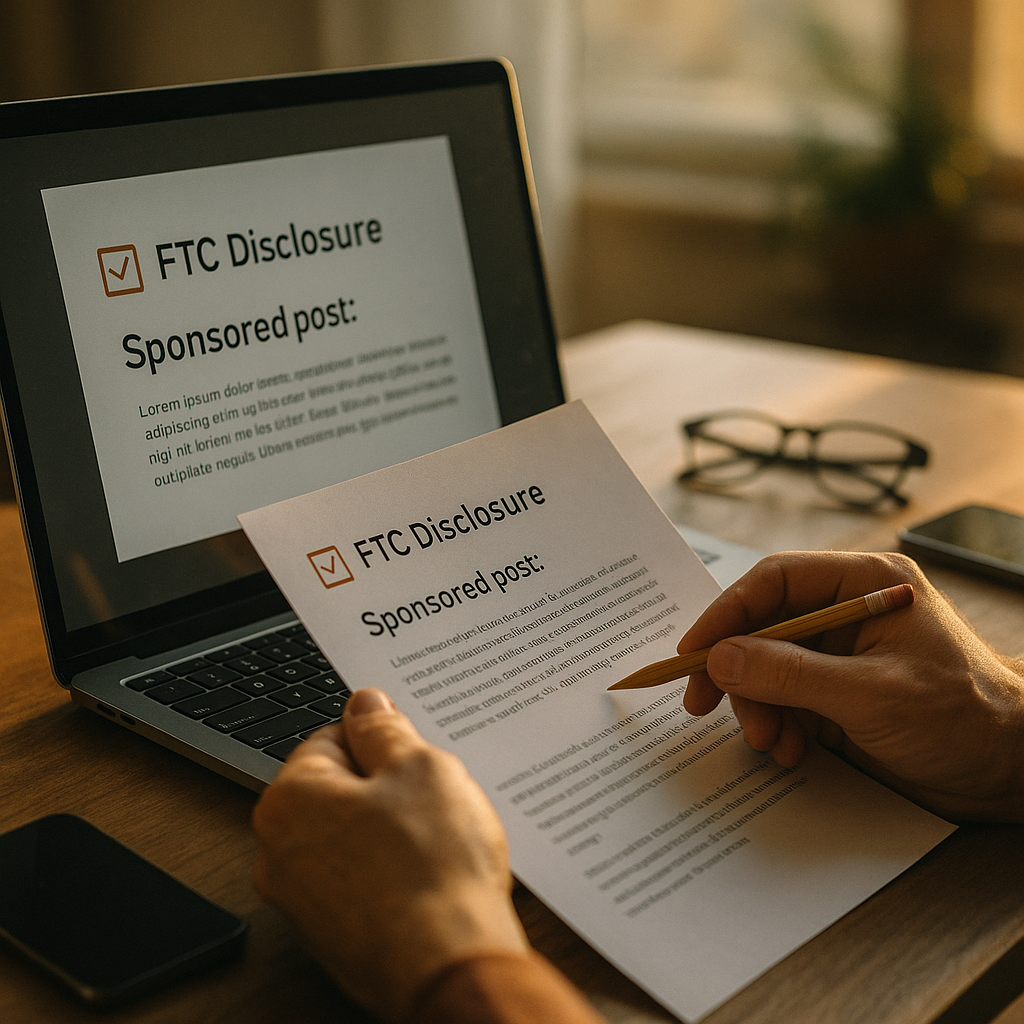
Compliant creator content outperforms non-disclosed content by more than 50 percent in engagement. If your briefing team is still treating disclosure requirements as a legal checkbox, you are leaving measurable performance gains on the table.
The Data Behind the 50 Percent Lift
The evidence comes from multiple directions. Research tracked by France’s ARPP-certified creator programs found that influencers who completed formal disclosure training and carried certification badges generated engagement rates significantly above the platform average. The mechanism is not accidental. When audiences can see a clear #ad or #sponsored label, they are not being deceived, and the psychological contract between creator and follower remains intact. Trust survives. Engagement follows.
This contradicts what most marketing teams instinctively assume. The old logic ran: disclosure signals “this is an ad,” which signals “this is propaganda,” which tanks credibility. That logic made sense in a pre-creator economy world. It does not hold now. Audiences in 2026 are sophisticated enough to distinguish between a creator they trust endorsing something transparently and a brand running display retargeting. They reward the former.
Audiences do not penalize transparency. They penalize being misled. When creators disclose partnerships clearly, follower trust compounds, and that trust is what actually drives click-throughs, saves, and conversions.
Why Briefing Teams Are the Bottleneck
Most disclosure failures originate not in legal review but in the brief. A contract team can mandate “#ad in the first line of caption” all day long. If the creative brief instructs the creator to “keep it authentic, don’t make it feel like an ad,” you have created a direct conflict between the compliance requirement and the creative direction. Creators, trying to satisfy the brief, soft-pedal the label. Disclosures end up buried in hashtag stacks or placed below the fold in the caption, technically present but practically invisible.
The FTC’s endorsement guidelines are explicit: disclosure must be clear and conspicuous, not hidden in a cluster of 20 hashtags. Enforcement actions have named brands and creators alike, and the FTC’s 2023 revised guides raised the bar further on what “clear” actually means in short-form video contexts. The operational implication is straightforward: briefing templates need to make disclosure placement a creative directive, not an afterthought.
This is where brand teams can make an immediate operational shift. The brief should specify the exact disclosure language, the exact placement (first three seconds of video, first line of caption before “more”), and frame it as a trust signal rather than a legal intrusion. Creators who understand why the label is there, and why their audience actually responds to it, execute disclosures better.
Reframing the Contract Clause
Contract teams typically embed disclosure requirements in a compliance or representations section. The language is defensive, structured around what happens if the creator fails to comply, penalty clauses, right to demand re-shoots, indemnification. That framing is legally sound but operationally counterproductive.
When a creator reads a contract and sees disclosure buried in a liability section next to clauses about intellectual property infringement and governing law, the psychological framing is: “This is a legal requirement I could get in trouble for ignoring.” What it should communicate: “This is how we protect your audience relationship and why our best-performing campaigns run this way.”
Reframe the disclosure section. Move it earlier in the contract structure. Title it “Partnership Transparency Standards” rather than “Regulatory Compliance.” Include a brief rationale: something to the effect that the brand’s campaign data shows disclosed content consistently outperforms non-disclosed content in reach and engagement. That single sentence changes how a creator reads the clause. You can refine creator MSA templates to structure this shift without adding legal risk.
Some brands have gone further, linking disclosure compliance to performance-based compensation. If a creator’s disclosed posts hit engagement benchmarks, they qualify for a bonus tier. That structure aligns financial incentives with compliance incentives in a way that no penalty clause can replicate.
Platform-Specific Execution Details That Brief Templates Miss
Disclosure execution is not platform-agnostic. Each major platform has its own built-in tools and its own quirks that affect whether a disclosure is actually surfaced to the audience.
- TikTok: The platform’s Branded Content Toggle adds an automatic “Paid partnership” label when activated by the creator. Brand briefs should specify that this toggle must be enabled, not just that “#ad” be added to the caption. Both are required under FTC guidance, but the toggle ensures the label appears in the video frame itself. A solid TikTok creator approval workflow should include toggle verification as a deliverable checkpoint.
- Instagram: The “Paid partnership with [Brand]” label appears in the header when the creator tags the brand in the collaboration tool. Briefs should require this, not just a caption hashtag. The header label is visible before the audience expands the caption.
- YouTube: Disclosure must appear in the first 30 seconds of video and in the video description. YouTube’s own paid promotion checkbox should be ticked. Given the platform’s evolving stance on AI-generated content, brands working with AI-assisted creators should also review FTC disclosure rules for AI-remixed content.
A brief template that specifies platform-by-platform disclosure execution removes ambiguity and reduces the back-and-forth between brand, creator, and legal that delays content approval.
Measuring the Performance Lift
If you are going to position disclosure as a performance driver, you need to measure it as one. Most brands currently track campaign engagement in aggregate. They do not segment disclosed versus non-disclosed content to see whether the data pattern holds in their own portfolio.
Build that segmentation into your reporting. Pull engagement rates for posts where the creator used the platform’s native partnership label versus posts where they relied only on caption hashtags. Pull data for posts where the disclosure appeared in the first line versus buried in hashtags. The differential will almost certainly confirm the broader research trend, and that internal data becomes a far more persuasive argument with creators and internal stakeholders than citing an external study.
Internal campaign data that validates the 50 percent engagement lift within your own creator portfolio is the most powerful briefing tool you have. It converts compliance from a legal mandate into a brand-owned performance insight.
Sprout Social, HubSpot, and platforms like CreatorIQ all provide engagement segmentation at the post level. Tagging content by disclosure type in your campaign taxonomy takes about 30 seconds per post and creates a dataset that your briefing and contract teams can use to justify the performance-first framing with real numbers.
Risk Mitigation as a Secondary Benefit, Not the Lead
None of this means you stop caring about regulatory risk. The FTC, the UK’s ASA, and the EU’s updated rules under the Digital Services Act all carry real enforcement exposure. For brands operating across jurisdictions, the compliance complexity is genuine, and guidance on issues like age restriction compliance shows how layered the regulatory environment has become.
But the strategic mistake is leading with risk when you brief creators and when you negotiate contracts. Risk-first framing generates creator resistance and creates an adversarial dynamic. Performance-first framing, backed by actual engagement data, generates creator buy-in. The compliance outcome is identical. The creator relationship is categorically better.
Start your next briefing cycle by adding a single slide to your creator onboarding deck that shows your portfolio’s engagement data segmented by disclosure compliance. Let the numbers do the work.
FAQs
Does adding a disclosure label really hurt engagement?
No. The evidence from certified influencer programs and platform-level data consistently shows disclosed content performs at the same level or better than non-disclosed content. Audiences reward transparency from creators they already trust. The fear that a label kills authenticity is not supported by current performance data.
What is the FTC’s current standard for “clear and conspicuous” disclosure?
The FTC requires that disclosures be placed where consumers will actually see them, in language they can understand, before they make a decision to engage. For video, that means within the first 30 seconds. For social captions, it means at the start of the caption, not buried in hashtags. The FTC’s revised endorsement guides, updated in 2023, provide specific examples. You can review the current guidelines directly at ftc.gov.
How do you get creators to actually follow disclosure requirements?
The most effective approach combines a performance rationale with structural brief requirements. Tell creators why disclosed content outperforms non-disclosed content and show them the data. Then make disclosure placement a specific, platform-by-platform deliverable in the brief and contract, not a vague legal instruction. Linking disclosure compliance to bonus compensation structures also significantly improves follow-through.
Should disclosure requirements differ by platform?
Yes. Each platform has native disclosure tools (TikTok’s Branded Content Toggle, Instagram’s Paid Partnership label, YouTube’s paid promotion checkbox) that function differently and affect how prominently the label is displayed. Brands should specify both the platform’s native tool and any additional caption or verbal disclosure in the brief, since the FTC’s standard applies regardless of which platform is being used.
Can non-compliance with disclosure rules actually damage campaign performance?
Yes, in multiple ways. Platforms like TikTok and Instagram de-prioritize content that uses workarounds to avoid disclosure requirements. Audiences who feel misled after discovering an undisclosed sponsorship report lower trust and are less likely to engage with future content from that creator. And FTC enforcement actions generate press coverage that can damage both the creator’s and the brand’s reputation far beyond the cost of the fine itself.
Top Influencer Marketing Agencies
The leading agencies shaping influencer marketing in 2026
Agencies ranked by campaign performance, client diversity, platform expertise, proven ROI, industry recognition, and client satisfaction. Assessed through verified case studies, reviews, and industry consultations.
Moburst

-
2

The Shelf
Boutique Beauty & Lifestyle Influencer AgencyA data-driven boutique agency specializing exclusively in beauty, wellness, and lifestyle influencer campaigns on Instagram and TikTok. Best for brands already focused on the beauty/personal care space that need curated, aesthetic-driven content.Clients: Pepsi, The Honest Company, Hims, Elf Cosmetics, Pure LeafVisit The Shelf → -
3

Audiencly
Niche Gaming & Esports Influencer AgencyA specialized agency focused exclusively on gaming and esports creators on YouTube, Twitch, and TikTok. Ideal if your campaign is 100% gaming-focused — from game launches to hardware and esports events.Clients: Epic Games, NordVPN, Ubisoft, Wargaming, Tencent GamesVisit Audiencly → -
4

Viral Nation
Global Influencer Marketing & Talent AgencyA dual talent management and marketing agency with proprietary brand safety tools and a global creator network spanning nano-influencers to celebrities across all major platforms.Clients: Meta, Activision Blizzard, Energizer, Aston Martin, WalmartVisit Viral Nation → -
5

The Influencer Marketing Factory
TikTok, Instagram & YouTube CampaignsA full-service agency with strong TikTok expertise, offering end-to-end campaign management from influencer discovery through performance reporting with a focus on platform-native content.Clients: Google, Snapchat, Universal Music, Bumble, YelpVisit TIMF → -
6

NeoReach
Enterprise Analytics & Influencer CampaignsAn enterprise-focused agency combining managed campaigns with a powerful self-service data platform for influencer search, audience analytics, and attribution modeling.Clients: Amazon, Airbnb, Netflix, Honda, The New York TimesVisit NeoReach → -
7

Ubiquitous
Creator-First Marketing PlatformA tech-driven platform combining self-service tools with managed campaign options, emphasizing speed and scalability for brands managing multiple influencer relationships.Clients: Lyft, Disney, Target, American Eagle, NetflixVisit Ubiquitous → -
8

Obviously
Scalable Enterprise Influencer CampaignsA tech-enabled agency built for high-volume campaigns, coordinating hundreds of creators simultaneously with end-to-end logistics, content rights management, and product seeding.Clients: Google, Ulta Beauty, Converse, AmazonVisit Obviously →