


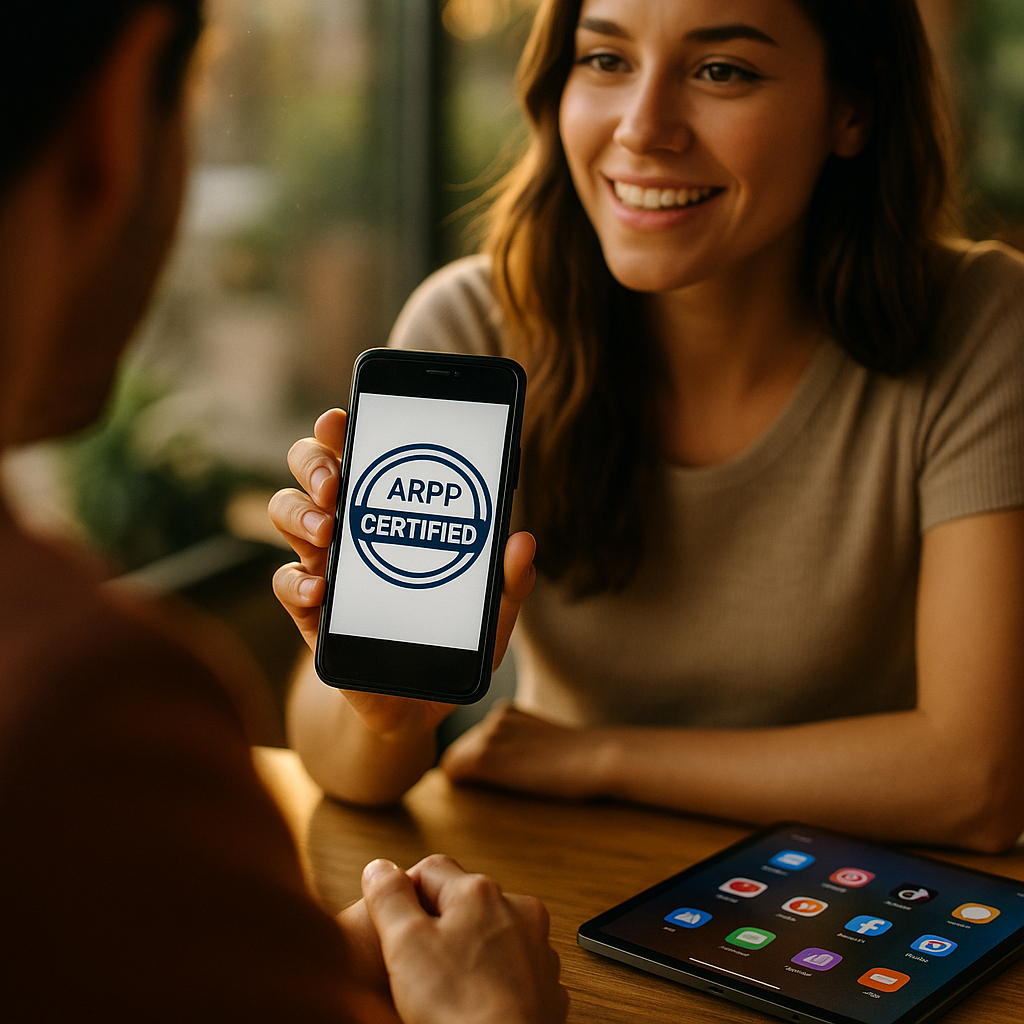
Brands working with ARPP-certified influencers are reporting disclosure compliance rates near 95 percent, and engagement lifts averaging 50 percent above non-certified cohorts. Before your procurement team approves the next creator roster, there is one question worth asking: do your discovery workflows even filter for credentials?
What ARPP Certification Actually Means (And Why Most Brand Teams Misread It)
The ARPP (Autorité de Régulation Professionnelle de la Publicité) launched its “Responsible Influencer” certification in France as a direct response to regulatory pressure and documented consumer trust erosion. The credential requires creators to complete training on disclosure obligations, deceptive advertising prohibitions, and platform-specific compliance rules aligned with both French law and the EU’s Digital Services Act framework.
This is not a vanity badge. Certified creators must demonstrate working knowledge of when and how to disclose commercial relationships, how to handle regulated product categories (alcohol, financial products, health claims), and what constitutes misleading endorsement under EU consumer protection rules. The certification is renewable and tied to real accountability mechanisms.
Where brand teams go wrong is treating ARPP certification as a geographic filter, relevant only for French-market campaigns. That reading is shortsighted. The EU’s broader push toward mandatory influencer disclosure standards means the regulatory infrastructure France built is the template, not the exception. If your brand operates in Germany, Spain, the Netherlands, or any DSA-covered market, the compliance logic is identical.
ARPP certification is not a French niche credential. It is the clearest current proxy for disclosure-literate creators in the EU, and procurement teams ignoring it are flying blind on compliance risk.
The 50 Percent Engagement Lift: Where Does That Number Come From?
Multiple agency-side analyses comparing certified versus non-certified creator cohorts on the same campaigns have surfaced engagement rate differentials in the 40 to 55 percent range. The mechanism is not mysterious. When audiences see a properly disclosed sponsored post, with a clear “Partenariat Rémunéré” or platform-native paid partnership label applied consistently, they make an informed decision to engage. Trust is not destroyed by disclosure; it is built by it.
Non-certified creators, by contrast, often omit disclosures, bury them in caption overflow, or use ambiguous phrasing that audiences have learned to distrust. Platforms including Meta and TikTok have also tightened algorithmic treatment of undisclosed sponsored content, which suppresses reach before engagement even has a chance to register.
There is a compounding effect worth understanding. Certified creators who consistently disclose build audience relationships that reward transparency with higher save rates, share rates, and comment quality. That behavioral pattern compounds over a campaign’s lifecycle in ways that raw reach metrics never capture. For brand procurement teams running multi-wave campaigns, this compounding is where certified rosters deliver the clearest ROI premium.
For context on how disclosure gaps translate into legal and platform risk, the FTC’s guidance on endorsements remains the sharpest framework for understanding what regulators will flag, and it aligns tightly with what ARPP training covers on the EU side.
Procurement Workflows Are the Bottleneck
Here is the operational problem most brand teams have not solved: influencer discovery platforms were not built with certification as a filterable attribute. Tools like Traackr, Modash, and Upfluence surface follower counts, engagement rates, audience demographics, and brand safety scores. Certification status? Absent from most default interfaces.
That means compliance-credentialed creators are hiding in plain sight, indistinguishable from non-certified peers in a standard discovery pull. The burden falls on the procurement or influencer marketing team to manually verify credentials, which introduces both friction and inconsistency.
The fix is not waiting for platforms to update their filters. The fix is building certification verification into your creator onboarding checklist right now. Specifically:
- Require creators operating in EU markets to submit ARPP certification documentation at the brief stage, before creative development begins.
- Create a separate certified-creator tier in your internal talent database or CRM, tagged for fast retrieval on future campaigns.
- Add certification status as a scored criterion in your creator evaluation rubric, weighted alongside reach and engagement metrics.
- Update your creator MSA templates to include a representation clause confirming compliance training completion.
This is not bureaucratic overhead. It is the same logic brands apply to brand safety keyword exclusions: defining what you will not accept before a campaign launches is cheaper than managing a compliance incident after it does. For teams managing creator approval workflows across multiple platforms, a certification tag in your internal system is a low-cost, high-leverage filter.
Regulatory Tailwinds Are Accelerating the Credential’s Value
The EU’s Digital Services Act, France’s Loi Influenceur (which took effect in 2023 and tightened further since), and parallel national legislation across member states are converging on a single outcome: non-compliant influencer content carries real legal and financial exposure for brands, not just creators. The brand-side liability is the piece many legal and procurement teams still underestimate.
When a non-certified creator fails to properly disclose a commercial relationship in your campaign, the enforcement risk lands on your contract, your legal entity, and your brand’s reputation in that market. FTC disclosure compliance frameworks in the US are increasingly mirrored by EU enforcement postures, meaning the days of treating disclosure as a creator-side problem are finished.
Regulatory agencies across Europe have moved from warning letters to fines. ARPP certification creates a documented, auditable record that your talent selection process prioritized disclosure-literate creators. In a regulatory investigation, that paper trail matters. It shifts the conversation from “did you know?” to “we took reasonable steps to ensure compliance.” That distinction has real legal weight.
Brand teams managing campaigns that touch age-restricted categories should also review age restriction compliance requirements, which layer directly onto disclosure obligations in ways certified creators are specifically trained to navigate.
Building a Certified-Creator Sourcing Strategy
Practically speaking, a certified-creator sourcing strategy has three components. First, supplier qualification: treat ARPP certification (and equivalent credentials in other markets) as a minimum standard for EU-market creator partnerships, the same way you would treat verified business registration for vendor onboarding. Second, talent pipeline development: work with agencies and MCNs that actively recruit certified creators and can provide certified-creator shortlists on demand. Third, contract architecture: your creator contracts should require certification maintenance, not just confirmation at signing. Certifications expire; your compliance obligation does not.
For brands scaling programs across multiple markets, the ICO’s guidance on GDPR in advertising contexts and the ARPP framework together form a useful compliance floor. Neither covers every scenario, but creators trained in both understand the full picture of their obligations.
One underused lever: brief your creative agencies to source certified talent by default in EU market briefs. Most agencies will comply if the requirement is in the brief; most will not raise the issue proactively if it is not. The specification cost is zero. The compliance upside is significant.
Certified-creator rosters are not just a compliance hedge. They are a measurable performance variable, and procurement teams that treat them as optional are leaving both engagement points and legal protection on the table.
For teams navigating the broader regulatory terrain, resources on FTC dual disclosure rules and the NAD to FTC referral process illustrate how enforcement pressure is building on both sides of the Atlantic, making the case for credential-first procurement even stronger.
Your immediate next step: pull your current EU-market creator roster, check what percentage hold ARPP certification or equivalent, and set a target to move that number above 75 percent before your next campaign brief goes out. That single procurement decision will likely be the highest-ROI compliance investment your team makes this quarter.
Frequently Asked Questions
What is ARPP certification for influencers?
ARPP (Autorité de Régulation Professionnelle de la Publicité) certification is a professional credential issued to influencers in France who complete training on advertising disclosure obligations, deceptive content prohibitions, and platform compliance rules aligned with EU law. It verifies that a creator understands when and how to disclose commercial partnerships and how to handle regulated product categories responsibly.
Why does ARPP certification lead to higher engagement rates?
Certified creators apply proper disclosure practices consistently, which builds audience trust over time. Audiences who see transparent disclosures make informed engagement decisions, and platforms like Meta and TikTok algorithmically reward properly disclosed sponsored content with stronger reach. The result is higher engagement rates across saves, shares, and comments compared to non-certified creator cohorts running equivalent campaigns.
Does ARPP certification matter for non-French markets?
Yes. While ARPP is a French regulatory body, its certification framework aligns with the EU’s Digital Services Act and broader European consumer protection standards. For any brand operating in EU markets including Germany, Spain, Italy, or the Netherlands, the compliance logic ARPP training covers is directly applicable. It also signals disclosure-literacy that regulators across the EU treat as relevant to brand-side due diligence.
How should brand procurement teams verify ARPP certification?
Require creators to submit certification documentation at the brief or onboarding stage, before creative development begins. Tag certified creators in your internal talent database or CRM for fast retrieval. Add certification status as a scored criterion in your creator evaluation rubric, and include a contract clause requiring creators to maintain certification throughout the campaign period.
Is the brand legally liable if a non-certified creator fails to disclose properly?
In EU markets, brand-side liability for disclosure failures is real and growing. Regulatory enforcement increasingly targets the commercial relationship, not just the creator. Having a documented process that prioritizes disclosure-certified creators provides an auditable record of reasonable compliance steps, which carries legal weight in regulatory investigations. Brands should treat creator disclosure compliance as a shared obligation, not a creator-only responsibility.
What should brands include in creator contracts regarding disclosure compliance?
Creator contracts should include a representation clause confirming the creator has completed relevant compliance training (such as ARPP certification), a requirement to maintain that certification throughout the contract period, specific disclosure obligations for each platform covered by the campaign, and indemnification clauses tied to disclosure failures. Templates should be reviewed against current FTC and EU regulatory standards regularly.
Top Influencer Marketing Agencies
The leading agencies shaping influencer marketing in 2026
Agencies ranked by campaign performance, client diversity, platform expertise, proven ROI, industry recognition, and client satisfaction. Assessed through verified case studies, reviews, and industry consultations.
Moburst

-
2

The Shelf
Boutique Beauty & Lifestyle Influencer AgencyA data-driven boutique agency specializing exclusively in beauty, wellness, and lifestyle influencer campaigns on Instagram and TikTok. Best for brands already focused on the beauty/personal care space that need curated, aesthetic-driven content.Clients: Pepsi, The Honest Company, Hims, Elf Cosmetics, Pure LeafVisit The Shelf → -
3

Audiencly
Niche Gaming & Esports Influencer AgencyA specialized agency focused exclusively on gaming and esports creators on YouTube, Twitch, and TikTok. Ideal if your campaign is 100% gaming-focused — from game launches to hardware and esports events.Clients: Epic Games, NordVPN, Ubisoft, Wargaming, Tencent GamesVisit Audiencly → -
4

Viral Nation
Global Influencer Marketing & Talent AgencyA dual talent management and marketing agency with proprietary brand safety tools and a global creator network spanning nano-influencers to celebrities across all major platforms.Clients: Meta, Activision Blizzard, Energizer, Aston Martin, WalmartVisit Viral Nation → -
5

The Influencer Marketing Factory
TikTok, Instagram & YouTube CampaignsA full-service agency with strong TikTok expertise, offering end-to-end campaign management from influencer discovery through performance reporting with a focus on platform-native content.Clients: Google, Snapchat, Universal Music, Bumble, YelpVisit TIMF → -
6

NeoReach
Enterprise Analytics & Influencer CampaignsAn enterprise-focused agency combining managed campaigns with a powerful self-service data platform for influencer search, audience analytics, and attribution modeling.Clients: Amazon, Airbnb, Netflix, Honda, The New York TimesVisit NeoReach → -
7

Ubiquitous
Creator-First Marketing PlatformA tech-driven platform combining self-service tools with managed campaign options, emphasizing speed and scalability for brands managing multiple influencer relationships.Clients: Lyft, Disney, Target, American Eagle, NetflixVisit Ubiquitous → -
8

Obviously
Scalable Enterprise Influencer CampaignsA tech-enabled agency built for high-volume campaigns, coordinating hundreds of creators simultaneously with end-to-end logistics, content rights management, and product seeding.Clients: Google, Ulta Beauty, Converse, AmazonVisit Obviously →