


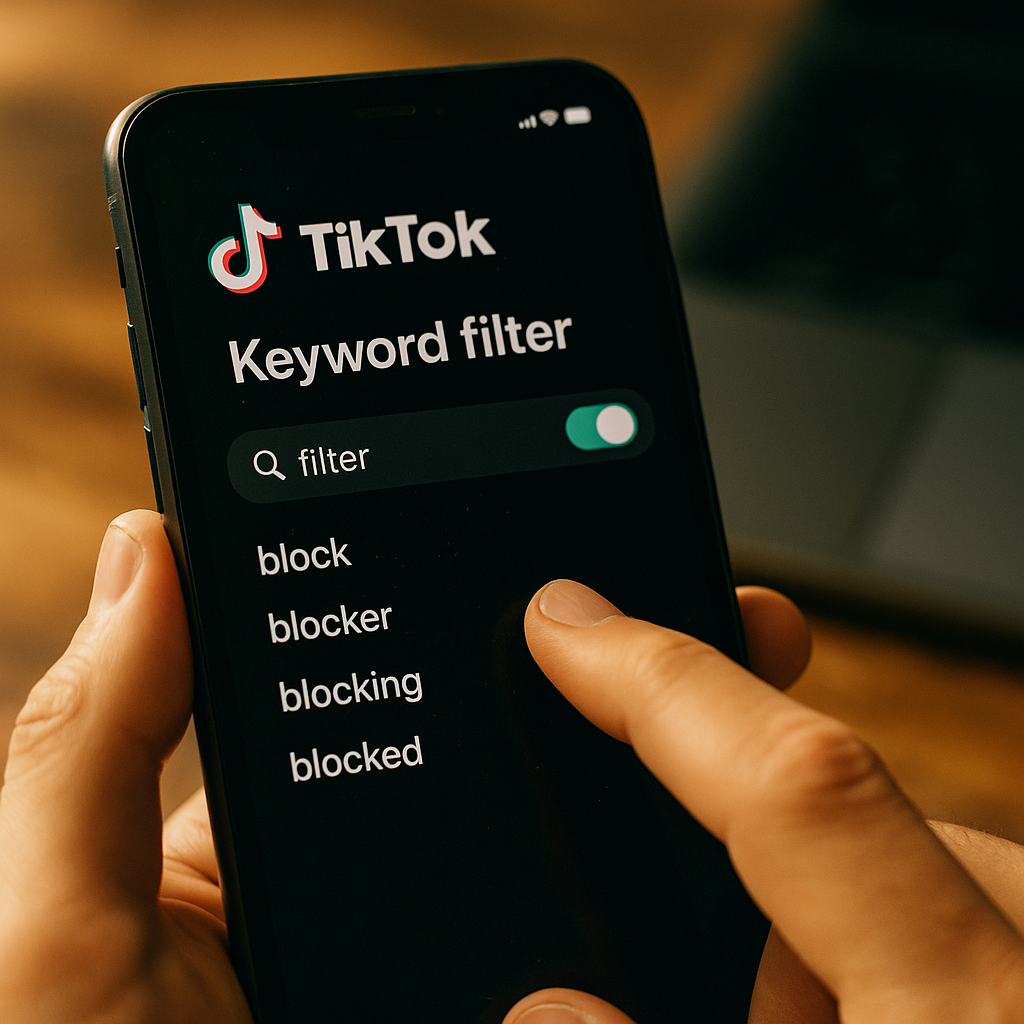
Manual keyword lists are failing your brand. Research from eMarketer shows that over 60% of brand safety incidents on short-form video platforms occur adjacent to content that bypasses exact-match filters through slang, phonetic spelling, or contextual drift. TikTok’s Smart Keyword Filter AI was built to close that gap — but only if your content team configures it correctly from day one.
Why Exact-Match Blocking Is a False Floor
Most brand safety configurations inside TikTok Ads Manager start and end with a manually curated keyword list. A brand manager blocks “drugs,” “violence,” “alcohol” and considers the job done. It isn’t. The problem is linguistic drift: the same harmful content concepts appear under dozens of surface forms — abbreviations, emojis used as code, regional slang, deliberate misspellings designed to evade moderation. An exact-match list cannot keep pace with community-driven language evolution on a platform where trending vocabulary turns over in days.
Synonym blocking, as implemented through TikTok’s Smart Keyword Filter AI layer, works differently. Instead of matching a string, it maps semantic proximity. The system recognizes that “lean,” “purple drank,” and a specific emoji combination all sit within the same conceptual cluster. That’s the operational shift your team needs to understand before touching a single configuration setting.
Exact-match keyword lists address the content your team already knows about. Synonym blocking addresses everything your team hasn’t encountered yet — which is where the real adjacency risk lives.
The Three Configuration Layers You Need to Activate
TikTok’s brand safety stack isn’t a single toggle. It operates across three distinct layers, and most brands only configure one of them.
Layer 1: Inventory Filter. This is your broadest control, sitting at the campaign level. TikTok offers Standard Inventory and Limited Inventory settings, aligned loosely with GARM (Global Alliance for Responsible Media) brand safety floor definitions. Limited Inventory removes your ads from appearing alongside content flagged across 11 GARM categories. Activate this as a non-negotiable baseline. It is not a substitute for keyword filtering — it’s the structural foundation beneath it.
Layer 2: Smart Keyword Filter AI (Semantic Layer). This is where synonym blocking lives. Once you seed the system with your core exclusion terms, the AI expands outward to semantically adjacent terms, contextual phrases, and cross-language equivalents relevant to TikTok’s multilingual feed. The system is iterative: it learns from flagged content within your account’s historical data. This means a brand running TikTok campaigns for 18+ months has a materially more accurate filter than a brand that launched last quarter. If you’re newer to the platform, lean harder on third-party verification.
Layer 3: Content Category Exclusions. Separate from keyword logic, TikTok allows category-level exclusions (gambling, mature themes, tragedy/conflict, etc.). These work by content classification, not keyword matching. The mistake most teams make is treating Layer 3 as redundant once Layer 2 is active. They’re complementary: keyword filtering catches language signals, category exclusions catch visual and structural content patterns the AI classifies without relying on spoken or captioned words at all.
Building Your Synonym Cluster Seed List
The quality of Smart Keyword Filter AI output is directly proportional to the quality of your seed list. Garbage in, incomplete protection out.
Start by running a content audit using Social Listening tools — Sprout Social and Brandwatch both surface emerging slang patterns relevant to your category. Pull the top 50 terms associated with content types you need to avoid, then categorize them into conceptual clusters rather than standalone terms. Each cluster becomes a semantic anchor for the AI to build from.
For a CPG brand in the energy drink category, for example, a cluster around “substance misuse” might include: common drug slang, mixing culture terminology, overconsumption challenges, and any hashtags that have historically trended alongside risky consumption content. You’re not just blocking words; you’re blocking a semantic neighborhood.
Practical steps for cluster construction:
- Identify 5-8 core exclusion concepts relevant to your brand category and regulatory environment
- For each concept, generate 15-20 surface variations using a tool like ChatGPT or Claude — slang, abbreviations, intentional misspellings, phonetic variants
- Cross-reference against TikTok Creative Center’s trending hashtag data to verify which variants are actually in circulation
- Import the full list into TikTok Ads Manager’s keyword exclusion interface, then enable Smart Keyword Filter AI to extend from those seeds
- Schedule a 30-day audit cadence to review flagged content and refine cluster anchors
This process is more intensive than dropping 20 words into a blocklist. But it’s also the difference between brand safety theater and actual adjacency control.
Adjacency Risk Beyond the Feed
Campaign adjacency on TikTok isn’t only about what plays before or after your ad in a vertical feed. It also includes comment sections, Duet chains, and Stitch sequences that attach user-generated content to the same content ecosystem your ad appears within. Smart Keyword Filter AI doesn’t currently govern comment-section adjacency at the ad unit level — that’s a known limitation.
To address this gap, brands running always-on TikTok programs should layer in third-party brand safety verification. DoubleVerify and Integral Ad Science both offer TikTok-specific measurement integrations that provide post-campaign adjacency reporting, catching what native filters miss. If your media plan includes Branded Buzz and TopReach combined buys, third-party verification isn’t optional — the reach scale alone makes manual review operationally impossible.
It’s also worth flagging that TikTok’s AI-generated content ecosystem introduces new adjacency vectors. Faceless AI video accounts can produce high-volume content that drifts into problematic territory faster than human creators. For context on how the platform is handling AI content suppression, the AI content authorship verification question is one your compliance team should already be tracking.
Connecting Brand Safety to Creative Briefing
Configuration is only half the job. The other half is ensuring your creator briefs actively reinforce brand safety parameters rather than leaving adjacency risk entirely to platform controls.
When building creator deliverables for TikTok, your brief should specify which content neighborhoods the creator must avoid — not just prohibited topics, but adjacent communities, trending sounds, and challenge formats that carry adjacency risk even when the creator’s own content is clean. A creator participating in a trending sound that originated in a harmful content context carries brand risk regardless of what they say in the video.
For brands developing TikTok Shop creator briefs, this is especially critical because shop-linked content sits at the intersection of organic discovery and paid amplification, meaning adjacency risk compounds with scale. Pair your Smart Keyword Filter AI configuration with explicit brief language about sound selection, hashtag pools, and Stitch/Duet permissions.
Brand safety configuration and creator briefing are not separate workstreams. When they operate in silos, the gap between them is exactly where adjacency incidents happen.
For teams managing broader TikTok strategy across paid and organic, the organic, paid and creator playbook framework is a useful structural reference for integrating brand safety requirements at the program level rather than treating them as a one-time setup task.
Governance: Who Owns the Configuration
The most common operational failure in brand safety configuration isn’t technical. It’s ownership ambiguity. Paid media teams configure keyword filters during campaign setup and then don’t revisit them. Creative teams write briefs without visibility into what the platform-side controls actually cover. Legal and compliance sign off on a policy document that nobody translates into Ads Manager settings.
Assign a named owner for TikTok brand safety configuration — typically a senior member of the paid social team with a dotted line to legal. Build a quarterly review checkpoint into your campaign governance calendar. At each checkpoint, pull the Smart Keyword Filter AI’s flagged content log, identify any new semantic clusters that emerged, and update seed lists accordingly. The platform evolves. Your configuration has to evolve with it.
If your organization runs influencer programs at scale, you might also find it useful to benchmark your TikTok brand safety process against how similar controls are structured on other platforms. The YouTube Shorts brand safety settings framework provides a useful comparison point, particularly around MRC-accredited measurement standards that TikTok is increasingly aligning with.
For teams with cross-platform budget considerations, FTC compliance requirements around disclosure intersect with brand safety governance in ways that are easy to overlook when teams are siloed by platform. A creator brief that’s clean on content adjacency but misses a disclosure requirement creates a different category of brand risk entirely.
TikTok’s own documentation on ad policies and safety tools is available through the TikTok Ads platform directly — review it quarterly, as policy updates frequently precede algorithm changes that affect keyword filter behavior.
Start this week: pull your current TikTok keyword exclusion list, map every term to a semantic cluster, identify which clusters have fewer than 10 surface variants, and treat those gaps as your immediate configuration priority. That single exercise will do more for your actual adjacency risk profile than any incremental budget increase in third-party brand safety tools.
FAQs
What is TikTok Smart Keyword Filter AI and how does it differ from a standard keyword blocklist?
TikTok Smart Keyword Filter AI uses semantic mapping to identify and block content conceptually related to your seed exclusion terms, including slang, abbreviations, phonetic variants, and cross-language equivalents. A standard keyword blocklist only blocks exact string matches, meaning any surface-form variation of a harmful term bypasses the filter entirely. The AI layer extends your blocking coverage significantly without requiring you to manually enumerate every possible variant.
How do I build an effective seed list for TikTok’s synonym blocking feature?
Start by identifying 5-8 core exclusion concepts relevant to your brand category. For each concept, generate 15-20 surface variations including slang, intentional misspellings, abbreviations, and phonetic variants using AI writing tools. Cross-reference these against TikTok Creative Center’s trending hashtag data to confirm which variants are active on the platform, then import the full list into TikTok Ads Manager and enable Smart Keyword Filter AI to extend from those anchors. Review and refine the list every 30 days.
Does TikTok’s Smart Keyword Filter AI cover comment section adjacency?
No. The Smart Keyword Filter AI operates at the feed and content adjacency level for ad placement, but does not currently govern comment section adjacency at the ad unit level. To address this gap, brands should layer in third-party verification tools such as DoubleVerify or Integral Ad Science, both of which offer TikTok-specific post-campaign adjacency reporting that captures signals the native filter misses.
What is the relationship between TikTok’s Inventory Filter and the Smart Keyword Filter AI?
They operate at different levels and are complementary, not interchangeable. The Inventory Filter (Standard or Limited) sets a broad categorical floor aligned with GARM brand safety definitions, removing your ads from content flagged across 11 risk categories. The Smart Keyword Filter AI works below that level to catch language-based signals within content that passes the categorical filter. Both should be active simultaneously for meaningful adjacency control.
How often should brand safety keyword configurations be reviewed on TikTok?
At minimum, conduct a formal review every 30 days during active campaigns and quarterly during always-on programs. At each review, pull the flagged content log from TikTok Ads Manager, identify any new semantic clusters or slang patterns that emerged, and update your seed list accordingly. TikTok’s language environment evolves rapidly, and a configuration that was comprehensive three months ago may have material gaps today.
Top Influencer Marketing Agencies
The leading agencies shaping influencer marketing in 2026
Agencies ranked by campaign performance, client diversity, platform expertise, proven ROI, industry recognition, and client satisfaction. Assessed through verified case studies, reviews, and industry consultations.
Moburst

-
2

The Shelf
Boutique Beauty & Lifestyle Influencer AgencyA data-driven boutique agency specializing exclusively in beauty, wellness, and lifestyle influencer campaigns on Instagram and TikTok. Best for brands already focused on the beauty/personal care space that need curated, aesthetic-driven content.Clients: Pepsi, The Honest Company, Hims, Elf Cosmetics, Pure LeafVisit The Shelf → -
3

Audiencly
Niche Gaming & Esports Influencer AgencyA specialized agency focused exclusively on gaming and esports creators on YouTube, Twitch, and TikTok. Ideal if your campaign is 100% gaming-focused — from game launches to hardware and esports events.Clients: Epic Games, NordVPN, Ubisoft, Wargaming, Tencent GamesVisit Audiencly → -
4

Viral Nation
Global Influencer Marketing & Talent AgencyA dual talent management and marketing agency with proprietary brand safety tools and a global creator network spanning nano-influencers to celebrities across all major platforms.Clients: Meta, Activision Blizzard, Energizer, Aston Martin, WalmartVisit Viral Nation → -
5

The Influencer Marketing Factory
TikTok, Instagram & YouTube CampaignsA full-service agency with strong TikTok expertise, offering end-to-end campaign management from influencer discovery through performance reporting with a focus on platform-native content.Clients: Google, Snapchat, Universal Music, Bumble, YelpVisit TIMF → -
6

NeoReach
Enterprise Analytics & Influencer CampaignsAn enterprise-focused agency combining managed campaigns with a powerful self-service data platform for influencer search, audience analytics, and attribution modeling.Clients: Amazon, Airbnb, Netflix, Honda, The New York TimesVisit NeoReach → -
7

Ubiquitous
Creator-First Marketing PlatformA tech-driven platform combining self-service tools with managed campaign options, emphasizing speed and scalability for brands managing multiple influencer relationships.Clients: Lyft, Disney, Target, American Eagle, NetflixVisit Ubiquitous → -
8

Obviously
Scalable Enterprise Influencer CampaignsA tech-enabled agency built for high-volume campaigns, coordinating hundreds of creators simultaneously with end-to-end logistics, content rights management, and product seeding.Clients: Google, Ulta Beauty, Converse, AmazonVisit Obviously →