


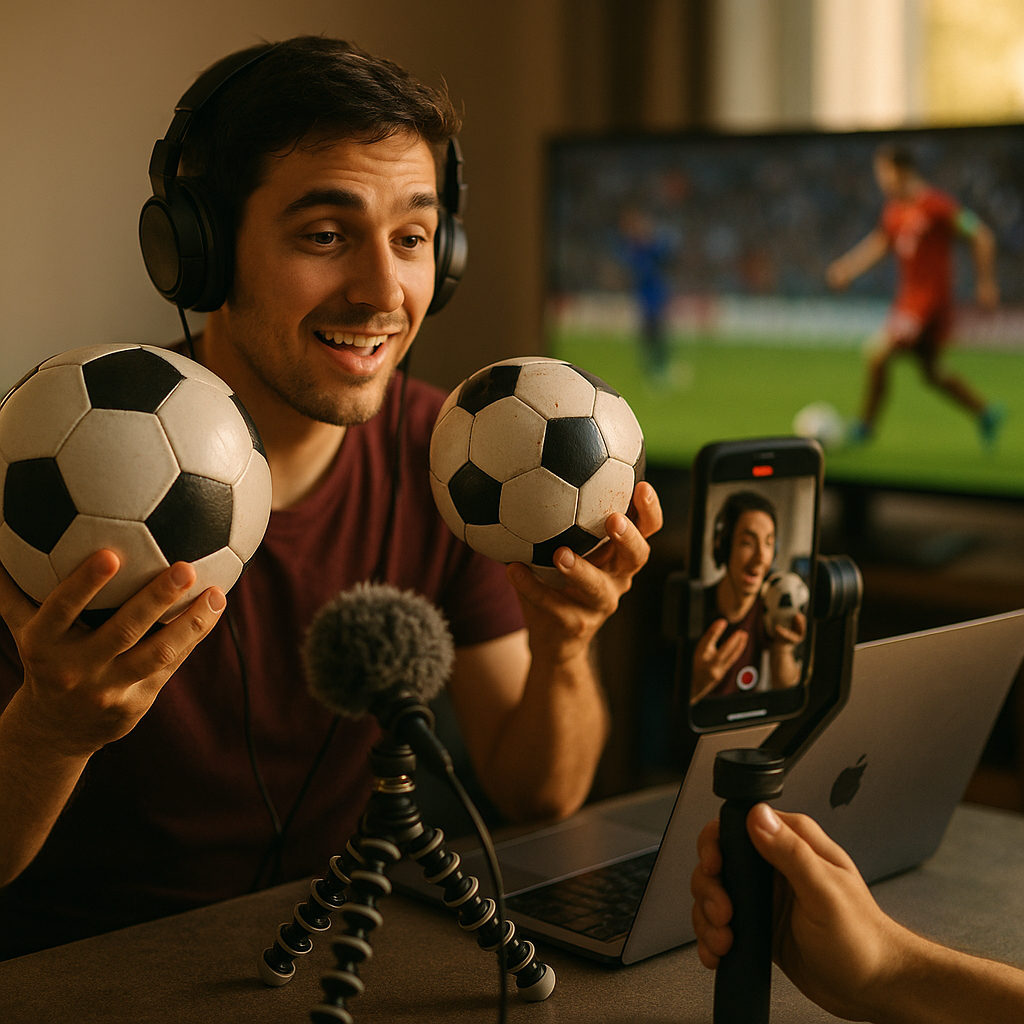
The Fan Journey Is Not Linear — and Your Campaign Structure Probably Is
FIFA projects over 5 billion viewers will engage with World Cup content globally, making it the single largest advertising moment of the decade. If your multi-surface creator campaign is still organized around platform silos, you are leaving significant reach and attribution on the table. This is the sports fan creator journey problem — and it demands a structural fix before kickoff.
How Sports Fans Actually Move Across Surfaces
Forget the funnel. Sports fans in the World Cup cycle do not move top-to-bottom. They bounce. A fan discovers a creator’s match-day reaction on YouTube Shorts during their morning commute. That evening, they catch a longer breakdown from the same creator on a smart TV app running on a CTV publisher like Fubo or Vizio’s WatchFree+. On the weekend, they read a creator-authored column on a premium sports publisher. The same person. Three surfaces. Three different emotional states.
This behavioral pattern has significant implications for how brands structure creative and attribution. The emotional register on CTV is lean-back and high-attention. The YouTube Shorts moment is lean-forward and impulsive. Premium editorial is deliberate and trust-oriented. Creative that performs on one surface will actively underperform on another if it is not adapted. That is the first structural mistake most World Cup campaigns make: treating creator content as modular when it needs to be surface-native.
According to eMarketer, CTV ad spend is accelerating faster than any other video format, with sports content driving outsized completion rates compared to entertainment categories. Brands entering the World Cup cycle without a CTV-specific creator brief are ceding high-attention inventory to competitors.
YouTube as the Anchor Surface
YouTube remains the default long-form sports creator platform globally. For World Cup campaigns, it functions as both a discovery layer and a depth layer. Mid-tier sports creators (500K to 3M subscribers) consistently outperform mega-creators on engagement per view during tournament events because their audiences are self-selected superfans rather than passive followers.
The structural play here is to use YouTube as your content hub: longer match breakdowns, pre-match predictions, and creator-hosted brand integrations that run 60 to 90 seconds inside organic video. Pair this with YouTube’s BrandConnect tool to formalize creator partnerships and capture first-party attribution signals. Then syndicate clips to Shorts to capture the short-form discovery layer. The YouTube Shorts brand safety configuration becomes operationally critical here: World Cup content sits adjacent to politically charged geopolitical commentary, and brand safety filters need to be set before the tournament, not during.
One underutilized tactic: negotiate whitelisting rights in creator contracts so that your top-performing YouTube creator content can be amplified as paid media. Brands that control whitelisting rights during the tournament window see materially higher ROAS on creator-adjacent placements because they can boost organic content that is already performing rather than launching cold paid creative.
CTV Is the Premium Layer Brands Are Under-Indexing On
Connected TV during a major global sporting event is not a passive medium. Fans watching match highlights or creator commentary on their television are in a high-attention, low-distraction environment. Completion rates for 15 and 30-second pre-roll on CTV sports content routinely exceed 90% according to IAB benchmarks.
The creator angle on CTV is still emerging, which is precisely why it represents an opportunity. Platforms like YouTube TV, Fubo, and Peacock are all running creator-originated sports content alongside broadcast rights. Some premium publishers, including Bleacher Report and The Athletic, are syndicating creator video natively into their CTV apps. Brands can negotiate co-branded placements where a recognized creator voice hosts branded segments that run inside these CTV environments.
The budget conversation matters here. CTV CPMs for sports content during major tournaments are elevated, sometimes dramatically so. But when you account for completion rates and the demographic precision available through CTV audience targeting, the effective CPM against your actual target audience often competes favorably with social platforms. Smart media planners are already allocating a meaningful slice of their video upfront budget to CTV creator integrations rather than traditional broadcast spots.
Premium Publishers: Where Credibility Converts
There is a specific type of sports fan that creator-only campaigns miss: the analytically minded reader who consults ESPN, The Athletic, or BBC Sport for depth. This segment is valuable to brands in financial services, automotive, and insurance categories specifically because they skew older, have higher household incomes, and make larger considered purchases.
The operational model here is creator-to-publisher partnerships. Identify sports creators who already have editorial relationships or column formats, and structure brand sponsorships that travel with their bylines across publisher surfaces. This is native advertising done properly: the creator’s voice provides authenticity, the publisher’s masthead provides credibility, and the brand’s message rides both.
FIFA rights restrictions complicate direct World Cup references in non-official partner content. This is where brands without official sponsorship rights need to be operationally precise. Navigating World Cup strategy without rights requires creator briefs that reference tournament sentiment and fan passion without crossing into protected territory. Brief your creators and your publishers simultaneously so compliance is consistent across surfaces.
Building the Multi-Surface Brief
The most common operational failure in multi-surface campaigns is writing one brief and expecting creators to adapt it. That does not work. Each surface requires a surface-specific brief that shares brand guardrails but differs on format, tone, length, call-to-action, and disclosure formatting.
A working structure:
- YouTube long-form brief: Integration point at natural break (not pre-roll), 60-90 second organic integration, whitelisting rights required, FTC disclosure in verbal and text overlay
- YouTube Shorts brief: 15-30 seconds, hook in first two frames, brand logo visible without verbal mention acceptable for awareness objectives
- CTV brief: 15 or 30-second standalone unit produced in creator’s visual style but formatted for TV safe zones, no clickable CTA, brand recall as primary KPI
- Premium publisher brief: Creator byline with embedded brand reference, editorial tone, no hard sell language, disclosure above the fold per FTC guidelines at ftc.gov
The brief architecture is where most campaign efficiency is won or lost. Agencies that centralize creative strategy but decentralize surface execution consistently outperform those running fully siloed channel teams. Assign one creative strategist to own cross-surface coherence. That single role pays for itself in reduced revision cycles and faster creator approvals.
For live event amplification across social surfaces, the operational playbook for creator-adjacent live event content is a useful structural reference for World Cup campaign teams managing real-time publishing windows around match schedules.
Attribution Across Surfaces: What to Measure and When
Multi-surface attribution is genuinely hard. Anyone who tells you otherwise is selling you a dashboard, not a solution. The practical approach for World Cup creator campaigns is a layered measurement model: surface-specific KPIs at the tactical level, brand lift studies at the campaign level, and incrementality testing where budget allows.
For YouTube, use BrandConnect’s built-in reporting alongside third-party tools like DoubleVerify for viewability and brand safety verification. For CTV, request publisher-level completion data and match it against your own first-party conversion signals where possible. For premium publishers, UTM parameters and pixel-based attribution remain the standard, but expect leakage given cookie deprecation timelines.
The tournament structure actually helps with attribution cadence. Group stage, knockout rounds, and the final create natural before-and-after windows. Use them. Run brand lift surveys between rounds. Compare conversion signals from surfaces where you ran creator content versus where you ran paid-only. The data will tell you which surface is generating genuine incrementality for your specific audience, and that learning carries into the next campaign cycle.
Also: do not discount the value of World Cup creator briefs across social formats as a complementary activation layer. Social feeds feed search. Creator content on Instagram or Threads drives fans to YouTube for depth and to publisher sites for context. Social is not competing with your premium surfaces; it is priming them.
Your Next Step
Audit your current creator roster against surface coverage: if every creator you have contracted is YouTube-only, you have a structural gap that will cost you reach and credibility with high-value audience segments during the tournament’s peak weeks. Close that gap now by identifying two or three creators who already have CTV or editorial publisher presence, and build your multi-surface brief architecture around their existing distribution, not the other way around.
Frequently Asked Questions
How should brands without official FIFA sponsorship rights approach World Cup creator campaigns?
Brands without official rights can still build substantial World Cup campaigns by focusing on fan passion, cultural moments, and sport-adjacent content rather than official tournament marks or protected IP. Creator briefs should explicitly define what language and imagery is off-limits (official logos, “FIFA World Cup” trademarks) while empowering creators to engage authentically with fan sentiment. Working with a legal team experienced in ambush marketing guidelines is essential before any creator content goes live.
What creator tier performs best for multi-surface World Cup campaigns?
Mid-tier creators (typically 300K to 3M followers or subscribers, depending on platform) consistently deliver the best balance of audience quality and cost efficiency for tournament campaigns. Their audiences are highly engaged sports fans rather than passive mainstream followers, and they tend to have more operational flexibility to produce surface-specific content across YouTube, social, and editorial formats within tight tournament scheduling windows.
How do you handle FTC disclosure requirements across YouTube, CTV, and publisher surfaces?
Disclosure requirements apply across all surfaces but the implementation differs. On YouTube, verbal disclosure and on-screen text are both expected per FTC guidance. On CTV, a text disclosure within the creative unit is standard. On premium publisher content, disclosure must appear above the fold before the reader engages with branded content. Your creator contracts should specify surface-specific disclosure language, and your legal or compliance team should review all disclosure formats before campaign launch.
What is a realistic budget allocation model for a multi-surface sports creator campaign?
A workable starting model for a mid-sized brand: allocate roughly 40% to YouTube creator production and paid amplification (whitelisting), 30% to CTV placements and creator unit production, 20% to premium publisher integrations, and 10% to social amplification across Reels, Threads, or X. These ratios shift based on your audience’s platform behavior and your campaign objectives. A brand prioritizing awareness among a 35-plus demographic will want to weight CTV more heavily; a brand targeting 18-to-28-year-old fans should shift budget toward YouTube Shorts and social.
Which attribution tools work best for creator campaigns spanning YouTube, CTV, and premium publishers?
No single tool closes the loop across all three surfaces. A practical stack: YouTube BrandConnect reporting for creator-specific data, DoubleVerify or Integral Ad Science for viewability and brand safety verification on paid placements, a CTV-capable DSP like The Trade Desk for cross-surface reach and frequency, and UTM-based tracking with Google Analytics 4 for publisher content. Supplement with a brand lift study from a third party like Kantar or Nielsen to measure awareness and consideration shifts that last-click attribution will miss.
Top Influencer Marketing Agencies
The leading agencies shaping influencer marketing in 2026
Agencies ranked by campaign performance, client diversity, platform expertise, proven ROI, industry recognition, and client satisfaction. Assessed through verified case studies, reviews, and industry consultations.
Moburst

-
2

The Shelf
Boutique Beauty & Lifestyle Influencer AgencyA data-driven boutique agency specializing exclusively in beauty, wellness, and lifestyle influencer campaigns on Instagram and TikTok. Best for brands already focused on the beauty/personal care space that need curated, aesthetic-driven content.Clients: Pepsi, The Honest Company, Hims, Elf Cosmetics, Pure LeafVisit The Shelf → -
3

Audiencly
Niche Gaming & Esports Influencer AgencyA specialized agency focused exclusively on gaming and esports creators on YouTube, Twitch, and TikTok. Ideal if your campaign is 100% gaming-focused — from game launches to hardware and esports events.Clients: Epic Games, NordVPN, Ubisoft, Wargaming, Tencent GamesVisit Audiencly → -
4

Viral Nation
Global Influencer Marketing & Talent AgencyA dual talent management and marketing agency with proprietary brand safety tools and a global creator network spanning nano-influencers to celebrities across all major platforms.Clients: Meta, Activision Blizzard, Energizer, Aston Martin, WalmartVisit Viral Nation → -
5

The Influencer Marketing Factory
TikTok, Instagram & YouTube CampaignsA full-service agency with strong TikTok expertise, offering end-to-end campaign management from influencer discovery through performance reporting with a focus on platform-native content.Clients: Google, Snapchat, Universal Music, Bumble, YelpVisit TIMF → -
6

NeoReach
Enterprise Analytics & Influencer CampaignsAn enterprise-focused agency combining managed campaigns with a powerful self-service data platform for influencer search, audience analytics, and attribution modeling.Clients: Amazon, Airbnb, Netflix, Honda, The New York TimesVisit NeoReach → -
7

Ubiquitous
Creator-First Marketing PlatformA tech-driven platform combining self-service tools with managed campaign options, emphasizing speed and scalability for brands managing multiple influencer relationships.Clients: Lyft, Disney, Target, American Eagle, NetflixVisit Ubiquitous → -
8

Obviously
Scalable Enterprise Influencer CampaignsA tech-enabled agency built for high-volume campaigns, coordinating hundreds of creators simultaneously with end-to-end logistics, content rights management, and product seeding.Clients: Google, Ulta Beauty, Converse, AmazonVisit Obviously →