


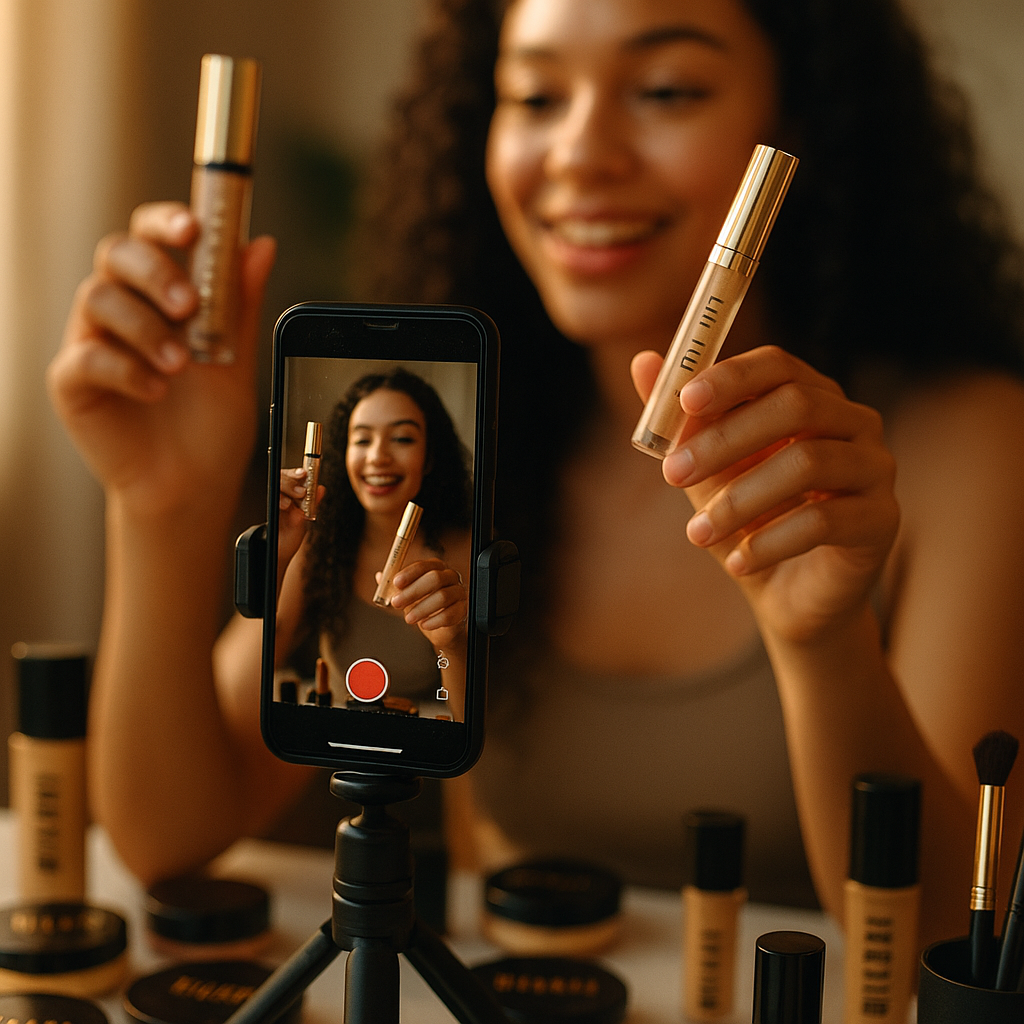
Milani Proved That Drugstore Beauty Can Win on TikTok — Without a Prestige Budget
Mass-market beauty is brutal. You’re fighting for shelf space at CVS while simultaneously competing for three seconds of attention on TikTok against brands with ten times your marketing budget. Milani Cosmetics found a way through: a creator brief architecture built around demonstration-first content and expert-validation formats that moved Gen Z from passive scrollers to active buyers. This is how they did it, and what brand strategists can take from it.
The Problem With Most Beauty Briefs
Most beauty brands hand creators a product, a talking point document, and a deadline. The result is content that looks like an ad, performs like an ad, and gets skipped like an ad. Gen Z, in particular, has developed an almost reflexive aversion to polished brand messaging. They’re not watching haul videos for the aesthetic. They want proof.
Milani’s marketing team recognized this early. The brand operates in a category where product efficacy is the purchase driver, not brand prestige. A $12 concealer doesn’t sell on aspiration. It sells on a creator showing real coverage, real skin, real lighting. So the brief had to reflect that reality from the first line.
Where most briefs lead with brand voice and hashtag requirements, Milani flipped the structure. Demonstration came first. The creator’s job was to show the product working, in real conditions, before anything else. Brand messaging was secondary, almost incidental.
When your brief leads with demonstration instead of brand talking points, you’re signaling to creators that authenticity outranks polish — and Gen Z audiences respond accordingly.
What “Demonstration-First” Actually Means Operationally
This isn’t just “show the product being used.” That’s table stakes. Demonstration-first in Milani’s framework meant the brief explicitly required creators to show a before state, a product application sequence, and an after state — in that order, with no scripted transitions. The brand was essentially asking for a real-time experiment, not a performance.
Creators were given latitude on format. Some did get-ready-with-me videos. Others used split-screen comparisons. Several filmed themselves testing the product for the first time with genuine reactions intact. What the brief prohibited was more instructive than what it required: no pre-filmed b-roll cutaways, no voiceovers recorded separately from the footage, no cuts that obscured the application process.
This approach aligns with what award-winning brief architecture increasingly demands: creative constraints that guide authenticity rather than restrict it. The brief becomes a permission structure, not a script.
Operationally, this required Milani’s team to do more upfront work. Vetting creators for skin tone diversity, ensuring product variants were matched to creator profiles, and building in a revision window for content that felt too produced. That investment paid off in content that performed organically before any paid amplification was applied.
The Expert-Validation Layer
Demonstration alone addresses efficacy. But purchase intent in beauty also requires trust, and trust in a mass-market product requires a different kind of signal. Milani’s second strategic layer was expert validation, deployed not through celebrity endorsements but through a tiered creator mix that included licensed estheticians, cosmetology students, and professional makeup artists alongside lifestyle creators.
This mirrors a proven playbook. La Roche-Posay’s dermatologist creator strategy demonstrated that professional credentialing dramatically increases conversion rates in skincare — and the same logic transfers to color cosmetics when the validator has visible, relevant expertise.
The key operational detail: Milani didn’t ask estheticians to act like influencers. The brief for expert creators was distinct. They were briefed to speak from clinical or professional experience, to compare the product against professional-grade alternatives they use in their practice, and to be explicit about what the product does and doesn’t do. That last element is counterintuitive for most brand managers, but it’s exactly what builds credibility with a skeptical audience.
A creator saying “this isn’t going to replace your full-coverage foundation for a formal event, but for everyday wear it’s genuinely impressive” lands harder than a superlative claim. Gen Z trusts the caveat. It signals the creator isn’t reading from a brand sheet.
Platform Mechanics and Algorithmic Fit
TikTok’s algorithm rewards watch time and completion rate. Demonstration-first content is structurally optimized for both. When a viewer doesn’t know what a concealer will look like at the end of an application video, they watch to find out. The before-to-after arc is one of the oldest narrative structures in human communication, and TikTok’s recommendation engine rewards it consistently.
According to TikTok for Business data, beauty content that includes product application sequences drives measurably higher engagement than static product showcases. This isn’t surprising, but brands continue to under-invest in demonstration formats because they feel less controlled. Milani’s willingness to accept that trade-off — less brand control in exchange for higher organic performance — is what separated their content from category competitors.
Milani also leaned into TikTok Shop integration, embedding shoppable links in creator content and using the platform’s affiliate program to align creator incentives with conversion rather than just reach. This is increasingly standard practice, as seen in Ulta Beauty’s TikTok Shop attribution model, but Milani’s execution was tighter because the demonstration format made the path from content to cart feel natural rather than transactional.
Measuring What Actually Matters
Reach is a vanity metric in this context. Milani’s team tracked a different stack: save rate (a strong proxy for purchase consideration), comment sentiment analysis specifically around product questions (indicating active purchase research), and TikTok Shop click-through rates segmented by creator tier.
The expert-validator tier consistently outperformed lifestyle creators on save rate and comment quality, even when lifestyle creators generated higher raw view counts. This is the kind of insight that only surfaces when you’re measuring intent signals rather than impression volume. For brands operating in competitive mass-market categories, e.l.f. Beauty’s mid-tier creator model offers a comparable framework for thinking about creator tier ROI beyond follower count.
Milani also ran brand lift studies through a third-party measurement partner, with purchase intent as the primary KPI. The results indicated meaningful lift among Gen Z women who had seen creator content versus those served traditional display advertising, with the expert-validation format showing the strongest intent scores of any content type tested.
Save rate and comment quality are your real purchase intent signals on TikTok. View count tells you about reach. Saves tell you about consideration. Build your reporting around the difference.
What This Means for Brand Strategists
Milani’s approach isn’t a creative accident. It’s a repeatable framework built on a clear insight: in mass-market beauty, skepticism is the baseline, and the only way through it is earned proof. Demonstration-first briefs create that proof. Expert validators amplify it. TikTok’s platform mechanics distribute it to audiences already primed to buy.
The operational ask is higher than standard influencer programs. You need more granular creator vetting, tiered briefs instead of a single template, and a measurement stack that goes beyond impressions. But the alternative is category-average performance in a category where average is invisible.
For brands evaluating whether to replicate this model, the first question isn’t “do we have the budget?” It’s “do we trust the product enough to let a creator show it working in real conditions, unedited?” If the answer is yes, the framework is accessible at almost any budget level. If the answer is no, you have a product problem, not a marketing problem.
Brands across categories are learning this lesson. Unilever’s creator discovery approach and similar enterprise-level programs are converging on the same conclusion: creator selection and brief architecture matter more than media spend. Milani just proved it works at the mass-market price point too.
Start by auditing your current creator briefs. If the first three requirements are about brand voice, hashtags, and disclosure language, you’re leading with compliance instead of content. Flip the order, put demonstration at the top, and rebuild from there.
Frequently Asked Questions
What is a demonstration-first creator brief in beauty marketing?
A demonstration-first creator brief prioritizes showing a product’s efficacy before any brand messaging or promotional language. In beauty, this means creators are required to show a genuine before, application, and after sequence — in real conditions, without scripted transitions or cutaways — so audiences can evaluate the product based on visible results rather than brand claims.
Why does expert validation improve purchase intent for mass-market beauty brands?
Expert validators — licensed estheticians, cosmetology professionals, or makeup artists — carry institutional credibility that lifestyle creators don’t. When a professional with visible expertise endorses a mass-market product, often by comparing it favorably to professional-grade alternatives, it signals genuine quality to a skeptical Gen Z audience. The credibility gap that typically disadvantages affordable beauty products is partially closed by third-party professional endorsement.
How did Milani use TikTok Shop alongside creator content?
Milani integrated TikTok Shop affiliate links directly into creator content, aligning creator incentives with conversion outcomes rather than reach metrics. This approach made the path from content to purchase feel seamless for viewers already engaged with a demonstration video, reducing friction at the final purchase step.
What metrics should beauty brands track for TikTok creator campaigns focused on purchase intent?
Beyond standard reach and view metrics, beauty brands should prioritize save rate (a reliable proxy for purchase consideration), comment sentiment and question volume (indicating active research), TikTok Shop click-through rates segmented by creator tier, and brand lift studies with purchase intent as the primary KPI. Impression volume is insufficient for measuring whether creator content is actually moving buyers.
Can smaller beauty brands replicate Milani’s creator brief strategy without a large budget?
Yes. The demonstration-first brief architecture and expert-validation tier model are accessible at most budget levels. The core investment is in creator vetting, brief development, and measurement infrastructure — not media spend. Smaller brands can start with micro-creators who have professional beauty credentials and scale the model as performance data accumulates.
Top Influencer Marketing Agencies
The leading agencies shaping influencer marketing in 2026
Agencies ranked by campaign performance, client diversity, platform expertise, proven ROI, industry recognition, and client satisfaction. Assessed through verified case studies, reviews, and industry consultations.
Moburst

-
2

The Shelf
Boutique Beauty & Lifestyle Influencer AgencyA data-driven boutique agency specializing exclusively in beauty, wellness, and lifestyle influencer campaigns on Instagram and TikTok. Best for brands already focused on the beauty/personal care space that need curated, aesthetic-driven content.Clients: Pepsi, The Honest Company, Hims, Elf Cosmetics, Pure LeafVisit The Shelf → -
3

Audiencly
Niche Gaming & Esports Influencer AgencyA specialized agency focused exclusively on gaming and esports creators on YouTube, Twitch, and TikTok. Ideal if your campaign is 100% gaming-focused — from game launches to hardware and esports events.Clients: Epic Games, NordVPN, Ubisoft, Wargaming, Tencent GamesVisit Audiencly → -
4

Viral Nation
Global Influencer Marketing & Talent AgencyA dual talent management and marketing agency with proprietary brand safety tools and a global creator network spanning nano-influencers to celebrities across all major platforms.Clients: Meta, Activision Blizzard, Energizer, Aston Martin, WalmartVisit Viral Nation → -
5

The Influencer Marketing Factory
TikTok, Instagram & YouTube CampaignsA full-service agency with strong TikTok expertise, offering end-to-end campaign management from influencer discovery through performance reporting with a focus on platform-native content.Clients: Google, Snapchat, Universal Music, Bumble, YelpVisit TIMF → -
6

NeoReach
Enterprise Analytics & Influencer CampaignsAn enterprise-focused agency combining managed campaigns with a powerful self-service data platform for influencer search, audience analytics, and attribution modeling.Clients: Amazon, Airbnb, Netflix, Honda, The New York TimesVisit NeoReach → -
7

Ubiquitous
Creator-First Marketing PlatformA tech-driven platform combining self-service tools with managed campaign options, emphasizing speed and scalability for brands managing multiple influencer relationships.Clients: Lyft, Disney, Target, American Eagle, NetflixVisit Ubiquitous → -
8

Obviously
Scalable Enterprise Influencer CampaignsA tech-enabled agency built for high-volume campaigns, coordinating hundreds of creators simultaneously with end-to-end logistics, content rights management, and product seeding.Clients: Google, Ulta Beauty, Converse, AmazonVisit Obviously →