


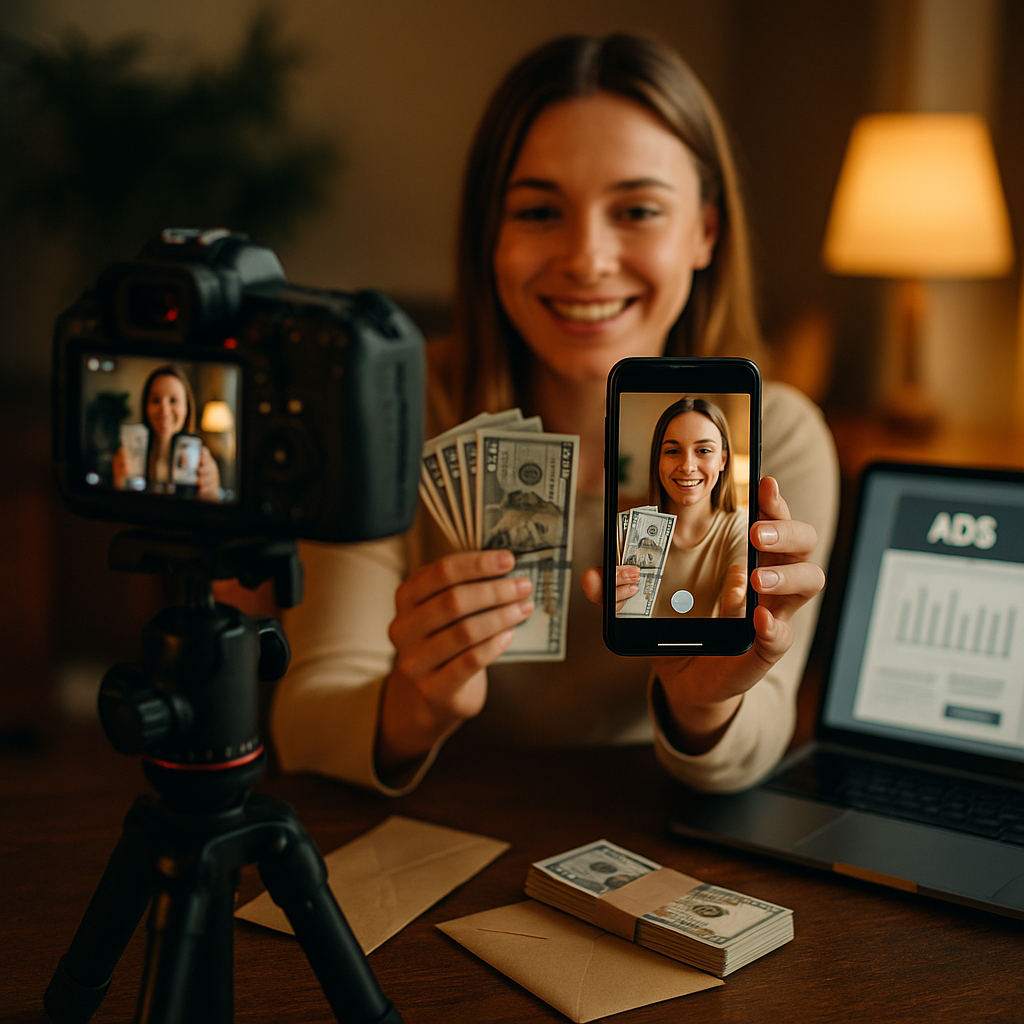
Most Brands Are Leaving UGC Money on the Table
Brands that separate their UGC strategy from their paid media planning are essentially running two engines that never share fuel. According to eMarketer, creator-driven paid social consistently outperforms brand-produced creative on conversion metrics by 20–40% — yet most brand teams still treat UGC as a bonus asset discovered after a campaign launches, not a planned input. That gap is where the UGC paid amplification bundle architecture closes the loop.
What “Bundle Architecture” Actually Means
The term sounds technical, but the concept is straightforward: you plan your community content creation and your performance media budget simultaneously, in a single brief, before a creator films a single frame. This is not a post-hoc whitelisting play. It is a structural decision made in the campaign design phase that determines which content gets produced, in what format, to what compliance standard, and with what amplification pathway already mapped.
Think of it as a two-track rail system built from the same blueprint. Track one is organic community activation — the fan videos, reaction clips, haul posts, and duets that generate cultural signal. Track two is paid distribution — Meta Advantage+, TikTok Spark Ads, YouTube Video Action Campaigns. Bundle architecture means both tracks are engineered together so content can move between them without friction or rework.
When UGC and paid media are briefed in the same document, brands report 30–50% faster creative iteration cycles because they eliminate the back-and-forth legal and licensing review that kills momentum post-launch.
Why the Timing of Budget Alignment Matters
Here is the operational reality most performance teams know but rarely say out loud: by the time organic UGC surfaces and goes through brand safety review, the cultural moment has passed. The post that would have driven a 4x ROAS as a Spark Ad is now three weeks stale. Bundle architecture solves this by front-loading the permission structure and creative parameters so amplification decisions take hours, not weeks.
This requires a shift in how media and creative teams collaborate. Performance media planners need to be in the creator brief meeting, not receiving a creative handoff after the fact. When a performance planner knows a campaign will generate 200 pieces of community video, they can pre-negotiate Spark Ad authorization windows, build audience segments in TikTok Ads Manager before launch, and reserve budget tranches for the top-performing posts. That is planning discipline, not luck.
For brands running complex multi-creator programs, the cross-platform brief structure becomes the operational scaffold that makes bundle architecture executable across different creator tiers and platforms simultaneously.
The Four Components Every Bundle Should Include
If you are architecting this for the first time, the bundle needs four non-negotiable components built into the initial campaign document.
- Creative guardrails with amplification intent: Every creator brief must specify not just tone and messaging but the technical requirements for paid use — resolution, safe zones, caption structure, audio licensing. A fan video shot vertically at 1080×1920 with licensed audio is amplification-ready. One shot at 720p with a Spotify track in the background is not. Creator production standards have to be baked into the brief, not appended as an afterthought.
- Pre-authorized usage rights: Community creators need to agree to amplification rights at the point of participation, not after their video performs. This means your campaign mechanics, challenge terms, or seeding agreements must include paid usage language upfront. The FTC’s endorsement guidelines also require disclosure at every point of publication, including paid amplification, so the compliance layer cannot be separated from the creative layer.
- Budget tranches tied to performance signals: Rather than committing your full paid budget to a fixed media plan, the bundle reserves a percentage (typically 20–35%) as a “performance amplification pool” that gets deployed based on organic signal. If a community post hits a threshold CTR or share velocity within 48 hours, it draws from that pool automatically. Some teams are using Meta’s Advantage+ Creative tools to automate this routing for Facebook and Instagram placements.
- Attribution architecture from day one: Every piece of community content entering the amplification pipeline needs a UTM framework or pixel event attached before it runs as paid. This sounds obvious, but it routinely breaks down when UGC is treated as organic and paid teams retrofit tracking late. Your commerce outcomes depend entirely on clean attribution from the first touchpoint.
Who Owns the Bundle? (And Why This Gets Messy)
Organizational ownership is where bundle architecture most commonly fails. Brand teams own creator relationships. Performance media teams own the ad budget. Legal owns rights and compliance. When these three groups are not aligned from campaign inception, each defaults to their own timeline and process, and the bundle never materializes.
The most effective structure assigns a “bundle lead” — a role that sits at the intersection of influencer marketing and paid social, with authority to pull decisions from all three groups. At larger brands, this is often a Integrated Content Manager or a Growth Creative Strategist. At agencies, it is typically the performance creative lead. The title matters less than the mandate: this person has sign-off authority on the brief, the rights language, and the media plan simultaneously.
For brands building episodic creator programs, the episodic vs. one-off ROI framework is worth reviewing before you commit to a bundle structure, because episodic programs generate more predictable UGC volume, which makes performance budget allocation significantly easier to model.
Commerce Channel Integration: Where Bundles Pay Off
The measurable commerce piece is where this entire architecture justifies its planning overhead. When community content flows directly into shoppable placements — TikTok Shop, Instagram Checkout, YouTube Shopping — with tracking and rights pre-configured, the path from fan post to product sale becomes a closed loop you can actually optimize.
Consider how a mid-size beauty brand running a “GRWM” community challenge would use this. Participants post their videos with a campaign hashtag. The bundle’s scoring system (built into a tool like Sprout Social or a dedicated UGC platform like Bazaarvoice) flags top performers by engagement velocity within six hours. Those flagged videos are routed to Spark Ad authorization (already signed), processed through the brand’s TikTok Shop product link, and activated as paid placements — all within 24 hours. The performance media team was never waiting on creative. The creative team was never waiting on legal. That is bundle architecture working as designed.
If your activation involves physical retail integration, layering in location-aware creator content can amplify both digital and foot traffic outcomes. The principles behind creator briefs for in-store traffic apply directly to how you brief community participants in retail-adjacent bundle campaigns.
Commerce-ready UGC does not happen by accident. It happens when the product link, the disclosure, and the performance pixel are part of the participation mechanic — not added later by a harried paid social manager.
Measurement Framework: What to Track and When
Bundle architecture lives or dies on measurement clarity. You need three layers of metrics running in parallel.
Layer 1 — Community health metrics: Volume of UGC generated, creator participation rate, organic reach and share velocity. These tell you whether the activation mechanic is working. Low participation signals a brief problem, not a media problem.
Layer 2 — Amplification efficiency metrics: Cost per amplified view, Spark Ad CTR vs. brand creative CTR, top-of-funnel CPM across community vs. produced content. This is where you prove the UGC creative hypothesis — that community content outperforms brand production at a lower CPM.
Layer 3 — Commerce conversion metrics: Add-to-cart rate from shoppable UGC placements, revenue attributed to amplified community content, ROAS segmented by creator tier and content type. This is the number that justifies the budget to your CFO.
Most brand teams track Layer 1 and Layer 3 in isolation and miss Layer 2 entirely. Layer 2 is where you learn which content types warrant higher amplification investment in future campaigns, which is the operational intelligence that makes each bundle iteration more efficient than the last.
For brands also thinking about how AI-driven shopping recommendations intersect with UGC, the AI shopping brief framework offers a useful parallel planning lens, particularly for CPG categories where platform algorithms are increasingly routing purchase intent queries to creator content.
According to Statista, social commerce revenue globally is projected to exceed $1.2 trillion by 2027, and the brands capturing disproportionate share of that will be those who treated community content as a performance asset from the start.
Start your next campaign brief by putting your media planner and your creator lead in the same room before any creative decisions are made. That single structural change is how bundle architecture begins.
Frequently Asked Questions
What is UGC paid amplification bundle architecture?
It is a campaign planning approach where user-generated content creation and performance media budgets are designed together from the start of a campaign, rather than treating organic community content and paid distribution as separate workstreams. The goal is to enable high-performing community videos to move seamlessly into paid placements like TikTok Spark Ads or Meta placements without legal, technical, or operational delays.
How does bundle architecture differ from standard UGC whitelisting?
Whitelisting is typically a reactive process: a creator’s post performs well, and the brand secures ad access after the fact. Bundle architecture is proactive — rights agreements, technical specs, budget tranches, and attribution tracking are all built into the campaign design before content is created, so amplification can happen within hours of a post surfacing rather than weeks.
What rights language do brands need from community creators upfront?
At minimum, participation terms should include a license for the brand to use submitted content in paid advertising across specified platforms for a defined period. Many brands include a 90-day paid usage window with renewal options. The FTC also requires that paid amplification of creator content includes appropriate disclosure at every placement, so the participation terms and the ad disclosure layer must be planned together. Legal counsel familiar with digital advertising and FTC endorsement guidelines should review all terms before campaign launch.
How much of a campaign budget should be reserved for the performance amplification pool?
Most practitioners allocate between 20–35% of the total paid social budget as a flexible amplification pool tied to organic performance signals. The exact percentage depends on campaign duration, expected UGC volume, and the brand’s risk tolerance for dynamic budget allocation. Longer campaigns with high community participation volume can sustain a larger pool because there is more content to evaluate and more time to optimize spend.
Which platforms support UGC bundle architecture most effectively?
TikTok is currently the strongest platform for this approach because Spark Ads allow brands to amplify organic creator posts directly from the creator’s account while retaining social proof metrics. Meta’s Advantage+ Creative also supports dynamic UGC amplification across Facebook and Instagram. YouTube’s Video Action Campaigns support amplification of creator content for lower-funnel commerce objectives. The right platform mix depends on where your target audience is most active and where your commerce infrastructure (shoppable links, checkout integrations) is most developed.
Top Influencer Marketing Agencies
The leading agencies shaping influencer marketing in 2026
Agencies ranked by campaign performance, client diversity, platform expertise, proven ROI, industry recognition, and client satisfaction. Assessed through verified case studies, reviews, and industry consultations.
Moburst

-
2

The Shelf
Boutique Beauty & Lifestyle Influencer AgencyA data-driven boutique agency specializing exclusively in beauty, wellness, and lifestyle influencer campaigns on Instagram and TikTok. Best for brands already focused on the beauty/personal care space that need curated, aesthetic-driven content.Clients: Pepsi, The Honest Company, Hims, Elf Cosmetics, Pure LeafVisit The Shelf → -
3

Audiencly
Niche Gaming & Esports Influencer AgencyA specialized agency focused exclusively on gaming and esports creators on YouTube, Twitch, and TikTok. Ideal if your campaign is 100% gaming-focused — from game launches to hardware and esports events.Clients: Epic Games, NordVPN, Ubisoft, Wargaming, Tencent GamesVisit Audiencly → -
4

Viral Nation
Global Influencer Marketing & Talent AgencyA dual talent management and marketing agency with proprietary brand safety tools and a global creator network spanning nano-influencers to celebrities across all major platforms.Clients: Meta, Activision Blizzard, Energizer, Aston Martin, WalmartVisit Viral Nation → -
5

The Influencer Marketing Factory
TikTok, Instagram & YouTube CampaignsA full-service agency with strong TikTok expertise, offering end-to-end campaign management from influencer discovery through performance reporting with a focus on platform-native content.Clients: Google, Snapchat, Universal Music, Bumble, YelpVisit TIMF → -
6

NeoReach
Enterprise Analytics & Influencer CampaignsAn enterprise-focused agency combining managed campaigns with a powerful self-service data platform for influencer search, audience analytics, and attribution modeling.Clients: Amazon, Airbnb, Netflix, Honda, The New York TimesVisit NeoReach → -
7

Ubiquitous
Creator-First Marketing PlatformA tech-driven platform combining self-service tools with managed campaign options, emphasizing speed and scalability for brands managing multiple influencer relationships.Clients: Lyft, Disney, Target, American Eagle, NetflixVisit Ubiquitous → -
8

Obviously
Scalable Enterprise Influencer CampaignsA tech-enabled agency built for high-volume campaigns, coordinating hundreds of creators simultaneously with end-to-end logistics, content rights management, and product seeding.Clients: Google, Ulta Beauty, Converse, AmazonVisit Obviously →