


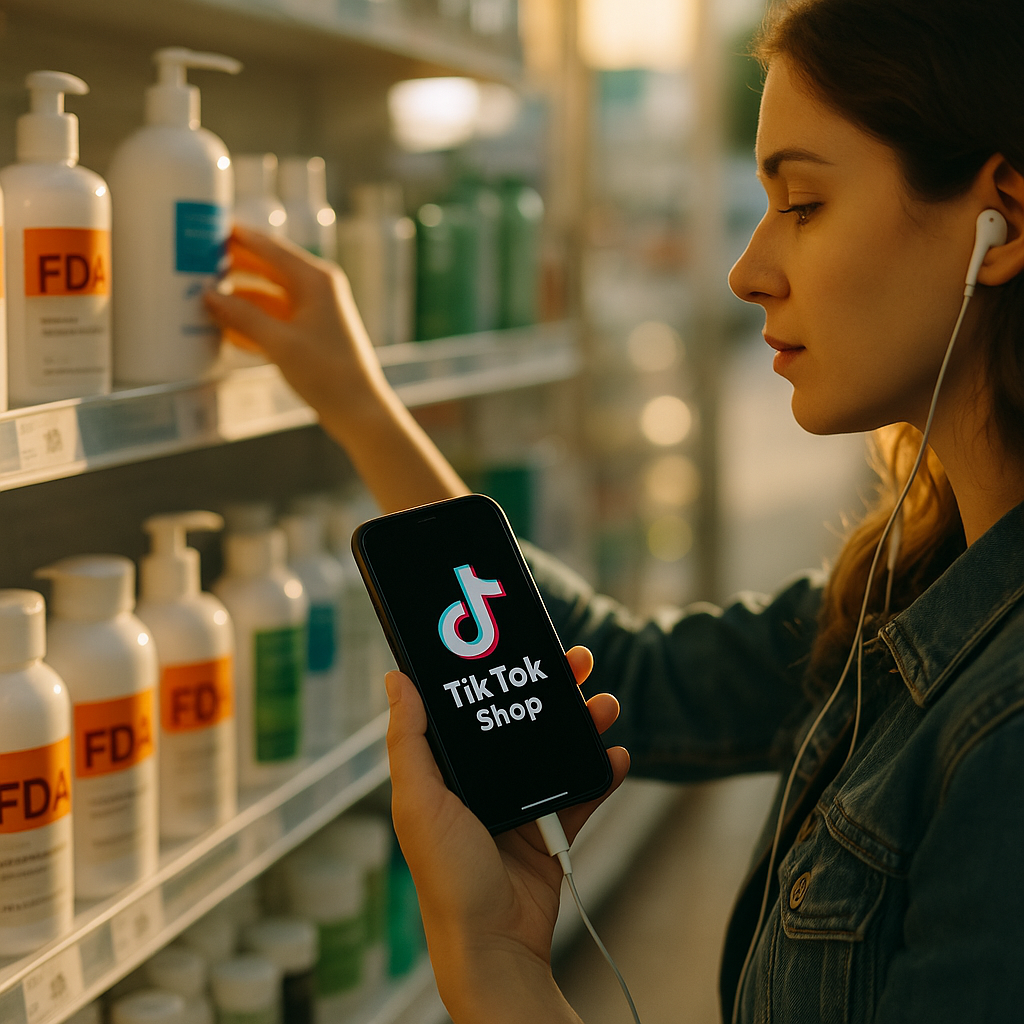
If You Can’t Sell Through TikTok Shop, You Can Still Win the Sale
Nearly 60% of CPG purchases influenced by social content still convert in physical retail, not on the originating platform. For healthcare and CPG brands operating under FDA jurisdiction, that gap isn’t a liability. It’s the entire strategy.
TikTok Shop has reshaped how brands think about social commerce. But FDA-regulated categories — OTC drugs, dietary supplements with structure/function claims, medical devices, and even certain cosmetics — face disclosure requirements, labeling regulations, and promotional restrictions that make direct in-app purchasing a compliance minefield. The instinct is to sit out TikTok commerce entirely. That instinct is wrong.
The brands winning in regulated categories aren’t waiting for platform policy to catch up with FDA rules. They’re building creator campaign architectures that use TikTok for discovery and drive documented, attributable lift at the shelf.
Why Direct Commerce Features Create Regulatory Exposure
TikTok Shop’s native checkout flow strips away the branded product page context that FDA-regulated brands rely on to satisfy labeling requirements. When a consumer purchases an OTC sleep aid through an in-app cart, they may never see the full drug facts panel, the required indications, or the warnings mandated under 21 CFR Part 201. That’s a regulatory exposure most legal teams won’t accept, regardless of how compelling the conversion economics look.
Beyond labeling, there’s the endorsement problem. Creator content that functions as a “testimonial” under FDA’s guidance on consumer endorsements must align with the brand’s substantiated efficacy claims. In a TikTok Shop affiliate arrangement — where creators self-select products and write their own captions — that alignment is nearly impossible to guarantee at scale. The FTC’s revised endorsement guides, which require clear disclosure of material connections, add another layer. When commerce and content collapse into a single in-app transaction, the audit trail gets murky fast. For a rigorous look at how disclosure requirements vary across platforms, the creator campaign disclosure audit framework is worth reviewing before any regulated brand activates creator commerce.
The practical result: healthcare brands with any FDA nexus, and CPG brands in adjacent categories like functional foods or “clean” personal care, are effectively frozen out of TikTok Shop’s affiliate and shoppable video infrastructure. So the question becomes architectural.
The Alternative Architecture: Discovery-to-Shelf
The workaround isn’t a workaround at all. It’s a more sophisticated attribution model.
The core structure works like this: creator content on TikTok and Instagram drives awareness and intent, a controlled mid-funnel asset (branded microsite, retailer landing page, or SMS opt-in) captures behavioral signals, and retail media data from Walmart Connect, Kroger Precision Marketing, or Target’s Roundel closes the loop on in-store lift. Each layer is measurable. None of it requires in-app checkout.
Specifically, the architecture has four components:
- Creator content optimized for search and save behavior, not swipe-to-buy. Creators are briefed to drive “find it at [retailer]” actions rather than affiliate clicks. This shifts the conversion intent to a compliant environment.
- A retailer-specific landing page that hosts full FDA-required labeling content, acts as the click destination in bio links, and passes UTM parameters into the brand’s attribution stack.
- Retail media closed-loop measurement using first-party shopper data from the retailer’s loyalty program. Brands submit a matched panel study through partners like Kroger Precision Marketing or Numerator to isolate exposed versus unexposed purchaser cohorts.
- Creator contract language that ties compensation to documented retail lift, not platform engagement metrics. This is the piece most teams skip, and it’s the one that makes the model defensible in a marketing mix review.
This is not a theoretical framework. Brands in the vitamin and supplement category have been running variations of this model for over two years, partly because Amazon’s marketplace restrictions pushed them toward the same architecture earlier than most CPG counterparts.
Making Long-Tail Sales Lift Documentable
The hardest part isn’t the technology. It’s the documentation methodology that CFOs and compliance teams will actually accept.
For in-store lift to be attributable to a specific creator campaign, you need three things: a clean exposure window, a geographic or demographic test-and-control design, and retailer data granular enough to isolate SKU-level velocity changes. Most brands get one of the three right. The architecture above is designed to get all three.
The exposure window is defined by creator campaign flight dates and the retailer landing page’s UTM tracking. Geographic targeting on TikTok and Instagram can be set to specific DMAs, which maps cleanly to retail trade areas. A DMA-level test-and-control design — running creator content in six markets while holding six comparable markets dark — gives you the baseline comparison. Retailer loyalty data from those same DMAs, pulled through a clean room or a direct retail media API integration, completes the measurement triangle.
For brands managing attribution windows in creator contracts, the standard 30-day post-exposure window used in destination marketing is too short for most healthcare and supplement categories, where the consumer research-to-purchase cycle can run 45 to 90 days. Build your contracts and your measurement windows to match category purchase cycles, not platform default attribution settings.
Numerator’s purchase-based attribution panels and NielsenIQ’s Activate platform are both viable options for closing the retail loop without requiring direct retailer data sharing agreements, which can take months to negotiate with larger chains.
Briefing Creators for Compliance-First Content
Creator briefing for regulated categories requires a different creative discipline. The brief can’t just specify format and talking points. It has to specify what creators cannot say, what claims require a qualifying statement, and what visual contexts (before/after framing, symptom narrative arcs) are off-limits under FDA promotional guidance.
That sounds restrictive. In practice, it produces tighter, more credible content. Creators who understand they can’t make efficacy claims tend to lean into personal routine and lifestyle framing, which performs better in feed anyway. The “how I use it” format outperforms the “here’s what it does” format on retention metrics across TikTok and Reels, which means compliance constraints and algorithmic preferences are actually aligned here.
For brands managing multi-platform creator briefs simultaneously, the single-brief multi-platform approach needs a regulated-category overlay: a one-page compliance addendum that travels with every brief and requires creator acknowledgment before content goes live. This is not optional documentation. It’s your first line of defense if an FDA warning letter or FTC inquiry arrives.
Pinterest deserves specific attention here. As a visual search platform with strong health and wellness audience density, Pinterest’s shoppable infrastructure sits in a different regulatory context than TikTok Shop. The Pinterest shoppable commerce strategy offers regulated brands a compliant alternative to TikTok Shop’s affiliate model, because the product pin destination can host full labeling content before any purchase action occurs.
Budget Allocation Across the Architecture
Brands running this model successfully tend to allocate roughly 40% of campaign budget to creator content production and whitelisting, 25% to paid amplification of top-performing organic creator content, 20% to retail media activation (Walmart Connect, Kroger, or Target Roundel), and 15% to measurement infrastructure — the clean room integrations, panel studies, and attribution tooling that make the lift documentable.
That 15% measurement line item is the one most brand teams cut first under budget pressure. Don’t. Without it, you have anecdotal evidence of sales lift. With it, you have a board-ready case study that justifies next year’s budget. The CPG creator model that Unilever has iterated on demonstrates exactly this: systematic measurement infrastructure is what separates a one-time creator experiment from a repeatable growth channel.
Organic creator content rarely reaches the scale needed to move retail velocity on its own. Paid amplification behind compliant creator content is what actually drives the in-store lift signal large enough to measure. Don’t brief for organic and hope; paid amplification is now essential to making the architecture work.
For healthcare brands specifically, whitelisting creator content through the brand’s own ad account (rather than the creator’s) gives legal and regulatory teams the ability to review every paid placement before it runs. That approval gate is non-negotiable in a regulated category, and whitelisting is how you operationalize it at scale.
The Compliance Advantage Nobody Talks About
Here’s the counterintuitive part: the constraints that block FDA-regulated brands from TikTok Shop’s direct commerce features are also a competitive moat. Competitors without those constraints will chase in-app conversion metrics. They’ll optimize for ROAS on platform-native commerce and underinvest in the retail lift infrastructure that actually builds long-term distribution leverage with major chains.
A brand that arrives at a Walmart or Kroger category review with three DMA-level test-and-control studies documenting creator-driven in-store lift has a fundamentally different conversation than one bringing TikTok Shop GMV data. Retailers care about shelf velocity. They are largely indifferent to in-app GMV on a competing platform.
FDA regulatory constraints, properly architectured, force a discipline that produces more durable commercial outcomes. The brands that recognize this now will have measurement infrastructure and retailer relationships that are very difficult to replicate quickly.
Start with one retailer, one DMA test design, and one creator cohort. Document the methodology rigorously before you scale. The FTC’s endorsement guidance and FDA’s promotional regulations for healthcare products are your compliance floor; build the architecture above that floor, not around it. For retail media measurement tools, both NielsenIQ and Numerator offer shopper panel solutions specifically designed for this kind of creator-to-shelf attribution. And review Statista’s retail media benchmarks to calibrate expected lift ranges before you set internal targets.
Frequently Asked Questions
Can FDA-regulated brands use TikTok creator content at all, or is the entire platform off-limits?
TikTok creator content is available to FDA-regulated brands — the restriction applies specifically to TikTok Shop’s in-app commerce features, not to the platform itself. Brands can and should use TikTok for discovery-stage creator campaigns, provided the content avoids unsubstantiated efficacy claims, uses compliant disclosures, and directs consumers to a destination that hosts full FDA-required labeling before any purchase action occurs.
What retail media platforms are best suited for closing the loop on in-store lift from creator campaigns?
Walmart Connect, Kroger Precision Marketing, and Target’s Roundel are the three most mature retail media networks for this use case. All three offer closed-loop measurement using first-party shopper loyalty data, which allows brands to match exposed consumer cohorts against actual purchase behavior at SKU level. The choice of platform should align with where your brand has strongest distribution and where your target consumer shops most frequently.
How do you structure creator contracts when compensation is tied to in-store lift rather than platform metrics?
The contract should specify a base fee for content delivery and a performance bonus tied to documented retail lift measured over a defined attribution window — typically 45 to 90 days for healthcare and supplement categories. The lift metric should be defined as sales velocity change in test DMAs versus control DMAs, measured through the agreed retail media platform. Creators must receive clear disclosure requirements and a compliance addendum acknowledging FDA and FTC promotional guidelines applicable to the category.
Is Pinterest a viable alternative commerce channel for regulated healthcare and CPG brands?
Yes. Pinterest’s shoppable infrastructure allows the product pin destination to host full labeling and disclosure content before any purchase transaction occurs, which addresses the core FDA compliance gap in TikTok Shop’s native checkout flow. Pinterest also indexes well for health and wellness intent searches, giving regulated brands a discovery surface with strong audience relevance. It functions well as a complementary platform alongside TikTok in a multi-platform creator architecture.
What measurement infrastructure do you need before launching this type of campaign?
At minimum, you need a UTM-structured retailer landing page, geographic targeting parameters that map to specific retail trade areas or DMAs, and a shopper panel or retail media clean room integration to capture purchase data from those same geographies. Brands that skip the measurement setup and try to retrofit attribution after a campaign runs rarely produce results that hold up to internal scrutiny or retailer presentations. Build the measurement layer before the first creator brief goes out.
Top Influencer Marketing Agencies
The leading agencies shaping influencer marketing in 2026
Agencies ranked by campaign performance, client diversity, platform expertise, proven ROI, industry recognition, and client satisfaction. Assessed through verified case studies, reviews, and industry consultations.
Moburst

-
2

The Shelf
Boutique Beauty & Lifestyle Influencer AgencyA data-driven boutique agency specializing exclusively in beauty, wellness, and lifestyle influencer campaigns on Instagram and TikTok. Best for brands already focused on the beauty/personal care space that need curated, aesthetic-driven content.Clients: Pepsi, The Honest Company, Hims, Elf Cosmetics, Pure LeafVisit The Shelf → -
3

Audiencly
Niche Gaming & Esports Influencer AgencyA specialized agency focused exclusively on gaming and esports creators on YouTube, Twitch, and TikTok. Ideal if your campaign is 100% gaming-focused — from game launches to hardware and esports events.Clients: Epic Games, NordVPN, Ubisoft, Wargaming, Tencent GamesVisit Audiencly → -
4

Viral Nation
Global Influencer Marketing & Talent AgencyA dual talent management and marketing agency with proprietary brand safety tools and a global creator network spanning nano-influencers to celebrities across all major platforms.Clients: Meta, Activision Blizzard, Energizer, Aston Martin, WalmartVisit Viral Nation → -
5

The Influencer Marketing Factory
TikTok, Instagram & YouTube CampaignsA full-service agency with strong TikTok expertise, offering end-to-end campaign management from influencer discovery through performance reporting with a focus on platform-native content.Clients: Google, Snapchat, Universal Music, Bumble, YelpVisit TIMF → -
6

NeoReach
Enterprise Analytics & Influencer CampaignsAn enterprise-focused agency combining managed campaigns with a powerful self-service data platform for influencer search, audience analytics, and attribution modeling.Clients: Amazon, Airbnb, Netflix, Honda, The New York TimesVisit NeoReach → -
7

Ubiquitous
Creator-First Marketing PlatformA tech-driven platform combining self-service tools with managed campaign options, emphasizing speed and scalability for brands managing multiple influencer relationships.Clients: Lyft, Disney, Target, American Eagle, NetflixVisit Ubiquitous → -
8

Obviously
Scalable Enterprise Influencer CampaignsA tech-enabled agency built for high-volume campaigns, coordinating hundreds of creators simultaneously with end-to-end logistics, content rights management, and product seeding.Clients: Google, Ulta Beauty, Converse, AmazonVisit Obviously →