


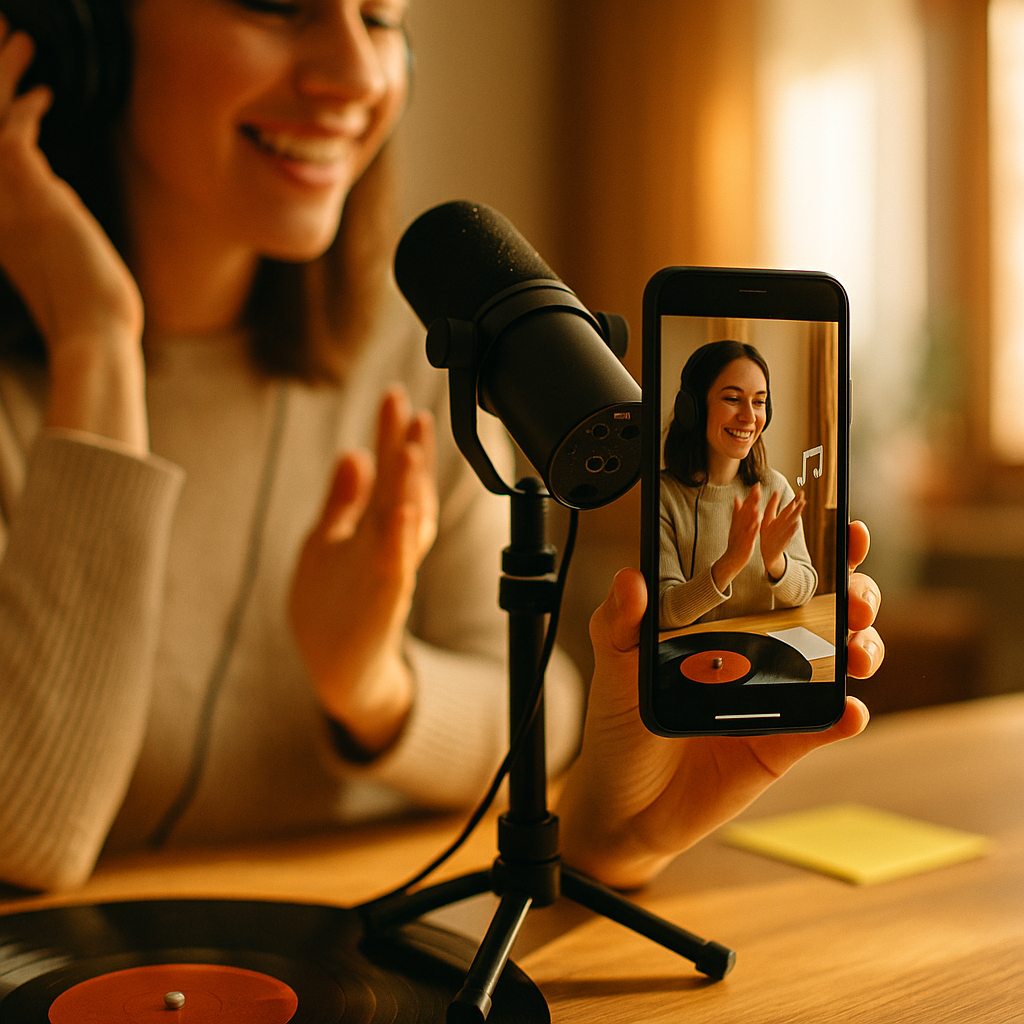
Sixty-two percent of TikTok users say sound is essential to their experience on the platform — yet most brand creator briefs still treat audio as an afterthought. That gap is where smart marketers are building durable brand jingle strategy, turning musical hooks into social commerce assets that work whether the feed is muted or blasting.
Why Audio Is Now a Distribution Channel, Not a Creative Garnish
The creator economy runs on remixability. A sound that gets reused becomes a discovery mechanism. When a creator uses your audio, every subsequent creator who duets, stitches, or trends on that sound generates an impression traceable back to the original. That is not a branding bonus. That is a media channel with compounding returns.
Brands like Ocean Spray, Chipotle, and more recently Duolingo have learned this the hard way and the right way. Their sonic moments were not accidents. They were (in retrospect) examples of audio assets that fit the platform’s native remix culture. The question brand strategists should be asking now is: how do we engineer that intentionally, at the brief level, before the creator ever picks up a phone?
A sonic hook that earns 10,000 organic reposts effectively functions as 10,000 earned media placements — each one carrying the brand’s audio identity into a new audience’s feed without additional media spend.
The Architecture of a Platform-Native Sonic Asset
Not every jingle qualifies. The platforms have trained their algorithms and their users to favor specific audio patterns. Understanding those patterns is table stakes for any brand investing in audio branding ROI.
Platform-native sonic assets share four structural traits:
- Brevity with distinctiveness. The hook lands in under three seconds. Think of it as the audio equivalent of a logo: instantly recognizable, stripped of complexity.
- BPM alignment with trending formats. TikTok’s most reused sounds cluster around 120–140 BPM. Briefs should specify tempo ranges, not just mood descriptors like “energetic” or “fun.”
- Lyric-free or lyric-light options. Lyrics create licensing friction the moment a creator wants to adapt the sound. Instrumental hooks or single-phrase hooks travel further with less legal exposure.
- Phonetic brand embedding. The brand name or a phonetically distinct phrase is woven into the hook itself, not bolted on at the end. This is what separates a branded sound from background music.
Commissioning a sound that hits all four is a production challenge. Most brand audio houses and jingle composers are not trained to think in these terms. That is why the brief itself has to carry the technical requirements, not just the brand values or emotional tone guidance.
Engineering Sonic Identity Into the Creator Brief
The brief is where sonic strategy either gets operationalized or gets lost. Most creator briefs include a line about “using the provided brand sound” or “incorporating the campaign audio.” That is not a strategy. That is an instruction.
Effective sonic briefs go further. They specify:
- The exact timestamp where the hook should appear (usually seconds 1–3 for Reels and TikTok, seconds 5–8 for YouTube Shorts where context hooks are more common)
- Approved remix and adaptation permissions — can the creator slow it down, pitch-shift, add their own vocal layer?
- Visual behavior cues tied to the audio beat — a lip sync moment, a product reveal, a gesture that reinforces the sonic beat
- A “sound-off fallback” requirement: on-screen text or motion that communicates the brand message independently of the audio
That last point is critical and frequently ignored. Meta’s own data suggests a significant portion of feed video is consumed without sound. A creator brief that does not account for the sound-off viewing environment is leaving brand recall on the table for every muted scroll.
The dual-environment brief — one that serves sound-on and sound-off simultaneously — is the standard sophisticated brands should be writing to now. The sonic hook does the heavy lifting for auditory learners and engaged viewers. The caption overlay, motion graphic, or product visual carries the message for everyone else.
Social Commerce: Where Audio Reuse Converts
Audio reuse is not just a vanity metric. On TikTok’s commerce platform, sounds that trend organically in a product category consistently outperform paid audio placements in driving product page visits. When a creator’s followers hear a sound associated with a brand across multiple creators they already trust, the cumulative effect accelerates purchase intent faster than any single sponsored post.
For brands running TikTok Shop campaigns, this matters operationally. A multi-surface creator brief that includes a branded sound as a required asset gives your affiliate creators a shared audio identity. When those creators’ videos surface in the same category search, the audio repetition creates familiarity signals that the algorithm rewards with additional reach.
The ROI case is not theoretical. Brands that treat their sonic asset as a performance creative element — A/B testing hook placement, monitoring sound reuse velocity in their analytics dashboards, and iterating the sound based on completion rate data — report measurably lower cost-per-action on creator-driven commerce campaigns.
Rights, Ownership, and the Licensing Trap
Before you brief creators on any audio asset, your legal and licensing structure needs to be airtight. This is where many brands stumble. They commission a sound, launch a campaign, and discover six weeks in that the composer retained rights to the underlying composition — meaning every creator video using that sound is technically unlicensed content.
The clean model: brand owns the master recording and the composition outright, with full work-for-hire agreements in place before production begins. The sound is then uploaded to the platform as a “brand original sound” — a feature available on TikTok and Meta — giving creators one-tap access and giving the brand analytics on how the sound is being used.
For brands exploring longer-form sonic integration, including music video formats and virtual event tie-ins, the rights complexity increases. Our coverage of music festival creator rights breaks down the licensing framework in more detail. The principles apply equally to standalone sonic asset production.
One practical safeguard: register the sonic trademark separately from your brand trademark. The FTC’s endorsement guidelines do not address sonic identity specifically, but courts have increasingly treated distinctive brand sounds as protectable trade dress. Registration creates a clear chain of ownership that matters in enforcement.
Measuring Audio Reuse as a Media Metric
Measurement is where sonic strategy either earns its seat at the budget table or gets cut. The good news: platforms now expose audio reuse data directly. TikTok’s Creator Marketplace and Meta’s Business Suite both surface sound performance metrics including total videos created with a sound, reach generated by sound-associated content, and audience overlap between original creator posts and organic reuses.
Layer that platform data against your brand lift survey results and you have a defensible attribution model. Brands running quarterly brand tracking through market research platforms can correlate audio reuse velocity with unaided recall scores — creating a direct line between sonic asset deployment and brand health metrics that CFOs can follow.
Sound reuse velocity — the rate at which a branded audio asset gets adopted by non-paid creators — is the leading indicator of organic reach multiplier. Track it weekly, not quarterly.
The creators who adopt your sound organically are also worth analyzing for influencer prospecting. They have self-selected as brand-aligned voices. Many brands have built their most efficient influencer programs by identifying organic sound adopters and converting them into paid partners, rather than sourcing new talent from scratch. This also connects naturally to how you think about scaling creator briefs without sacrificing the authenticity that makes organic adoption happen in the first place.
The Brief Is the Product
Sonic strategy only works if the brief communicates it at a level of specificity that production teams and creators can execute without guesswork. Vague audio direction — “use the brand vibe” or “incorporate our signature sound” — produces vague results. Specific briefs produce repeatable, measurable sonic identity. If you want to go deeper on brief architecture that drives measurable performance, the framework for scoring briefs for performance applies directly to sonic brief development.
Start with a single platform, a single sound, and a defined measurement window. Engineer the hook with technical precision, brief your creators with explicit placement and adaptation rules, and track reuse velocity from day one. The brands winning on social audio are not spending more — they are briefing smarter.
Frequently Asked Questions
What makes a brand jingle work as a social commerce asset?
A brand jingle works as a social commerce asset when it is short enough to function as a hook (under three seconds), tempo-aligned with platform-native content patterns, easy for creators to remix without licensing friction, and contains a phonetically distinct brand identifier. The goal is a sound that earns organic reuse by non-paid creators, extending reach without additional media spend.
How should a brand brief creators on audio usage?
Creator briefs for sonic assets should specify the exact timestamp for hook placement, define permitted adaptations (pitch, tempo, vocal layering), include visual behavior cues tied to the audio beat, and require a sound-off fallback — meaning on-screen captions or visuals that communicate the brand message for muted viewers. Audio direction should be as precise as visual direction.
Who owns a branded sound used in creator campaigns?
The brand should own both the master recording and the underlying composition through work-for-hire agreements signed before production begins. Uploading the sound as a “brand original sound” on TikTok or Meta gives creators licensed access and gives the brand analytics on adoption. Brands should also consider registering the sound as a sonic trademark for long-term protection.
How do you measure the ROI of a brand sonic asset?
Measure sound reuse velocity (how many non-paid creator videos use the sound over time), reach generated by sound-associated content, and overlay that data against brand lift survey results tracking unaided recall. Correlating audio reuse metrics with brand health tracking data creates a defensible attribution model for CFO-level reporting.
Does sound-off viewing undermine sonic brand strategy?
No, if the brief is written correctly. Sound-off viewing is a significant share of total feed consumption on Meta and TikTok. The solution is a dual-environment brief: the sonic hook captures engaged, sound-on viewers while caption overlays and motion graphics carry the brand message independently for muted scrollers. Both audiences receive the brand signal, just through different sensory channels.
Top Influencer Marketing Agencies
The leading agencies shaping influencer marketing in 2026
Agencies ranked by campaign performance, client diversity, platform expertise, proven ROI, industry recognition, and client satisfaction. Assessed through verified case studies, reviews, and industry consultations.
Moburst

-
2

The Shelf
Boutique Beauty & Lifestyle Influencer AgencyA data-driven boutique agency specializing exclusively in beauty, wellness, and lifestyle influencer campaigns on Instagram and TikTok. Best for brands already focused on the beauty/personal care space that need curated, aesthetic-driven content.Clients: Pepsi, The Honest Company, Hims, Elf Cosmetics, Pure LeafVisit The Shelf → -
3

Audiencly
Niche Gaming & Esports Influencer AgencyA specialized agency focused exclusively on gaming and esports creators on YouTube, Twitch, and TikTok. Ideal if your campaign is 100% gaming-focused — from game launches to hardware and esports events.Clients: Epic Games, NordVPN, Ubisoft, Wargaming, Tencent GamesVisit Audiencly → -
4

Viral Nation
Global Influencer Marketing & Talent AgencyA dual talent management and marketing agency with proprietary brand safety tools and a global creator network spanning nano-influencers to celebrities across all major platforms.Clients: Meta, Activision Blizzard, Energizer, Aston Martin, WalmartVisit Viral Nation → -
5

The Influencer Marketing Factory
TikTok, Instagram & YouTube CampaignsA full-service agency with strong TikTok expertise, offering end-to-end campaign management from influencer discovery through performance reporting with a focus on platform-native content.Clients: Google, Snapchat, Universal Music, Bumble, YelpVisit TIMF → -
6

NeoReach
Enterprise Analytics & Influencer CampaignsAn enterprise-focused agency combining managed campaigns with a powerful self-service data platform for influencer search, audience analytics, and attribution modeling.Clients: Amazon, Airbnb, Netflix, Honda, The New York TimesVisit NeoReach → -
7

Ubiquitous
Creator-First Marketing PlatformA tech-driven platform combining self-service tools with managed campaign options, emphasizing speed and scalability for brands managing multiple influencer relationships.Clients: Lyft, Disney, Target, American Eagle, NetflixVisit Ubiquitous → -
8

Obviously
Scalable Enterprise Influencer CampaignsA tech-enabled agency built for high-volume campaigns, coordinating hundreds of creators simultaneously with end-to-end logistics, content rights management, and product seeding.Clients: Google, Ulta Beauty, Converse, AmazonVisit Obviously →