


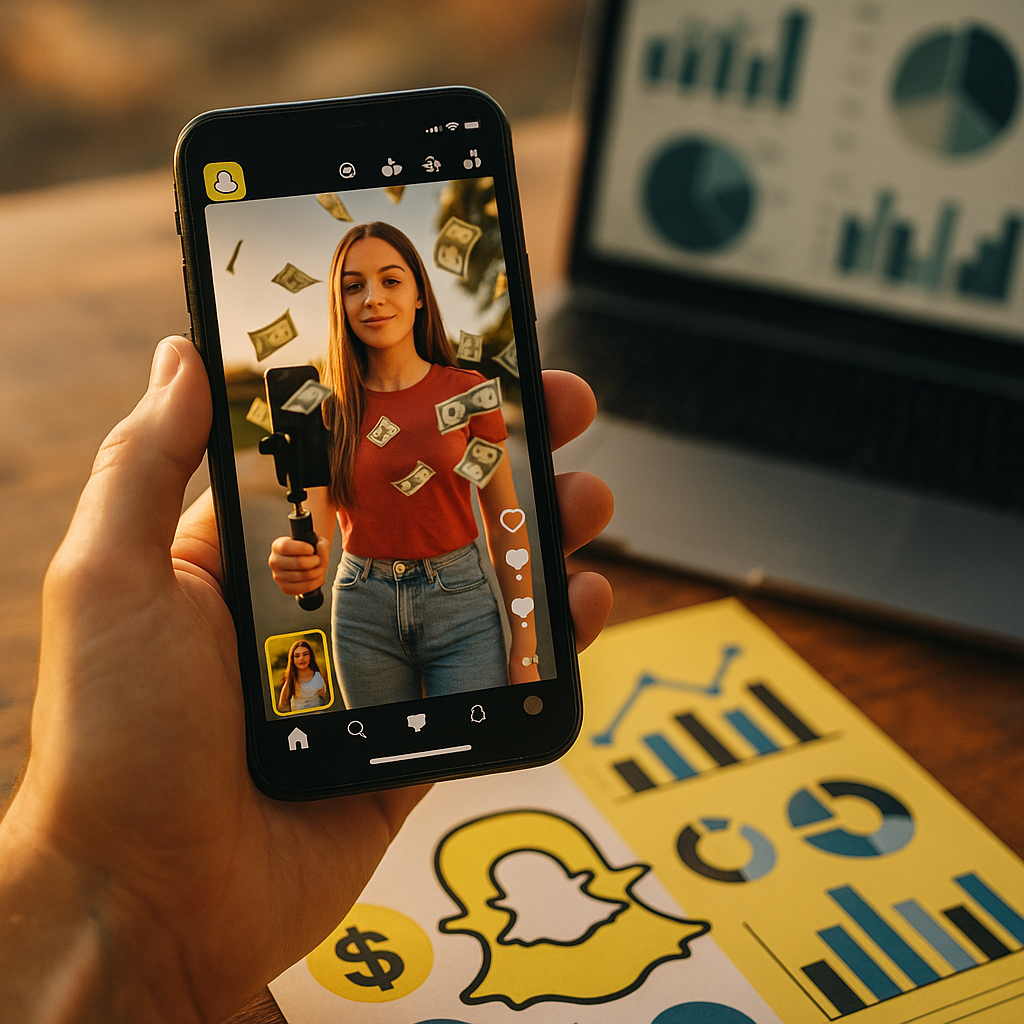
Snapchat has 900 million monthly users, and most brand strategists still treat it like a 2018 disappearing-photo app. That gap is exactly why Spotlight deserves a second look. If your media plan is TikTok-or-nothing for Gen Z reach, you’re likely overpaying for shrinking inventory while ignoring a discovery surface with real, underpriced upside.
Why Spotlight Keeps Getting Skipped in Planning Meetings
Ask ten media planners about Snapchat and nine will mention AR lenses or the map feature. Almost none will bring up Spotlight, the TikTok-style vertical video feed Snap has quietly built into the app’s core navigation. That’s a planning blind spot, not a performance one.
Spotlight sits alongside Snap’s Stories and Chat tabs, surfacing algorithmically recommended short-form video to users regardless of who they follow. It’s discovery-first, not social-graph-first. For brands chasing cold reach among 13-to-24-year-olds, that distinction matters more than most decks give it credit for.
Snap reports that Spotlight engagement has grown steadily as the company leans into AI-driven recommendations, and eMarketer’s platform usage data continues to show Snapchat holding onto younger daily-active users at rates that rival or beat Instagram among teens. The audience is there. The competition for it, at least among brand marketers, is not.
Spotlight CPMs regularly run 20-40% below comparable TikTok For You Page placements, largely because fewer brands are bidding for the inventory.
What Spotlight Actually Is (and Isn’t)
Spotlight is not a paid ad unit in the traditional sense. It’s an organic discovery feed that surfaces short vertical videos from any creator or brand account, ranked by an algorithm that weighs completion rate, replay, and shares far more heavily than follower count. Snap does offer paid amplification and Snap Ads that can run adjacent to or within Spotlight-style placements, but the core play is earning organic reach through content the algorithm wants to push.
That’s a fundamentally different mechanic than buying a guaranteed impression. It rewards brands willing to treat Spotlight like a content channel, not a media line item. Think of it as closer to organic TikTok strategy than to a programmatic buy.
- No follower requirement: a brand account with zero followers can still get Spotlight distribution if the content performs.
- Short-form native: videos under 60 seconds, vertical, sound-on, built for mobile-first consumption.
- Creator-friendly economics: Snap has run creator payout programs tied to Spotlight views, which has pulled in a steady stream of native creators worth partnering with.
- Youth skew: Snapchat’s core demographic remains younger and more US/UK/Canada-concentrated than TikTok’s global spread, which is either an advantage or a limitation depending on your target market.
Who Should Actually Be Testing This
Not every brand belongs on Spotlight. If your buyer is a 45-year-old B2B procurement manager, skip this section and go read about LinkedIn creator sponsorships instead. But if you’re selling to Gen Z or younger millennials, particularly in beauty, gaming, fast fashion, snacks, or entertainment, Spotlight deserves a line item in next quarter’s test budget.
Snap’s own advertiser data has consistently shown Snapchatters over-indexing on categories like cosmetics, mobile gaming, and quick-service restaurants. Those are exactly the categories where discovery-driven, low-friction video content tends to outperform polished brand ads. A 22-second unboxing clip that lands in the algorithm can outperform a six-figure production that never gets recommended past a brand’s own follower base.
There’s also a compliance angle worth flagging early. Brands operating in youth-facing categories should already be tracking regional age-verification rules, since platforms are under increasing regulatory pressure globally. The same scrutiny applied to age verification compliance on TikTok and Instagram is starting to extend to every short-form video surface, Snapchat included. Build that review into your legal sign-off now, not after a campaign launches.
Building a Spotlight-Ready Content Strategy
Spotlight rewards the same instincts that work on TikTok and Reels: hook in the first two seconds, cut fast, sound on, and don’t open with a logo. But there are platform-specific wrinkles worth knowing before you brief creators.
- Native creators over cross-posted content. Snap’s algorithm appears to favor content originated on the platform over videos with visible TikTok or Reels watermarks. Re-uploading your TikTok backlog is a lazy shortcut that underperforms.
- Lean into AR where it fits. Snap’s Lens ecosystem is still the platform’s differentiator. Pairing a Spotlight campaign with a branded Lens gives users a participatory hook competitors on other platforms can’t easily replicate.
- Prioritize completion and replay over reach vanity metrics. Since the algorithm weighs watch-through heavily, briefs should optimize for tight editing and loopable endings, not just impressions.
- Test creator partnerships before brand-owned accounts. A brand account with no history starts cold. A creator with an existing Spotlight track record gives the algorithm a head start.
This mirrors a pattern seen across other emerging creator ecosystems: platforms reward native fluency over repurposed assets, and the brands willing to build platform-specific briefs consistently outperform the ones running a single asset everywhere. If you’re already juggling multiple short-form platforms, it’s worth reading how teams are handling one brief across TikTok, YouTube, and Pinterest and adapting that same discipline for Snap.
The Snap Creator Network Advantage
Snap has been investing in formal creator infrastructure to make brand-creator matching easier, following a familiar playbook from TikTok’s Creator Marketplace and YouTube’s BrandConnect. Brands moving early on this get first pick of native Spotlight talent before CPMs and creator rates catch up to demand.
Influencers Time has covered this in depth: the Snap Creator Network early-mover strategy lays out how brands are securing preferred creator rates before the platform matures, and a direct comparison of Snap, TikTok, and LinkedIn creator networks breaks down where each platform’s economics currently favor advertisers. Both are worth reading before you write your first Spotlight brief.
The early-mover argument isn’t hype. Platforms in growth mode tend to subsidize the supply side, creators, to build out content libraries, which keeps rates artificially low for a window that eventually closes. Anyone who bought TikTok influencer placements in 2019 versus now knows exactly what that curve looks like.
Measurement: What to Actually Report to Your CMO
Spotlight’s native analytics are thinner than TikTok’s or Meta’s, so set expectations with stakeholders before launch. You’ll get view counts, completion rates, and share data at the content level, but attribution to downstream conversion requires the same disciplined UTM and pixel setup you’d use anywhere else.
Snap’s ad platform does support conversion tracking for paid Snap Ads run alongside or in support of Spotlight content, and pairing organic Spotlight testing with a small paid amplification budget is a reasonable way to get cleaner attribution data. If your team already runs multi-touch attribution models, treat Spotlight like any other emerging channel: short attribution windows for direct response goals, longer windows for brand lift and awareness plays. The same logic Influencers Time has outlined for attribution windows in creator contracts applies directly here.
Don’t skip the disclosure audit either. Any paid creator partnership on Spotlight still falls under FTC endorsement guidance, and Snap’s in-app disclosure tools are less mature than TikTok’s. A quick pass through ad disclosure requirements across platforms will save you a compliance headache later. The FTC’s endorsement guidelines apply regardless of how obscure the platform feels to your legal team.
What This Costs You If You Wait
Every underpriced channel eventually gets discovered. Reddit went from ignored to a legitimate brand citation authority once marketers realized AI search engines were pulling answers from its threads. Pinterest shifted from “nice to have” to a real commerce channel once brands figured out how to budget, brief, and measure it properly. Spotlight is at that same inflection point now, cheap, underexploited, and genuinely reaching an audience that’s getting harder to find elsewhere as organic reach on legacy platforms continues to erode, a trend covered extensively in why organic reach is dead and paid amplification is now essential.
None of this means abandon TikTok or Reels. It means Spotlight deserves a real test budget, a native creator brief, and a spot on your quarterly channel review, not a footnote in the “emerging platforms” slide nobody reads.
Frequently Asked Questions
Is Snapchat Spotlight worth testing for brands outside beauty and gaming?
Yes, though results vary by category. Food and beverage, entertainment, and youth apparel brands have seen strong Spotlight traction. B2B and higher-consideration purchase categories generally see weaker returns, since Spotlight’s audience skews younger and impulse-driven.
How is Spotlight different from Snapchat Stories or Discover?
Stories are follower-based and time-limited to friend and creator subscriptions. Discover is Snap’s curated publisher and media content hub. Spotlight is algorithmic discovery open to any account, closer in mechanics to TikTok’s For You Page than to either of Snapchat’s other content surfaces.
Do brands need a paid budget to succeed on Spotlight?
No. Spotlight distribution is organic and algorithm-driven, so a zero-budget brand account can gain traction with the right content. That said, pairing organic testing with modest paid amplification improves consistency and gives cleaner attribution data.
What content length performs best on Spotlight?
Videos under 60 seconds tend to perform best, with the strongest completion rates typically coming from clips in the 10-to-25 second range. Fast hooks and loopable endings outperform longer narrative formats.
How do CPMs on Spotlight compare to TikTok or Instagram Reels?
Spotlight CPMs are generally lower, often 20-40% below comparable TikTok placements, primarily due to lower advertiser demand rather than lower audience quality. That gap is likely to narrow as more brands catch on.
Next step: pick one Gen Z-relevant product line, brief two native Snap creators through the Snap Creator Network, and run a four-week Spotlight test before you finalize next quarter’s short-form video budget.
Top Influencer Marketing Agencies
The leading agencies shaping influencer marketing in 2026
Agencies ranked by campaign performance, client diversity, platform expertise, proven ROI, industry recognition, and client satisfaction. Assessed through verified case studies, reviews, and industry consultations.
Moburst

-
2

The Shelf
Boutique Beauty & Lifestyle Influencer AgencyA data-driven boutique agency specializing exclusively in beauty, wellness, and lifestyle influencer campaigns on Instagram and TikTok. Best for brands already focused on the beauty/personal care space that need curated, aesthetic-driven content.Clients: Pepsi, The Honest Company, Hims, Elf Cosmetics, Pure LeafVisit The Shelf → -
3

Audiencly
Niche Gaming & Esports Influencer AgencyA specialized agency focused exclusively on gaming and esports creators on YouTube, Twitch, and TikTok. Ideal if your campaign is 100% gaming-focused — from game launches to hardware and esports events.Clients: Epic Games, NordVPN, Ubisoft, Wargaming, Tencent GamesVisit Audiencly → -
4

Viral Nation
Global Influencer Marketing & Talent AgencyA dual talent management and marketing agency with proprietary brand safety tools and a global creator network spanning nano-influencers to celebrities across all major platforms.Clients: Meta, Activision Blizzard, Energizer, Aston Martin, WalmartVisit Viral Nation → -
5

The Influencer Marketing Factory
TikTok, Instagram & YouTube CampaignsA full-service agency with strong TikTok expertise, offering end-to-end campaign management from influencer discovery through performance reporting with a focus on platform-native content.Clients: Google, Snapchat, Universal Music, Bumble, YelpVisit TIMF → -
6

NeoReach
Enterprise Analytics & Influencer CampaignsAn enterprise-focused agency combining managed campaigns with a powerful self-service data platform for influencer search, audience analytics, and attribution modeling.Clients: Amazon, Airbnb, Netflix, Honda, The New York TimesVisit NeoReach → -
7

Ubiquitous
Creator-First Marketing PlatformA tech-driven platform combining self-service tools with managed campaign options, emphasizing speed and scalability for brands managing multiple influencer relationships.Clients: Lyft, Disney, Target, American Eagle, NetflixVisit Ubiquitous → -
8

Obviously
Scalable Enterprise Influencer CampaignsA tech-enabled agency built for high-volume campaigns, coordinating hundreds of creators simultaneously with end-to-end logistics, content rights management, and product seeding.Clients: Google, Ulta Beauty, Converse, AmazonVisit Obviously →