


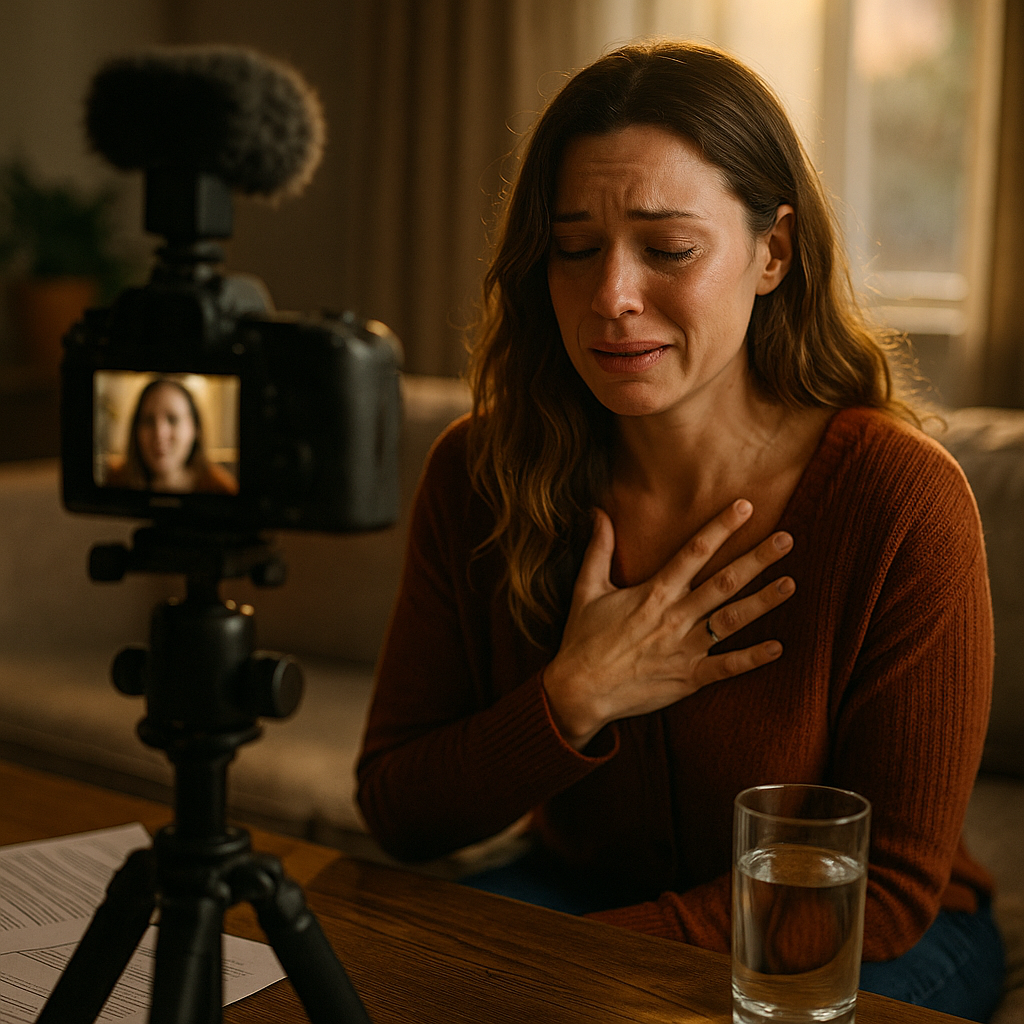
Polished testimonials get skipped. Skepticism about traditional ads has become the default consumer posture, and audiences can smell a script from three seconds out. So brands are quietly shifting toward something messier, riskier, and far more effective: the confessional testimonial format, where creators admit doubt, failure, or discomfort before they ever mention a product. It sells precisely because it doesn’t try to.
Why Vulnerability Outperforms Polish
Here’s the uncomfortable truth for brand teams raised on benefit-statement scripts: the more a testimonial sounds like marketing, the less it converts. Audiences have been trained by a decade of influencer content to detect paid enthusiasm instantly. The confessional format works around that filter by leading with something a brand would never approve in a traditional ad — a struggle, an embarrassment, a moment of doubt.
Think of the creator who opens with “I almost didn’t post this” or “I was actually kind of skeptical this would work on my skin.” That framing does something a benefit list can’t: it signals the creator has something to lose by being honest, which makes the audience trust what comes next.
A confessional testimonial doesn’t ask viewers to believe the product works. It asks them to believe the creator, and lets that trust carry the product claim along for free.
This isn’t just a vibe. Sprout Social’s consumer research has repeatedly found that authenticity and relatability rank above production quality when audiences decide whether to trust branded content. Brands optimizing for slick still get outperformed by brands optimizing for real.
What the Format Actually Looks Like
Confessional testimonials follow a loose but recognizable arc. It’s not chaos — it’s structure disguised as spontaneity, and that distinction matters enormously when you’re briefing creators at scale.
- The admission: a personal struggle, insecurity, or skepticism stated plainly, before the brand is named.
- The turning point: the moment the creator tried the product, often framed as low-stakes or accidental (“my friend basically forced me”).
- The specific detail: not “it changed my life” but “I stopped using three other products because of this one thing.”
- The unresolved edge: a small caveat, a “this won’t work for everyone,” or an honest limitation that keeps the whole thing credible.
That last beat is the one most brand briefs cut, and it’s the one doing the heaviest lifting. A testimonial with zero downside reads as an ad. A testimonial with one honest limitation reads as a person.
The Brief Problem: Directing Vulnerability Without Faking It
This is where most marketing teams get nervous, and rightly so. You can’t script authenticity. Tell a creator exactly what insecurity to perform and you get something that feels worse than a normal ad — it feels manipulative, and audiences are increasingly literate enough to spot manufactured vulnerability. The line between “directed confessional” and “exploitative script” is thin, and crossing it damages both the creator’s credibility and your brand’s.
The fix isn’t looser briefs. It’s differently structured ones. Instead of scripting lines, brief the emotional beat and let the creator supply their own true story that fits it. This is the same logic behind briefing GRWM content that doesn’t sound scripted — you’re directing structure, not dialogue.
A workable brief template looks like this:
- Name the emotional territory (self-doubt, frustration, embarrassment, exhaustion) rather than the specific anecdote.
- Ask the creator to identify a real personal moment that matches that territory — give them 2-3 days to think of it, don’t force it live.
- Require the product mention to arrive at least 30-45 seconds into the story, never in the first line.
- Mandate one honest caveat or limitation before any CTA.
- Review for claims accuracy, not tone. Don’t touch the emotional language.
Notice what’s missing: a script. That’s deliberate. The moment you hand a creator scripted vulnerability, you’ve turned confession into copy, and copy is exactly what this format exists to avoid.
Where This Format Wins (and Where It Doesn’t)
Confessional testimonials aren’t universal. They perform best in categories where audiences already expect an emotional undercurrent: skincare, mental health apps, fitness, personal finance, fertility and women’s health, career coaching, weight management. Anywhere the purchase decision is tangled up with identity or shame, confession outperforms demonstration.
They perform worse in categories where the buying decision is purely functional. Nobody wants a confessional testimonial about printer ink. If your product doesn’t touch on insecurity, aspiration, or a felt personal problem, this format will feel forced, and forced confession is worse than no confession at all.
It also pairs well with formats that already trade on realism. Brands running day-in-the-life content that weaves products in naturally or before-and-after formats built for compliance can layer confessional beats into either without restructuring the whole campaign.
The Compliance Question Nobody Wants to Ask
Vulnerability sells, but it also raises the regulatory stakes. A creator sharing a personal health struggle and crediting a product with resolving it is making an implied efficacy claim, whether or not they say “cures” or “treats.” The FTC has been explicit that testimonials, including personal stories, must reflect the typical experience or be paired with clear disclosure of what’s atypical, and the endorsement guidance applies just as much to a tearful confession as to a straightforward review.
Brand and legal teams should treat confessional content with the same rigor they’d apply to any efficacy-adjacent claim. If you haven’t formalized that process, the FTC compliance guide for functional claims is a solid starting framework, and it maps directly onto testimonial review too. Disclosure requirements don’t disappear because the content feels personal — if anything, emotionally charged content gets more regulatory scrutiny, not less. Review the official FTC endorsement guidelines before greenlighting any campaign built around personal health, financial, or wellness narratives.
Emotional authenticity is not a compliance exemption. If anything, the more personal the story, the more scrutiny the underlying claim deserves.
Practical safeguards worth building into your workflow:
- Require creators to state results are personal and not guaranteed, in-video, not just in the caption.
- Keep #ad or #sponsored disclosure in the first three seconds, not buried after the confession.
- Document the creator’s actual product usage period before publishing — “I used this for two weeks” claims need to be true, not aspirational.
- Run every script-adjacent brief past legal if it touches health, mental health, weight, or financial outcomes.
Measuring What Actually Moved
Confessional testimonials rarely spike immediate click-through the way a discount-code post does. Their value shows up in different metrics: watch-through rate on longer-form video, comment sentiment, saves, and — critically — branded search lift in the days following a post. eMarketer’s ongoing creator economy research has flagged trust-driven content as a stronger predictor of downstream conversion than immediate CTR, which means brands measuring this format purely on click-through are underselling its actual performance.
Track these instead:
- Comment sentiment quality: are people sharing their own stories in response? That’s the format working.
- Completion rate on long-form cuts: confessional content often runs 60-90 seconds; if people are staying, the vulnerability is landing.
- Branded search or direct traffic lift: a delayed but real signal of trust translating to intent.
- Repeat creator requests: are audiences asking the creator to talk about the product again? That’s earned advocacy, not paid reach.
If you’re building a broader measurement framework across formats, it’s worth benchmarking confessional content against other trust-forward formats in your social-first format taxonomy and ROI model, since the KPIs genuinely differ from transactional formats like carousels or product demos.
Casting Matters More Than the Brief
You can write the best confessional brief in the industry and still fail if you cast the wrong creator. This format lives or dies on whether the audience already believes the creator would be vulnerable on camera. A creator known for polished, aspirational content suddenly “confessing” reads as a pivot, and audiences notice pivots.
Look for creators who already share unscripted moments organically — the ones whose comment sections are full of “thank you for being honest” rather than “love this fit.” Their existing trust equity is what makes the confessional format land in three seconds instead of thirty. Casting for this format is closer to casting for POV-driven immersive storytelling than for a standard product demo — you’re hiring for perceived interiority, not just reach.
A quick gut check before signing a creator for this format: would their audience believe them if they said something negative about your brand? If the answer is no, their positive confession won’t land either. Trust is not selective by default.
Next Step
Don’t brief for tears — brief for territory, then get out of the way. Give creators the emotional zone and the compliance guardrails, let them supply the true story, and review for accuracy rather than polish. That’s the entire difference between a confessional testimonial that converts and one that reads like a script wearing a diary’s clothes.
FAQs
What is a confessional testimonial in influencer marketing?
It’s a creator-led testimonial format built around an honest personal admission, doubt, struggle, or insecurity, shared before the product is introduced. The vulnerability builds trust, which then transfers to the product claim.
How do you brief creators for vulnerability without sounding scripted?
Brief the emotional territory, not the anecdote. Ask creators to supply their own true story matching that feeling, require the product mention to arrive well into the narrative, and leave the actual language unscripted.
Is the confessional testimonial format FTC compliant?
It can be, but it requires the same disclosure and substantiation standards as any testimonial. Disclosure needs to appear early in the video, results claims need to reflect typical experience, and health or financial claims need legal review.
Which industries benefit most from confessional testimonials?
Categories tied to identity, insecurity, or aspiration perform best: skincare, mental health, fitness, personal finance, and wellness. Purely functional product categories generally see weaker results from this format.
How should brands measure confessional testimonial performance?
Track completion rate, comment sentiment quality, branded search lift, and repeat creator mentions rather than relying solely on click-through rate, since trust-driven content tends to convert on a delay.
FAQs
What is a confessional testimonial in influencer marketing?
It’s a creator-led testimonial format built around an honest personal admission, doubt, struggle, or insecurity, shared before the product is introduced. The vulnerability builds trust, which then transfers to the product claim.
How do you brief creators for vulnerability without sounding scripted?
Brief the emotional territory, not the anecdote. Ask creators to supply their own true story matching that feeling, require the product mention to arrive well into the narrative, and leave the actual language unscripted.
Is the confessional testimonial format FTC compliant?
It can be, but it requires the same disclosure and substantiation standards as any testimonial. Disclosure needs to appear early in the video, results claims need to reflect typical experience, and health or financial claims need legal review.
Which industries benefit most from confessional testimonials?
Categories tied to identity, insecurity, or aspiration perform best: skincare, mental health, fitness, personal finance, and wellness. Purely functional product categories generally see weaker results from this format.
How should brands measure confessional testimonial performance?
Track completion rate, comment sentiment quality, branded search lift, and repeat creator mentions rather than relying solely on click-through rate, since trust-driven content tends to convert on a delay.
Top Influencer Marketing Agencies
The leading agencies shaping influencer marketing in 2026
Agencies ranked by campaign performance, client diversity, platform expertise, proven ROI, industry recognition, and client satisfaction. Assessed through verified case studies, reviews, and industry consultations.
Moburst

-
2

The Shelf
Boutique Beauty & Lifestyle Influencer AgencyA data-driven boutique agency specializing exclusively in beauty, wellness, and lifestyle influencer campaigns on Instagram and TikTok. Best for brands already focused on the beauty/personal care space that need curated, aesthetic-driven content.Clients: Pepsi, The Honest Company, Hims, Elf Cosmetics, Pure LeafVisit The Shelf → -
3

Audiencly
Niche Gaming & Esports Influencer AgencyA specialized agency focused exclusively on gaming and esports creators on YouTube, Twitch, and TikTok. Ideal if your campaign is 100% gaming-focused — from game launches to hardware and esports events.Clients: Epic Games, NordVPN, Ubisoft, Wargaming, Tencent GamesVisit Audiencly → -
4

Viral Nation
Global Influencer Marketing & Talent AgencyA dual talent management and marketing agency with proprietary brand safety tools and a global creator network spanning nano-influencers to celebrities across all major platforms.Clients: Meta, Activision Blizzard, Energizer, Aston Martin, WalmartVisit Viral Nation → -
5

The Influencer Marketing Factory
TikTok, Instagram & YouTube CampaignsA full-service agency with strong TikTok expertise, offering end-to-end campaign management from influencer discovery through performance reporting with a focus on platform-native content.Clients: Google, Snapchat, Universal Music, Bumble, YelpVisit TIMF → -
6

NeoReach
Enterprise Analytics & Influencer CampaignsAn enterprise-focused agency combining managed campaigns with a powerful self-service data platform for influencer search, audience analytics, and attribution modeling.Clients: Amazon, Airbnb, Netflix, Honda, The New York TimesVisit NeoReach → -
7

Ubiquitous
Creator-First Marketing PlatformA tech-driven platform combining self-service tools with managed campaign options, emphasizing speed and scalability for brands managing multiple influencer relationships.Clients: Lyft, Disney, Target, American Eagle, NetflixVisit Ubiquitous → -
8

Obviously
Scalable Enterprise Influencer CampaignsA tech-enabled agency built for high-volume campaigns, coordinating hundreds of creators simultaneously with end-to-end logistics, content rights management, and product seeding.Clients: Google, Ulta Beauty, Converse, AmazonVisit Obviously →