


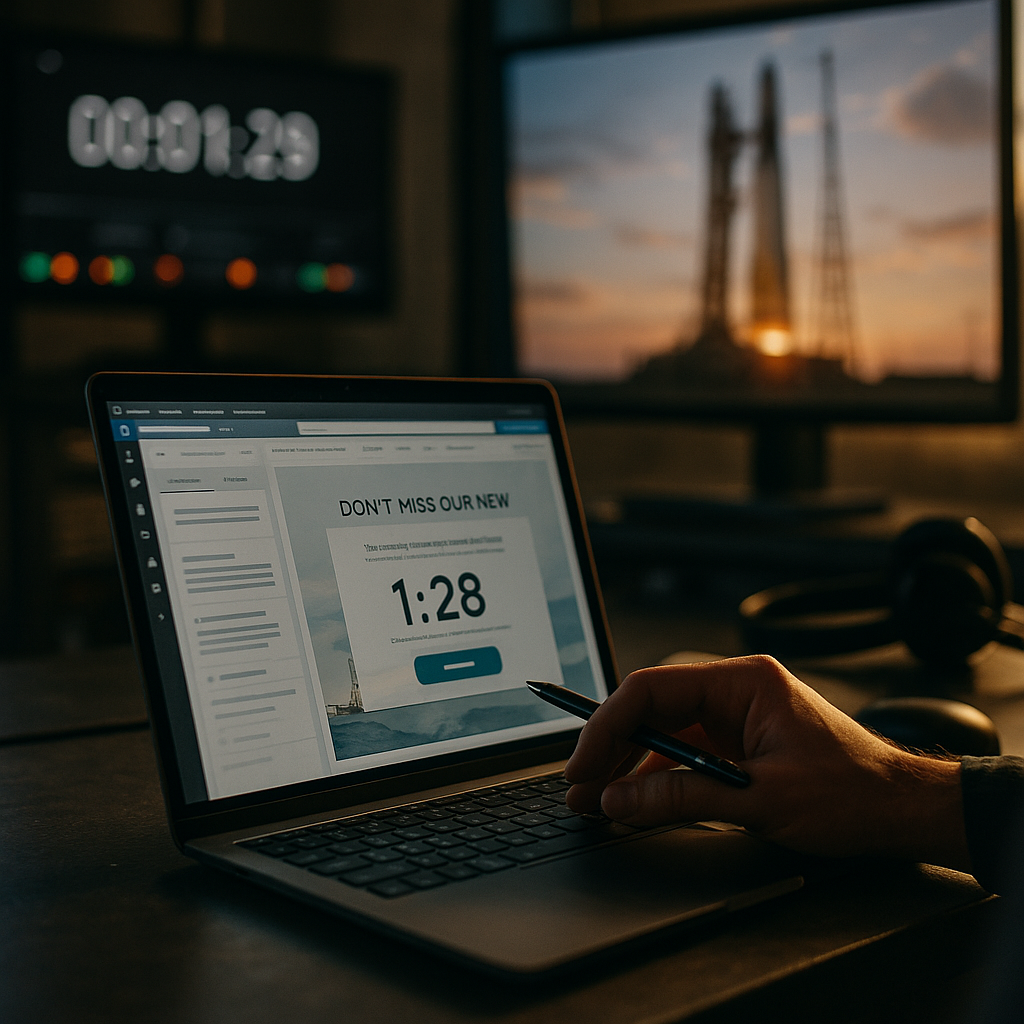
Seventy percent of a product launch’s momentum is decided before the product exists. Not by the launch post. By what comes before it. The countdown drop format — a structured sequence of teaser content released across several days — has become the default playbook for creator-led launches, and yet most brands still botch the pacing.
Done well, a countdown builds a crowd that shows up on day one ready to buy. Done poorly, it’s just five posts that say “coming soon” with diminishing returns each time. The difference is structure, not creativity.
Why Countdown Sequences Outperform Single-Moment Launches
A single launch post asks an audience to go from zero interest to purchase intent in one scroll. That’s a hard conversion to force. A countdown format spreads that cognitive work across multiple touchpoints, each one doing a smaller, easier job: curiosity, then context, then proof, then urgency.
This isn’t just creative theory. Repetition and staged reveals are core to how attention and memory work — a single exposure rarely moves someone from awareness to action, but three to five spaced exposures compound. Marketers running countdown formats consistently report higher launch-day conversion rates than single-drop announcements, largely because the audience arrives pre-sold rather than cold.
A countdown drop isn’t a hype tactic — it’s a distribution strategy that turns one launch moment into five to seven separate opportunities to be discovered, shared, and remembered.
There’s also an algorithmic case. Platforms like TikTok and Instagram reward accounts that post consistently around a theme, and a countdown gives creators a built-in content calendar with a natural narrative arc. That’s easier to sustain than five unrelated pieces of content competing for the same launch budget.
The Anatomy of a Countdown: What Each Day Should Actually Do
Most countdown sequences fail because every post tries to do the same job: generate hype. Hype without escalation gets ignored by day three. Instead, treat each day as a distinct narrative beat with its own objective.
- Day 5-7 out — The tease: No product visible. A silhouette, a sound cue, a cryptic caption. The goal is pure curiosity, not information.
- Day 3-4 out — The context: Introduce the problem the product solves. This is where origin story content works well — it gives the audience a reason to care before they see the thing itself.
- Day 2 out — The proof: Early access creators show a glimpse of use, texture, or function. This is where formats like sensory-first demos or a partial slow-motion reveal earn their keep — enough to convince, not enough to spoil.
- Day 1 out — The countdown clock: Explicit urgency. Timer graphics, “tomorrow” language, FOMO-driven copy. This is the day to lean into poll-driven content to spike engagement and signal the algorithm that something’s coming.
- Launch day — The full reveal: Everything converges. Product page live, creator content synchronized, paid amplification switched on.
Notice the pattern: information increases, but never all at once. Each day answers one question and raises a new one. That’s the engine that keeps people checking back.
How Many Days Should a Countdown Actually Run?
Shorter is usually better than marketers assume. A five-to-seven day window tends to be the sweet spot for consumer products; anything longer risks fatigue, anything shorter doesn’t give creators enough runway to build a narrative arc. B2B and high-consideration launches (software, durable goods) can stretch to two or three weeks, but only if each week introduces genuinely new information — not just a reposted timer graphic.
Ask yourself honestly: does day four have anything to say that day two didn’t? If not, cut it.
Briefing Creators for Sequential Content Without Killing Spontaneity
The hardest part of a countdown isn’t the concept. It’s briefing multiple creators to hit the same narrative beats on the same days without making everything feel like corporate copy-paste.
The fix is a shared framework, not a shared script. Give every creator the day’s objective, the one non-negotiable brand detail (product name embargo, hashtag, disclosure language), and a loose creative direction. Let them fill in tone and format themselves. A beauty creator’s “day 3 context” post should look nothing like a tech reviewer’s, even if both are hitting the same beat.
This is where a lot of brands over-brief. If you send a shot list for a five-day sequence, you’ll get five days of stiff, samey content. Better to treat the brief the way you’d brief a day-in-the-life format — give structure, not a script.
Coordinating Cross-Platform Timing
Countdown content rarely lives on one platform anymore. A brand might run the tease on Instagram Stories, the proof beat on TikTok, and the full reveal as a coordinated push across both plus YouTube Shorts. That means your creator calendar has to account for platform-specific posting windows and format quirks — a countdown clock graphic that works in Stories won’t translate directly to a YouTube Shorts feed.
Build a single master calendar, but let each platform lead adapt timing to when its audience is actually active. Posting all five days at 9am regardless of platform is a rookie mistake that guarantees inconsistent reach.
The Compliance Layer Nobody Wants to Think About
Countdown content creates a specific disclosure problem: is a teaser post — one that shows no product, mentions no brand name, and just says “something’s coming” — a sponsored post that needs an #ad tag?
The honest answer, per FTC guidance, is usually yes if the creator was compensated or briefed by the brand to post it, even if the product itself is invisible. Material connection disclosure isn’t about what’s shown, it’s about whether the relationship exists. Brands that skip disclosure on early teaser posts because “there’s nothing to disclose yet” are taking on unnecessary regulatory risk.
Build disclosure into the brief from day one of the sequence, not just the reveal post. This is the same logic covered in our piece on staying FTC compliant with format-driven content — the rules don’t relax just because the content is teaser material.
If a creator was paid or product-seeded to post a teaser, it needs a disclosure — even if the post never shows the product or names the brand.
Measuring a Countdown: What Actually Predicts Launch-Day Performance
Vanity metrics on individual teaser posts (views, likes) tell you almost nothing about launch-day conversion. What actually predicts performance is the trajectory across the sequence, not any single post’s numbers.
Track these instead:
- Engagement velocity across days: Is engagement climbing day over day, or flat? A flat line means the escalation structure isn’t working.
- Save and share rate on the proof-stage content: This is the strongest leading indicator of purchase intent, stronger than comment volume.
- Waitlist or notify-me signups per teaser: If you’re not capturing emails or app notifications during the countdown, you’re leaving the most valuable asset of the whole sequence on the table.
- Branded search lift: Tools like Google Trends or platform-native search data can show whether the countdown is driving people to look the product up before launch — a strong signal of real intent versus passive scrolling.
According to eMarketer research on creator-led campaigns, sequenced content consistently drives higher completion and recall rates than single-asset drops, which reinforces why the countdown structure earns its place in a launch budget rather than being treated as a nice-to-have.
What to Do When a Countdown Underperforms Mid-Sequence
Sometimes day two lands flat. Don’t panic and don’t scrap the plan — diagnose it. Was the beat too similar to day one? Did the creator ignore the brief’s core hook? Or did the platform’s algorithm just have a bad day (it happens)?
If engagement is genuinely stalling, the fix is usually to skip ahead: reveal more than planned on the next post to re-inject curiosity. A countdown is a structure, not a contract. Adjust the pacing if the data tells you to.
A Format That Rewards Discipline Over Cleverness
The brands that run countdown drops well aren’t necessarily the most creative ones. They’re the ones with the discipline to plan the full arc before day one goes live, brief for escalation instead of repetition, and resist the urge to reveal everything by day three because it’s “getting good engagement.” Patience is the actual creative skill here.
Start your next launch by mapping the five beats before you write a single caption — the structure will do more work than any individual piece of content.
Frequently Asked Questions
How long should a countdown drop sequence run before a product launch?
Five to seven days works best for most consumer launches. Longer sequences of two to three weeks can work for high-consideration products like software or durable goods, but only if each stage introduces genuinely new information rather than repeating the same teaser.
Do teaser posts need FTC disclosure if the product isn’t shown?
Yes, in most cases. Disclosure requirements are triggered by the material connection between the creator and the brand, not by whether the product appears on screen. If a creator was paid, seeded product, or briefed to post a teaser, it should carry a disclosure.
What’s the biggest mistake brands make with countdown content?
Treating every day’s post as the same hype message instead of giving each day a distinct narrative job. Escalating information, not repeating it, is what keeps audiences engaged across the full sequence.
Which metrics predict launch-day success during a countdown?
Engagement velocity across the sequence, save and share rates on mid-sequence “proof” content, and waitlist or notify-me signups are stronger predictors than raw views or likes on any single post.
Should every creator in a countdown campaign follow the same script?
No. Give creators a shared objective and required brand details per day, but let them adapt tone and format to their own audience. A rigid shared script tends to produce flat, repetitive content across the sequence.
FAQs
How long should a countdown drop sequence run before a product launch?
Five to seven days works best for most consumer launches. Longer sequences of two to three weeks can work for high-consideration products like software or durable goods, but only if each stage introduces genuinely new information rather than repeating the same teaser.
Do teaser posts need FTC disclosure if the product isn’t shown?
Yes, in most cases. Disclosure requirements are triggered by the material connection between the creator and the brand, not by whether the product appears on screen. If a creator was paid, seeded product, or briefed to post a teaser, it should carry a disclosure.
What’s the biggest mistake brands make with countdown content?
Treating every day’s post as the same hype message instead of giving each day a distinct narrative job. Escalating information, not repeating it, is what keeps audiences engaged across the full sequence.
Which metrics predict launch-day success during a countdown?
Engagement velocity across the sequence, save and share rates on mid-sequence “proof” content, and waitlist or notify-me signups are stronger predictors than raw views or likes on any single post.
Should every creator in a countdown campaign follow the same script?
No. Give creators a shared objective and required brand details per day, but let them adapt tone and format to their own audience. A rigid shared script tends to produce flat, repetitive content across the sequence.
Top Influencer Marketing Agencies
The leading agencies shaping influencer marketing in 2026
Agencies ranked by campaign performance, client diversity, platform expertise, proven ROI, industry recognition, and client satisfaction. Assessed through verified case studies, reviews, and industry consultations.
Moburst

-
2

The Shelf
Boutique Beauty & Lifestyle Influencer AgencyA data-driven boutique agency specializing exclusively in beauty, wellness, and lifestyle influencer campaigns on Instagram and TikTok. Best for brands already focused on the beauty/personal care space that need curated, aesthetic-driven content.Clients: Pepsi, The Honest Company, Hims, Elf Cosmetics, Pure LeafVisit The Shelf → -
3

Audiencly
Niche Gaming & Esports Influencer AgencyA specialized agency focused exclusively on gaming and esports creators on YouTube, Twitch, and TikTok. Ideal if your campaign is 100% gaming-focused — from game launches to hardware and esports events.Clients: Epic Games, NordVPN, Ubisoft, Wargaming, Tencent GamesVisit Audiencly → -
4

Viral Nation
Global Influencer Marketing & Talent AgencyA dual talent management and marketing agency with proprietary brand safety tools and a global creator network spanning nano-influencers to celebrities across all major platforms.Clients: Meta, Activision Blizzard, Energizer, Aston Martin, WalmartVisit Viral Nation → -
5

The Influencer Marketing Factory
TikTok, Instagram & YouTube CampaignsA full-service agency with strong TikTok expertise, offering end-to-end campaign management from influencer discovery through performance reporting with a focus on platform-native content.Clients: Google, Snapchat, Universal Music, Bumble, YelpVisit TIMF → -
6

NeoReach
Enterprise Analytics & Influencer CampaignsAn enterprise-focused agency combining managed campaigns with a powerful self-service data platform for influencer search, audience analytics, and attribution modeling.Clients: Amazon, Airbnb, Netflix, Honda, The New York TimesVisit NeoReach → -
7

Ubiquitous
Creator-First Marketing PlatformA tech-driven platform combining self-service tools with managed campaign options, emphasizing speed and scalability for brands managing multiple influencer relationships.Clients: Lyft, Disney, Target, American Eagle, NetflixVisit Ubiquitous → -
8

Obviously
Scalable Enterprise Influencer CampaignsA tech-enabled agency built for high-volume campaigns, coordinating hundreds of creators simultaneously with end-to-end logistics, content rights management, and product seeding.Clients: Google, Ulta Beauty, Converse, AmazonVisit Obviously →