


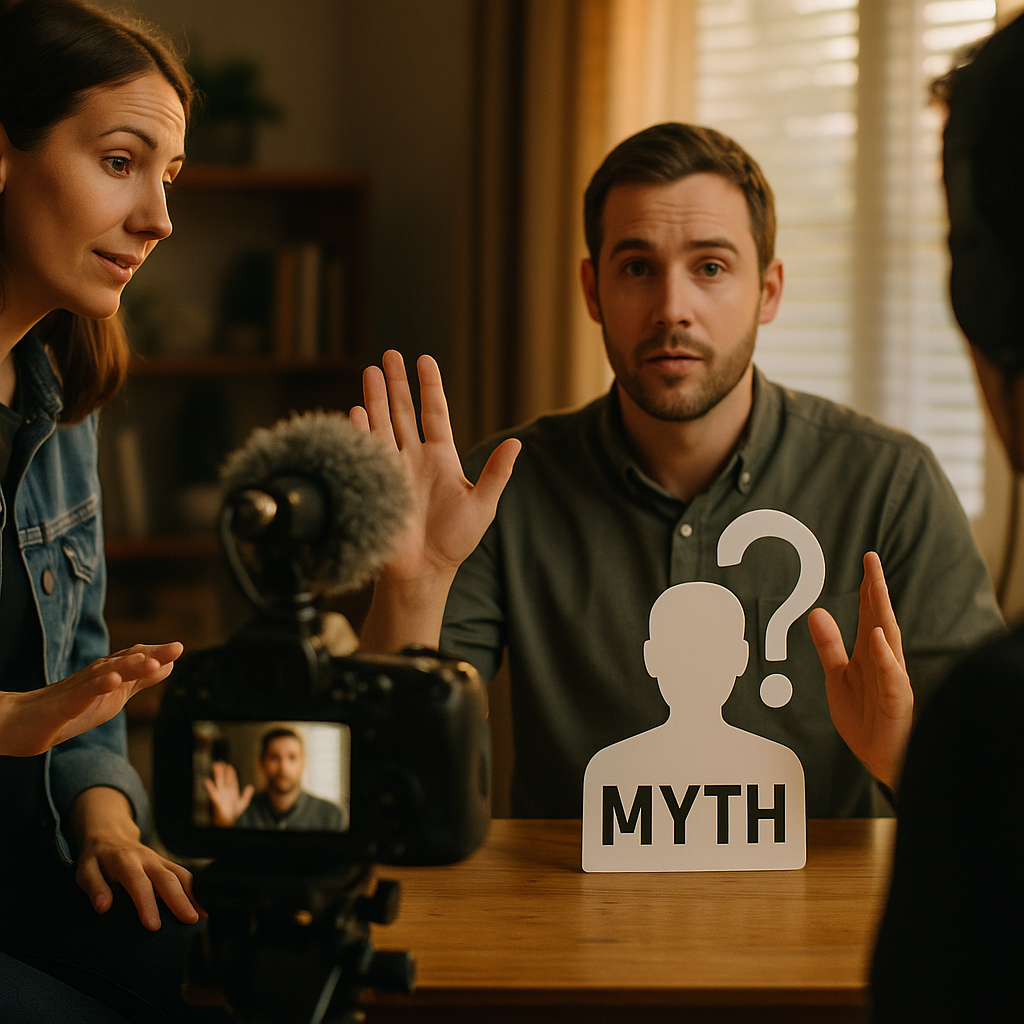
63% of consumers say they’ve stopped trusting a brand after catching it in a misleading claim — yet most category myths sit unaddressed for years because marketers are terrified of sounding defensive. The myth-busting video format solves this, but only if you direct it correctly. Get the tone wrong, and you’ve just handed skeptics more ammunition.
Here’s the uncomfortable truth: every category has misconceptions your prospects believe. Skincare brands fight “natural means safer.” Supplement companies battle “more is better.” Fintech apps wrestle with “if it’s free, you’re the product.” Ignoring these myths doesn’t make them disappear. It just means your competitors’ misinformation, or worse, outdated influencer content, keeps shaping buyer decisions while you stay silent.
Why This Format Is Different From Standard Educational Content
Most brand education content answers questions nobody asked. Myth-busting content does the opposite: it targets a belief the audience already holds, and directly challenges it. That’s a fundamentally riskier proposition. Tell someone they’re wrong, and their brain activates a defense mechanism before you’ve even finished the sentence.
This is why the briefing process matters more here than in almost any other creator format. A poorly directed myth-busting video reads as corporate damage control. A well-directed one reads as a trusted friend setting the record straight. Same information, wildly different reception.
The difference between a myth-busting video that builds trust and one that triggers backlash almost never comes down to the facts. It comes down to who’s saying it, and how much ego is in the delivery.
We covered the foundational case for this format in our earlier breakdown of myth-busting videos as a category authority play. This piece goes further, into the specific direction choices that separate credible correction from defensive noise.
The Defensiveness Trap, and Why Brands Fall Into It
Defensiveness in myth-busting content usually isn’t intentional. It creeps in through small choices: a script that leads with “actually,” a creator who sounds like they’re reading a legal disclaimer, a thumbnail that screams “DEBUNKED” in red text like it’s personal.
Three patterns account for most defensive-sounding briefs:
- Over-explaining. When a creator spends 40 seconds justifying why the myth is wrong before ever landing the point, viewers sense insecurity. Confidence is brief. Insecurity rambles.
- Naming the competitor’s claim too specifically. There’s a difference between busting a category myth and subtweeting a rival brand. The former builds authority. The latter looks petty, and can create legal exposure if you’re characterizing a competitor’s marketing inaccurately.
- Zero acknowledgment of why the myth exists. Myths rarely come from nowhere. If a creator dismisses a belief without explaining its origin, the audience assumes the brand is hiding something rather than clarifying it.
The fix isn’t softer language. It’s better structure. Direct the creator to validate the myth’s origin, then pivot to evidence, not opinion.
A Four-Beat Structure That Keeps Creators Credible
Give creators a loose structure, not a script. The best myth-busting videos still sound spontaneous, even when they’re carefully briefed. Here’s the beat structure we recommend to clients:
- Name the myth as a common belief, not a stupid one. “A lot of people think X” lands differently than “People wrongly assume X.” The first respects the audience’s prior knowledge. The second insults it.
- Explain why the myth makes intuitive sense. This is the step most brands skip, and it’s the single biggest credibility unlock. A creator who says “Honestly, I believed this too until I saw the lab results” disarms skepticism instantly.
- Introduce the correction with a source, not an assertion. Data, a named study, a visible test, or a demonstrated result. Never just the creator’s word against the myth.
- End on practical implication, not brand pride. What should the viewer actually do differently? Frame the payoff around the viewer’s decision-making, not the brand’s superiority.
Notice what’s missing: there’s no beat where the creator trashes competitors or gets snippy about misinformation. That restraint is the whole point.
Casting Matters More Than Script Here
You can write the most balanced script in the world and still end up with a defensive-sounding video if you cast the wrong creator. Myth-busting content demands a specific creator archetype: someone with enough category credibility that correcting a misconception feels earned, not opportunistic.
This is where expert takeover talent tends to outperform lifestyle creators for this format. A dermatologist-creator debunking a skincare myth carries inherent authority. A general beauty influencer doing the same content, even with an identical script, invites more “sponsored, so of course they’d say that” comments.
That doesn’t mean lifestyle creators can’t do myth-busting content well. It means the brief needs to lean harder into personal experience framing (“I used to believe this, here’s what changed my mind”) rather than declarative expertise they haven’t earned. Confessional framing, similar to the approach in confessional testimonial briefs, works well because it centers the creator’s own journey rather than positioning them as an unearned authority.
Tone Direction: What to Say in the Brief Itself
The words you use in your creative brief shape the words the creator uses on camera. If your brief says “correct the misinformation around X,” you’ll get combative content. If it says “help people understand something confusing about X,” you’ll get something warmer.
Specific brief language that consistently produces non-defensive delivery:
- Replace “debunk” with “unpack” or “clear up”
- Replace “wrong” with “outdated” or “incomplete”
- Replace “prove” with “show” or “walk through”
- Ask for a curious tone, not a corrective one — direct creators to sound like they’re solving a puzzle with the viewer, not lecturing them
Small language shifts, but they change everything downstream. Creators mirror the emotional register of the brief. If the brief sounds annoyed at the misconception’s persistence, the video will too.
Handling the Comments Section Before It Happens
Myth-busting content generates more comment engagement than almost any other format, because it invites disagreement by design. Some viewers will defend the myth. That’s not a failure state, it’s the format working.
Brief creators (and your community team) on how to respond before the video goes live. The worst outcome is a brand account jumping into replies to argue with a skeptical commenter. That single interaction can undo an otherwise well-executed video. Direct creators to respond to pushback with more evidence, delivered warmly, never with “well actually” energy.
According to Sprout Social’s ongoing research on social trust, audiences consistently rate brands higher on authenticity when they engage with criticism openly rather than deleting or ignoring it. Myth-busting content is a stress test for that principle. Plan the response strategy with the same rigor as the video brief itself.
Compliance Considerations You Can’t Skip
Myth-busting videos sit closer to comparative and efficacy claims than most creator formats, which means FTC disclosure and substantiation rules apply with extra weight. If a creator claims “clinical studies show,” you need the receipts, literally. The FTC’s endorsement guidance is unambiguous about creators needing to reflect their honest opinion and about brands being responsible for claims made in sponsored content, even indirectly.
Practical steps that keep legal comfortable:
- Provide creators with source documentation for every factual claim in the brief, not just talking points
- Avoid absolute language (“always,” “never,” “proven”) unless you can substantiate it fully
- Keep #ad or #sponsored disclosure prominent, since myth-busting content can read as editorial or journalistic, which makes non-disclosure feel more deceptive to regulators and audiences alike
- Route any comparative claims about competitors through legal review before the brief goes out, not after filming
This isn’t just risk mitigation. Brands like Meta’s advertiser resources emphasize that platforms increasingly demote content that gets flagged for misleading claims, regardless of intent. A myth-busting video that gets reported for making an unsubstantiated claim can lose distribution entirely, which defeats the purpose of making it in the first place.
Where This Format Fits in a Broader Content Calendar
Myth-busting content works best as a recurring series, not a one-off. A single myth-busting video reads as reactive. A series reads as ongoing category leadership. Brands that pair this format with complementary formats, like split-test reaction videos or before-and-after briefs, build a layered evidence base rather than relying on any single video to carry the credibility burden.
Consider a quarterly cadence: one myth per quarter, chosen based on actual search data or customer service tickets showing where confusion is highest. eMarketer’s research on influencer content performance consistently shows that educational formats retain viewership longer than promotional ones, which supports treating this as an always-on content pillar rather than a campaign tactic.
What Good Actually Looks Like
Picture a hydration-drink brand tackling the myth that “electrolytes are only for athletes.” A defensive version opens with “Actually, everyone needs electrolytes.” A well-directed version opens with a creator saying, “I thought this was athlete-only stuff too, until my doctor explained why I was getting afternoon headaches.” Same correction. Completely different reception.
The second version works because it does something counterintuitive: it makes the myth reasonable before making it wrong. That single sequencing choice is the entire craft of directing this format.
Next step: Before your next myth-busting brief goes out, run it through one test: read the creator’s opening line out loud. If it sounds like a rebuttal, rewrite it as a confession. That one edit will do more for credibility than any amount of data in the script.
FAQs
What makes a myth-busting video sound defensive instead of authoritative?
Defensiveness usually comes from over-explaining, naming competitors too directly, or dismissing the myth without acknowledging why people believed it in the first place. Fixing the sequencing, validate first, correct second, resolves most of this.
Should creators name competitors when busting a category myth?
Generally, no. Naming a specific competitor’s claim shifts the content from educational to combative, and it increases legal exposure if the characterization isn’t precisely accurate. Address the myth generically and let the evidence speak.
What creator type performs best for myth-busting content?
Creators with earned category credibility, like clinicians, technicians, or long-tenured practitioners, perform best for declarative corrections. Lifestyle creators can still work well using a confessional, personal-experience frame instead of positioning themselves as unearned experts.
How do FTC rules apply to myth-busting content specifically?
Any factual or comparative claim made in sponsored myth-busting content needs substantiation the brand can produce on request. Disclosure requirements are especially important here since the format can read as editorial rather than promotional, making non-disclosure feel more deceptive.
How often should brands publish myth-busting videos?
Treat it as an always-on content pillar rather than a one-off campaign. A quarterly cadence, tied to real confusion points from search data or customer support tickets, builds sustained category authority without oversaturating the format.
FAQs
What makes a myth-busting video sound defensive instead of authoritative?
Defensiveness usually comes from over-explaining, naming competitors too directly, or dismissing the myth without acknowledging why people believed it in the first place. Fixing the sequencing, validate first, correct second, resolves most of this.
Should creators name competitors when busting a category myth?
Generally, no. Naming a specific competitor’s claim shifts the content from educational to combative, and it increases legal exposure if the characterization isn’t precisely accurate. Address the myth generically and let the evidence speak.
What creator type performs best for myth-busting content?
Creators with earned category credibility, like clinicians, technicians, or long-tenured practitioners, perform best for declarative corrections. Lifestyle creators can still work well using a confessional, personal-experience frame instead of positioning themselves as unearned experts.
How do FTC rules apply to myth-busting content specifically?
Any factual or comparative claim made in sponsored myth-busting content needs substantiation the brand can produce on request. Disclosure requirements are especially important here since the format can read as editorial rather than promotional, making non-disclosure feel more deceptive.
How often should brands publish myth-busting videos?
Treat it as an always-on content pillar rather than a one-off campaign. A quarterly cadence, tied to real confusion points from search data or customer support tickets, builds sustained category authority without oversaturating the format.
Top Influencer Marketing Agencies
The leading agencies shaping influencer marketing in 2026
Agencies ranked by campaign performance, client diversity, platform expertise, proven ROI, industry recognition, and client satisfaction. Assessed through verified case studies, reviews, and industry consultations.
Moburst

-
2

The Shelf
Boutique Beauty & Lifestyle Influencer AgencyA data-driven boutique agency specializing exclusively in beauty, wellness, and lifestyle influencer campaigns on Instagram and TikTok. Best for brands already focused on the beauty/personal care space that need curated, aesthetic-driven content.Clients: Pepsi, The Honest Company, Hims, Elf Cosmetics, Pure LeafVisit The Shelf → -
3

Audiencly
Niche Gaming & Esports Influencer AgencyA specialized agency focused exclusively on gaming and esports creators on YouTube, Twitch, and TikTok. Ideal if your campaign is 100% gaming-focused — from game launches to hardware and esports events.Clients: Epic Games, NordVPN, Ubisoft, Wargaming, Tencent GamesVisit Audiencly → -
4

Viral Nation
Global Influencer Marketing & Talent AgencyA dual talent management and marketing agency with proprietary brand safety tools and a global creator network spanning nano-influencers to celebrities across all major platforms.Clients: Meta, Activision Blizzard, Energizer, Aston Martin, WalmartVisit Viral Nation → -
5

The Influencer Marketing Factory
TikTok, Instagram & YouTube CampaignsA full-service agency with strong TikTok expertise, offering end-to-end campaign management from influencer discovery through performance reporting with a focus on platform-native content.Clients: Google, Snapchat, Universal Music, Bumble, YelpVisit TIMF → -
6

NeoReach
Enterprise Analytics & Influencer CampaignsAn enterprise-focused agency combining managed campaigns with a powerful self-service data platform for influencer search, audience analytics, and attribution modeling.Clients: Amazon, Airbnb, Netflix, Honda, The New York TimesVisit NeoReach → -
7

Ubiquitous
Creator-First Marketing PlatformA tech-driven platform combining self-service tools with managed campaign options, emphasizing speed and scalability for brands managing multiple influencer relationships.Clients: Lyft, Disney, Target, American Eagle, NetflixVisit Ubiquitous → -
8

Obviously
Scalable Enterprise Influencer CampaignsA tech-enabled agency built for high-volume campaigns, coordinating hundreds of creators simultaneously with end-to-end logistics, content rights management, and product seeding.Clients: Google, Ulta Beauty, Converse, AmazonVisit Obviously →