


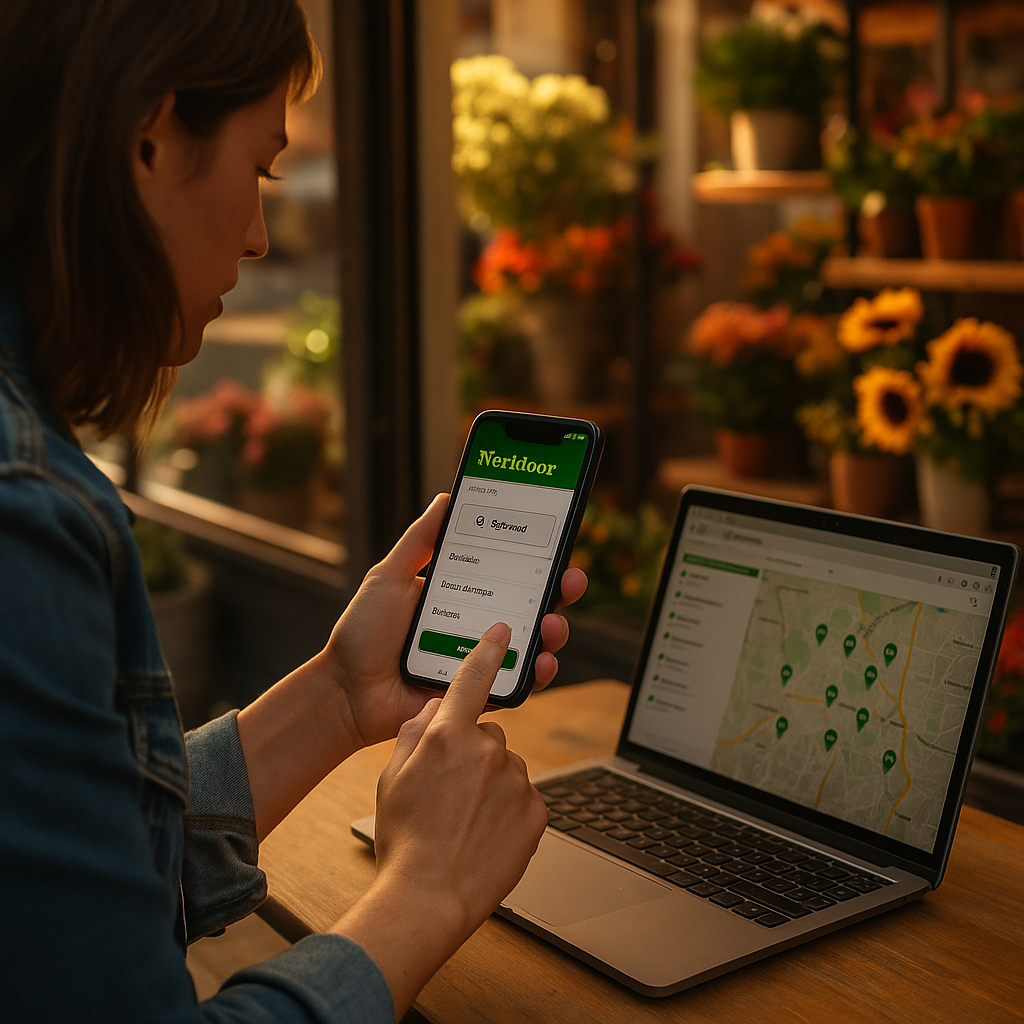
Nextdoor now reaches over 100 million verified neighborhoods worldwide, and multi-location retailers are still treating it like a digital bulletin board. That’s a mistake. A well-structured Nextdoor local business creator strategy can outperform paid social on cost-per-acquisition, because trust here is hyperlocal by design. The question isn’t whether Nextdoor works for retail. It’s whether your organization can operationalize partnerships at the neighborhood level without drowning in logistics.
Why Nextdoor Breaks the Usual Influencer Playbook
Most creator programs scale by finding one voice and blasting it across a national audience. Nextdoor inverts that model entirely. Content lives inside neighborhood boundaries, verified by address, and recommendations from a “neighbor” carry more weight than a paid post from a follower-heavy account ever could.
That changes the unit of measurement. Instead of optimizing for reach, you’re optimizing for density: how many trusted local voices are talking about your store in a five-mile radius? A single regional creator with 40,000 followers is often less valuable here than ten neighbors each posting to their own 300-person pod.
On Nextdoor, credibility is geographic. A recommendation loses value the further it travels from the poster’s actual neighborhood, which means national creator deals simply don’t translate.
Start With a Location Tiering Model, Not a Creator List
Before you recruit a single local voice, segment your store footprint. Retailers with 20+ locations should never run a one-size-fits-all program; the operational overhead alone will sink it. Instead, build three tiers:
- Tier 1 (flagship or high-traffic stores): Dedicated neighborhood ambassadors, quarterly content cadence, store manager involvement.
- Tier 2 (mid-volume locations): Rotating micro-creator partnerships tied to seasonal promotions or grand reopenings.
- Tier 3 (low-density or new markets): Organic neighbor seeding — free product or in-store experiences in exchange for honest posts, no formal contract.
This tiering matters because Nextdoor’s algorithm favors authentic, community-relevant content over polished ads. Overproduced creator content, the kind that works beautifully on TikTok Shop, can actually read as spam here. Compare this to how brands handle scale on other platforms; the TikTok Shop commission tier structure rewards volume and velocity, while Nextdoor rewards restraint and specificity.
How Do You Actually Find Neighborhood Creators?
There’s no influencer marketplace for Nextdoor the way there is for Instagram or YouTube. That’s the operational headache nobody warns you about. Three practical sourcing methods work:
- Store-level nomination: Have location managers flag regular customers who already post about the business organically. These are your highest-trust, lowest-cost partners.
- Neighborhood group monitoring: Use Nextdoor’s Business Page insights to identify who’s engaging with local posts about your category (retail, home goods, food) and reach out directly.
- Local micro-agency partnerships: Some regional social agencies now specialize in neighborhood-tier creator recruitment, particularly in metro markets with high Nextdoor penetration.
Vetting matters more here than on most platforms. A creator with a thin posting history or a recently created profile can trigger community skepticism fast. Check tenure, post frequency, and whether their address verification aligns with the neighborhoods you’re targeting.
Structuring the Partnership: Compensation and Compliance
This is where most retail marketing teams get nervous, and rightly so. Nextdoor users are quick to call out anything that smells like undisclosed advertising, and the platform’s community guidelines are stricter than Instagram’s about promotional content in neighborhood feeds.
Build every agreement around three non-negotiables:
- Disclosure first. The FTC’s endorsement guidelines apply regardless of platform size or follower count. Require #ad or “Partnered with [Brand]” language in every post, no exceptions. Review the FTC’s current endorsement guidance before finalizing contracts.
- Local relevance clause. Content must reference the specific store, staff, or neighborhood event, not generic brand messaging. Corporate copy gets flagged and removed by community moderators.
- Compensation transparency. Whether it’s store credit, a flat fee, or a discount code, spell out the exchange in writing. Verbal agreements with dozens of micro-creators across multiple markets are a legal and reputational risk waiting to happen.
On payment structure, most retailers find a hybrid model works best: a modest flat fee ($50-$150 per post for Tier 2/3 partners) plus a performance bonus tied to a trackable promo code. This keeps costs predictable while still rewarding creators whose content actually drives foot traffic.
Measurement: What Actually Counts as ROI Here?
Engagement metrics on Nextdoor look tiny compared to Instagram or TikTok. Don’t panic. A post with 40 comments in a single neighborhood group can represent near-total penetration of that micro-market. The right KPIs are:
- Redemption rate on neighborhood-specific promo codes
- Store visit lift (measurable via Meta’s location-based ad tools or Google’s local campaign reporting through Google Ads support if you’re running parallel geofenced campaigns)
- Repeat mentions of the same store across multiple neighbor threads (a strong organic trust signal)
- Comment sentiment, not just comment count
Retailers running this well typically see promo code redemption rates 2-4x higher than generic social influencer campaigns, according to internal benchmarking shared by regional retail marketing teams working with Nextdoor’s local business tools. That’s not a universal guarantee, but it tracks with the platform’s underlying trust dynamic: people act on recommendations from someone who lives three streets away.
Don’t judge Nextdoor creator ROI by follower counts or impressions. Judge it by redemption rate and repeat neighborhood mentions — the metrics that actually correlate with foot traffic.
Common Mistakes That Sink Multi-Location Programs
A few patterns show up again and again when retailers scale Nextdoor creator programs across regions:
- Treating it like a national campaign. Copy-pasting the same creator brief across 50 locations kills authenticity instantly. Neighbors can tell.
- Ignoring store manager input. Corporate marketing teams that skip local staff in creator selection miss the people who actually know which customers are influential in the neighborhood.
- Underestimating moderation risk. Nextdoor’s community moderators (actual neighbors, often unpaid volunteers) can and do remove posts that feel like spam. Build buffer time into launch schedules for this.
- No cross-platform continuity. If your creator content lives only on Nextdoor, you’re leaving reach on the table. Repurpose top-performing local posts into other channels; the same discipline applies whether you’re managing Reddit’s moderation filters or Nextdoor’s neighbor-run review system.
There’s also a budgeting mistake worth flagging: allocating the same per-location spend regardless of neighborhood density. A store in a tight urban zip code with high Nextdoor adoption needs a different budget than a suburban location where the platform’s penetration is thinner. Check adoption data by region before setting flat budgets; Statista’s social platform usage data is a reasonable starting point for regional comparison, though Nextdoor’s own business dashboard will give you more granular local numbers.
Building the Internal Workflow
Operationally, this only works if you assign clear ownership. Someone at the regional or district level needs to own creator relationships for their cluster of stores, reporting into a central brand team that sets guardrails but doesn’t micromanage local voice. Think of it less like a national influencer program and more like a franchise model: consistent standards, locally executed.
A simple monthly cadence keeps this manageable:
- Week 1: Store managers nominate or reconfirm local creator relationships
- Week 2: Regional marketing reviews content calendar and disclosure compliance
- Week 3: Content goes live, tied to a specific promo or in-store event
- Week 4: Redemption and engagement data rolled up for regional reporting
This rhythm mirrors what’s worked for brands managing distributed community programs elsewhere, similar in spirit to the tiered access structures used in Discord community building, where different engagement levels get different creator treatment. The channel is different. The underlying logic of tiering by value and proximity isn’t.
Next Step
Pick your five highest-traffic locations, assign one store manager per location to nominate two neighborhood creators each, and run a 30-day pilot with a trackable promo code before scaling company-wide. Measure redemption rate against your current paid social CPA, then decide how fast to expand.
FAQs
Is Nextdoor worth it for retailers with fewer than 10 locations?
Yes, provided the locations sit in areas with meaningful Nextdoor adoption. Check the platform’s business dashboard for neighborhood density before committing budget; in low-adoption regions, the ROI won’t justify the operational lift.
How much should a Nextdoor creator partnership cost per post?
Most Tier 2/3 partnerships run $50-$150 per post plus a performance bonus tied to promo code redemption. Flagship-tier ambassador relationships can run higher, especially with recurring quarterly commitments.
Do Nextdoor creators need to disclose paid partnerships?
Absolutely. FTC endorsement guidelines apply regardless of platform, and Nextdoor’s community moderators actively remove undisclosed promotional content. Require clear disclosure language in every contract.
Can national creator agencies run Nextdoor programs?
Some can, but only if they understand hyperlocal sourcing. A national agency used to follower-count-driven recruitment will struggle here; look for partners with genuine local market recruitment experience.
What’s the biggest measurement mistake brands make on Nextdoor?
Judging performance by impressions or likes instead of promo code redemption and repeat neighborhood mentions. Nextdoor engagement numbers look small by design; the value is in conversion density, not reach.
Top Influencer Marketing Agencies
The leading agencies shaping influencer marketing in 2026
Agencies ranked by campaign performance, client diversity, platform expertise, proven ROI, industry recognition, and client satisfaction. Assessed through verified case studies, reviews, and industry consultations.
Moburst

-
2

The Shelf
Boutique Beauty & Lifestyle Influencer AgencyA data-driven boutique agency specializing exclusively in beauty, wellness, and lifestyle influencer campaigns on Instagram and TikTok. Best for brands already focused on the beauty/personal care space that need curated, aesthetic-driven content.Clients: Pepsi, The Honest Company, Hims, Elf Cosmetics, Pure LeafVisit The Shelf → -
3

Audiencly
Niche Gaming & Esports Influencer AgencyA specialized agency focused exclusively on gaming and esports creators on YouTube, Twitch, and TikTok. Ideal if your campaign is 100% gaming-focused — from game launches to hardware and esports events.Clients: Epic Games, NordVPN, Ubisoft, Wargaming, Tencent GamesVisit Audiencly → -
4

Viral Nation
Global Influencer Marketing & Talent AgencyA dual talent management and marketing agency with proprietary brand safety tools and a global creator network spanning nano-influencers to celebrities across all major platforms.Clients: Meta, Activision Blizzard, Energizer, Aston Martin, WalmartVisit Viral Nation → -
5

The Influencer Marketing Factory
TikTok, Instagram & YouTube CampaignsA full-service agency with strong TikTok expertise, offering end-to-end campaign management from influencer discovery through performance reporting with a focus on platform-native content.Clients: Google, Snapchat, Universal Music, Bumble, YelpVisit TIMF → -
6

NeoReach
Enterprise Analytics & Influencer CampaignsAn enterprise-focused agency combining managed campaigns with a powerful self-service data platform for influencer search, audience analytics, and attribution modeling.Clients: Amazon, Airbnb, Netflix, Honda, The New York TimesVisit NeoReach → -
7

Ubiquitous
Creator-First Marketing PlatformA tech-driven platform combining self-service tools with managed campaign options, emphasizing speed and scalability for brands managing multiple influencer relationships.Clients: Lyft, Disney, Target, American Eagle, NetflixVisit Ubiquitous → -
8

Obviously
Scalable Enterprise Influencer CampaignsA tech-enabled agency built for high-volume campaigns, coordinating hundreds of creators simultaneously with end-to-end logistics, content rights management, and product seeding.Clients: Google, Ulta Beauty, Converse, AmazonVisit Obviously →