


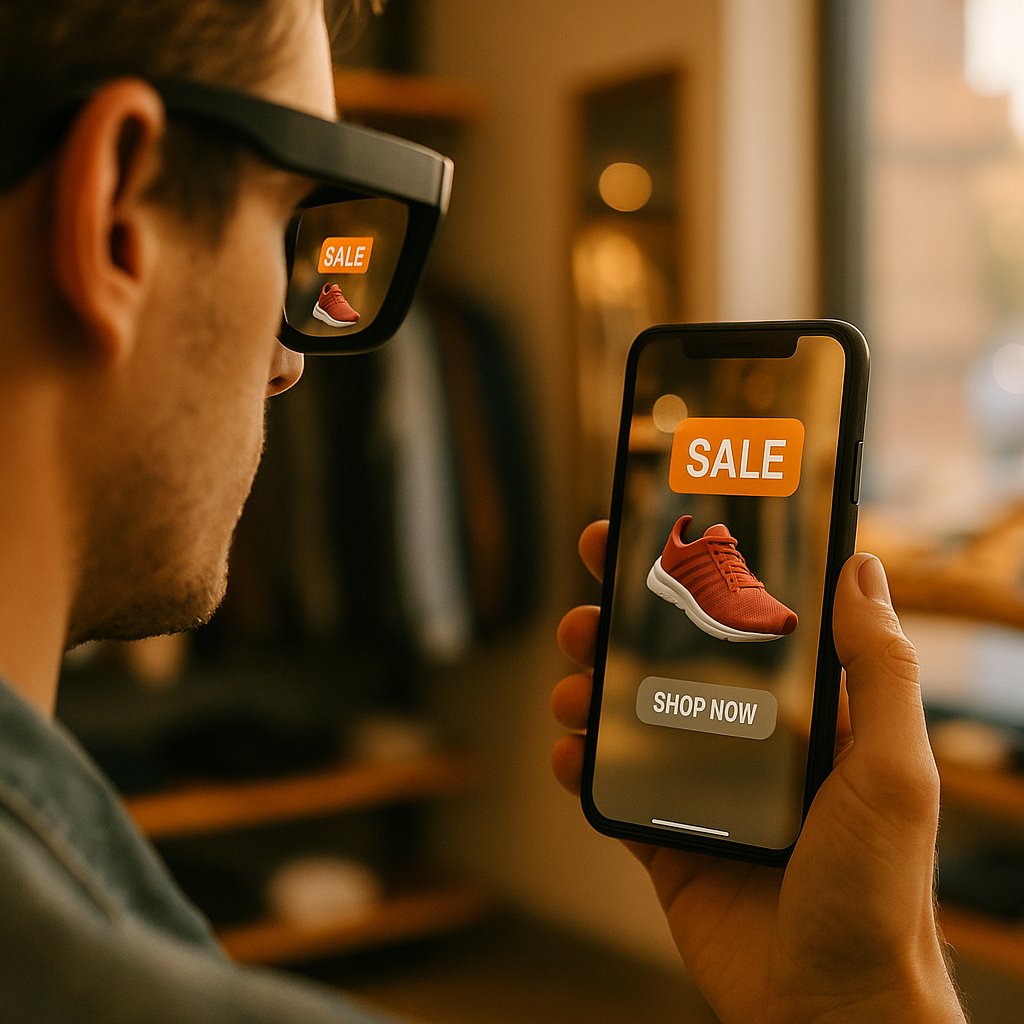
Meta says over 1.5 billion people already interact with AR effects across its apps every month. So why do most brand budgets still treat AR and XR ad experiences like a novelty line item instead of a channel? The gap between usage and investment is the opportunity — and the risk, if your competitors close it first.
Short-form video won the last cycle. It’s cheap, fast, and creators know how to make it. But the format is maxing out on differentiation. Everyone’s doing the same hook-in-three-seconds trick. AR and XR ad experiences are the next lever, and in 2026 the tooling finally makes them viable for mid-size brands, not just Fortune 500 pilots.
Why the Static Feed Stopped Working
Attention is the scarcest resource in marketing. Feed scroll velocity keeps increasing, and static or single-take video simply doesn’t hold a thumb anymore. Brands have responded by iterating on format novelty — split-personality videos, mockumentary-style content, rapid-fire series. These work. But they’re all still flat video inside a flat feed.
AR and XR change the interaction model entirely. Instead of watching, the user does something: tries on, places, plays, explores. That shift from passive to active is where the ROI story gets interesting, because interaction time and purchase intent correlate far more strongly than watch time ever did.
Brands running AR try-on experiences report conversion lifts of 20-90% over standard product pages, depending on category — cosmetics and eyewear see the highest lift, according to data cited by Meta for Business.
The Platform Landscape: Who’s Actually Ready
Not all platforms treat AR the same way, and picking the wrong one wastes budget fast. Here’s the practical breakdown for 2026 media planning.
- Meta (Instagram/Facebook): Still the most mature ad-ready AR stack. Spark AR’s successor tooling supports try-on ads natively in Reels and Stories, with direct integration into Advantage+ campaign optimization. Best for beauty, apparel, eyewear, and furniture.
- Snapchat: The original AR ad pioneer and arguably still the best for camera-native experiences. Snap’s AR Enterprise division works directly with brands on Lens-based campaigns, and its 300-million-plus daily AR users skew younger, making it a strong fit for CPG and fashion targeting Gen Z.
- TikTok: Effect House lets brands build branded AR effects that spread organically through duets and remixes — essentially UGC amplification wrapped in a filter. TikTok’s ad platform (TikTok for Business) has expanded shoppable AR integrations tied directly to TikTok Shop.
- Google/YouTube: AR in Shopping ads (via Google’s product try-on tech) is quietly becoming a default expectation for apparel and beauty retailers on search. Less flashy, higher intent.
- Apple Vision Pro and mixed-reality headsets: Still a small-audience play, but spatial ad formats are emerging through immersive app experiences and Apple’s developer ecosystem. Treat this as R&D budget, not core media spend, unless you’re in luxury, automotive, or real estate.
The mistake most media buyers make? Treating AR as one channel. It’s not. It’s five different production and targeting environments wearing the same acronym.
Budget Reality Check
AR production costs have dropped significantly. A basic Instagram try-on effect can run $8,000-$15,000 through a specialized studio; a Snap Lens with 3D tracking lands in a similar range. Compare that to a mid-tier video production budget with multiple creator deliverables, and AR starts looking less like a luxury and more like a line item you can test quarterly.
The bigger cost isn’t production — it’s measurement infrastructure. Most brands underinvest in tracking interaction depth, completion rate, and downstream conversion, then wonder why they can’t prove ROI to finance.
What Actually Makes an AR Ad Work
Novelty wears off in about six weeks. After that, the experience has to earn its place through utility or entertainment value that a static post can’t replicate. Three things separate AR campaigns that convert from ones that just get a press release:
- Speed of load. If the AR asset takes more than two seconds to render, most users bail. Optimize file size before you optimize creative.
- Obvious next action. Try-on experiences need a visible “shop this” button inside the camera view, not a separate tap-through. Friction kills AR conversion faster than it kills video conversion.
- Shareability built in. The best AR effects get remixed. Design for the share, not just the first interaction — this is where TikTok’s Effect House genuinely outperforms competitors.
This isn’t fundamentally different from what works in creator-led video: demonstration beats description. It’s the same logic behind demonstration-first briefs that already outperform claim-heavy scripts. AR just makes the demonstration interactive instead of watched.
Where Creators Fit Into an XR Strategy
Here’s a question a lot of brand teams skip: who actually builds trust in an AR experience, the platform or the creator introducing it?
The answer is almost always the creator. A branded Lens sitting alone in a discovery tab gets ignored. The same Lens demoed by a creator in a 15-second video, showing genuine reaction to the try-on result, gets adopted. Treat AR assets as creator tools, not standalone ad units.
This pairs naturally with existing creator formats. A one-take challenge demo using an AR try-on filter feels more authentic than a polished studio render. A customer-handoff unboxing paired with a spatial product preview closes the gap between “I saw it online” and “I know what it’ll look like in my space.” Brands running countdown-to-launch livestreams are starting to layer AR try-on moments into Act Three, giving viewers something to do besides watch the countdown clock.
Brief creators to react to the AR experience the first time on camera. Rehearsed reactions read as fake; genuine surprise at a try-on result is unscripted proof, and it’s the single highest-converting moment in an XR campaign.
Compliance and Disclosure: Don’t Skip This Part
AR ad experiences introduce disclosure questions that a lot of legal teams haven’t fully mapped yet. If a creator’s filter is sponsored, that needs the same #ad disclosure as any paid post, per FTC endorsement guidelines. Where it gets murkier: data collection. Face-tracking and try-on filters often capture biometric-adjacent data (facial landmarks, body dimensions) even when brands don’t intend to store it.
Illinois’ BIPA and similar state laws create real exposure if your AR vendor isn’t explicit about data retention. Before launching any face- or body-tracking AR unit, get written confirmation from the platform and any third-party AR studio on:
- What data is captured during the AR interaction
- Whether it’s stored, and for how long
- Whether it’s used to train models or shared with third parties
- Consent language shown to users before the camera activates
This isn’t optional legal boilerplate. Regulators in the EU and UK are watching this space closely, and guidance from bodies like the ICO increasingly treats facial-mapping AR data with the same scrutiny as other biometric processing. Build the compliance review into your production timeline, not as an afterthought before launch.
Measurement: What to Actually Report to Finance
Standard video KPIs don’t map cleanly to AR. Views and completion rate matter less than these:
- Interaction rate: percentage of impressions that trigger the AR experience (not just see it)
- Dwell time inside the experience: a proxy for genuine interest versus accidental trigger
- Try-to-buy conversion: the ratio of AR interactions to add-to-cart or purchase
- Share/remix rate: especially critical for TikTok Effect House campaigns, where organic spread is the entire point
Platforms like Sprout Social and category benchmarking from eMarketer are starting to formalize AR-specific reporting templates, but most brands are still cobbling together custom dashboards. Budget analyst time for this; it’s the difference between renewing the program and losing the budget line next quarter.
Building the Test-and-Scale Roadmap
Don’t launch AR across five platforms simultaneously. Pick one platform aligned to your strongest category fit, run a controlled test against a matched video-only audience, and measure incremental lift over a full purchase cycle, not just a two-week campaign window.
A sensible sequence for a first XR push:
- Pilot on the platform with the best category precedent (Meta for beauty/apparel, Snap for younger CPG audiences, TikTok for impulse and trend-driven categories).
- Pair every AR asset with a creator brief, not a standalone media buy.
- Run compliance review in parallel with production, not after.
- Report interaction and conversion metrics separately from awareness metrics — mixing them muddies the case for renewed budget.
- Expand to a second platform only after the first shows measurable lift over a full quarter.
This mirrors the discipline brands already apply to newer creator formats — the same rigor behind testing a shoppable livestream production standard or scaling UGC content harvesting applies here. AR isn’t a separate discipline from creator marketing. It’s an extension of it.
Next step: pick one product category with a strong visual or spatial use case, brief one creator to introduce an AR try-on experience natively, and measure interaction-to-purchase against your current best-performing video ad over a full 30-day cycle before committing further budget.
FAQs
What’s the difference between AR ads and XR ads?
AR (augmented reality) ads overlay digital elements onto the real world through a phone camera, like a virtual try-on filter. XR is the broader umbrella covering AR, VR, and mixed reality, including headset-based immersive experiences. Most brand budgets in 2026 are still AR-focused because it requires no extra hardware; XR headset campaigns remain a smaller, higher-cost test category.
How much should a brand budget for a first AR ad campaign?
A basic try-on or face-filter AR unit typically costs $8,000-$20,000 to produce, depending on 3D asset complexity and platform. Add media spend on top, and a reasonable first pilot budget sits between $25,000 and $50,000 including creator fees and measurement setup.
Which platform is best for AR ad experiences?
It depends on category. Meta leads for beauty, apparel, and home goods try-on. Snapchat performs strongest with younger audiences and CPG. TikTok’s Effect House is best when the goal is organic spread through remix and duet behavior rather than a controlled media buy.
Do AR ads require special FTC disclosure?
Yes. If a creator is compensated to feature a branded AR filter or Lens, standard endorsement disclosure rules apply, the same as any sponsored post. Brands should also review data consent language shown before any face- or body-tracking camera feature activates.
Is AR advertising actually more effective than short-form video?
Not universally, it’s complementary. AR performs best for categories with a strong “how will this look on me/in my space” question — beauty, apparel, furniture, eyewear. For pure storytelling or trust-building, creator-led video formats still outperform. The strongest campaigns combine both.
Visible FAQ HTML (duplicate block per instructions)
What’s the difference between AR ads and XR ads?
AR (augmented reality) ads overlay digital elements onto the real world through a phone camera, like a virtual try-on filter. XR is the broader umbrella covering AR, VR, and mixed reality, including headset-based immersive experiences. Most brand budgets in 2026 are still AR-focused because it requires no extra hardware; XR headset campaigns remain a smaller, higher-cost test category.
How much should a brand budget for a first AR ad campaign?
A basic try-on or face-filter AR unit typically costs $8,000-$20,000 to produce, depending on 3D asset complexity and platform. Add media spend on top, and a reasonable first pilot budget sits between $25,000 and $50,000 including creator fees and measurement setup.
Which platform is best for AR ad experiences?
It depends on category. Meta leads for beauty, apparel, and home goods try-on. Snapchat performs strongest with younger audiences and CPG. TikTok’s Effect House is best when the goal is organic spread through remix and duet behavior rather than a controlled media buy.
Do AR ads require special FTC disclosure?
Yes. If a creator is compensated to feature a branded AR filter or Lens, standard endorsement disclosure rules apply, the same as any sponsored post. Brands should also review data consent language shown before any face- or body-tracking camera feature activates.
Is AR advertising actually more effective than short-form video?
Not universally, it’s complementary. AR performs best for categories with a strong “how will this look on me/in my space” question — beauty, apparel, furniture, eyewear. For pure storytelling or trust-building, creator-led video formats still outperform. The strongest campaigns combine both.
Top Influencer Marketing Agencies
The leading agencies shaping influencer marketing in 2026
Agencies ranked by campaign performance, client diversity, platform expertise, proven ROI, industry recognition, and client satisfaction. Assessed through verified case studies, reviews, and industry consultations.
Moburst

-
2

The Shelf
Boutique Beauty & Lifestyle Influencer AgencyA data-driven boutique agency specializing exclusively in beauty, wellness, and lifestyle influencer campaigns on Instagram and TikTok. Best for brands already focused on the beauty/personal care space that need curated, aesthetic-driven content.Clients: Pepsi, The Honest Company, Hims, Elf Cosmetics, Pure LeafVisit The Shelf → -
3

Audiencly
Niche Gaming & Esports Influencer AgencyA specialized agency focused exclusively on gaming and esports creators on YouTube, Twitch, and TikTok. Ideal if your campaign is 100% gaming-focused — from game launches to hardware and esports events.Clients: Epic Games, NordVPN, Ubisoft, Wargaming, Tencent GamesVisit Audiencly → -
4

Viral Nation
Global Influencer Marketing & Talent AgencyA dual talent management and marketing agency with proprietary brand safety tools and a global creator network spanning nano-influencers to celebrities across all major platforms.Clients: Meta, Activision Blizzard, Energizer, Aston Martin, WalmartVisit Viral Nation → -
5

The Influencer Marketing Factory
TikTok, Instagram & YouTube CampaignsA full-service agency with strong TikTok expertise, offering end-to-end campaign management from influencer discovery through performance reporting with a focus on platform-native content.Clients: Google, Snapchat, Universal Music, Bumble, YelpVisit TIMF → -
6

NeoReach
Enterprise Analytics & Influencer CampaignsAn enterprise-focused agency combining managed campaigns with a powerful self-service data platform for influencer search, audience analytics, and attribution modeling.Clients: Amazon, Airbnb, Netflix, Honda, The New York TimesVisit NeoReach → -
7

Ubiquitous
Creator-First Marketing PlatformA tech-driven platform combining self-service tools with managed campaign options, emphasizing speed and scalability for brands managing multiple influencer relationships.Clients: Lyft, Disney, Target, American Eagle, NetflixVisit Ubiquitous → -
8

Obviously
Scalable Enterprise Influencer CampaignsA tech-enabled agency built for high-volume campaigns, coordinating hundreds of creators simultaneously with end-to-end logistics, content rights management, and product seeding.Clients: Google, Ulta Beauty, Converse, AmazonVisit Obviously →