


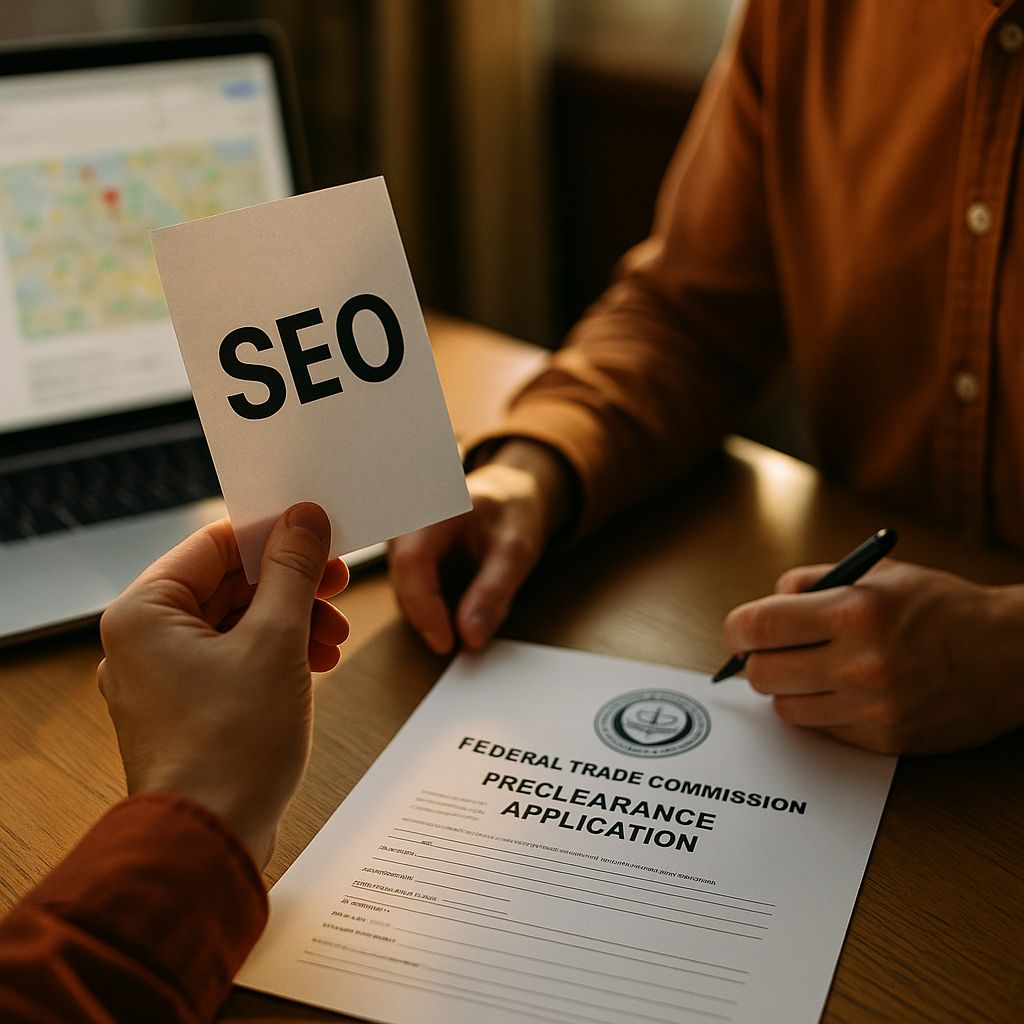
Roughly 82% of FTC influencer enforcement actions since the revised Endorsement Guides took effect have touched health, finance, or wellness claims. That’s not a coincidence. It’s a target list. If your brand is optimizing creator content for AI answer engines before your legal team has cleared the underlying claims, you’re not doing GEO optimization — you’re scaling liability.
GEO, or generative engine optimization, is the new arms race. Brands want their creator content surfacing in ChatGPT, Perplexity, and Google’s AI Overviews. But when the content contains health, finance, or wellness claims, feeding it into optimization workflows before substantiation review is like publishing a press release before fact-checking it. Except now it’s replicated across dozens of creator accounts, indexed, and repeated by AI systems as if it were vetted fact.
Why GEO Changes the Risk Calculus
Traditional influencer content lived and died on a feed. It scrolled past. GEO doesn’t work that way. Content optimized for generative engines is structured, repeated, and often cited verbatim by AI tools answering user questions like “does this supplement lower cortisol” or “is this app FDIC insured.” That structure is exactly what makes a claim durable — and exactly what makes an unsubstantiated claim dangerous.
Once a creator’s claim gets picked up and summarized by an AI engine, it takes on a strange second life. The AI strips context. It drops disclaimers. It presents “may support metabolism” as “supports metabolism.” The FTC has been clear for years that advertisers are responsible for claims made in their marketing, including through intermediaries. An AI engine repeating a creator’s unsubstantiated claim doesn’t dilute liability. It amplifies reach while erasing nuance, which is the worst combination for a compliance team.
GEO doesn’t just amplify good content faster. It amplifies bad claims faster, further, and with less context than any platform algorithm before it.
What FTC Substantiation Actually Requires
The FTC’s standard is deceptively simple to state and genuinely hard to operationalize: advertisers must have a “reasonable basis” for claims before they’re made, not after. For health claims, that generally means competent and reliable scientific evidence. For finance products, it means the numbers, rates, and outcomes cited must be accurate, current, and not cherry-picked. For wellness products sitting in the gray zone between the two, the FTC has shown it will apply the stricter health-claim standard when a product implies a physiological effect.
Here’s where brands get tripped up. “Reasonable basis” isn’t a vibe. It’s not a testimonial from a satisfied customer. It’s not an anecdote a creator shared because it felt authentic. The FTC has pursued companies for relying on customer reviews and creator testimonials as if they constituted clinical evidence. Testimonials can illustrate a claim already substantiated elsewhere. They cannot substitute for the evidence itself.
That distinction matters enormously in creator marketing because creators are natural storytellers. They speak in first-person outcomes: “this fixed my sleep,” “this saved me $400 a month.” Those statements feel authentic, and that’s precisely why they perform well and why GEO tools love to surface them. But performance and compliance are separate axes. A claim can crush engagement and still expose the brand to an FTC inquiry.
The Pre-Clearance Gap Most Brands Have
Most influencer programs have a disclosure process. Fewer have a substantiation process. Disclosure covers whether a creator says “#ad.” Substantiation covers whether the underlying claim is even legally defensible. Brands frequently nail the first and skip the second, treating legal review as a formality applied to owned-channel copy only, not creator scripts.
That gap is what regulators are now probing. The FTC’s enforcement pattern over the past several review cycles shows increasing interest in the chain of custody for a claim: who wrote it, who approved it, what evidence backed it, and whether the brand had a functioning review process at all. A brand that can produce a substantiation file for every material claim looks fundamentally different to an investigator than one that can’t. This is closely related to the disclosure-side issues covered in undisclosed AI scriptwriting risk, where the process gap is procedural rather than evidentiary, but the enforcement exposure is similar.
Building a Pre-Clearance Workflow Before Optimization
The fix isn’t complicated in concept. It’s just a sequencing problem most teams get backwards. Claims should be cleared before content goes live, and definitely before it’s fed into any GEO or SEO amplification layer. Here’s a workable structure:
- Claim inventory first. Before a single script is approved, pull every explicit and implied claim out of the creative brief. “Boosts energy,” “clinically studied,” “guaranteed returns” — list them individually, not as a paragraph of marketing copy.
- Map each claim to evidence. For health and wellness, this means peer-reviewed studies, FDA-cleared data, or internal clinical trials where relevant. For finance, it means verified rate sheets, audited performance data, or regulatory filings. No evidence, no claim. Full stop.
- Route through legal or regulatory affairs, not just brand marketing. Marketing teams optimize for resonance. Legal teams optimize for defensibility. Both are necessary, but only one can veto a claim.
- Lock approved language into creator briefs verbatim. Give creators pre-cleared phrasing options rather than a general topic to riff on. This is the single highest-leverage fix available, because ad-libbed claims are where most exposure originates.
- Only then move to GEO optimization. Structuring content for AI engine visibility, adding schema, building FAQ blocks, and optimizing for citation should happen after claims are locked, never before.
This sequencing mirrors what’s already recommended for AI disclosure conflicts, where brands are urged to reconcile labeling before content scales across channels. See the parallel logic in the AI disclosure reconciliation approach, which treats label consistency as a pre-publication gate rather than a post-hoc cleanup task.
Where GEO Optimization Makes Things Worse If You Skip This
Generative engines don’t just repeat content, they synthesize it. If five creators each make slightly different claims about the same supplement, an AI engine may blend them into a composite answer that no single creator actually said and no single brand reviewer ever approved. That composite claim can be stronger, vaguer, or more absolute than anything in the original briefs.
This is a genuinely new risk surface. It didn’t exist when content lived in isolated posts. Now, optimization tools and AI crawlers are actively pulling claims into structured formats, question-and-answer blocks, comparison tables, “best of” summaries, precisely the formats the FTC has said it scrutinizes for implied claims. A vague creator statement optimized into a crisp FAQ answer can read as far more definitive than intended.
Brands running livestream commerce or shoppable content face this acutely, since claims made live are harder to pre-script and easier for AI transcription tools to index verbatim. The sign-off process outlined in the livestream commerce legal checklist is a useful model: real-time claim monitoring paired with a kill switch for noncompliant language, rather than relying on post-broadcast cleanup.
Finance and Wellness Aren’t Interchangeable Risk Categories
It’s tempting to treat “regulated-adjacent” products as one bucket. Don’t. Finance claims trigger different statutory frameworks (Regulation Z, state usury disclosures, SEC-adjacent issues for investment content) while health and wellness claims sit closer to FTC health-claim precedent and, in some cases, FDA-adjacent territory when a product implies disease treatment. The evidentiary bar and the regulator’s likely first move differ by category, so a single generic “claims checklist” across a diversified creator program is a mistake.
For brands running AI-generated product demonstrations, the FDA-adjacent nuances get even sharper, since a demo can visually imply an outcome no substantiation file supports. That’s covered in depth in AI product demo legal framework guidance, which is worth reviewing alongside any GEO plan touching video content.
Vendor and Platform Accountability
Brands increasingly outsource claim generation to AI scriptwriting tools and creator-matching platforms. That doesn’t transfer liability, it just adds a vendor to the chain. Before granting any AI vendor authority over creator briefs or claim language, run them through a real diligence process: ask how their models are trained, whether they flag regulated-category language automatically, and who owns the output if it’s wrong. The AI vendor due-diligence checklist is a solid starting framework for this conversation, and it applies just as much to claim-generation tools as it does to media-buying AI.
Regulatory guidance itself is worth revisiting directly rather than relying on secondhand summaries. The FTC publishes updated endorsement guidance and enforcement actions on an ongoing basis, and reviewing the source material at ftc.gov should be a standing quarterly task for compliance leads, not a one-time onboarding exercise. Industry data on creator marketing spend growth, tracked by firms like eMarketer, also helps quantify exactly how much budget is riding on content that may not have cleared substantiation review.
Building the Habit, Not Just the Checklist
None of this works as a one-time audit. Claim substantiation has to become a standing gate in the content pipeline, sitting between creative approval and publishing, every single cycle. Brands that treat it as a quarterly cleanup exercise inevitably find themselves optimizing already-published, already-indexed noncompliant claims for AI visibility, which is the exact scenario that turns a manageable correction into a public retraction.
Tools like HubSpot and social listening platforms such as Sprout Social can help track where creator claims are being republished or cited, giving compliance teams visibility into where cleanup is needed before an AI engine locks a bad claim into its training or retrieval layer.
FAQs
What counts as a health or wellness claim that needs FTC substantiation?
Any statement implying a product affects the structure or function of the body, treats a condition, or produces a measurable physical outcome. This includes indirect phrasing like “supports immunity” or “helps you sleep better,” not just explicit medical claims.
Does a creator’s personal testimonial count as substantiation?
No. A testimonial can illustrate a claim that’s already substantiated through other evidence, but it cannot serve as the evidence itself. The FTC has repeatedly rejected testimonials as a stand-in for competent scientific proof.
How does GEO optimization increase FTC risk compared to standard social posts?
Generative engines structure, synthesize, and repeat claims across formats like FAQs and comparison summaries, often stripping context or disclaimers. This can make a vague creator statement appear as a definitive, brand-endorsed claim to anyone querying an AI tool.
Who inside a brand should own claim pre-clearance?
Legal or regulatory affairs, not marketing alone. Marketing can flag claims during brief development, but final sign-off needs to sit with a team empowered to reject unsubstantiated language regardless of performance potential.
What’s the first step for a brand that hasn’t formalized this process yet?
Run a claim inventory across current live creator content, health, finance, and wellness campaigns first, since these carry the highest enforcement priority, and map every claim to existing evidence before any further GEO optimization work continues.
The Next Step
Don’t wait for an FTC inquiry to discover your substantiation files don’t exist. Build the claim inventory this quarter, lock it into creator briefs before GEO work begins, and make the review a recurring gate, not a one-time fire drill.
FAQs
What counts as a health or wellness claim that needs FTC substantiation?
Any statement implying a product affects the structure or function of the body, treats a condition, or produces a measurable physical outcome. This includes indirect phrasing like “supports immunity” or “helps you sleep better,” not just explicit medical claims.
Does a creator’s personal testimonial count as substantiation?
No. A testimonial can illustrate a claim that’s already substantiated through other evidence, but it cannot serve as the evidence itself. The FTC has repeatedly rejected testimonials as a stand-in for competent scientific proof.
How does GEO optimization increase FTC risk compared to standard social posts?
Generative engines structure, synthesize, and repeat claims across formats like FAQs and comparison summaries, often stripping context or disclaimers. This can make a vague creator statement appear as a definitive, brand-endorsed claim to anyone querying an AI tool.
Who inside a brand should own claim pre-clearance?
Legal or regulatory affairs, not marketing alone. Marketing can flag claims during brief development, but final sign-off needs to sit with a team empowered to reject unsubstantiated language regardless of performance potential.
What’s the first step for a brand that hasn’t formalized this process yet?
Run a claim inventory across current live creator content, health, finance, and wellness campaigns first, since these carry the highest enforcement priority, and map every claim to existing evidence before any further GEO optimization work continues.
Top Influencer Marketing Agencies
The leading agencies shaping influencer marketing in 2026
Agencies ranked by campaign performance, client diversity, platform expertise, proven ROI, industry recognition, and client satisfaction. Assessed through verified case studies, reviews, and industry consultations.
Moburst

-
2

The Shelf
Boutique Beauty & Lifestyle Influencer AgencyA data-driven boutique agency specializing exclusively in beauty, wellness, and lifestyle influencer campaigns on Instagram and TikTok. Best for brands already focused on the beauty/personal care space that need curated, aesthetic-driven content.Clients: Pepsi, The Honest Company, Hims, Elf Cosmetics, Pure LeafVisit The Shelf → -
3

Audiencly
Niche Gaming & Esports Influencer AgencyA specialized agency focused exclusively on gaming and esports creators on YouTube, Twitch, and TikTok. Ideal if your campaign is 100% gaming-focused — from game launches to hardware and esports events.Clients: Epic Games, NordVPN, Ubisoft, Wargaming, Tencent GamesVisit Audiencly → -
4

Viral Nation
Global Influencer Marketing & Talent AgencyA dual talent management and marketing agency with proprietary brand safety tools and a global creator network spanning nano-influencers to celebrities across all major platforms.Clients: Meta, Activision Blizzard, Energizer, Aston Martin, WalmartVisit Viral Nation → -
5

The Influencer Marketing Factory
TikTok, Instagram & YouTube CampaignsA full-service agency with strong TikTok expertise, offering end-to-end campaign management from influencer discovery through performance reporting with a focus on platform-native content.Clients: Google, Snapchat, Universal Music, Bumble, YelpVisit TIMF → -
6

NeoReach
Enterprise Analytics & Influencer CampaignsAn enterprise-focused agency combining managed campaigns with a powerful self-service data platform for influencer search, audience analytics, and attribution modeling.Clients: Amazon, Airbnb, Netflix, Honda, The New York TimesVisit NeoReach → -
7

Ubiquitous
Creator-First Marketing PlatformA tech-driven platform combining self-service tools with managed campaign options, emphasizing speed and scalability for brands managing multiple influencer relationships.Clients: Lyft, Disney, Target, American Eagle, NetflixVisit Ubiquitous → -
8

Obviously
Scalable Enterprise Influencer CampaignsA tech-enabled agency built for high-volume campaigns, coordinating hundreds of creators simultaneously with end-to-end logistics, content rights management, and product seeding.Clients: Google, Ulta Beauty, Converse, AmazonVisit Obviously →