


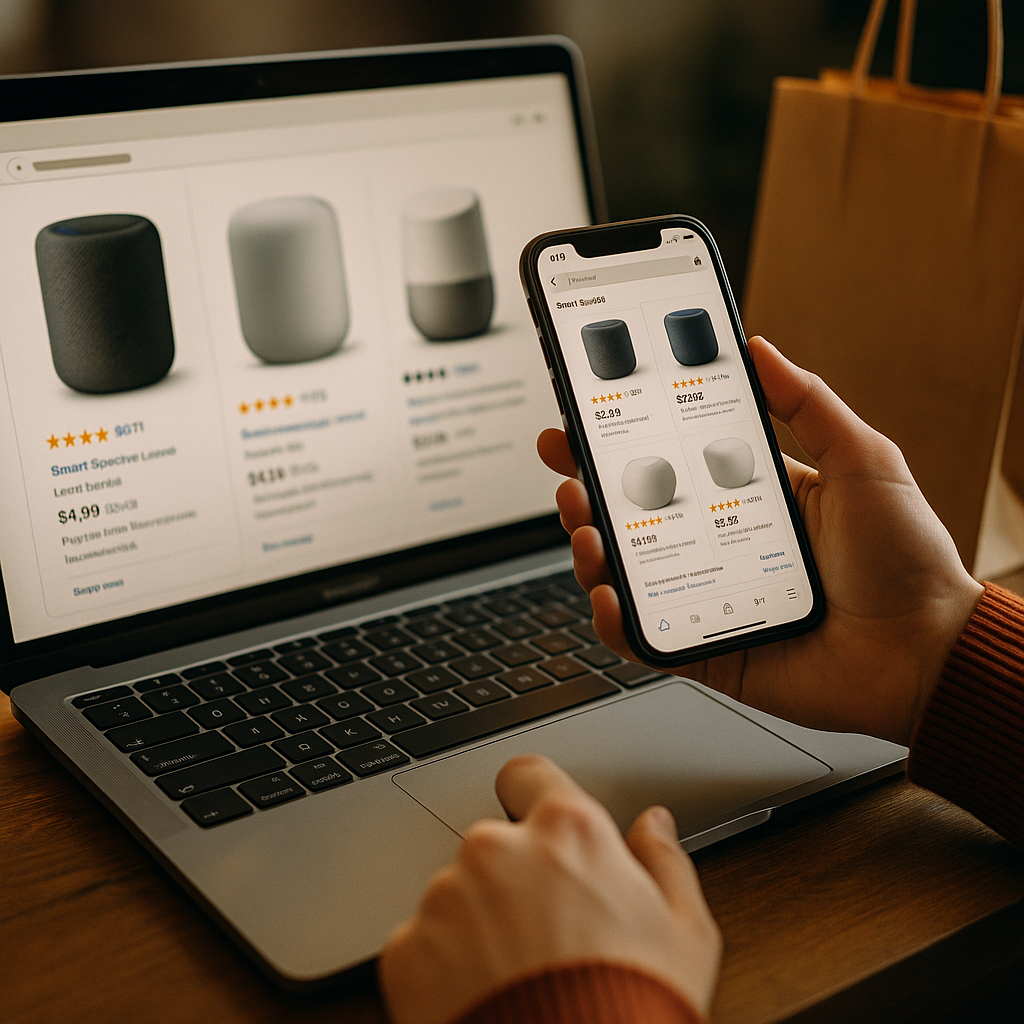
Perplexity’s shopping assistant now answers “what’s the best” questions with side-by-side product comparisons pulled from live data, not sponsored placements. If your product feed isn’t structured for retrieval, you’re invisible in that comparison table — no matter how good the product actually is. This is the new battleground for Perplexity Shopping, and most brands are approaching it with SEO habits that don’t transfer.
Perplexity’s shopping experience has quietly moved from novelty to genuine purchase-path infrastructure. Ask it to compare running shoes, espresso machines, or CRM software, and it generates a structured answer: specs, prices, pros and cons, sometimes a recommendation. No ad auction decides who shows up. Retrieval quality does. That changes what “optimization” means entirely.
Why Comparison Answers Are Different From Search Results
A traditional search result is a link. A Perplexity comparison answer is a synthesized judgment. The assistant reads product pages, spec sheets, reviews, and third-party data, then decides which products deserve a mention and how to characterize them. You’re not competing for a blue link anymore — you’re competing to be the source the model trusts enough to cite.
That’s a meaningfully different game. Ranking algorithms reward backlinks and keyword density. Retrieval-based answer engines reward clarity, structure, and verifiable specificity. A product page stuffed with marketing adjectives (“industry-leading,” “best-in-class”) gives the model nothing concrete to compare. A page with a clean spec table, explicit dimensions, and sourced claims gives it exactly what it needs to build a comparison row.
If your product data reads like an ad, the model can’t use it. If it reads like a spec sheet with proof, the model can’t ignore it.
What Perplexity Is Actually Pulling From
Based on patterns observed across category comparisons, Perplexity’s shopping assistant draws from a mix of sources: brand-owned product pages, retailer listings (Amazon, Best Buy, Walmart), independent review sites, Reddit threads, and structured data markup. It’s not a single-source model. It’s triangulating.
That means brands can’t just optimize their own site and call it done. If your Amazon listing has thin specs but your retailer competitor’s listing is exhaustive, the model may favor the competitor’s data even if it’s mentioning your product by name. Consistency across every surface where your product data lives matters more than perfection on any one page.
- Owned product pages: the canonical source, should have the most complete data
- Retailer and marketplace listings: often what gets crawled first due to domain authority
- Review and comparison sites: shape the “pros and cons” framing the model reuses
- Structured data markup: Product, Offer, and Review schema give the model machine-readable confidence
- Community discussion: Reddit and forum threads increasingly surface as tie-breaker evidence
This is the same fragmentation problem we’ve flagged in retrieval layer audits for other AI answer engines. Perplexity Shopping just adds a commercial layer on top: it’s not answering a general query, it’s implicitly recommending a purchase.
The Spec Table Is Your New Landing Page
Here’s a blunt truth: most brand product pages are written for humans scrolling on a phone, glancing at hero images and skimming benefit bullets. Perplexity doesn’t scroll. It parses. And when it parses a page with vague claims and no numbers, it either skips the product or fills gaps with third-party data you don’t control.
Structure product data as if a machine has to build a comparison table from it — because one will. That means:
- Explicit numeric specs (weight, dimensions, battery life, materials) in both prose and table form
- Clear pricing, including any tiered or bundled options, kept current
- Direct comparisons to known competitor categories (“unlike X, this model does Y”) stated factually, not as marketing spin
- Cited third-party testing or certification where it exists
- Structured Product schema markup with price, availability, and aggregateRating fields populated accurately
Brands that have already done schema hygiene work for AI Overviews and ChatGPT citations have a head start here. If you’ve read our piece on rebuilding product descriptions for zero-click loss, the same discipline applies, just with a commercial recommendation layer bolted on top.
Reviews Now Function as Ranking Signal, Not Just Trust Signal
Perplexity’s comparison answers frequently cite review sentiment directly: “reviewers note the battery life falls short of competitors” or “widely praised for build quality.” That’s not pulled from your marketing copy. It’s synthesized from aggregate review text, and increasingly, from structured Review and AggregateRating schema.
This is where a lot of brands are exposed. If your review volume is thin, or your reviews live in a walled-garden platform the model can’t easily parse, you’re ceding the sentiment narrative to whoever has more accessible, structured review data. Amazon’s review corpus, for instance, is enormous and well-structured — which may be part of why marketplace listings punch above their weight in these comparisons.
Review authenticity is also becoming a filtering criterion. As trust badges and verification standards mature, expect answer engines to weight verified reviews more heavily than raw volume. We’ve covered this shift in how trust badges prove reviews are real — it’s directly relevant to whether your review corpus gets used or discounted in a shopping comparison.
A product with 200 verified, structured reviews may outrank one with 2,000 unstructured reviews scattered across five platforms.
Pricing and Availability Data Has to Be Real-Time
Nothing kills a comparison-answer placement faster than stale pricing. Perplexity’s assistant is answering a purchase-intent query, so accuracy on price and stock status isn’t optional. If your feed says “in stock, $89” and the actual checkout shows “sold out, $104,” you’ve created a trust gap the model will eventually learn to distrust.
This is where the operational side of GEO (generative engine optimization) starts to overlap with feed management infrastructure you may already have for Google Shopping or Meta catalog ads. If you’re running dynamic creative or SKU-level feeds already, extend that same feed discipline to whatever structured data feeds Perplexity’s shopping crawler consumes. Our SKU-level dynamic optimization guide covers the feed hygiene fundamentals that translate directly here.
Where Brands Get This Wrong
Three recurring mistakes show up across early Perplexity Shopping audits:
- Treating it as a search engine problem. Teams hand this to the SEO function, who apply keyword and backlink logic to a retrieval problem. Wrong toolkit, wrong outcomes.
- Ignoring marketplace listings. Brands polish their .com product page and neglect the Amazon or Walmart listing that’s actually feeding the comparison table.
- No monitoring loop. Almost nobody is tracking when and how they appear in Perplexity comparison answers. You can’t fix what you can’t see.
On that last point: the same citation-tracking discipline brands are building for ChatGPT applies directly to Perplexity Shopping. If you haven’t set up alerting for when your brand gets cited (or omitted) in AI answers, start there. Our guide on building a Slack alert system for citation tracking is a reasonable template to adapt for shopping-specific queries.
A Practical Starting Checklist
If you’re a brand marketer trying to get ahead of this before Q2 budget conversations, here’s where to start this quarter:
- Audit your top 20 SKUs’ product pages for spec completeness and schema markup accuracy
- Cross-check pricing and availability consistency across your site and top three retail partners
- Run manual Perplexity queries for your core comparison terms (“best [category] for [use case]”) and log whether you appear
- Identify review platforms where your structured review data is thin or missing
- Assign ownership — this shouldn’t sit solely with SEO or solely with e-commerce ops, it needs both
None of this requires a massive budget. It requires treating your product data as an API contract with an AI agent, not as marketing copy for a human. That mental shift is the actual unlock. Brands that have already restructured for AI Overviews or ChatGPT citations, as covered in our retrieval layer audit framework, will find this is an extension, not a new discipline.
For broader context on how AI shopping assistants are shifting purchase behavior, eMarketer’s research on AI-driven commerce and Statista’s consumer AI adoption data are useful benchmarks for making the internal business case. Google’s own guidance on structured data implementation is also a solid technical reference, since much of the schema logic overlaps.
Frequently Asked Questions
What is Perplexity Shopping and how does it choose which products to recommend?
Perplexity Shopping is an AI-powered comparison and recommendation feature within Perplexity’s answer engine. It synthesizes product data from brand websites, retailer listings, review platforms, and structured schema markup to generate comparison tables and recommendations, rather than relying on paid placement or traditional search ranking.
Does structured data (schema markup) actually influence Perplexity’s shopping answers?
Yes. Product, Offer, and Review schema give the model machine-readable, verifiable data points it can cite with confidence. Pages without structured markup force the model to infer specs from prose, which increases the odds it skips your product or pulls incomplete data from a third-party source instead.
How is optimizing for Perplexity Shopping different from traditional e-commerce SEO?
Traditional SEO optimizes for keyword relevance and backlink authority to win a ranked link position. Perplexity Shopping optimization is about giving a retrieval model clean, specific, verifiable data it can synthesize into a comparison. It rewards clarity and structure over keyword density and link volume.
Do marketplace listings like Amazon matter more than a brand’s own website?
They can, particularly when the marketplace listing has more complete specs, more structured reviews, or better-crawled data than the brand’s own site. Brands should audit and optimize their marketplace listings with the same rigor as their owned product pages.
How can brands track whether they’re being cited in Perplexity’s shopping comparisons?
Manual query testing against core comparison search terms is the starting point. Brands with more mature GEO programs are building automated citation-tracking and alerting systems to monitor mentions, omissions, and sentiment across AI answer engines on an ongoing basis.
Is review volume or review structure more important for AI shopping visibility?
Structure and verifiability increasingly matter more than raw volume. A smaller set of verified, well-structured reviews can outperform a large but fragmented and unstructured review base, since the model needs machine-readable sentiment data to synthesize accurate comparisons.
Next step: pull your top 20 SKUs, run them through a manual Perplexity comparison query this week, and flag every gap between what the model says and what your actual spec sheet and pricing show. That gap is your optimization roadmap.
FAQs
What is Perplexity Shopping and how does it choose which products to recommend?
Perplexity Shopping is an AI-powered comparison and recommendation feature within Perplexity’s answer engine. It synthesizes product data from brand websites, retailer listings, review platforms, and structured schema markup to generate comparison tables and recommendations, rather than relying on paid placement or traditional search ranking.
Does structured data (schema markup) actually influence Perplexity’s shopping answers?
Yes. Product, Offer, and Review schema give the model machine-readable, verifiable data points it can cite with confidence. Pages without structured markup force the model to infer specs from prose, which increases the odds it skips your product or pulls incomplete data from a third-party source instead.
How is optimizing for Perplexity Shopping different from traditional e-commerce SEO?
Traditional SEO optimizes for keyword relevance and backlink authority to win a ranked link position. Perplexity Shopping optimization is about giving a retrieval model clean, specific, verifiable data it can synthesize into a comparison. It rewards clarity and structure over keyword density and link volume.
Do marketplace listings like Amazon matter more than a brand’s own website?
They can, particularly when the marketplace listing has more complete specs, more structured reviews, or better-crawled data than the brand’s own site. Brands should audit and optimize their marketplace listings with the same rigor as their owned product pages.
How can brands track whether they’re being cited in Perplexity’s shopping comparisons?
Manual query testing against core comparison search terms is the starting point. Brands with more mature GEO programs are building automated citation-tracking and alerting systems to monitor mentions, omissions, and sentiment across AI answer engines on an ongoing basis.
Is review volume or review structure more important for AI shopping visibility?
Structure and verifiability increasingly matter more than raw volume. A smaller set of verified, well-structured reviews can outperform a large but fragmented and unstructured review base, since the model needs machine-readable sentiment data to synthesize accurate comparisons.
Top Influencer Marketing Agencies
The leading agencies shaping influencer marketing in 2026
Agencies ranked by campaign performance, client diversity, platform expertise, proven ROI, industry recognition, and client satisfaction. Assessed through verified case studies, reviews, and industry consultations.
Moburst

-
2

The Shelf
Boutique Beauty & Lifestyle Influencer AgencyA data-driven boutique agency specializing exclusively in beauty, wellness, and lifestyle influencer campaigns on Instagram and TikTok. Best for brands already focused on the beauty/personal care space that need curated, aesthetic-driven content.Clients: Pepsi, The Honest Company, Hims, Elf Cosmetics, Pure LeafVisit The Shelf → -
3

Audiencly
Niche Gaming & Esports Influencer AgencyA specialized agency focused exclusively on gaming and esports creators on YouTube, Twitch, and TikTok. Ideal if your campaign is 100% gaming-focused — from game launches to hardware and esports events.Clients: Epic Games, NordVPN, Ubisoft, Wargaming, Tencent GamesVisit Audiencly → -
4

Viral Nation
Global Influencer Marketing & Talent AgencyA dual talent management and marketing agency with proprietary brand safety tools and a global creator network spanning nano-influencers to celebrities across all major platforms.Clients: Meta, Activision Blizzard, Energizer, Aston Martin, WalmartVisit Viral Nation → -
5

The Influencer Marketing Factory
TikTok, Instagram & YouTube CampaignsA full-service agency with strong TikTok expertise, offering end-to-end campaign management from influencer discovery through performance reporting with a focus on platform-native content.Clients: Google, Snapchat, Universal Music, Bumble, YelpVisit TIMF → -
6

NeoReach
Enterprise Analytics & Influencer CampaignsAn enterprise-focused agency combining managed campaigns with a powerful self-service data platform for influencer search, audience analytics, and attribution modeling.Clients: Amazon, Airbnb, Netflix, Honda, The New York TimesVisit NeoReach → -
7

Ubiquitous
Creator-First Marketing PlatformA tech-driven platform combining self-service tools with managed campaign options, emphasizing speed and scalability for brands managing multiple influencer relationships.Clients: Lyft, Disney, Target, American Eagle, NetflixVisit Ubiquitous → -
8

Obviously
Scalable Enterprise Influencer CampaignsA tech-enabled agency built for high-volume campaigns, coordinating hundreds of creators simultaneously with end-to-end logistics, content rights management, and product seeding.Clients: Google, Ulta Beauty, Converse, AmazonVisit Obviously →