


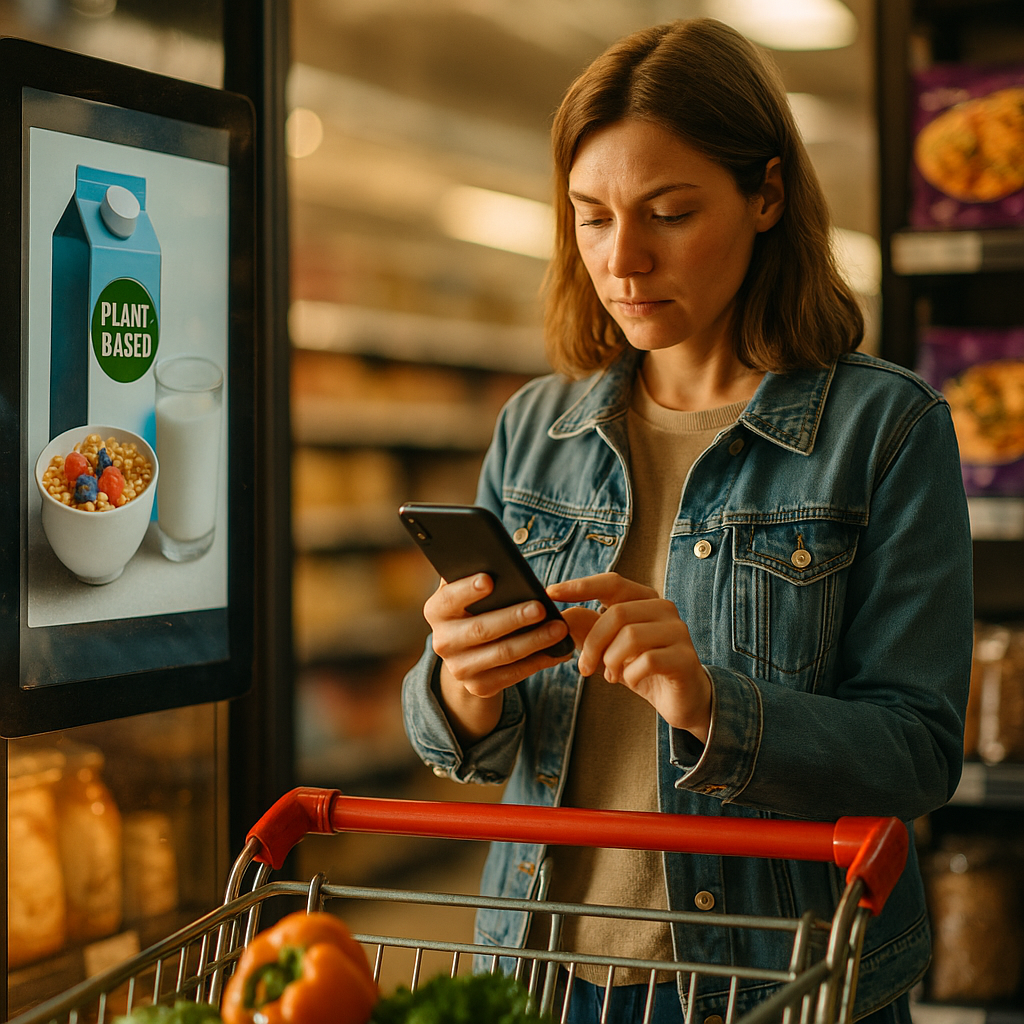
Retail media hit $175 billion globally last year, and yet most of that spend still buys the same static banner it did five years ago. Retail media branded content — shoppable video, interactive product carousels, livestream integrations — is finally getting enough inventory and enough data to test against standard display. The early results are messy, promising, and worth your attention before next quarter’s budget gets locked.
Why This Test Matters Now
For years, retail media meant sponsored search placements and banner ads bolted onto a retailer’s website. Boring, but reliable. Amazon and Walmart Connect changed the equation by opening branded content formats — shoppable video units, interactive demo tiles, brand storefronts with embedded product feeds — to mid-tier advertisers, not just the Nike- and P&G-sized accounts that got white-glove pilots.
That shift matters because branded content historically lived in a walled garden of custom deals and unclear reporting. Now there’s enough volume running through self-serve dashboards that brand marketers can actually compare performance against display, apples to apples, inside the same platform.
The question every media buyer is asking: does the shoppable format justify the higher production cost and CPM, or is it a shinier wrapper around the same click?
What “Branded Content” Actually Means in Retail Media Today
Definitions get sloppy here, so let’s be precise. On Amazon, branded content in this context spans Sponsored Brands video, Amazon DSP shoppable video, and Posts-style storefront content. On Walmart Connect, it’s Walmart’s Sponsored Video, interactive display units, and the newer in-app shoppable formats tied to Walmart+ and its connected TV inventory through Vizio. Both platforms are pushing brands toward richer, more native-feeling units instead of the static rectangle.
The common thread: content that lets a shopper act on the ad without leaving the page. Tap the video, add to cart, done. Compare that to standard display, where a click just starts a new journey on a product detail page.
The Early Numbers: Lift Is Real, But Uneven
Early advertiser data circulating through agency trading desks suggests shoppable video units on Amazon are delivering return on ad spend anywhere from 15% to 40% higher than standard display campaigns in the same category, according to conversations with retail media buyers managing eight-figure Amazon budgets. Walmart Connect’s own case studies point to similar directional lift, particularly in grocery and household categories where video demos help explain product use.
The lift isn’t uniform across categories. High-consideration purchases (appliances, beauty tools, electronics) see the biggest gains from shoppable video. Commodity categories like paper goods or pantry staples barely move the needle beyond what a good display creative already delivers.
That category dependency is the detail most vendor pitch decks conveniently leave out. If you sell laundry detergent, a shoppable video unit probably isn’t worth the 3x production cost. If you sell a $200 skincare device that needs explanation, it might be the highest-ROI placement in your entire retail media mix.
Where Standard Display Still Wins
Display isn’t dead, and anyone telling you otherwise is selling production services. Standard display still wins on:
- Cost efficiency at scale. A display campaign can run across thousands of SKUs with minimal creative variation. Branded shoppable content usually needs custom assets per hero product.
- Speed to launch. Display creative can go live in days. Shoppable video units, especially on Walmart’s newer formats, often require a two-to-four week production and approval cycle.
- Retargeting and lower-funnel efficiency. For shoppers who already know the product, a simple display retarget converts fine without the extra production investment.
The smart play isn’t picking one format. It’s sequencing them: shoppable content for upper-funnel discovery and consideration, display for retargeting and bottom-funnel conversion. That mirrors the full-funnel shift already documented in retail media shoppable video coverage, where retailers are explicitly building formats to cover the entire path to purchase inside one platform.
Amazon vs. Walmart: Two Different Bets
The two retail giants are approaching branded content from different starting points, and that shapes how brands should test.
Amazon’s advantage is scale and measurement maturity. Amazon Marketing Cloud gives advertisers granular attribution across Sponsored Brands video, DSP, and organic search lift, which makes it easier to isolate the incremental value of a shoppable unit versus a standard placement. Amazon is also leaning hard into livestream shopping and connected TV, pushing brands to treat Prime Video ad slots as an extension of the same branded content ecosystem, not a separate line item.
Walmart’s bet is different. Walmart Connect is building on top of first-party purchase data from 255 million weekly customers and layering in Vizio’s connected TV footprint to create shoppable formats that bridge streaming and in-store. Walmart’s pitch to brands is less about search-adjacent placements and more about full-household reach, especially in categories where Walmart’s grocery dominance gives it purchase signal Amazon simply doesn’t have.
Practically, that means:
- Test Amazon branded content first if your category has strong search intent and impulse-driven consideration (beauty, electronics, supplements).
- Test Walmart branded content first if your category leans grocery, household, or value-driven, where Walmart’s shopper base and CTV reach carry more weight.
What Brands Should Actually Measure
Retail media dashboards love to report clicks and ROAS. Neither tells you whether the branded content format is doing something display can’t. Here’s what a rigorous test actually requires.
- Incrementality, not attribution. Run a holdout test. Split similar audiences between shoppable content and standard display, then measure the delta in conversion rate and new-to-brand purchase rate, not just last-touch attribution.
- Production cost per incremental sale. A shoppable video unit might cost three to five times more to produce than a static banner. Divide that cost against the incremental lift, not the total sales, to get a real efficiency number.
- Halo effect on organic search. Amazon Marketing Cloud and Walmart’s Luminate platform both let advertisers see whether branded content campaigns lift organic rank and organic conversion rate for the same ASIN or item number.
- Repeat exposure fatigue. Shoppable formats are novel enough that early performance may reflect a curiosity bump. Track performance over multiple flight cycles before declaring a permanent win.
This measurement discipline matters more in retail media than almost anywhere else in the marketing stack, because the retailer controls the reporting environment. You’re grading your own homework unless you build independent incrementality tests, similar to how brands are now scrutinizing consumer sentiment data instead of trusting platform-reported engagement at face value.
Budget Reality Check
Branded content isn’t cheap, and CFOs will ask hard questions before approving a shift away from proven display budgets. Build the business case around a small, defensible pilot: one hero SKU, one category, a four-to-six week flight, with a holdout group. That’s the same pre-approved, incremental approach that’s worked for brands navigating other budget approval bottlenecks, as outlined in pre-approved budget tiers strategies. Retail media line items are getting the same CFO scrutiny as influencer deals, and the brands winning approval are the ones showing incremental math, not vanity ROAS.
Compliance and Disclosure Aren’t Optional Here
Branded content on retail platforms still falls under FTC disclosure rules, even when the “ad” looks like organic shopping content. If a creator or influencer partnership feeds into the shoppable video (increasingly common as brands repurpose creator UGC for Amazon Posts or Walmart’s video units), the endorsement disclosure requirements from the FTC still apply. Retailers won’t police this for you. Build a disclosure checklist into your creative approval workflow before assets go live, not after a compliance review flags it.
UK-facing brands running the same content through Amazon UK or comparable retail media inventory should also check ICO guidance on data use in targeted retail media, particularly where shoppable video units pull in loyalty program data for targeting.
How This Connects to the Broader Retail Media Buildout
Branded content experiments aren’t happening in isolation. Retailers are rebuilding their entire media businesses around this format, not treating it as a side test. Grocers and mass retailers are standing up in-house content studios specifically to produce this kind of shoppable video at scale, a trend covered in depth in the piece on retail media studios. That infrastructure investment tells you where these retailers expect ad dollars to flow over the next several planning cycles: away from static display, toward owned, shoppable, content-first formats.
It also connects to how connected TV inventory is evolving. As CTV ad inventory grows, retail media networks are positioning shoppable formats as the bridge between streaming attention and point-of-sale conversion, which is exactly the pitch Walmart is making with its Vizio integration.
For brands still deciding where to allocate test budgets, third-party benchmarking helps ground the conversation. eMarketer’s retail media forecasts and Statista’s ad spend data both show branded content and video formats growing faster than standard display within retail media budgets, a trend line that should inform how aggressively you pilot in the next two quarters.
The Bottom Line for Media Buyers
Branded shoppable content beats standard display on consideration and mid-funnel metrics, but only in categories where the extra production spend buys real explanation value. Don’t kill your display budget to fund the experiment. Run a controlled, incrementality-tested pilot on one high-consideration category, measure cost per incremental sale rather than raw ROAS, and let that number decide whether the format earns a permanent line item next planning cycle.
FAQs
Is branded shoppable content on Amazon and Walmart worth the extra production cost?
It depends on category. High-consideration products (electronics, beauty devices, appliances) tend to see meaningful lift over standard display, while commodity categories like grocery staples often don’t justify the added production spend.
How do Amazon and Walmart branded content formats differ?
Amazon leans on Sponsored Brands video, DSP shoppable units, and Amazon Marketing Cloud attribution. Walmart Connect combines Sponsored Video with first-party grocery purchase data and Vizio connected TV inventory for household-level reach.
What’s the biggest measurement mistake brands make with retail media branded content?
Relying on platform-reported ROAS instead of running independent incrementality tests with a holdout group. Platform dashboards attribute generously, which can overstate a format’s true lift over display.
Do FTC disclosure rules apply to shoppable retail media content?
Yes. If creator content or endorsements feed into a shoppable unit, standard FTC disclosure requirements still apply, regardless of how “organic” the placement looks on the retailer’s site or app.
Should brands shift their entire retail media budget to branded content?
No. Standard display remains more cost-efficient for scale, retargeting, and fast-turnaround campaigns. Branded content works best as an upper-funnel complement, not a full replacement.
Top Influencer Marketing Agencies
The leading agencies shaping influencer marketing in 2026
Agencies ranked by campaign performance, client diversity, platform expertise, proven ROI, industry recognition, and client satisfaction. Assessed through verified case studies, reviews, and industry consultations.
Moburst

-
2

The Shelf
Boutique Beauty & Lifestyle Influencer AgencyA data-driven boutique agency specializing exclusively in beauty, wellness, and lifestyle influencer campaigns on Instagram and TikTok. Best for brands already focused on the beauty/personal care space that need curated, aesthetic-driven content.Clients: Pepsi, The Honest Company, Hims, Elf Cosmetics, Pure LeafVisit The Shelf → -
3

Audiencly
Niche Gaming & Esports Influencer AgencyA specialized agency focused exclusively on gaming and esports creators on YouTube, Twitch, and TikTok. Ideal if your campaign is 100% gaming-focused — from game launches to hardware and esports events.Clients: Epic Games, NordVPN, Ubisoft, Wargaming, Tencent GamesVisit Audiencly → -
4

Viral Nation
Global Influencer Marketing & Talent AgencyA dual talent management and marketing agency with proprietary brand safety tools and a global creator network spanning nano-influencers to celebrities across all major platforms.Clients: Meta, Activision Blizzard, Energizer, Aston Martin, WalmartVisit Viral Nation → -
5

The Influencer Marketing Factory
TikTok, Instagram & YouTube CampaignsA full-service agency with strong TikTok expertise, offering end-to-end campaign management from influencer discovery through performance reporting with a focus on platform-native content.Clients: Google, Snapchat, Universal Music, Bumble, YelpVisit TIMF → -
6

NeoReach
Enterprise Analytics & Influencer CampaignsAn enterprise-focused agency combining managed campaigns with a powerful self-service data platform for influencer search, audience analytics, and attribution modeling.Clients: Amazon, Airbnb, Netflix, Honda, The New York TimesVisit NeoReach → -
7

Ubiquitous
Creator-First Marketing PlatformA tech-driven platform combining self-service tools with managed campaign options, emphasizing speed and scalability for brands managing multiple influencer relationships.Clients: Lyft, Disney, Target, American Eagle, NetflixVisit Ubiquitous → -
8

Obviously
Scalable Enterprise Influencer CampaignsA tech-enabled agency built for high-volume campaigns, coordinating hundreds of creators simultaneously with end-to-end logistics, content rights management, and product seeding.Clients: Google, Ulta Beauty, Converse, AmazonVisit Obviously →