


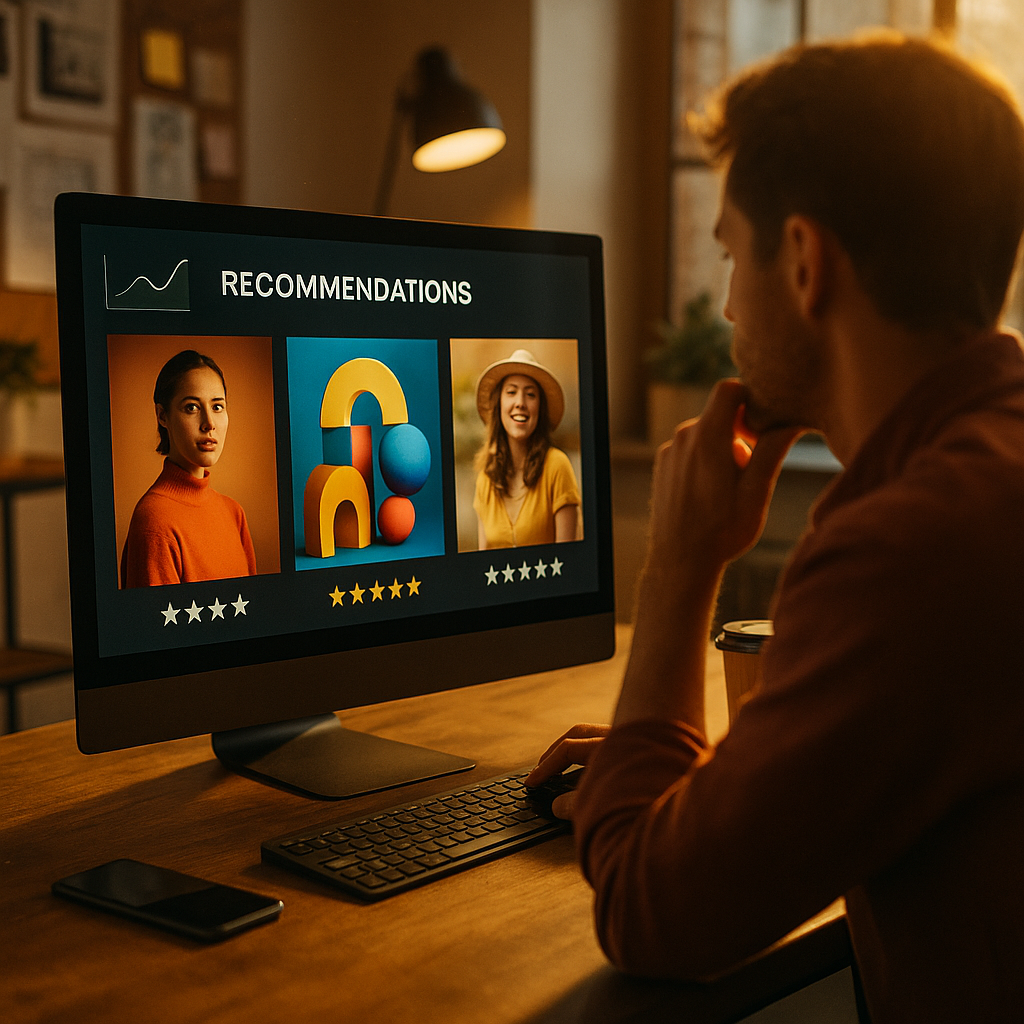
A two-person agency in Austin shipped 340 creative variants last quarter for a mid-size DTC brand. No, they didn’t hire a secret army of freelancers. They ran a predictive creative recommendation engine that told them which concepts to build before they wasted a single production hour. Output volume used to be a headcount problem. Now it’s a tooling problem — and that changes who gets to compete for the accounts that matter.
The Old Math Doesn’t Work Anymore
For two decades, agency scale meant bodies. More accounts required more strategists, more editors, more account managers fielding “can we get five more variants by Friday” requests. A shop with two founders and a laptop simply couldn’t out-produce a 40-person agency with dedicated creative pods. That math held until generative video and predictive analytics collided.
Now the constraint isn’t production capacity. It’s decision quality. Any team can generate fifty ad variants in an afternoon using tools like Runway or Sora — the real bottleneck is knowing which fifty are worth making. That’s exactly the gap predictive creative recommendation engines are built to close.
The agencies winning right now aren’t the ones producing the most content. They’re the ones producing the least waste — and predictive tooling is how a two-person shop gets there without a research department.
What a Predictive Creative Recommendation Engine Actually Does
Strip away the marketing language and these platforms do three things: ingest performance data across past campaigns, score creative attributes (hook style, pacing, color grading, CTA placement) against outcomes, and rank which new concepts are statistically likely to perform before a single asset gets produced.
Think of it as a recommendation algorithm — the same underlying logic as Netflix suggesting your next watch — pointed at ad creative instead of content libraries. Feed it enough historical data (client-specific or aggregated industry benchmarks) and it starts flagging patterns humans miss. Maybe UGC-style hooks under three seconds consistently beat polished intros for a specific vertical. Maybe split-screen comparisons outperform single-product shots for anything priced under $50. The engine surfaces this before the brief goes out, not after the campaign underperforms.
- Pre-production scoring: Ranks concept briefs by predicted engagement or conversion probability.
- Pattern extraction: Identifies recurring creative attributes tied to top-quartile performance.
- Variant prioritization: Tells you which of ten possible directions to build first, second, and not at all.
- Cross-platform adaptation: Flags which creative elements need to change for TikTok versus YouTube Shorts versus Meta Reels.
This isn’t wildly different from the logic behind SKU-level dynamic creative optimization, just applied earlier in the funnel — before spend, not during it.
Why Two-Person Shops Can Suddenly Compete on Volume
Here’s the uncomfortable truth big agencies don’t love admitting: a lot of “creative capacity” at scale was really just brute-force iteration. Produce forty versions, run them, see what sticks, repeat. That approach requires headcount because someone has to physically build forty things.
Predictive engines collapse that cycle. Instead of building forty and testing, a small team builds eight — the eight the model ranked highest — and gets comparable signal. That’s an 80% reduction in production hours for roughly the same insight. For a two-person operation, that’s the difference between serving two clients and serving eight.
eMarketer and similar research bodies have tracked steady growth in AI-assisted content production tools among small and mid-size agencies, and the pattern is consistent across sources: smaller shops adopt faster because they have less legacy process to unwind. A solo founder can swap workflows in a weekend. A 200-person agency needs a change management committee.
The Tools Doing the Heavy Lifting
Nobody’s naming their engine “predictive creative recommendation software” in a sales deck, but the functional category shows up across a few adjacent tool types:
- Creative intelligence platforms that score ad libraries against performance data (some built on top of Meta’s own ad library APIs).
- Generative video tools like Sora, Veo, and Runway, increasingly paired with recommendation layers that suggest prompts based on what’s historically converted — see our breakdown of cost per variant across Sora, Veo, and Runway for how the economics actually shake out.
- Multi-agent workflows that chain research, briefing, and production agents together, similar to the setups covered in our multi-agent marketing team blueprint.
- Channel optimization layers that take one hero asset and predict the right cuts for each platform, a pattern explored in AI-driven channel optimization for creator content.
None of these tools are magic. They’re pattern-matching systems trained on data, and they’re only as good as what they’re fed. A two-person shop with six months of solid performance history will get sharper recommendations than one starting from zero. That’s worth knowing before you promise a client “AI-optimized” output on day one.
Where This Breaks: Sameness Risk and Data Thinness
Predictive engines have a structural weakness nobody in the sales demo mentions: they optimize toward what already worked. Push that too far and every client’s creative starts converging on the same three hook formats, the same pacing, the same visual grammar. That’s a real risk, and it’s already visible in categories like beauty and supplements where “TikTok-native” ad style has become almost a template.
Small shops need to treat the engine’s output as a shortlist, not a mandate. The recommendation says “build these six” — a sharp strategist still decides whether concept four is worth a swing even though it scored lower, because it’s genuinely differentiated. Removing human judgment entirely is how you end up with technically optimized, creatively forgettable work.
There’s also a data thinness problem. Predictive scoring needs volume to be reliable. A brand-new agency running its first three campaigns doesn’t have enough historical signal for the model to say anything meaningful. In that gap, most tools fall back on aggregated industry benchmarks, which are directionally useful but nowhere near as precise as client-specific data. Set that expectation with clients up front. Overpromising precision you can’t yet deliver is a fast way to lose trust — and it echoes the same sign-off discipline covered in AI creator brief agents and where human sign-off can’t be skipped.
Operational Reality: What This Looks Like Week to Week
Talk to founders actually running lean shops on these tools and the workflow looks something like this: Monday, pull performance data from the last two weeks of live campaigns. Tuesday, run it through the recommendation engine alongside new brief inputs, get a ranked list of concept directions. Wednesday and Thursday, produce the top-ranked concepts using generative tools for rough cuts, then a human pass for polish and brand voice. Friday, ship, tag performance, feed results back into the model.
That loop is tight enough to run with two people because the thinking work — the “what should we even make” question — got compressed from days to hours. Account management and client strategy still eat real time. Nothing’s automating the trust-building parts of agency work, and it shouldn’t.
The tools don’t replace strategists. They replace the guesswork that used to eat 30-40% of a strategist’s week.
Budget-wise, most of these platforms price on usage tiers rather than flat enterprise contracts, which is exactly why they’re accessible to small shops. HubSpot’s research on marketing tool adoption consistently shows SMBs prioritizing usage-based pricing over annual commitments, and creative recommendation tools have followed that model closely — a meaningful shift from the seat-license SaaS era.
Compliance and Attribution Still Matter — Maybe More
Volume without governance is a liability, not an asset. As predictive engines push more AI-assisted and AI-generated creative into market faster, provenance and disclosure questions get sharper, not softer. Platforms are already building in verification layers — see how TikTok’s C2PA content provenance badge works — and small agencies producing high-volume AI-assisted creative need to know exactly what claims that badge is and isn’t making on their behalf.
Before scaling output with any recommendation engine, run product and performance claims through a basic accuracy check. Our AI hallucination audit framework is a reasonable starting template — it catches the kind of fabricated stat or overstated benefit that AI-assisted briefing can quietly introduce at volume. The FTC’s guidance on endorsements and testimonials is also worth revisiting whenever creative pace increases; disclosure obligations don’t shrink because output did.
Is This a Threat to Bigger Agencies, or a Leveling Force?
Both, honestly. Bigger shops still win on strategic depth, integrated media buying, and multi-market execution. But the pure output-volume advantage they used to hold — “we can make more stuff faster” — is eroding. Sprout Social’s ongoing research into agency and brand tool adoption points to the same trend: the gap between well-tooled small teams and under-tooled large ones is narrowing faster than headcount differences would predict.
For brand marketers reading this from the client side, the practical implication is simple: agency size is no longer a reliable proxy for output capacity. A two-person shop with a sharp predictive engine and a disciplined review process can match a 30-person agency on variant volume. What it can’t always match yet is account depth across multiple simultaneous large-scale campaigns. Know which one you’re actually buying before you sign the contract.
Next step: if you’re a small agency evaluating this category, don’t buy the platform with the flashiest demo — pilot it on one live client for 30 days, compare variant output against your historical hit rate, and only scale the workflow once the data, not the sales deck, proves it out.
FAQs
What exactly is a predictive creative recommendation engine?
It’s a tool that analyzes past creative performance data and scores or ranks new concept ideas before production, so teams know which variants are statistically likely to perform ahead of building them.
Can a two-person agency really compete with a large agency on output volume?
Yes, on raw variant volume specifically. Predictive tooling compresses the “what should we make” decision from days to hours, letting small teams skip low-value production work that larger agencies historically absorbed with more headcount.
Do these engines work without a lot of historical data?
Not well. New agencies with limited campaign history typically get generic, benchmark-based recommendations rather than precise, client-specific ones. Accuracy improves significantly after several campaign cycles of data.
Does relying on predictive tools risk making all creative look the same?
Yes, if used without human judgment. These engines optimize toward historical winners, which can push creative toward sameness across clients and categories. Strategists should treat recommendations as a shortlist, not a final decision.
What’s the biggest operational risk small agencies should watch for?
Skipping human review and compliance checks in the rush to scale output. Faster production doesn’t reduce the need for accuracy checks, disclosure compliance, or brand voice consistency — if anything, it increases it.
Top Influencer Marketing Agencies
The leading agencies shaping influencer marketing in 2026
Agencies ranked by campaign performance, client diversity, platform expertise, proven ROI, industry recognition, and client satisfaction. Assessed through verified case studies, reviews, and industry consultations.
Moburst

-
2

The Shelf
Boutique Beauty & Lifestyle Influencer AgencyA data-driven boutique agency specializing exclusively in beauty, wellness, and lifestyle influencer campaigns on Instagram and TikTok. Best for brands already focused on the beauty/personal care space that need curated, aesthetic-driven content.Clients: Pepsi, The Honest Company, Hims, Elf Cosmetics, Pure LeafVisit The Shelf → -
3

Audiencly
Niche Gaming & Esports Influencer AgencyA specialized agency focused exclusively on gaming and esports creators on YouTube, Twitch, and TikTok. Ideal if your campaign is 100% gaming-focused — from game launches to hardware and esports events.Clients: Epic Games, NordVPN, Ubisoft, Wargaming, Tencent GamesVisit Audiencly → -
4

Viral Nation
Global Influencer Marketing & Talent AgencyA dual talent management and marketing agency with proprietary brand safety tools and a global creator network spanning nano-influencers to celebrities across all major platforms.Clients: Meta, Activision Blizzard, Energizer, Aston Martin, WalmartVisit Viral Nation → -
5

The Influencer Marketing Factory
TikTok, Instagram & YouTube CampaignsA full-service agency with strong TikTok expertise, offering end-to-end campaign management from influencer discovery through performance reporting with a focus on platform-native content.Clients: Google, Snapchat, Universal Music, Bumble, YelpVisit TIMF → -
6

NeoReach
Enterprise Analytics & Influencer CampaignsAn enterprise-focused agency combining managed campaigns with a powerful self-service data platform for influencer search, audience analytics, and attribution modeling.Clients: Amazon, Airbnb, Netflix, Honda, The New York TimesVisit NeoReach → -
7

Ubiquitous
Creator-First Marketing PlatformA tech-driven platform combining self-service tools with managed campaign options, emphasizing speed and scalability for brands managing multiple influencer relationships.Clients: Lyft, Disney, Target, American Eagle, NetflixVisit Ubiquitous → -
8

Obviously
Scalable Enterprise Influencer CampaignsA tech-enabled agency built for high-volume campaigns, coordinating hundreds of creators simultaneously with end-to-end logistics, content rights management, and product seeding.Clients: Google, Ulta Beauty, Converse, AmazonVisit Obviously →