


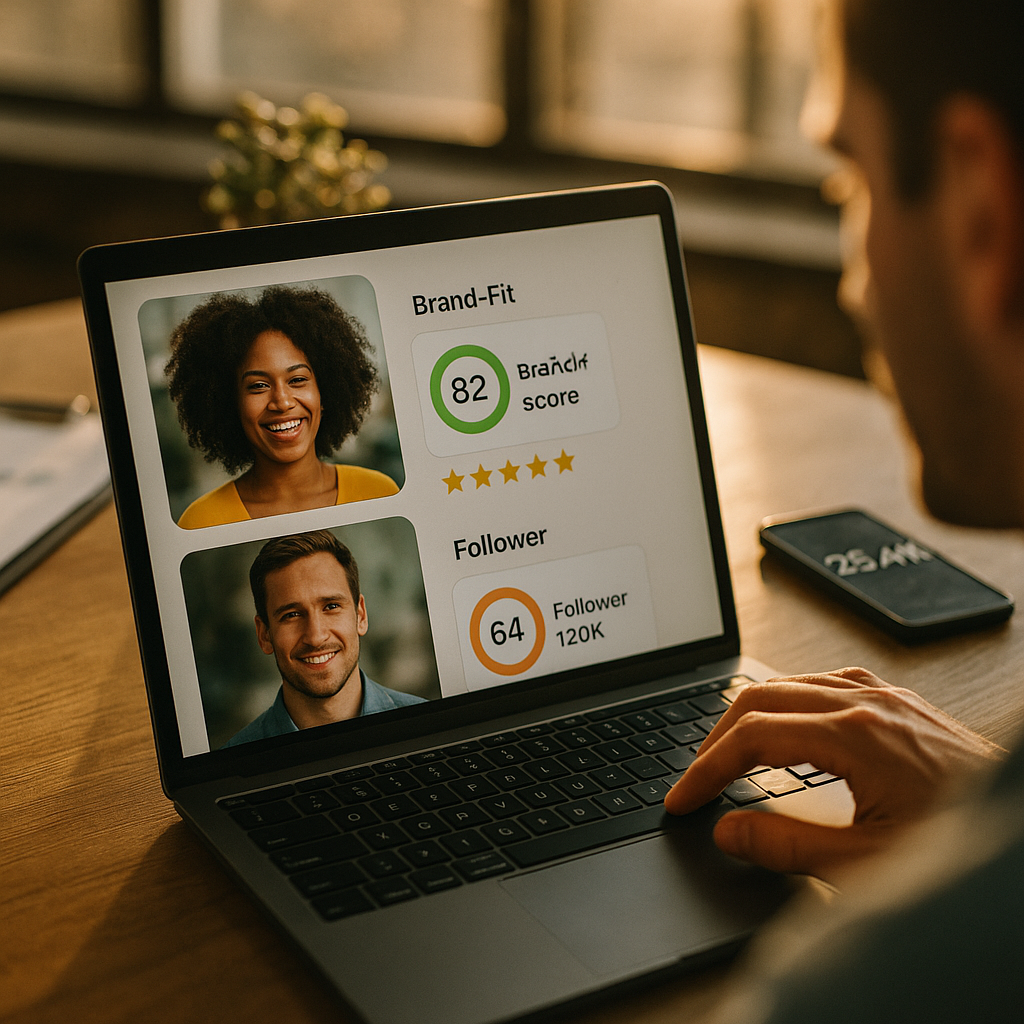
Only 8 percent of marketers still name follower count their top priority when vetting creators, according to recent industry survey data circulating among agency buyers this year. That number used to hover near 40 percent. Something broke. What replaced it is a messier, harder-to-game signal set that’s forcing every discovery platform on the market to rebuild its ranking logic around brand-fit scoring instead of raw reach.
The Follower Count Collapse Was Overdue
Anyone who’s run a campaign brief in the last three years already knew this was coming. A creator with 800,000 followers and a 0.4 percent engagement rate isn’t an asset — it’s a liability with a nice-looking media kit. Brands got burned enough times by inflated audiences, bot-padded followings, and mismatched niches that “big number” stopped meaning “good bet.”
The data backs up the gut feeling. Engagement rate, audience authenticity, and content-brand alignment now rank far above follower count in nearly every practitioner survey worth citing. That’s not a fad. It’s a correction.
When only 8 percent of marketers prioritize follower count, the metric hasn’t declined — it’s been demoted to a tiebreaker, not a headline number.
This mirrors what we’ve already seen play out in the micro-creator surge. Our earlier coverage of micro-creators beating mega-influencers in travel campaigns showed the same pattern: smaller, tighter-fit audiences consistently outperformed mass reach on conversion. Follower count told you nothing about whether that audience would actually buy.
What Brand-Fit Scoring Actually Measures
Brand-fit scoring isn’t one metric. It’s a composite, and the exact formula varies by platform, but most versions weigh some combination of:
- Content category alignment (does this creator actually talk about your product category, or just accept any brand deal?)
- Audience demographic and psychographic overlap with your target buyer
- Historical brand-safety signals, including past controversies or off-brand content
- Engagement quality — comment sentiment, save rates, share velocity, not just likes
- Tone and aesthetic consistency with the brand’s existing content library
Some tools now run this through machine-learning models trained on past campaign performance, essentially predicting fit before a single dollar gets spent. That’s a meaningfully different pitch than the old “sort by followers, descending” interface most platforms shipped a few years ago.
The shift makes sense once you consider who’s actually buying these tools now. It’s not community managers looking for a quick shoutout. It’s brand strategists and performance marketers who need to defend spend to a CFO. CFO-friendly creator metrics have become table stakes, and follower count simply doesn’t survive that conversation anymore.
Why Discovery Tools Had No Choice
Platforms like Upfluence, CreatorIQ, and Grin have all quietly rebuilt their filtering logic over recent product cycles. The public messaging talks about “AI-powered matching” and “predictive fit scores.” The private reality is simpler: buyers stopped trusting reach-first sorting, and vendors that didn’t adapt started losing renewal conversations.
This isn’t unique to influencer discovery. It rhymes with what’s happening across ad tech broadly, where eMarketer research has repeatedly flagged a shift toward outcome-based measurement over vanity reach metrics in nearly every channel, from CTV to paid social.
The Micro-Creator Effect on Ranking Logic
Here’s where it gets structural, not just philosophical. As brands lean harder into micro and mid-tier creators, discovery tools can’t rely on follower thresholds to define search results anymore, because the interesting candidates increasingly sit below the old cutoffs.
Our analysis of the micro-creator majority forcing discovery rebuilds covered this in detail: when most of your addressable creator pool has under 50,000 followers, sorting by size just returns noise. You need a different axis. Brand-fit scoring is that axis.
This also connects to the tier allocation model problem many agencies are quietly rebuilding right now. If your budget bands were designed around follower brackets, and follower brackets no longer predict performance, your entire allocation model is built on sand. Smart agencies are re-mapping tiers around fit-and-performance blends instead.
None of this means reach is irrelevant. A creator with zero audience obviously can’t move product. But reach is now a floor, not a ranking criterion. Once a creator clears a minimum viability threshold, fit does the heavy lifting.
Compliance and Risk: The Quiet Driver Nobody Talks About
There’s a risk-management angle here that gets less airtime than it deserves. Follower count tells you nothing about disclosure history, regulatory exposure, or audience authenticity. Brand-fit scoring systems, done well, incorporate brand-safety and compliance signals directly into the score.
That matters more each quarter. The FTC’s endorsement guidelines continue to tighten enforcement expectations around disclosure, and UK advertisers face similar scrutiny from the ICO on data handling tied to targeted creator campaigns. A discovery tool that surfaces a creator purely on reach, with no visibility into past compliance issues, is handing legal and brand-safety teams a live grenade.
Agencies that have already adapted their sourcing workflows around this reality are the ones winning renewal conversations. It’s part of why small agencies using AI to win pitches faster increasingly lead with fit-and-risk dashboards instead of reach decks. Clients want proof of due diligence, not just a big number on a slide.
What This Means for Your Discovery Stack
If you’re still running searches sorted by follower count as a first filter, you’re working with a tool that’s a generation behind buyer expectations. Here’s what to actually check when evaluating or auditing your discovery platform:
- Does it let you weight fit criteria yourself? Category alignment, tone, and audience overlap should be adjustable, not hardcoded.
- Can it show engagement quality, not just rate? Comment sentiment and save/share ratios matter more than raw like counts.
- Does it flag compliance history? Past FTC issues or brand-safety flags should surface automatically.
- Is performance data fed back into future scoring? The best tools learn from your own campaign outcomes, not just industry averages.
- Does it handle mid-tier and micro creators well? If it was built for celebrity-tier search, it’ll struggle with the volume and nuance of the micro-creator pool.
Vendors that can’t answer these clearly are still selling last decade’s product with a new landing page. Ask for a live demo filtered on your actual target audience, not their curated case study creators.
A Quick Gut-Check for Your Next Vetting Cycle
Try this exercise before your next campaign brief: pull the top ten creators your current tool surfaces for a target category, sorted by its default ranking. Then manually score them on category fit, audience overlap, and tone match. If the manual ranking looks wildly different from the platform’s default, you have a tooling problem, not a talent-pool problem.
This is roughly what’s happening across the broader creator economy right now — a slow, deliberate replacement of one-dimensional filters with something closer to actual fit prediction. It parallels the shift toward commission-based creator deals over flat fees: both trends reward provable performance over surface-level scale.
Bottom Line for Brand Teams
Stop asking your discovery tool “how big is this creator’s audience.” Start asking “how well does this creator’s audience match my buyer, and can the tool prove it.” That single question realignment will save more budget than any negotiation tactic, and it’s the difference between a program that scales predictably and one that keeps chasing reach that never converts.
Frequently Asked Questions
Why did follower count stop being a priority metric for marketers?
Brands repeatedly found that high follower counts didn’t correlate with sales or engagement, especially once bot-inflated audiences and mismatched niches became common. Performance data consistently showed smaller, tightly-aligned audiences outperforming large but generic ones.
What is brand-fit scoring in influencer discovery tools?
Brand-fit scoring is a composite metric combining content category alignment, audience overlap, engagement quality, tone consistency, and often brand-safety or compliance history, used to rank creators by likely campaign performance rather than audience size alone.
Does follower count matter at all anymore?
Yes, but as a minimum threshold rather than a ranking factor. Once a creator has enough reach to be viable, fit and engagement quality determine actual campaign value, not additional followers.
How does this shift affect micro-creator strategy?
Since most viable creators now fall into micro or mid-tier follower ranges, discovery tools that still default to follower-based sorting miss the majority of high-performing candidates, making fit-based filtering essential for accurate sourcing.
What should marketers look for when choosing a discovery platform?
Look for adjustable fit-weighting, engagement quality data beyond basic rates, built-in compliance and brand-safety flags, and evidence that the tool learns from your own past campaign performance rather than relying solely on generic benchmarks.
Top Influencer Marketing Agencies
The leading agencies shaping influencer marketing in 2026
Agencies ranked by campaign performance, client diversity, platform expertise, proven ROI, industry recognition, and client satisfaction. Assessed through verified case studies, reviews, and industry consultations.
Moburst

-
2

The Shelf
Boutique Beauty & Lifestyle Influencer AgencyA data-driven boutique agency specializing exclusively in beauty, wellness, and lifestyle influencer campaigns on Instagram and TikTok. Best for brands already focused on the beauty/personal care space that need curated, aesthetic-driven content.Clients: Pepsi, The Honest Company, Hims, Elf Cosmetics, Pure LeafVisit The Shelf → -
3

Audiencly
Niche Gaming & Esports Influencer AgencyA specialized agency focused exclusively on gaming and esports creators on YouTube, Twitch, and TikTok. Ideal if your campaign is 100% gaming-focused — from game launches to hardware and esports events.Clients: Epic Games, NordVPN, Ubisoft, Wargaming, Tencent GamesVisit Audiencly → -
4

Viral Nation
Global Influencer Marketing & Talent AgencyA dual talent management and marketing agency with proprietary brand safety tools and a global creator network spanning nano-influencers to celebrities across all major platforms.Clients: Meta, Activision Blizzard, Energizer, Aston Martin, WalmartVisit Viral Nation → -
5

The Influencer Marketing Factory
TikTok, Instagram & YouTube CampaignsA full-service agency with strong TikTok expertise, offering end-to-end campaign management from influencer discovery through performance reporting with a focus on platform-native content.Clients: Google, Snapchat, Universal Music, Bumble, YelpVisit TIMF → -
6

NeoReach
Enterprise Analytics & Influencer CampaignsAn enterprise-focused agency combining managed campaigns with a powerful self-service data platform for influencer search, audience analytics, and attribution modeling.Clients: Amazon, Airbnb, Netflix, Honda, The New York TimesVisit NeoReach → -
7

Ubiquitous
Creator-First Marketing PlatformA tech-driven platform combining self-service tools with managed campaign options, emphasizing speed and scalability for brands managing multiple influencer relationships.Clients: Lyft, Disney, Target, American Eagle, NetflixVisit Ubiquitous → -
8

Obviously
Scalable Enterprise Influencer CampaignsA tech-enabled agency built for high-volume campaigns, coordinating hundreds of creators simultaneously with end-to-end logistics, content rights management, and product seeding.Clients: Google, Ulta Beauty, Converse, AmazonVisit Obviously →