


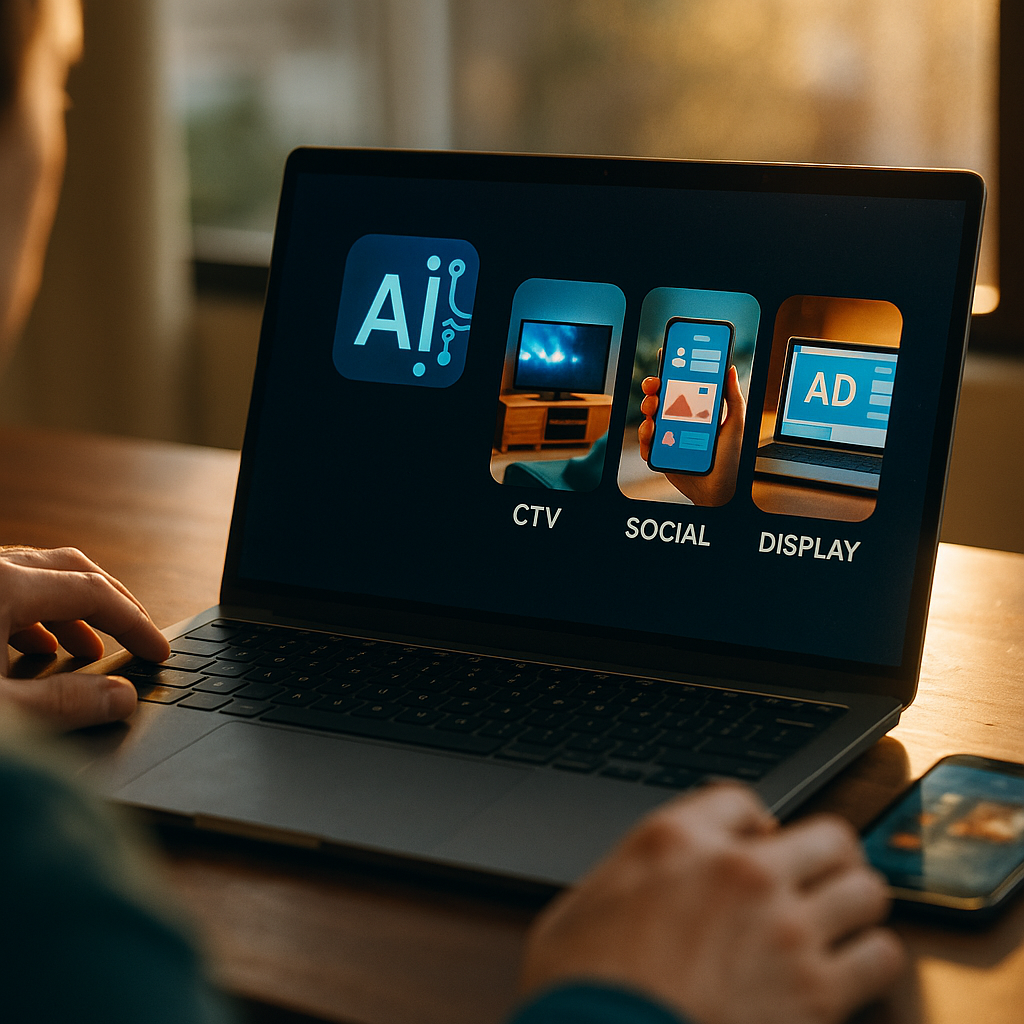
Sixty-four percent of marketers say they’ve misallocated budget to the wrong ad format in the last year, according to internal benchmarking cited across recent industry surveys. That’s not a rounding error — that’s real money burned on placements that were never going to convert. AI-driven format prediction tools promise to fix this before the insertion order gets signed. But do they actually work, or are they just another dashboard promising certainty in an uncertain market?
Platforms like XR ONE have popularized a specific pitch: feed us your creative, audience, and objective, and we’ll tell you whether CTV, social, or display will outperform before you spend a dollar. It sounds like magic. It’s actually pattern-matching against historical performance data, and the quality of that match varies wildly by vendor. Let’s break down how these tools actually work, where they diverge, and what a brand marketer should demand before trusting one with next quarter’s budget.
What Format Prediction Actually Means
Strip away the marketing language and format prediction tools do three things: ingest your creative assets and campaign parameters, compare them against a training set of historical placements, and output a probability score for each channel. Think of it as a recommendation engine, similar to what Netflix uses for content, except instead of suggesting your next show, it’s suggesting where your $200,000 media buy should live.
The technical backbone usually involves computer vision models scoring creative elements (motion, pacing, aspect ratio, text density) alongside historical engagement data pulled from the platform’s own campaign archive or third-party clean rooms. XR ONE, for instance, builds its scoring off a proprietary dataset of cross-channel campaign outcomes, then layers a recommendation engine on top that weighs format fit against your stated KPIs.
Here’s the catch: the model is only as good as the data it’s trained on. If a vendor’s historical dataset skews heavily toward CTV campaigns because that’s where they built their book of business, don’t be shocked when their tool keeps recommending CTV. This isn’t necessarily malicious. It’s just selection bias baked into the product.
A format prediction tool is a mirror of its training data, not a neutral oracle. Ask every vendor what campaigns built their model before you ask what the model recommends for yours.
Comparing the Approaches: CTV, Social, and Display Logic
Not all format prediction tools weigh channels the same way, and understanding the underlying logic matters more than the output score.
CTV-first platforms tend to prioritize completion rate and household reach signals. They’re built around the assumption that attention is scarcer and more valuable on the living room screen, so their models reward creative with strong narrative arcs and slower pacing. The tradeoff? These tools often struggle with identity resolution, which is a well-documented weak spot across the CTV ecosystem. If you’re relying on a prediction tool that recommends CTV heavily, pair that recommendation with a hard look at how the platform verifies household-level targeting. Our CTV targeting checklist is a useful gut check here, and the identity resolution gaps we’ve covered around pause-ad placements apply directly to any tool recommending CTV as a primary channel.
Social-first platforms weight short-form engagement velocity, completion within the first three seconds, and creator-content fit. These tools tend to be more accurate for lower-funnel objectives because social platforms expose more granular real-time performance data through their own APIs. The downside is overfitting to platform-specific quirks. A model trained heavily on TikTok data might not translate cleanly to Meta Reels or YouTube Shorts, even though they look similar on the surface.
Display-recommending tools are, frankly, the least glamorous but often the most conservative and defensible. Display prediction models lean on decades of click-through and viewability data, which makes them statistically stable even if the creative upside is lower. If a tool keeps steering you toward display, it might be because the math genuinely favors efficiency over impact, not because the platform is under-selling the sexier channels.
Does the Prediction Actually Reduce Waste?
This is the question that matters to anyone holding a budget line. Early data from brands running side-by-side tests (predicted allocation vs. gut-instinct allocation) shows meaningful but not dramatic improvement. One agency-reported benchmark found campaigns using format prediction tools saw an 18-22% reduction in cost-per-completed-view compared to manually planned allocations. That’s real, but it’s not the 40-50% efficiency gains some vendor decks imply.
The honest answer is that these tools reduce the worst-case scenarios more than they optimize the best case. They’re good at flagging “don’t put this creative on CTV, it’s built for vertical scroll” and less good at predicting which specific social platform will outperform by how much. Treat them as a triage function, not a crystal ball.
We’ve written before about how format prediction tools should be evaluated before you buy, and the core advice holds: demand a backtest against your own historical campaigns before trusting forward-looking recommendations. Any vendor unwilling to run that backtest on your data, using your past campaigns as the validation set, is asking you to trust a black box.
XR ONE and the Platform Landscape
XR ONE has become something of a shorthand in trade conversations for this entire category, similar to how “Kleenex” became shorthand for tissue. That’s partly earned. The platform’s approval-cycle claims have been scrutinized in depth, and the results are mixed. Our breakdown of XR ONE’s approval cycle time data found real time savings in creative-to-launch workflows, but the format prediction accuracy claims held up less consistently across verticals, especially in retail and CPG where seasonality throws off historical pattern matching.
Competing platforms differentiate mainly on data source transparency and integration depth. Some, like the tools compared in our in-house vs. XR ONE accuracy comparison, show that internally built prediction models, when fed enough proprietary first-party data, can match or beat vendor tools on accuracy, just without the polish or support infrastructure. That’s a real tradeoff for mid-market brands: buy a platform with weaker data specificity but strong UX and support, or build internally with better data fit but longer time-to-value.
If you’re running a formal RFP process, the vendor evaluation matrix we published breaks scoring into data provenance, model transparency, integration cost, and backtest performance. It’s worth using as a template regardless of which specific tools make your shortlist. Similarly, the XR ONE vendor scorecard covers the rights and licensing questions that get glossed over in most sales demos but matter enormously once creative starts running across channels you didn’t originally plan for.
The Governance Problem Nobody Talks About
Here’s what vendor demos rarely show you: what happens when the prediction is wrong and creative is already live across three channels? Format prediction tools increasingly plug into automated buying systems, which means a bad recommendation doesn’t just cost you a planning meeting, it costs you live budget burn before a human notices.
This is where governance frameworks matter as much as prediction accuracy. If you’re layering format prediction on top of automated platforms like TikTok Symphony or Meta Advantage+, you need clear escalation triggers for when actual performance diverges from predicted performance. We’ve covered the governance gap in detail in our Symphony vs. Advantage+ governance guide, and the same principles apply to any format-prediction-to-execution pipeline. Approval workflows also need to account for this; our piece on AI budget approval workflows digs into how some organizations are quietly automating away the risk checks that used to catch these errors manually.
A prediction tool that’s 80% accurate still means one in five recommendations sends budget to the wrong channel. Build a governance layer that assumes the model will be wrong sometimes, not one that assumes it won’t.
What to Ask Before You Sign
- What’s the training data composition? Ask for a channel breakdown of the historical campaigns used to build the model.
- Can you backtest against our data? Any credible vendor should run a pilot against your last four to six quarters of campaign performance.
- How does the tool handle new or hybrid formats? Shoppable CTV and interactive display are growing fast; ask how the model adapts to formats outside its original training set.
- What’s the confidence interval on each recommendation? A single score without a confidence range is a red flag.
- Who owns the creative rights data flowing through the platform? This matters more once predictions start feeding automated buys.
For deeper context on measurement infrastructure that pairs well with format prediction, tools like eMarketer’s ad spend forecasts and Statista’s channel performance data are useful for sanity-checking vendor claims against broader market trends. It’s also worth reviewing platform-specific guidance directly, such as Google’s ad format documentation and TikTok’s ads platform resources, since prediction tools often lag behind the platforms’ own format updates.
Frequently Asked Questions
FAQs
What is AI-driven format prediction in advertising?
It’s the use of machine learning models to recommend which ad format, such as CTV, social, or display, is most likely to perform well for a given campaign before budget is committed. The tools analyze creative assets, audience data, and historical performance patterns to generate a recommendation score.
How accurate are platforms like XR ONE at predicting the right format?
Accuracy varies by vertical and by how closely a campaign resembles the vendor’s training data. Reported efficiency gains typically range from 15-22% reduction in wasted spend, not the dramatic improvements sometimes implied in sales materials. Backtesting against your own historical campaigns is the only reliable way to verify accuracy claims.
Should format prediction replace human media planning?
No. These tools work best as a triage layer that flags obviously mismatched formats early, not as a full replacement for strategic planning. Human oversight remains critical, especially for governance and escalation when live performance diverges from the prediction.
What’s the biggest risk with these tools?
Training data bias. If a vendor’s historical dataset skews toward one channel, its recommendations will too, regardless of what’s actually best for your campaign. Always ask vendors to disclose the composition of their training data.
How do format prediction tools handle new or hybrid ad formats?
Inconsistently. Since these models are trained on historical data, newer formats like shoppable CTV or interactive display often fall outside the original training set, leading to lower-confidence or less reliable recommendations. Ask vendors directly how their models adapt to emerging formats.
Next step: Before your next planning cycle, run any format prediction tool against your last two quarters of actual campaign data and compare its recommendations to what actually performed. If the vendor won’t support that backtest, that’s your answer.
Top Influencer Marketing Agencies
The leading agencies shaping influencer marketing in 2026
Agencies ranked by campaign performance, client diversity, platform expertise, proven ROI, industry recognition, and client satisfaction. Assessed through verified case studies, reviews, and industry consultations.
Moburst

-
2

The Shelf
Boutique Beauty & Lifestyle Influencer AgencyA data-driven boutique agency specializing exclusively in beauty, wellness, and lifestyle influencer campaigns on Instagram and TikTok. Best for brands already focused on the beauty/personal care space that need curated, aesthetic-driven content.Clients: Pepsi, The Honest Company, Hims, Elf Cosmetics, Pure LeafVisit The Shelf → -
3

Audiencly
Niche Gaming & Esports Influencer AgencyA specialized agency focused exclusively on gaming and esports creators on YouTube, Twitch, and TikTok. Ideal if your campaign is 100% gaming-focused — from game launches to hardware and esports events.Clients: Epic Games, NordVPN, Ubisoft, Wargaming, Tencent GamesVisit Audiencly → -
4

Viral Nation
Global Influencer Marketing & Talent AgencyA dual talent management and marketing agency with proprietary brand safety tools and a global creator network spanning nano-influencers to celebrities across all major platforms.Clients: Meta, Activision Blizzard, Energizer, Aston Martin, WalmartVisit Viral Nation → -
5

The Influencer Marketing Factory
TikTok, Instagram & YouTube CampaignsA full-service agency with strong TikTok expertise, offering end-to-end campaign management from influencer discovery through performance reporting with a focus on platform-native content.Clients: Google, Snapchat, Universal Music, Bumble, YelpVisit TIMF → -
6

NeoReach
Enterprise Analytics & Influencer CampaignsAn enterprise-focused agency combining managed campaigns with a powerful self-service data platform for influencer search, audience analytics, and attribution modeling.Clients: Amazon, Airbnb, Netflix, Honda, The New York TimesVisit NeoReach → -
7

Ubiquitous
Creator-First Marketing PlatformA tech-driven platform combining self-service tools with managed campaign options, emphasizing speed and scalability for brands managing multiple influencer relationships.Clients: Lyft, Disney, Target, American Eagle, NetflixVisit Ubiquitous → -
8

Obviously
Scalable Enterprise Influencer CampaignsA tech-enabled agency built for high-volume campaigns, coordinating hundreds of creators simultaneously with end-to-end logistics, content rights management, and product seeding.Clients: Google, Ulta Beauty, Converse, AmazonVisit Obviously →