


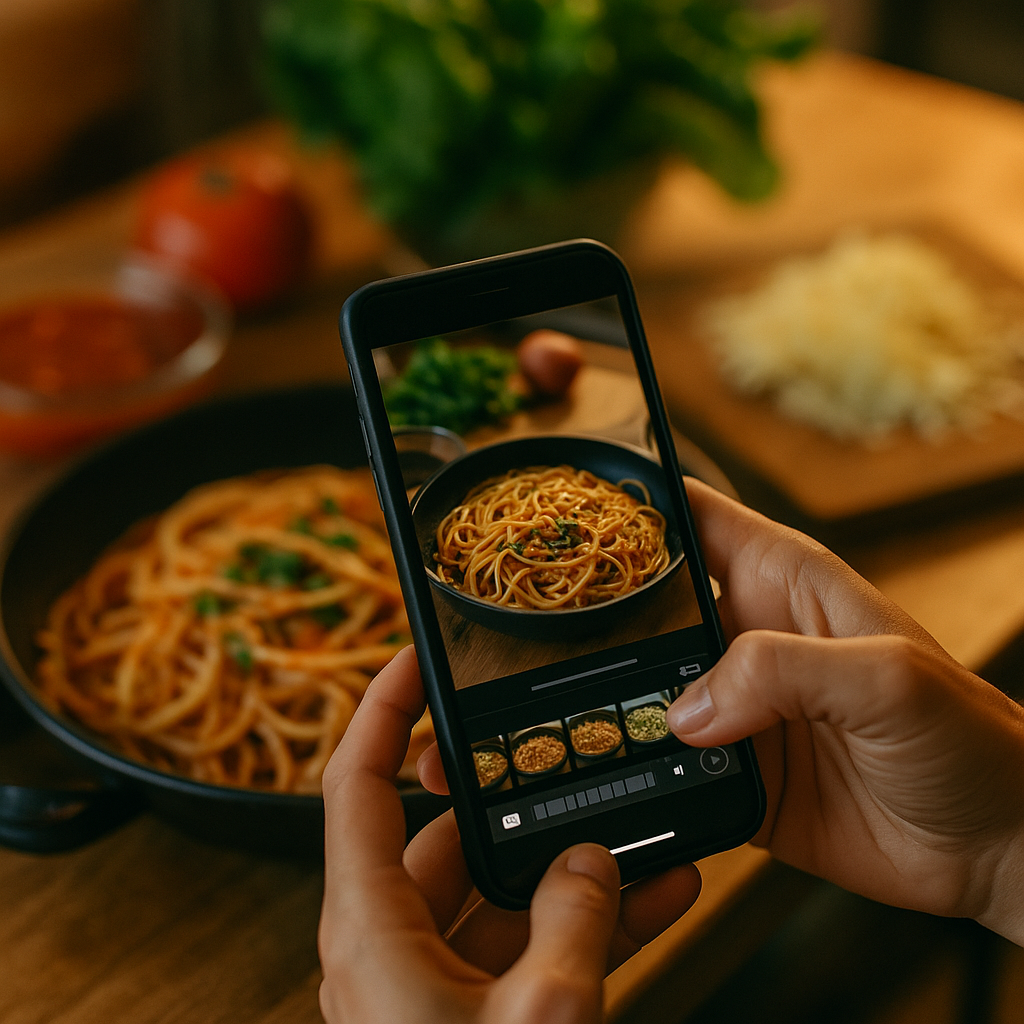
Nostalgia sells. But nostalgia plus a “buy now” button sells better. TikTok videos tagged with classic recipe remixes routinely outperform standard food content by wide margins, and grocery brands are taking notice. The recipe-remix format — where creators take a familiar dish and flip it with a twist, a shortcut, or a viral hack — has become one of the most reliable ways to turn a scroll into a sale. The problem? Most brand briefs for this format are still built like they’re pitching a cooking show, not a commerce engine.
Why Recipe Remixes Convert Where Straight Demos Don’t
A straight product demo says “here’s what this does.” A recipe remix says “here’s what your life could look like if you had this in your pantry.” That’s a completely different psychological entry point, and it matters more than most brand marketers give it credit for.
Classic dishes carry built-in trust. Viewers already know what a grilled cheese, a birthday cake, or a chicken parm is supposed to taste like. When a creator remixes that dish using your product, they’re not asking the audience to trust something new — they’re asking them to trust a twist on something already beloved. That’s a much smaller leap of faith, and it’s why remix content tends to hold watch time better than pure product-first videos.
Recipe-remix content works because it borrows credibility from the dish itself, then transfers that credibility to the product in seconds — not minutes.
There’s also a commerce mechanic at play. Shoppable video units on TikTok Shop and Instagram now let creators tag ingredients directly in a recipe video, meaning the moment someone thinks “I need that pan sauce,” they can act on it without leaving the app. That immediacy is the entire point of pairing this format with shoppable content structures rather than treating it as top-of-funnel awareness only.
What Goes Wrong When Brands Brief This Wrong
Most failed recipe-remix campaigns share the same three sins: over-scripting the twist, under-specifying the shoppable mechanics, and forgetting the dish needs to actually taste good on camera. Let’s take those one at a time.
- Over-scripted twists. If the brief tells the creator exactly how to remix the dish, you lose the thing that made the format work in the first place — creator authorship. Give them the product constraint, not the creative solution.
- Vague shoppable instructions. “Make sure to tag the product” is not a brief. You need exact placement timing, which SKUs to tag, and whether ingredient callouts happen in on-screen text, caption, or spoken CTA.
- No food styling guidance. A remix that looks unappetizing kills conversion no matter how clever the concept is. Briefs need lighting and plating notes, even for casual, “kitchen-counter” aesthetics.
Brands that get this right treat the brief less like a script and more like a set of guardrails. Give the creator a dish, a product-use constraint, and a shoppable checklist. Let them handle the rest.
Building the Brief: Five Non-Negotiable Sections
A workable recipe-remix brief needs five components. Skip any one of them and you’ll end up reshooting, or worse, publishing content that can’t legally or operationally support a “shop now” tag.
1. The Classic-to-Remix Bridge
Name the classic dish explicitly and describe the single twist your product enables. Keep it to one twist. Creators who try to layer three product hacks into one recipe usually end up with a video that feels like an infomercial, and audiences can smell that instantly.
2. Ingredient and SKU Mapping
List every product SKU that needs to appear on camera and in the shoppable tag set. If you’re running this across a bundle — say, a sauce plus a spice blend — specify whether both need individual tags or whether a bundle tag is preferred. This detail alone prevents half the post-production fire drills agencies deal with.
3. Shoppable Tagging Timestamps
Don’t leave tag placement to guesswork. Specify the moment in the video (usually right after the “reveal” bite or plating shot) where the shoppable card should appear. This mirrors best practice from shoppable livestream production standards, where timing the tag to the emotional peak of the content measurably lifts click-through.
4. FTC Disclosure Language
Every recipe-remix video that’s paid or gifted needs a clear, unambiguous disclosure per FTC guidelines. This isn’t optional, and “made in partnership” buried in a caption after three hashtags doesn’t cut it anymore. Require the disclosure spoken or on-screen within the first three seconds, not just in the caption.
5. Usage and Whitelisting Rights
If you plan to run the content as a paid ad or repost it on owned channels, the brief must spell out usage rights and duration up front. Retroactively negotiating usage after a video goes viral is a bad negotiating position for the brand — and creators know it.
Casting: Why Food Skill Level Matters More Than Follower Count
Here’s a mistake brands make constantly: casting creators purely on audience size instead of actual cooking competence. Recipe-remix content lives or dies on whether the food looks and sounds real. A creator with 40,000 highly engaged followers who can actually cook will outperform a 500,000-follower lifestyle influencer awkwardly holding a spatula.
Look for creators who’ve already posted classic-dish content organically. Their audience has opted into that content type, which means your remix video is landing in a feed that’s primed for it rather than fighting for attention against unrelated content. This casting logic mirrors what’s worked well in nano-creator grocery content, where authenticity and niche relevance beat raw reach almost every time.
Also worth asking: does the creator cook the dish start-to-finish in their normal content, or do they rely on quick-cut editing tricks? Both styles can work, but your brief’s shot list needs to match their natural production style. Forcing a fast-cut TikTok chef into a slow, ASMR-style plating sequence rarely lands well.
Measurement: What Actually Predicts Sales Lift
Views are the vanity metric here. Watch-through rate past the “reveal” moment, saves, and shoppable tag click-through are the numbers that actually correlate with sales lift. Recipe content tends to get saved at a much higher rate than average video content, because people bookmark recipes to cook later — track saves separately from likes, since they signal purchase intent more directly.
According to eMarketer, shoppable video formats continue to see rising adoption among CPG and grocery brands as platforms improve in-app checkout friction. Pair that platform momentum with recipe content’s naturally high save rate, and you get a format with an unusually strong case for budget allocation compared to generic UGC.
Track saves and shoppable tag clicks separately from likes and views — those two metrics are the closest proxy you’ll get to purchase intent before the sale actually happens.
Attribution gets messier when creators post across platforms with different shoppable capabilities. TikTok Shop, Instagram Checkout, and Amazon’s creator storefronts all handle tagging differently, so your reporting dashboard needs platform-specific breakdowns rather than one blended number. If you’re running this alongside broader retail media pushes, review how interactive retail media ad units handle attribution, since the logic transfers directly to recipe-remix reporting.
Scaling It: From One-Off Video to Repeatable Series
The real ROI shows up when recipe-remix content becomes a series, not a one-off. A single viral remix video is a nice spike. A monthly “classic dish, remixed” series with a consistent format builds an audience habit, and habitual viewers convert at a higher rate over time because they trust the format itself, not just one creator.
Consider structuring the series the way you’d structure any long-running creator format: consistent intro beat, consistent shoppable tag placement, rotating creators or rotating dishes. This is the same logic behind formats like the multi-part creator series, where repetition builds trust faster than one-off virality.
Don’t ignore the harvesting opportunity either. Every recipe-remix video is also raw material for owned-channel content, retail media creative, and email marketing. Treat the shoot as a footage bank, not a single-use asset, following the same logic outlined in guides on harvesting creator footage for repurposing across paid and owned channels.
A Quick Gut-Check Before You Brief
Before sending any recipe-remix brief out the door, run it through three questions: Does the twist actually require our product, or could a viewer swap in a competitor’s? Is the shoppable tag placed at the emotional peak, not just tacked onto the end? And is the FTC disclosure visible enough to survive a screenshot test? If any answer is shaky, revise before you shoot, not after.
Frequently Asked Questions
FAQs
What makes a dish a good candidate for the recipe-remix format?
Choose dishes with strong nostalgic recognition and a simple, obvious swap point where your product naturally replaces or upgrades an ingredient or step. Overly complex dishes slow down the video and dilute the twist.
How long should a recipe-remix creator video be?
Most high-performing versions run 30 to 90 seconds on TikTok and Reels, long enough to show the classic setup and the twist, short enough to hold watch-through rate to the shoppable moment.
Do recipe-remix videos need FTC disclosure even if the creator was only gifted product?
Yes. Gifted product still requires clear disclosure under FTC guidelines, whether or not cash changed hands. Disclosure should be visible on-screen or spoken, not buried only in the caption.
Which platforms support shoppable tagging for recipe content?
TikTok Shop, Instagram Checkout, and Amazon’s creator storefront tools all support ingredient or product tagging within recipe videos, though tagging mechanics and attribution reporting differ by platform.
How do I measure success beyond views?
Track save rate, shoppable tag click-through, and watch-through past the reveal moment. These correlate more directly with purchase intent than raw view counts.
FAQs
What makes a dish a good candidate for the recipe-remix format?
Choose dishes with strong nostalgic recognition and a simple, obvious swap point where your product naturally replaces or upgrades an ingredient or step. Overly complex dishes slow down the video and dilute the twist.
How long should a recipe-remix creator video be?
Most high-performing versions run 30 to 90 seconds on TikTok and Reels, long enough to show the classic setup and the twist, short enough to hold watch-through rate to the shoppable moment.
Do recipe-remix videos need FTC disclosure even if the creator was only gifted product?
Yes. Gifted product still requires clear disclosure under FTC guidelines, whether or not cash changed hands. Disclosure should be visible on-screen or spoken, not buried only in the caption.
Which platforms support shoppable tagging for recipe content?
TikTok Shop, Instagram Checkout, and Amazon’s creator storefront tools all support ingredient or product tagging within recipe videos, though tagging mechanics and attribution reporting differ by platform.
How do I measure success beyond views?
Track save rate, shoppable tag click-through, and watch-through past the reveal moment. These correlate more directly with purchase intent than raw view counts.
Start with one classic dish, one clear product twist, and one tight shoppable brief — then let the series, not the single video, do the heavy lifting for your ROI.
Top Influencer Marketing Agencies
The leading agencies shaping influencer marketing in 2026
Agencies ranked by campaign performance, client diversity, platform expertise, proven ROI, industry recognition, and client satisfaction. Assessed through verified case studies, reviews, and industry consultations.
Moburst

-
2

The Shelf
Boutique Beauty & Lifestyle Influencer AgencyA data-driven boutique agency specializing exclusively in beauty, wellness, and lifestyle influencer campaigns on Instagram and TikTok. Best for brands already focused on the beauty/personal care space that need curated, aesthetic-driven content.Clients: Pepsi, The Honest Company, Hims, Elf Cosmetics, Pure LeafVisit The Shelf → -
3

Audiencly
Niche Gaming & Esports Influencer AgencyA specialized agency focused exclusively on gaming and esports creators on YouTube, Twitch, and TikTok. Ideal if your campaign is 100% gaming-focused — from game launches to hardware and esports events.Clients: Epic Games, NordVPN, Ubisoft, Wargaming, Tencent GamesVisit Audiencly → -
4

Viral Nation
Global Influencer Marketing & Talent AgencyA dual talent management and marketing agency with proprietary brand safety tools and a global creator network spanning nano-influencers to celebrities across all major platforms.Clients: Meta, Activision Blizzard, Energizer, Aston Martin, WalmartVisit Viral Nation → -
5

The Influencer Marketing Factory
TikTok, Instagram & YouTube CampaignsA full-service agency with strong TikTok expertise, offering end-to-end campaign management from influencer discovery through performance reporting with a focus on platform-native content.Clients: Google, Snapchat, Universal Music, Bumble, YelpVisit TIMF → -
6

NeoReach
Enterprise Analytics & Influencer CampaignsAn enterprise-focused agency combining managed campaigns with a powerful self-service data platform for influencer search, audience analytics, and attribution modeling.Clients: Amazon, Airbnb, Netflix, Honda, The New York TimesVisit NeoReach → -
7

Ubiquitous
Creator-First Marketing PlatformA tech-driven platform combining self-service tools with managed campaign options, emphasizing speed and scalability for brands managing multiple influencer relationships.Clients: Lyft, Disney, Target, American Eagle, NetflixVisit Ubiquitous → -
8

Obviously
Scalable Enterprise Influencer CampaignsA tech-enabled agency built for high-volume campaigns, coordinating hundreds of creators simultaneously with end-to-end logistics, content rights management, and product seeding.Clients: Google, Ulta Beauty, Converse, AmazonVisit Obviously →