


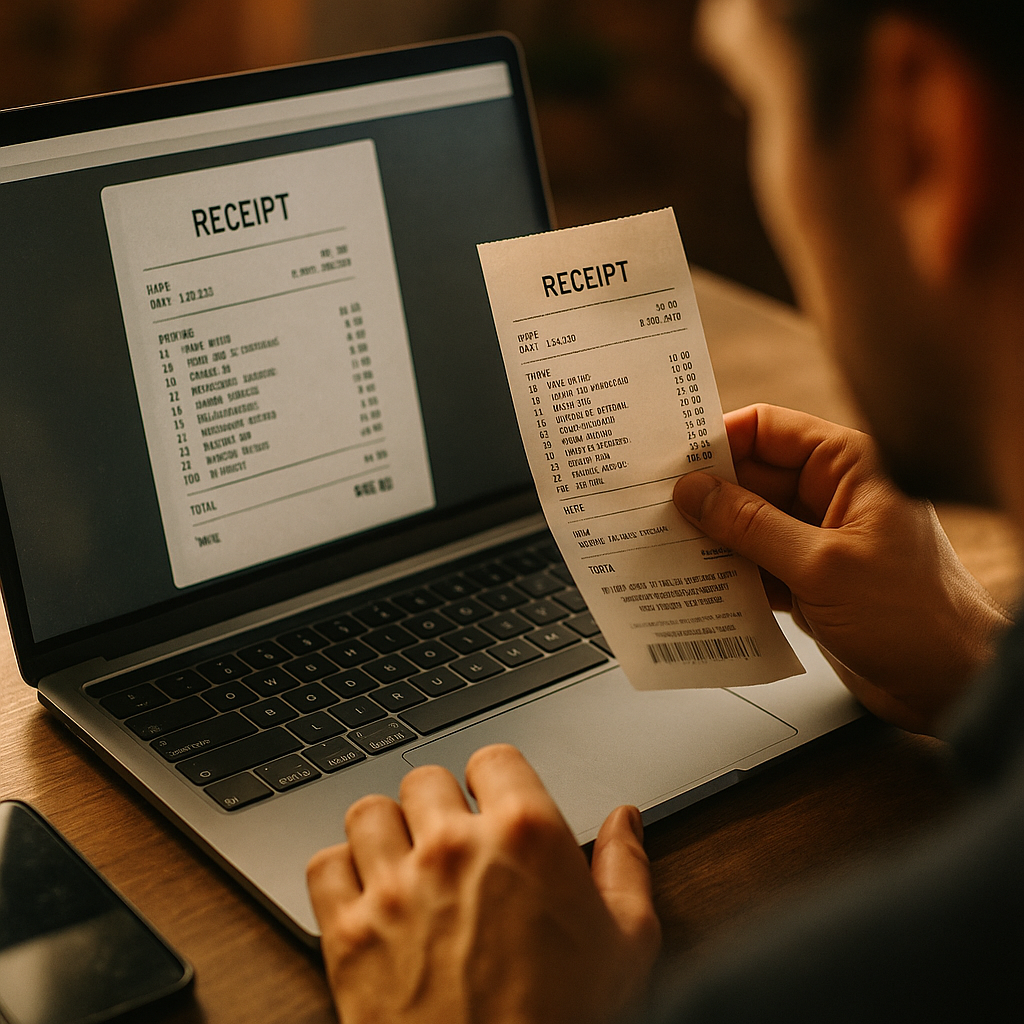
Sixty-three percent of shoppers say they’ve suspected a retailer of showing them a higher price than someone else got for the same item, according to consumer surveys on dynamic pricing perception. They’re usually right. And now creators are filming the proof, live, on checkout screens, in what’s become known as the algorithmic receipt format. If your brand hasn’t thought through how to brief this safely, you’re already behind.
What Is the Algorithmic Receipt Format?
Picture a creator opening two phones side by side. One is logged into a rewards account. One is a fresh guest checkout. Same cart, same moment, different prices. They screen-record both, split the frame, and let the receipt do the talking. No script, no hard sell. Just a timestamped checkout screen showing a price gap that the algorithm created and the creator merely exposed.
This isn’t the same as the split-screen price comparison content that compares two competing retailers. The algorithmic receipt format stays inside one brand’s ecosystem. It’s about showing how your pricing engine treats a loyalty member versus a new visitor, or a mobile app user versus a desktop shopper, or someone who abandoned a cart three days ago versus someone shopping for the first time. The comparison is internal. That’s what makes it both more credible to viewers and more sensitive for legal teams.
The format works because it removes the creator’s opinion from the equation entirely. A checkout screen is not a claim, it’s a receipt. And receipts are hard to argue with.
Why This Format Is Suddenly Everywhere
Dynamic pricing isn’t new. Airlines and hotels have run algorithmic pricing for decades. What’s new is the transparency demand. Shoppers raised on price-tracking browser extensions and Camelizer-style tools have gotten comfortable treating “the price” as a variable, not a fact. When a creator films that variability in real time, it validates something audiences already suspected but rarely saw documented.
There’s also a trust dividend for brands willing to show this openly. Retail media spend keeps climbing, per eMarketer’s retail media forecasts, and much of that spend depends on consumers believing personalized offers are actually beneficial to them, not extractive. A creator who says “here’s why my price is lower, and here’s how you can get it too” does more for loyalty program signups than a banner ad ever will. Brands that treat dynamic pricing as a dirty secret are missing a genuine acquisition angle.
Compare this to the momentum behind our algorithmic pricing explainer content, which walks audiences through the mechanics rather than showing a live screen capture. The receipt format is the natural next step: less explaining, more showing.
The Legal Line You Cannot Blur
Here’s where marketing leads need to slow down. The FTC has been explicit that endorsements involving pricing claims must be accurate, substantiated, and not misleading about material terms. A checkout screen showing $42 versus $58 is a factual claim about price. If that price gap isn’t reproducible by an ordinary viewer under normal conditions, you have a problem. Not a “we’ll deal with it if someone complains” problem. A “this could trigger a complaint to the FTC” problem.
Three things have to be true before you brief this format:
- The lower price must be genuinely accessible to the audience the creator is speaking to, not a market-test price shown to 2% of users.
- The conditions creating the price difference (loyalty tier, app-only discount, location, cart abandonment retargeting) must be disclosed on screen, not buried in a caption.
- The creator must not imply the higher price is a scam or “ripoff” unless legal has approved that characterization. Algorithmic pricing is legal. Calling it deceptive on camera, without evidence, is not the creator’s call to make.
This is very similar terrain to what we’ve mapped in the price-tag reveal format guide, where the core tension is the same: showing a real number on screen is powerful, but it’s also a factual claim your legal team now owns.
Where Brands Get This Wrong
Most compliance failures in this format aren’t malicious. They’re operational. A brand approves a creator brief in March. The pricing algorithm updates in May. The content, still live, now shows a price gap that no longer exists. Nobody flagged it because nobody built in a content-refresh trigger tied to pricing engine changes.
Another common failure: the brand assumes the creator will explain the “why” behind the price gap accurately, without giving them the actual mechanism. Loyalty discount? Regional cost-of-living adjustment? First-purchase incentive? If you don’t hand the creator the real answer, they’ll guess, and their guess becomes the on-record explanation your legal team has to defend later.
Briefing the Format Without Losing the Authenticity
The temptation is to over-script this. Don’t. The entire appeal of the algorithmic receipt format is that it looks unscripted, like the creator stumbled onto something. A tightly worded script kills that. Instead, brief the guardrails and let the delivery stay loose.
Give creators a short reference sheet, not a script:
- The exact, current price conditions (what triggers the lower price, and confirm it’s live at time of filming).
- One approved sentence explaining the mechanism, which they can paraphrase but not contradict.
- A required on-screen disclosure of the discount condition (e.g., “with rewards account” text overlay, not just spoken).
- A ban on words like “scam,” “ripoff,” or “they’re screwing you,” regardless of how viral that framing might be.
- A refresh clause: content gets pulled or re-filmed if the pricing structure changes materially.
This is nearly identical in structure to how we recommend handling the split-screen price comparison format, just applied to a single retailer’s internal pricing logic instead of a competitor set. If your team already has that workflow built, adapting it here is mostly a matter of updating the disclosure language.
Nano and Micro Creators Are Better Suited to This Than Celebrities
There’s a credibility asymmetry here worth naming. A creator with 8,000 followers filming their own actual checkout screen reads as documentation. A creator with 2 million followers doing the same thing reads as a stunt, especially if their account looks like it was gifted a “special” price for the video. Audiences aren’t dumb. They know brand deals get preferential treatment.
If you’re running this format, weight it toward smaller creators with genuine account histories. The format’s entire value proposition rests on “this could be you,” and that only lands if the creator’s account looks like a regular customer’s account. We’ve seen the same dynamic play out in nano-creator aisle tours and in grocery-aisle walkthrough briefs: smaller accounts read as proof, bigger accounts read as performance.
Measuring Whether It Actually Works
Standard engagement metrics undersell this format. Watch instead for:
- Loyalty program signups attributed to the content window, tracked via unique promo codes or UTM-tagged app download links.
- Saves-to-views ratio. This format tends to get bookmarked for later reference rather than liked in the moment, since viewers want to replicate the checkout, not just watch it.
- Comment sentiment specifically around fairness language. “Wait so I can get this too?” is the comment you want. “This is rigged” is the comment that should trigger a legal review.
- Support ticket volume tied to pricing confusion in the days following a post. A spike suggests your disclosure wasn’t clear enough on screen.
Tools like Sprout Social can help track comment-level sentiment at scale, which matters more here than in most formats because the downside risk (a viral “this brand is scamming people” narrative) is asymmetric to the upside.
A single mislabeled price gap, screenshotted and re-shared without context, can outlive the original post by months. Build the disclosure right the first time.
How This Fits Into a Broader Transparency Content Strategy
The algorithmic receipt format works best as one piece in a portfolio, not a standalone campaign. Brands running FTC-conscious transparency content are increasingly pairing it with formats like the ghost ad confession format or two-truths-and-a-lie briefs, all of which share the same underlying bet: audiences reward brands that show their work, even when the work is a little uncomfortable.
Consumer trust research consistently shows transparency outperforms polish. HubSpot’s ongoing marketing benchmark research has repeatedly found authenticity signals outperform production value in influencer content, which is exactly why the shaky, unedited checkout screen recording tends to beat the polished brand video on this specific topic.
Don’t greenlight this format until legal has signed off on the exact price mechanism being shown, and don’t let a creator explain “why” in their own words without an approved reference sentence. Get those two things locked, and the algorithmic receipt format becomes one of the most trust-building assets in your content mix instead of a liability waiting to surface.
FAQs
What is the algorithmic receipt format in influencer marketing?
It’s a content style where creators film real checkout screens, often side by side, to show how dynamic or personalized pricing changes based on account status, device, or shopping history. The “receipt” itself acts as proof rather than a spoken claim.
Is showing dynamic pricing on camera legal?
Yes, dynamic pricing itself is legal. The risk comes from how it’s presented. If the price shown isn’t genuinely accessible to viewers, or if the creator mischaracterizes the pricing as deceptive without evidence, that crosses into FTC-relevant misrepresentation territory.
How is this different from the split-screen price comparison format?
Split-screen price comparisons typically pit one retailer against a competitor. The algorithmic receipt format stays within a single brand’s own pricing system, comparing what different customer segments pay for the same product.
Should brands use large creators or smaller ones for this format?
Nano and micro creators tend to perform better here because their accounts read as genuine customer accounts rather than staged brand assets, which is essential to the format’s credibility.
What disclosure is required when showing a price difference?
The condition creating the lower price (loyalty membership, app-only discount, first-purchase offer, etc.) should be shown as on-screen text, not just mentioned verbally, and it needs to reflect the live, current pricing structure at time of filming.
How often should this content be reviewed after publishing?
Pricing algorithms change. Build a refresh trigger into your workflow so content gets pulled or re-filmed whenever the underlying pricing mechanism it depicts is updated.
Top Influencer Marketing Agencies
The leading agencies shaping influencer marketing in 2026
Agencies ranked by campaign performance, client diversity, platform expertise, proven ROI, industry recognition, and client satisfaction. Assessed through verified case studies, reviews, and industry consultations.
Moburst

-
2

The Shelf
Boutique Beauty & Lifestyle Influencer AgencyA data-driven boutique agency specializing exclusively in beauty, wellness, and lifestyle influencer campaigns on Instagram and TikTok. Best for brands already focused on the beauty/personal care space that need curated, aesthetic-driven content.Clients: Pepsi, The Honest Company, Hims, Elf Cosmetics, Pure LeafVisit The Shelf → -
3

Audiencly
Niche Gaming & Esports Influencer AgencyA specialized agency focused exclusively on gaming and esports creators on YouTube, Twitch, and TikTok. Ideal if your campaign is 100% gaming-focused — from game launches to hardware and esports events.Clients: Epic Games, NordVPN, Ubisoft, Wargaming, Tencent GamesVisit Audiencly → -
4

Viral Nation
Global Influencer Marketing & Talent AgencyA dual talent management and marketing agency with proprietary brand safety tools and a global creator network spanning nano-influencers to celebrities across all major platforms.Clients: Meta, Activision Blizzard, Energizer, Aston Martin, WalmartVisit Viral Nation → -
5

The Influencer Marketing Factory
TikTok, Instagram & YouTube CampaignsA full-service agency with strong TikTok expertise, offering end-to-end campaign management from influencer discovery through performance reporting with a focus on platform-native content.Clients: Google, Snapchat, Universal Music, Bumble, YelpVisit TIMF → -
6

NeoReach
Enterprise Analytics & Influencer CampaignsAn enterprise-focused agency combining managed campaigns with a powerful self-service data platform for influencer search, audience analytics, and attribution modeling.Clients: Amazon, Airbnb, Netflix, Honda, The New York TimesVisit NeoReach → -
7

Ubiquitous
Creator-First Marketing PlatformA tech-driven platform combining self-service tools with managed campaign options, emphasizing speed and scalability for brands managing multiple influencer relationships.Clients: Lyft, Disney, Target, American Eagle, NetflixVisit Ubiquitous → -
8

Obviously
Scalable Enterprise Influencer CampaignsA tech-enabled agency built for high-volume campaigns, coordinating hundreds of creators simultaneously with end-to-end logistics, content rights management, and product seeding.Clients: Google, Ulta Beauty, Converse, AmazonVisit Obviously →