


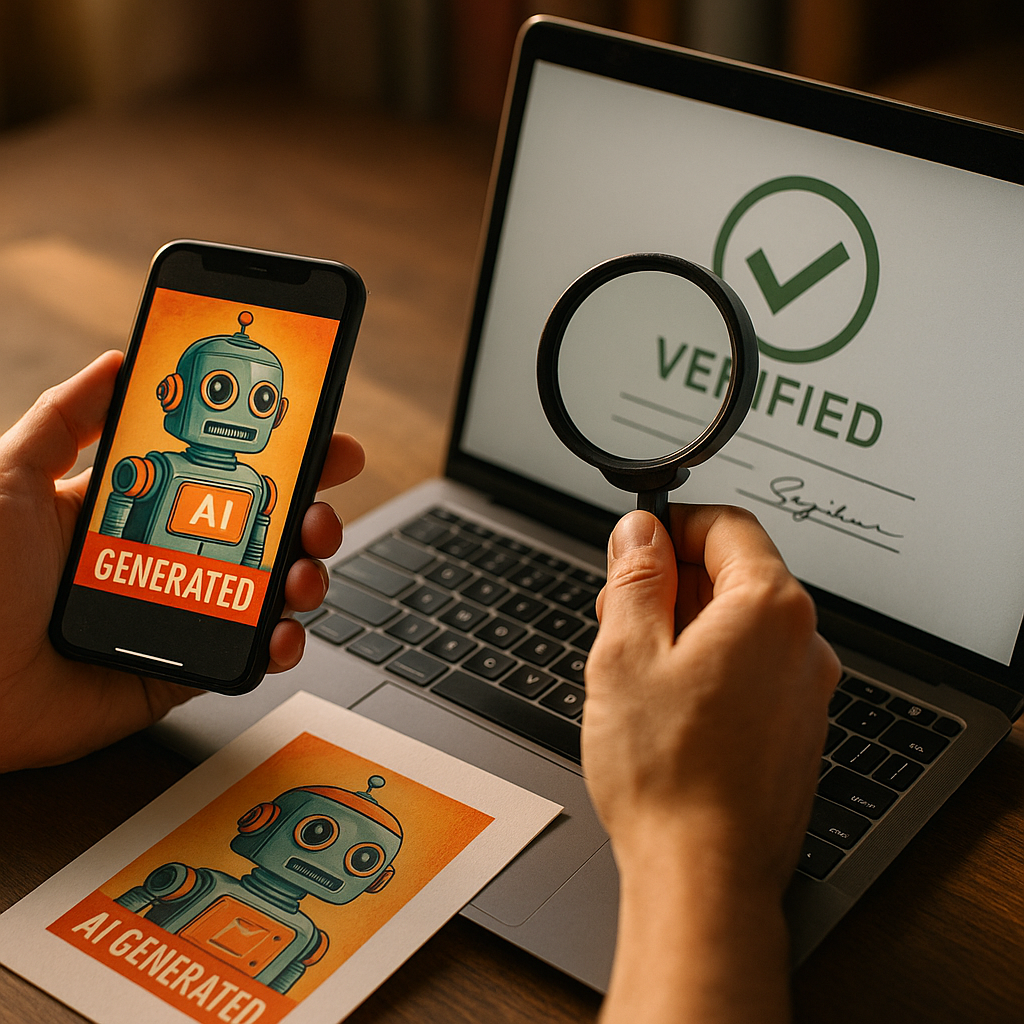
YouTube now labels “unoriginal” content for demonetization review. Substack just told writers their AI-generated posts won’t get algorithmic distribution. If your influencer program can’t prove a human made the content, you’re about to lose reach, revenue, or both. The AI-slop crackdown isn’t a content moderation footnote — it’s a new compliance layer brands need in every creator contract.
Why Platforms Suddenly Care Who (or What) Made the Content
Six months ago, “AI-generated” was a feature. Now it’s a red flag. YouTube’s updated guidance on “inauthentic content” specifically calls out mass-produced, repetitive AI videos that add no commentary or editorial value. Substack’s policy shift is subtler but just as consequential: newsletters flagged as low-effort AI output get quietly deprioritized in recommendations and Notes distribution.
The trigger is obvious if you’ve spent any time in your own feed lately. Faceless AI slideshow channels. Newsletter roundups spun from press releases with zero original reporting. Product “reviews” that read like they were generated from a spec sheet, because they were. Platforms are protecting user trust, and increasingly, protecting themselves from regulatory scrutiny around deceptive endorsement practices.
The platforms aren’t banning AI tools. They’re banning the appearance of AI without disclosed human authorship — and that distinction is where most brand influencer contracts currently have zero language at all.
For brands, this changes the risk calculus on every UGC and creator deal. If a sponsored video gets flagged as low-value AI content, your brand mention disappears from recommendations right along with it. Worse, if it’s later revealed a “creator” partnership was actually an AI content farm wearing a human’s name, that’s a disclosure and trust problem that lands squarely on the brand’s desk, not just the creator’s.
What “Creator-Authored” Actually Means Now
Here’s the uncomfortable part: most brands never defined “creator-authored” in their contracts. It was assumed. A creator posts under their name, it’s their content. That assumption doesn’t hold anymore.
Platforms are drawing a distinction between three tiers of content, and brands need to know which one they’re paying for:
- Human-originated, AI-assisted: a creator writes the outline, records the footage, uses AI for captions or editing polish. Generally fine, and increasingly disclosed voluntarily.
- AI-drafted, human-reviewed: a creator prompts an LLM for a script, edits it, delivers it in their own voice. This is the gray zone platforms are actively scrutinizing.
- Fully synthetic: no meaningful human input beyond a prompt. This is what YouTube’s policy and Substack’s distribution changes are designed to catch and suppress.
The problem for brands running influencer programs at scale: you often don’t know which tier you’re getting. A creator agency delivering 40 pieces of “authentic UGC” a month may be running half of it through AI generation tools without disclosure, because nobody asked them not to.
The Verification Playbook: Five Checks Before You Pay an Invoice
Treat authenticity verification like you’d treat a fraud check on paid media. It’s operational, not philosophical.
1. Require raw asset delivery, not just final cuts
Ask creators to submit unedited camera roll footage or original draft documents alongside the polished final. AI-generated video has telltale signs in raw form — inconsistent lighting logic, uncanny motion artifacts, absent B-roll continuity — that get smoothed over in final edits. This single requirement filters out a shocking share of fully synthetic submissions.
2. Build an authorship clause into every contract
Your creator agreements should explicitly state whether AI tools were used, where, and how much. Not a blanket ban (that’s unrealistic and increasingly out of step with how creators actually work) but a disclosure requirement with specificity: script generation, voice cloning, visual generation, editing assistance. Treat it the same way you’d treat an FTC disclosure requirement — because functionally, it’s becoming one.
3. Cross-check platform standing before onboarding
Before signing a creator, check their channel or newsletter’s current standing on the platform. Has content been flagged, demonetized, or throttled recently? Platform-side authenticity signals are now a legitimate part of creator vetting, right alongside audience demographics and engagement rate.
4. Use detection tools as a second opinion, not a verdict
AI-content detectors (from Originality.ai to platform-native tools) are imperfect. False positive rates on human-written text still run uncomfortably high. Use them to flag content for human review, not to auto-reject. A brand that auto-terminates creator relationships based solely on a detector score is inviting disputes it can’t win.
5. Audit a sample, not everything
You don’t need to forensically examine every piece of UGC. Sample 10-15% of deliverables per campaign for deeper authenticity review, weighted toward higher-spend creators and newer relationships where trust hasn’t been established yet.
Brands running high-volume UGC programs should budget authenticity auditing the same way they budget influencer fraud detection: a fixed percentage of program spend, reviewed quarterly, not left to chance.
Where This Hits Hardest: High-Volume UGC and Affiliate Programs
The risk isn’t evenly distributed. Brands running boutique, high-touch creator partnerships with five or ten well-known names have less exposure. It’s the high-volume programs, think TikTok Shop affiliate networks, YouTube Shorts commerce pushes, or retail media UGC pipelines, where AI-slop risk concentrates.
Why? Volume creates pressure to cut corners. When a brand is running affiliate deals across hundreds of creators, quality control naturally loosens. Some percentage of that long tail is going to lean on AI generation tools to hit posting quotas, especially in categories like beauty dupes, tech reviews, and home goods where scripted “reaction” content is easy to templatize.
The same dynamic applies to YouTube Shorts commerce content, where discovery-row placement depends heavily on platform trust signals. If YouTube’s authenticity filters catch a wave of AI-generated Shorts in your affiliate network, your entire commerce discovery presence takes a hit, not just the flagged videos.
Retail media programs face a parallel problem. Shoppable video pilots on Amazon and Walmart depend on shopper trust in the reviewer. An AI-slop scandal in that context isn’t just a platform penalty, it’s a brand safety and consumer trust event that regulators watching influencer marketing (per FTC endorsement guidance) are increasingly primed to notice.
Substack’s Angle Is Different, and Brands Sponsoring Newsletters Should Care
Substack’s crackdown matters for a narrower but growing set of brands: those running newsletter sponsorships as part of B2B or lifestyle content strategy. Substack has built its brand identity on “real writers, real voices.” An AI-slop wave threatens that positioning directly, which is why the platform is moving faster on distribution penalties than on outright bans.
For sponsors, this means due diligence on newsletter partners now needs an authorship check, not just a subscriber count and open rate. Ask writers directly: what’s your AI tool usage, and how do you disclose it to readers? A writer who’s transparent about using AI for research synthesis but writes final copy themselves is a lower-risk partner than one who’s cagey about the question.
This mirrors a trend already playing out on LinkedIn’s creator marketplace for B2B sponsorships, where buyer trust in “thought leadership” content depends heavily on perceived authentic authorship. B2B audiences, in particular, are unforgiving of content that smells synthetic. It undermines the exact credibility the sponsorship was meant to borrow.
Building This Into Your Creator Ops, Not Just Your Legal Team’s Job
The temptation is to hand this problem to legal and call it solved with a contract clause. Don’t. Authenticity verification needs to live in creator ops alongside your existing QA process, similar to how brands already handle identity verification in merchant onboarding.
Practically, that means:
- Adding an authorship disclosure field to your creator briefing template, right alongside deliverable specs and posting windows.
- Training your influencer marketing team (not just legal) to spot common AI content markers, so review happens at the campaign management level, not just at contract signing.
- Building authenticity checks into your existing fraud and compliance dashboard, rather than creating a separate, easily-forgotten process.
- Revisiting payout structures. Programs using hybrid payout models tied to performance should confirm those payouts aren’t inadvertently rewarding high-volume, low-authenticity content producers.
None of this requires banning AI tools from your creator programs. Most working creators use AI somewhere in their workflow now, for research, captioning, thumbnail generation, editing. That’s not the problem platforms are policing. The problem is undisclosed, low-value, mass-produced content masquerading as authentic creator work, and that’s exactly the gap your contracts and QA process need to close.
FAQs
Frequently Asked Questions
What counts as “AI slop” under YouTube’s and Substack’s new policies?
Generally, it’s mass-produced content with little to no original human input: repetitive AI-generated videos, spun articles, or synthetic voiceovers layered over stock or generated visuals with no editorial commentary added. Platforms are targeting volume and lack of originality, not AI tool usage itself.
Can brands still use AI-assisted content in influencer campaigns?
Yes. AI-assisted content, where a human creator originates, reviews, and delivers the final work, is not the target of these crackdowns. The risk is in fully synthetic or undisclosed AI content presented as authentic creator work.
How can brands verify a creator’s content is human-authored?
Request raw or unedited source assets, add authorship disclosure clauses to contracts, check the creator’s platform standing before onboarding, and use AI-detection tools as a screening aid rather than a final verdict.
Does this affect UGC and affiliate programs more than traditional sponsorships?
Yes. High-volume programs, like TikTok Shop affiliate networks or YouTube Shorts commerce content, carry more exposure because quality control is harder to maintain at scale, increasing the odds of undisclosed AI-generated submissions.
What happens if a brand’s sponsored content gets flagged as AI slop?
Flagged content typically loses recommendation and distribution reach, which can tank campaign performance. Repeated flags can affect the creator’s channel standing broadly, indirectly damaging every brand partnership tied to that channel.
Is there legal risk beyond platform penalties?
Potentially. Undisclosed synthetic content presented as an authentic endorsement can raise concerns under FTC endorsement guidelines, particularly if consumers are misled about who or what is actually reviewing a product.
The playbook is simple even if the enforcement isn’t: document authorship, verify before you pay, and treat authenticity like the compliance issue it now is. Brands that build this into creator ops now will spend less time explaining flagged campaigns to leadership later.
Top Influencer Marketing Agencies
The leading agencies shaping influencer marketing in 2026
Agencies ranked by campaign performance, client diversity, platform expertise, proven ROI, industry recognition, and client satisfaction. Assessed through verified case studies, reviews, and industry consultations.
Moburst

-
2

The Shelf
Boutique Beauty & Lifestyle Influencer AgencyA data-driven boutique agency specializing exclusively in beauty, wellness, and lifestyle influencer campaigns on Instagram and TikTok. Best for brands already focused on the beauty/personal care space that need curated, aesthetic-driven content.Clients: Pepsi, The Honest Company, Hims, Elf Cosmetics, Pure LeafVisit The Shelf → -
3

Audiencly
Niche Gaming & Esports Influencer AgencyA specialized agency focused exclusively on gaming and esports creators on YouTube, Twitch, and TikTok. Ideal if your campaign is 100% gaming-focused — from game launches to hardware and esports events.Clients: Epic Games, NordVPN, Ubisoft, Wargaming, Tencent GamesVisit Audiencly → -
4

Viral Nation
Global Influencer Marketing & Talent AgencyA dual talent management and marketing agency with proprietary brand safety tools and a global creator network spanning nano-influencers to celebrities across all major platforms.Clients: Meta, Activision Blizzard, Energizer, Aston Martin, WalmartVisit Viral Nation → -
5

The Influencer Marketing Factory
TikTok, Instagram & YouTube CampaignsA full-service agency with strong TikTok expertise, offering end-to-end campaign management from influencer discovery through performance reporting with a focus on platform-native content.Clients: Google, Snapchat, Universal Music, Bumble, YelpVisit TIMF → -
6

NeoReach
Enterprise Analytics & Influencer CampaignsAn enterprise-focused agency combining managed campaigns with a powerful self-service data platform for influencer search, audience analytics, and attribution modeling.Clients: Amazon, Airbnb, Netflix, Honda, The New York TimesVisit NeoReach → -
7

Ubiquitous
Creator-First Marketing PlatformA tech-driven platform combining self-service tools with managed campaign options, emphasizing speed and scalability for brands managing multiple influencer relationships.Clients: Lyft, Disney, Target, American Eagle, NetflixVisit Ubiquitous → -
8

Obviously
Scalable Enterprise Influencer CampaignsA tech-enabled agency built for high-volume campaigns, coordinating hundreds of creators simultaneously with end-to-end logistics, content rights management, and product seeding.Clients: Google, Ulta Beauty, Converse, AmazonVisit Obviously →