


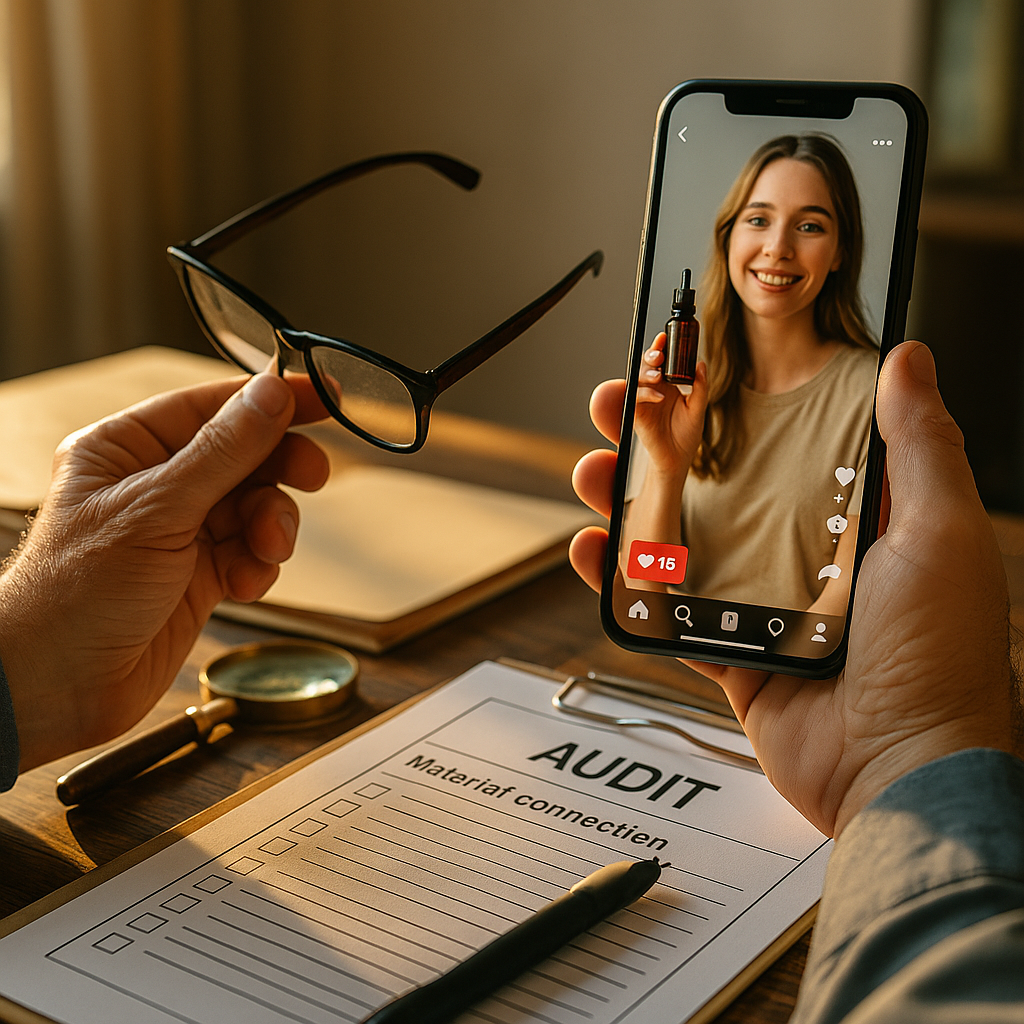
The FTC has settled more influencer disclosure cases in the past two years than in the previous decade combined. Yet most brands still treat creator whitelisting agreements as media contracts, not disclosure instruments. That gap is where enforcement risk lives.
Whitelisting — letting a brand run paid ads through a creator’s handle — has quietly become one of the murkiest zones in influencer marketing law. The creator didn’t necessarily “endorse” the ad copy. The brand didn’t necessarily disclose the arrangement to viewers. And the FTC’s material connection standard, which used to be a fairly narrow test, has stretched to cover exactly this kind of ambiguity.
Why Whitelisting Sits in the FTC’s Blind Spot
Whitelisting emerged as a performance-marketing tactic, not a disclosure one. Brands liked it because ads running through a creator’s handle outperform brand-handle ads on trust and engagement. Media buyers liked it because it plugged into existing paid social infrastructure. Nobody built it with the Endorsement Guides in mind.
That’s the problem. The FTC’s material connection test asks a simple question: would knowing about the brand-creator relationship affect how a consumer weighs the message? Under whitelisting, the answer is almost always yes — the entire value proposition is borrowing the creator’s perceived authenticity. Yet the ad often runs without the creator’s name attached to a visible disclosure, sometimes without the creator even reviewing the final creative.
If the ad exists because of the creator’s likeness and audience trust, a material connection exists — regardless of whether the creator wrote a single word of the copy.
The Standard Has Expanded. Most Contracts Haven’t.
The FTC’s 2023 revised Endorsement Guides and subsequent enforcement actions have made clear that “material connection” now covers a wider set of arrangements than the classic sponsored-post scenario. Business use of a creator’s identity, paid amplification through their handle, and algorithmic boosting of creator-attributed content can all trigger disclosure duty, even when the underlying content was brand-authored.
Compare that to a typical whitelisting agreement drafted three or four years ago. Most were built around usage rights, ad account access, and revocation windows. Disclosure obligations, if present at all, were a single boilerplate line. Few contracts specify who is responsible for the #ad tag when the brand controls the ad account and the creator has no visibility into the final placement.
That mismatch is exactly what an audit needs to catch. For related contract language, see our creator whitelisting agreement audit guidance ahead of renewal season, and the broader FTC liability audit framework for scripted content.
What Counts as Material Connection Now?
Practitioners often assume material connection only applies to payment. It doesn’t. The FTC’s guidance and enforcement history point to a broader set of triggers:
- Payment or free product — the classic trigger, still the most common.
- Employment or equity relationships — including affiliate or ambassador arrangements layered on top of whitelisting.
- Family or personal relationships between the creator and brand principals.
- Early access or exclusive perks tied to running the campaign.
- Usage of likeness for paid distribution, even without new content creation — this is the whitelisting-specific trigger most contracts miss.
Notice that last one. It’s the crux of the whitelisting problem: the “endorsement” isn’t the organic post, it’s the paid media unit built on top of it. If your legal team is only auditing the original content for disclosure compliance, you’re auditing the wrong layer.
Building the Audit Framework
A defensible audit isn’t a checklist you run once. It’s a recurring legal review tied to contract renewal cycles, campaign launches, and platform policy changes. Here’s the structure we recommend to brand legal and marketing ops teams.
1. Map the Chain of Custody
Start by tracing every step between creator content and paid placement: who owns the ad account, who approves creative, who controls the disclosure tag, and who has final sign-off before spend goes live. Whitelisting agreements frequently hand ad-account control to the brand while leaving disclosure responsibility undefined. That silence is the audit’s first flag.
2. Test Disclosure Persistence Across Formats
A disclosure that’s visible in the organic post can disappear when the creative is repurposed into a Reels ad, a Spark Ad, or a carousel unit on Meta. Platforms handle disclosure tools differently — Meta’s branded content tools and TikTok’s ad disclosure settings don’t always carry through when brands rebuild the unit inside their own ad account. Your audit needs to check every downstream format, not just the source post.
3. Assign Contractual Ownership of Disclosure Risk
This is the clause most whitelisting agreements get wrong. Someone has to own the disclosure obligation in writing — not “the parties will comply with FTC guidelines” boilerplate, but a named party with a defined mechanism (who adds the tag, in what format, verified by whom). Indemnification language should mirror the logic used in indemnification clauses for AI-driven media buying, where responsibility follows control, not intent.
4. Cross-Reference Script and Creative Approval Depth
If the brand scripts or heavily edits the creator’s content before whitelisting it, that approval depth itself can shift FTC liability toward the brand, independent of the whitelisting question. Our analysis on when script approval shifts FTC liability is worth running in parallel with any whitelisting audit, since the two risks compound rather than cancel out.
5. Check Promo Code and Pricing Claims Riding on Whitelisted Ads
Whitelisted ads frequently carry promo codes or “as low as” pricing claims lifted from the creator’s original post. If that pricing claim wasn’t accurate at the time the ad scaled, you’ve now got a second violation stacked on the disclosure one. The deceptive-pricing disclosure standard for promo codes is a useful companion check here, particularly for retail and CPG whitelisting campaigns.
Every dollar of paid amplification behind an undisclosed relationship is a dollar of measurable, quantifiable enforcement exposure — not theoretical risk.
What Enforcement Actually Looks Like
The FTC doesn’t need a consumer complaint to act. Its staff can and does monitor paid social directly, and recent settlements have named both the brand and, in some cases, the agency of record. Penalties under the revised Guides can scale with the reach and spend behind the ad — meaning a whitelisted campaign with six figures in paid amplification carries meaningfully more exposure than an organic post with the same disclosure gap.
There’s also a reputational cost that outlasts any fine. FTC enforcement actions get picked up by trade press and consumer advocacy groups fast, and “brand paid to hide it was an ad” is a headline that sticks. Industry data from eMarketer continues to show influencer marketing spend climbing year over year, which means the base of whitelisted paid media the FTC could scrutinize is also growing. More spend, more scrutiny surface area.
Where This Intersects With AI-Generated Creative
Whitelisting audits can’t ignore the AI layer anymore. Brands increasingly use AI tools to remix creator content into new ad variants, sometimes without re-running disclosure checks on each variant. The AI remix consent clause framework is directly relevant here: if your whitelisting agreement doesn’t address AI-generated derivatives, you have an unaddressed disclosure gap every time a variant gets produced. Similarly, the AI scriptwriting material connection test applies whenever brand-side AI tools draft copy that a creator’s handle then distributes as paid media.
Practical Steps for the Next Contract Cycle
- Add a disclosure-persistence clause requiring tags to survive reformatting into any paid unit.
- Name a single accountable party for disclosure verification before spend activation.
- Require creator sign-off (even lightweight) on final paid creative, not just the organic draft.
- Build a rolling audit cadence tied to renewal dates rather than a one-time legal review.
- Cross-check promo codes, pricing claims, and AI-generated variants each time a whitelisted ad scales spend.
None of this requires slowing down media buying. It requires making disclosure ownership as explicit as usage rights and revocation terms already are in most contracts. Treat it as a checklist gap, not a strategic redesign.
Run the audit now, before Q4 renewal cycles lock in another year of undefined disclosure ownership across your whitelisted campaigns.
FAQs
What is a material connection under FTC rules?
A material connection is any relationship between a brand and an endorser that could affect how a reasonable consumer weighs the endorsement’s credibility, including payment, free products, employment, or paid amplification of the endorser’s content.
Does whitelisting always require disclosure?
In nearly all cases, yes. If a brand pays to distribute an ad through a creator’s handle, the underlying relationship is material to how consumers interpret the content, triggering disclosure obligations under the Endorsement Guides.
Who is liable when a whitelisted ad lacks proper disclosure, the brand or the creator?
The FTC can pursue either party, and recent enforcement has named brands and agencies directly. Liability typically follows control: whoever manages the ad account and approves final creative bears the greater share of risk.
How often should brands audit whitelisting agreements?
At minimum, at every contract renewal and before any major campaign scale-up. Platform policy changes and new FTC guidance can also trigger an off-cycle audit.
Does AI-generated ad creative change the disclosure analysis?
Yes. AI-remixed or AI-scripted variants of creator content can each carry independent disclosure obligations, and brands should verify disclosure persistence across every AI-generated derivative before it runs as paid media.
FAQs
Top Influencer Marketing Agencies
The leading agencies shaping influencer marketing in 2026
Agencies ranked by campaign performance, client diversity, platform expertise, proven ROI, industry recognition, and client satisfaction. Assessed through verified case studies, reviews, and industry consultations.
Moburst

-
2

The Shelf
Boutique Beauty & Lifestyle Influencer AgencyA data-driven boutique agency specializing exclusively in beauty, wellness, and lifestyle influencer campaigns on Instagram and TikTok. Best for brands already focused on the beauty/personal care space that need curated, aesthetic-driven content.Clients: Pepsi, The Honest Company, Hims, Elf Cosmetics, Pure LeafVisit The Shelf → -
3

Audiencly
Niche Gaming & Esports Influencer AgencyA specialized agency focused exclusively on gaming and esports creators on YouTube, Twitch, and TikTok. Ideal if your campaign is 100% gaming-focused — from game launches to hardware and esports events.Clients: Epic Games, NordVPN, Ubisoft, Wargaming, Tencent GamesVisit Audiencly → -
4

Viral Nation
Global Influencer Marketing & Talent AgencyA dual talent management and marketing agency with proprietary brand safety tools and a global creator network spanning nano-influencers to celebrities across all major platforms.Clients: Meta, Activision Blizzard, Energizer, Aston Martin, WalmartVisit Viral Nation → -
5

The Influencer Marketing Factory
TikTok, Instagram & YouTube CampaignsA full-service agency with strong TikTok expertise, offering end-to-end campaign management from influencer discovery through performance reporting with a focus on platform-native content.Clients: Google, Snapchat, Universal Music, Bumble, YelpVisit TIMF → -
6

NeoReach
Enterprise Analytics & Influencer CampaignsAn enterprise-focused agency combining managed campaigns with a powerful self-service data platform for influencer search, audience analytics, and attribution modeling.Clients: Amazon, Airbnb, Netflix, Honda, The New York TimesVisit NeoReach → -
7

Ubiquitous
Creator-First Marketing PlatformA tech-driven platform combining self-service tools with managed campaign options, emphasizing speed and scalability for brands managing multiple influencer relationships.Clients: Lyft, Disney, Target, American Eagle, NetflixVisit Ubiquitous → -
8

Obviously
Scalable Enterprise Influencer CampaignsA tech-enabled agency built for high-volume campaigns, coordinating hundreds of creators simultaneously with end-to-end logistics, content rights management, and product seeding.Clients: Google, Ulta Beauty, Converse, AmazonVisit Obviously →