


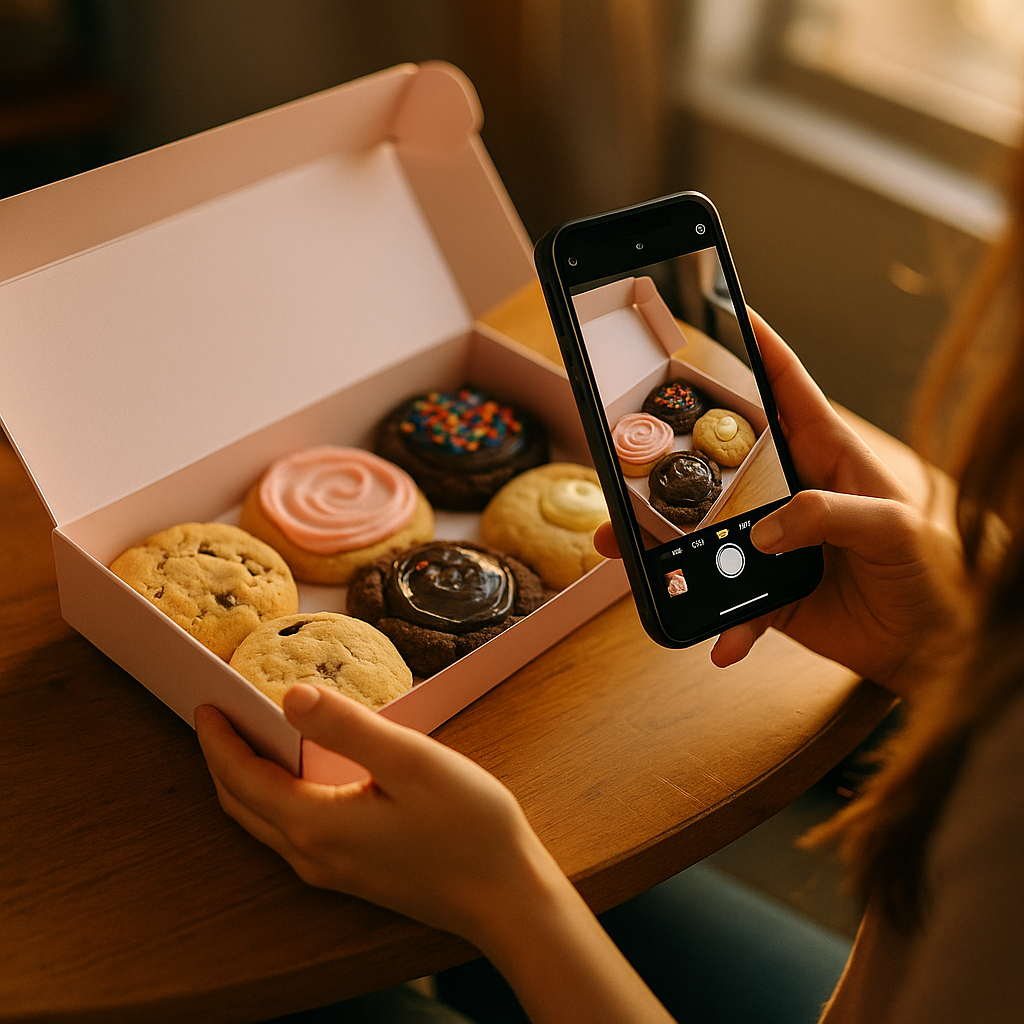
Crumbl’s weekly rotating menu generates over 1 billion organic views across TikTok and Instagram in a typical month, most of it unpaid. No media buy required. Just a cookie box, a camera, and a schedule brands would kill to replicate. This is the Crumbl case study every CPG and QSR marketer should be studying right now.
The Weekly Drop as a Marketing Engine, Not a Menu Gimmick
Most restaurant chains treat menu rotation as an operational decision. Crumbl treated it as a media strategy. Every Sunday night, the brand reveals the following week’s flavor lineup. That single moment of reveal has become the most predictable content trigger in the QSR category, and creators build entire posting calendars around it.
Here’s the mechanic: six rotating flavors change weekly, layered on top of the permanent chocolate chip and chilled sugar cookie. That’s just enough novelty to justify a new video every seven days, but not so much volatility that creators lose the format they’ve already perfected. Predictability, it turns out, is what makes a ritual repeatable.
Crumbl didn’t pay for a viral moment. It engineered a recurring occasion, then let thousands of creators supply the content for free, week after week.
Compare that to brands chasing a single hero campaign. A flavor drop isn’t a launch, it’s infrastructure. Once the cadence exists, unboxing content becomes self-sustaining, because creators know exactly when to show up and what to film.
Why Unboxing Became the Default Format
Crumbl’s packaging was practically built for a camera. The pink box, the branded sticker seal, the reveal of six distinct cookies arranged in a grid: it’s a format, not an accident. Unboxing has been a content genre since the early YouTube haul days, but Crumbl compressed it into something faster and more repeatable than tech or beauty unboxings ever were.
Think about the friction removed. No assembly, no explanation, no waiting for a product to “work.” You open the box, you react, you rate. That’s a 30-second TikTok with a built-in hook, payoff, and call-to-action baked into the packaging itself.
This mirrors what worked for Rhode’s drop-based release model, where scarcity and timing did more heavy lifting than paid promotion. Crumbl applied the same scarcity logic to something perishable and cheap, which is a much harder trick to pull off at national scale.
The Numbers Behind the Ritual
- Crumbl operates roughly 1,000+ franchise locations across the US and Canada, giving nearly every regional creator a local store to film at.
- The brand’s weekly flavor reveal post on Instagram routinely pulls hundreds of thousands of engagements within 48 hours, according to social listening trackers.
- TikTok’s own creator search data shows “Crumbl flavor of the week” as a recurring high-volume query pattern, spiking every Sunday and Monday.
- User-generated unboxing and taste-test videos outnumber Crumbl’s own branded posts by a wide margin, a ratio most CPG brands would envy.
That last point matters most for anyone running a creator program. Crumbl isn’t the loudest voice in its own content ecosystem. It’s the quietest. The brand supplies the occasion; the audience supplies the volume.
No Paid Creator Roster? That’s the Point
Here’s what surprises marketers who dig into Crumbl’s actual influencer spend: there isn’t a sprawling paid roster driving this. Crumbl runs some affiliate and gifting relationships with mid-tier creators, but the overwhelming majority of unboxing content comes from unpaid, organic participation. Regular customers, local micro-creators, and even other brands’ employees post the ritual because it’s genuinely fun content to make, not because a contract requires it.
This is a fundamentally different model than the seeded-product playbook brands like Poppi used to rebuild trust or the tiered gifting structure behind Gap’s denim sell-out. Those brands manufactured scarcity through seeding logistics. Crumbl manufactures scarcity through a calendar.
Should every brand assume they can get free content at this volume? No. Crumbl earned this position over years of consistent cadence, consistent packaging, and a product that’s inherently visual. The lesson isn’t “stop paying creators.” It’s “build a rhythm interesting enough that creators want in without being asked.”
What Brands Get Wrong When They Try to Copy This
Plenty of QSR and CPG brands have attempted their own “flavor drop” cycles since Crumbl’s model went mainstream. Most fail for one of three reasons:
- Inconsistent timing. If the drop isn’t on a fixed, memorized schedule, creators can’t build a posting habit around it.
- Weak visual differentiation. A new flavor that looks identical to the last one doesn’t give creators anything new to show.
- No local access. National retail distribution dilutes the “I found this” excitement that drives regional creator posts. Crumbl’s franchise density keeps a sense of local discovery alive even at national scale.
This is the same access-versus-scale tension retail and grocery brands wrestle with constantly. Aldi’s nano-creator grocery hauls work for similar reasons: local stores, local creators, a genuine sense of “you have to go see this yourself.”
The ROI Case: Why This Beats Paid Media on Efficiency
Let’s talk numbers, because that’s ultimately what gets this model funded internally. Paid social CPMs for QSR and CPG categories have climbed steadily, with eMarketer tracking continued increases in social ad costs across food and beverage verticals. Meanwhile, Crumbl’s organic unboxing content generates comparable reach at a fraction of the cost, because the audience is doing the media buying for free, one repost at a time.
When the content creation cost approaches zero and the reach rivals a paid campaign, the ROI conversation isn’t close. It’s not even the same conversation.
There’s also a compounding effect paid media can’t replicate. Each week’s flavor drop content stays discoverable through search and hashtag browsing, meaning older unboxing videos keep surfacing new viewers long after the flavor itself is off the menu. That’s a durable content asset, not a one-week media flight.
This echoes the commission-versus-flat-fee logic explored in Chipotle’s TikTok Go data: cost efficiency often comes from designing a system that rewards genuine engagement rather than paying upfront for guaranteed posts. Crumbl’s version of that system just happens to run without any payout at all for most participants.
Operational Risk: What Could Go Wrong
No ritual is risk-free. Marketers replicating this model should watch for a few operational pitfalls:
- Franchise inconsistency. With over a thousand independently operated locations, flavor availability and quality control vary. A bad unboxing video from a poorly run franchise spreads just as fast as a good one.
- FTC disclosure gaps. Even unpaid gifting relationships can trigger disclosure requirements under FTC endorsement guidelines if any free product or perk is involved. Brands scaling gifting programs need clear creator guidance here.
- Flavor fatigue. Sustaining creator interest requires genuine novelty every single week. Recycled flavors risk deflating the “I have to try this” urgency that fuels the whole content cycle.
None of these are dealbreakers, but they’re exactly the kind of details that separate a five-year ritual from a six-month trend.
What Other Categories Can Actually Steal From This
The Crumbl model isn’t really about cookies. It’s about designing a recurring, visually distinct occasion that creators want to document without being paid to. Beauty brands running seasonal drops, beverage brands with limited releases, even fintech apps with feature rollouts, all of them can borrow the core mechanic: fixed cadence, visual novelty, low participation friction.
The connective tissue between Crumbl and something like Olipop’s creator-driven category build is the same instinct, just executed differently: give creators a reason to show up on a schedule, then get out of the way. Brands obsessed with controlling every piece of creator content often miss this. The Crumbl model works precisely because the brand isn’t the one filming.
For a deeper look at how brands structure nano and micro-creator programs around recurring, low-cost touchpoints, our coverage of Chamberlain Coffee’s retail shelf strategy offers a useful parallel on turning small, repeatable actions into outsized organic reach.
The takeaway for brand teams: stop asking “how do we get more creators to post” and start asking “what recurring moment would creators want to post about even if we never asked.” Build the calendar first, the content follows on its own.
FAQs
What made Crumbl’s weekly flavor drop go viral organically?
The consistent Sunday reveal schedule combined with visually distinct, camera-ready packaging gave creators a repeatable format to film every week without needing brand direction or payment.
Does Crumbl pay influencers for unboxing videos?
Crumbl runs limited affiliate and gifting relationships with select creators, but the vast majority of unboxing content is unpaid, organic participation from regular customers and micro-creators.
Can smaller brands replicate the Crumbl flavor drop model?
Yes, but it requires a fixed, memorable cadence, genuine visual novelty each cycle, and low-friction local access, three elements many brands underestimate when copying the format.
How does Crumbl’s model compare to paid influencer campaigns?
It trades guaranteed reach for near-zero cost, relying on product design and scheduling to generate organic volume that would otherwise require significant paid media spend to match.
What are the legal risks of unpaid creator gifting programs?
Even free product exchanges can trigger FTC disclosure requirements if creators receive anything of value, so brands should provide clear guidance regardless of whether payment changes hands.
Top Influencer Marketing Agencies
The leading agencies shaping influencer marketing in 2026
Agencies ranked by campaign performance, client diversity, platform expertise, proven ROI, industry recognition, and client satisfaction. Assessed through verified case studies, reviews, and industry consultations.
Moburst

-
2

The Shelf
Boutique Beauty & Lifestyle Influencer AgencyA data-driven boutique agency specializing exclusively in beauty, wellness, and lifestyle influencer campaigns on Instagram and TikTok. Best for brands already focused on the beauty/personal care space that need curated, aesthetic-driven content.Clients: Pepsi, The Honest Company, Hims, Elf Cosmetics, Pure LeafVisit The Shelf → -
3

Audiencly
Niche Gaming & Esports Influencer AgencyA specialized agency focused exclusively on gaming and esports creators on YouTube, Twitch, and TikTok. Ideal if your campaign is 100% gaming-focused — from game launches to hardware and esports events.Clients: Epic Games, NordVPN, Ubisoft, Wargaming, Tencent GamesVisit Audiencly → -
4

Viral Nation
Global Influencer Marketing & Talent AgencyA dual talent management and marketing agency with proprietary brand safety tools and a global creator network spanning nano-influencers to celebrities across all major platforms.Clients: Meta, Activision Blizzard, Energizer, Aston Martin, WalmartVisit Viral Nation → -
5

The Influencer Marketing Factory
TikTok, Instagram & YouTube CampaignsA full-service agency with strong TikTok expertise, offering end-to-end campaign management from influencer discovery through performance reporting with a focus on platform-native content.Clients: Google, Snapchat, Universal Music, Bumble, YelpVisit TIMF → -
6

NeoReach
Enterprise Analytics & Influencer CampaignsAn enterprise-focused agency combining managed campaigns with a powerful self-service data platform for influencer search, audience analytics, and attribution modeling.Clients: Amazon, Airbnb, Netflix, Honda, The New York TimesVisit NeoReach → -
7

Ubiquitous
Creator-First Marketing PlatformA tech-driven platform combining self-service tools with managed campaign options, emphasizing speed and scalability for brands managing multiple influencer relationships.Clients: Lyft, Disney, Target, American Eagle, NetflixVisit Ubiquitous → -
8

Obviously
Scalable Enterprise Influencer CampaignsA tech-enabled agency built for high-volume campaigns, coordinating hundreds of creators simultaneously with end-to-end logistics, content rights management, and product seeding.Clients: Google, Ulta Beauty, Converse, AmazonVisit Obviously →