


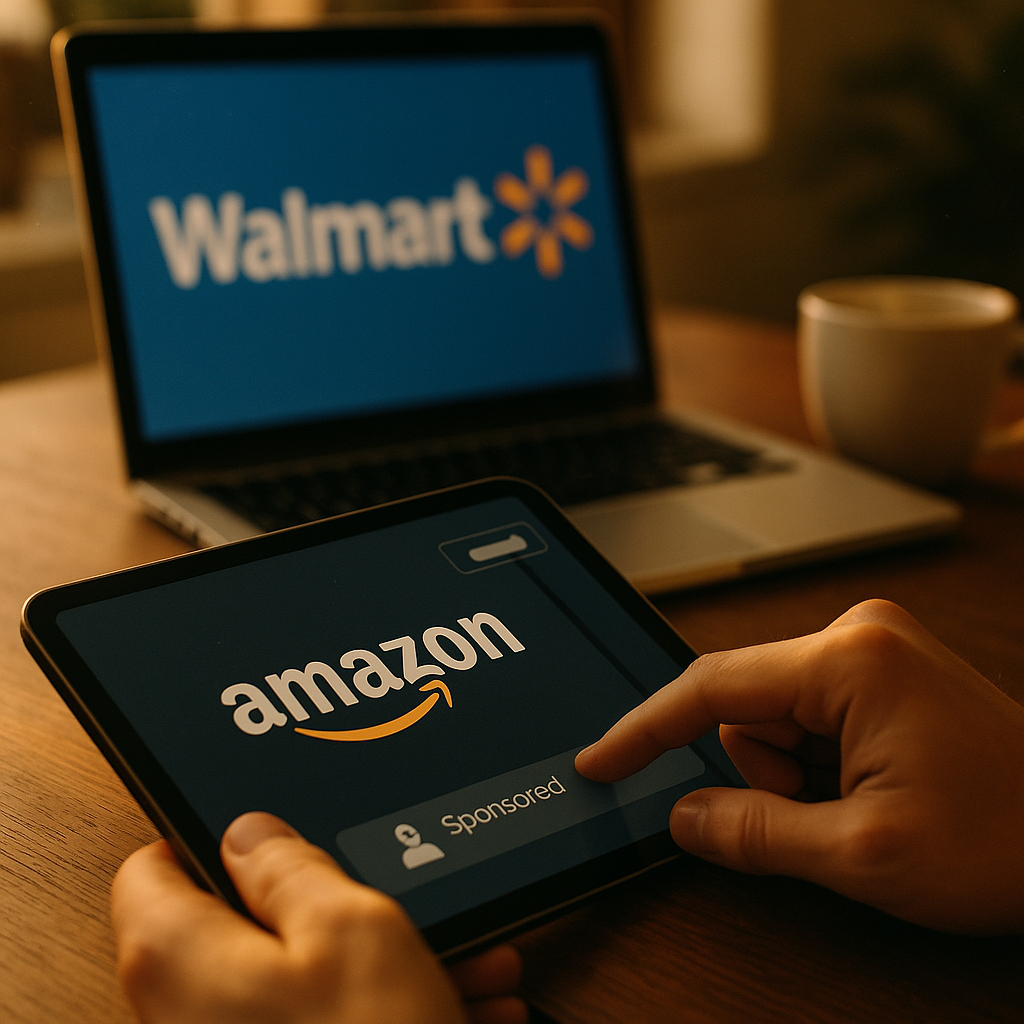
Sixty-nine percent of shoppers say they’ve bought a product because an influencer recommended it, yet most of those same shoppers can’t tell you whether a “Sponsored” tag on Amazon actually discloses a creator relationship or just an ad placement. That gap is where FTC endorsement rules and retail media network disclosure standards collide, and it’s a compliance blind spot most brands haven’t mapped yet. If your creator content is running inside Amazon Sponsored Brands or Walmart Connect placements, you’re now managing two disclosure regimes at once, not one.
This isn’t a theoretical problem. Retail media ad spend crossed $175 billion in the U.S. this year according to eMarketer’s retail media forecasts, and a growing share of that inventory is creator-generated content repurposed into paid placements. Amazon’s Creator Connections and Walmart’s Creator Studio have made it trivially easy to pull a TikTok-style haul video into a shoppable ad slot. What they haven’t made easy is figuring out whose disclosure rules apply once that happens.
Two Rulebooks, One Piece of Content
Here’s the structural problem. The FTC’s endorsement guides require that a material connection between a brand and a creator be disclosed clearly and conspicuously, in a way an average consumer would notice and understand, regardless of where the content appears. Retail media networks, meanwhile, layer on their own labeling conventions: “Sponsored,” “Ad,” or “Presented by” tags that signal paid placement within the retailer’s platform, not a creator relationship.
Those two things are not the same disclosure. A “Sponsored” badge on an Amazon product carousel tells a shopper this is paid ad inventory. It does not tell them the person in the video got paid, gifted product, or holds equity in the brand. The FTC has been explicit that platform-level or placement-level labels don’t substitute for creator-level disclosure — a point our team covered in depth in platform labels and FTC disclosure gaps.
A retail network’s “Sponsored” tag discloses the ad buy. It says nothing about the creator’s material connection to the brand — and the FTC treats those as two separate disclosure obligations, not one.
So when a brand takes a creator’s UGC and runs it as a Sponsored Brands video on Amazon, or slots it into a Walmart Connect display unit, the retailer’s native “Sponsored” label satisfies the retailer’s own ad-transparency policy. It does nothing for FTC compliance. The creator’s endorsement still needs its own clear disclosure — #ad, “paid partnership,” or equivalent — baked into the content itself, not layered on by the platform after the fact.
Why This Keeps Tripping Up Brand Teams
Ask any performance marketing lead running retail media budgets whether they’ve read the FTC’s Endorsement Guides. Most haven’t. Retail media buying sits in a different org than influencer marketing at a lot of companies — sometimes a completely different agency of record. The creative asset gets approved once, by the influencer team, for organic or whitelisted social use. Then a retail media buyer repurposes it for an Amazon DSP campaign without looping back to confirm the disclosure still reads clearly at 3-second video-thumbnail size inside a shopping carousel.
That’s not hypothetical. Amazon Sponsored Brands video ads autoplay muted in search results, often with disclosure text cropped or scaled down to the point of illegibility. Walmart’s shoppable video units run similarly compressed. If the “#ad” overlay a creator added for Instagram gets shrunk into a 15% smaller frame for a retail ad unit, and it’s no longer readable, you’ve got a functionally undisclosed endorsement running as paid media at scale.
The FTC doesn’t grade on effort. It grades on whether an average consumer, viewing the ad as actually rendered, would understand the connection. A disclosure that was compliant in its original format but becomes illegible after repurposing is not compliant in its new format. Full stop.
The Whitelisting Precedent Already Applies Here
Brands running influencer whitelisting or spark ads through Meta or TikTok have already dealt with a version of this problem: paid amplification of creator content changes the disclosure calculus, even when the underlying content was originally disclosed correctly. Our whitelisted creator ads audit framework breaks down how disclosure obligations shift when a brand becomes the media buyer behind someone else’s content. Retail media is the same pattern, just with a different platform layer.
The key distinction: on Meta or TikTok, the platform ad label (“Sponsored,” “Paid partnership”) at least references the creator relationship in some form. Amazon and Walmart’s retail media labels don’t reference creators at all. They reference the ad buy. That’s a meaningful gap, and it means retail media disclosure risk is arguably higher than social platform whitelisting risk, not lower.
What Compliant Actually Looks Like
Reconciling the two systems doesn’t require exotic legal engineering. It requires treating retail media placement as a distinct disclosure checkpoint, not an automatic extension of the original content’s compliance status. Practically, that means:
- Re-verify legibility at destination format. Check disclosure text size, contrast, and duration inside the actual Amazon Sponsored Brands or Walmart Connect unit, not the original TikTok or Instagram export.
- Burn disclosure into the video, not the caption. Retail ad units frequently strip captions or run without accompanying text. If the only disclosure lived in an Instagram caption, it disappears entirely once the video moves to a retail placement.
- Don’t rely on the retailer’s “Sponsored” tag to cover you. Treat it as separate from creator disclosure. Both need to be present and both need to be clear.
- Loop in retail media buyers on creator contracts. Whoever is repurposing UGC for paid retail placements needs visibility into what disclosure terms the original creator agreement requires, including format and placement restrictions.
- Document the review. Keep a record of who approved the repurposed asset for retail media use and confirmed disclosure legibility. If the FTC ever asks, “we assumed the platform handled it” is not a defense.
This is the same discipline we’ve recommended for sign-off matrices for AI creator scripts — a documented chain of accountability that survives an audit, rather than an assumption that someone else in the pipeline checked the box.
Amazon and Walmart Aren’t Going to Solve This For You
It would be convenient if Amazon or Walmart built creator-disclosure enforcement into their ad platforms. They haven’t, and there’s no strong signal they will soon. Amazon’s advertising policies focus on prohibited content, trademark issues, and claims substantiation — not creator material-connection disclosure. Walmart Connect’s guidelines are similarly silent on the specific mechanics of endorsement disclosure once content is repurposed into paid units.
That silence is a liability allocation problem, not a compliance solution. The retailer isn’t going to eat FTC risk on your behalf. If a Sponsored Brands video runs without adequate creator disclosure, the FTC’s enforcement conversation happens with the brand and possibly the creator, not with Amazon.
Retail media networks manage ad-transparency risk, not endorsement-disclosure risk. Brands that conflate the two are the ones most likely to end up in an FTC inquiry letter.
This mirrors a pattern we’ve flagged before with AI-generated ad labels: a platform label that addresses one regulatory concern doesn’t automatically address another. Our piece on synthetic performer disclosure and platform AI labels covers a structurally identical mismatch — different technology, same underlying lesson about not outsourcing your compliance obligations to a platform’s UI.
Building the Contract Language Now
The cleanest fix happens upstream, in the creator contract, not downstream in ad ops. Brands should specify, in writing, whether content can be repurposed into retail media placements and, if so, what disclosure requirements travel with that use. That includes minimum text size, on-screen duration, and placement (burned into video versus caption-only).
This is an extension of the work covered in creator contract audits for FTC disclosure updates. If your current contract template doesn’t address retail media repurposing specifically, assume it’s a gap. Most legacy influencer contracts were written before retail media networks became a meaningful UGC distribution channel, and the language simply hasn’t caught up.
Agencies buying retail media on behalf of brands should also build a pre-flight checklist into their trafficking process: confirm creator disclosure is legible in the final ad unit before the campaign goes live, not after a compliance team flags it post-launch. A five-minute check at trafficking is a lot cheaper than an FTC inquiry six months later.
The Practical Next Step
Audit your last quarter of Amazon and Walmart retail media campaigns that used creator-sourced video. Pull the actual rendered ad units, not the original creative files, and check whether disclosure is legible and present in the format that actually ran. If it isn’t, fix the asset before you fix the policy — then update your creator contracts and trafficking checklist so the gap doesn’t reopen next quarter.
FAQs
Frequently Asked Questions
Does Amazon’s “Sponsored” label satisfy FTC disclosure requirements for creator content?
No. Amazon’s “Sponsored” tag discloses that the placement is paid advertising inventory. It does not disclose a creator’s material connection to the brand, which is a separate requirement under the FTC’s endorsement guides. Both disclosures need to be present independently.
Who is liable if a repurposed creator video runs without adequate disclosure in a retail media ad unit?
Primary liability generally falls on the brand, and potentially the creator, not the retail media network. Amazon and Walmart’s advertising policies address prohibited content and claims substantiation, not endorsement-disclosure compliance, so brands can’t rely on retailer approval as a compliance shield.
What’s the most common way disclosure fails when content moves into retail media placements?
Legibility loss is the most common failure. Disclosure text that was readable in an original social post often gets cropped, scaled down, or stripped entirely (especially if it lived only in a caption) when repurposed into Amazon Sponsored Brands or Walmart Connect video units.
Should creator contracts specifically address retail media repurposing?
Yes. Contracts should specify whether content can be used in retail media placements and what disclosure requirements travel with that use, including minimum text size and on-screen duration. Most legacy influencer contracts predate retail media as a major UGC channel and don’t address it.
How is this different from influencer whitelisting on Meta or TikTok?
The underlying risk is similar, but retail media labels don’t reference creator relationships at all, whereas Meta and TikTok’s paid-partnership labels at least gesture toward one. That makes retail media disclosure gaps arguably higher risk since there’s less built-in context for the shopper.
Top Influencer Marketing Agencies
The leading agencies shaping influencer marketing in 2026
Agencies ranked by campaign performance, client diversity, platform expertise, proven ROI, industry recognition, and client satisfaction. Assessed through verified case studies, reviews, and industry consultations.
Moburst

-
2

The Shelf
Boutique Beauty & Lifestyle Influencer AgencyA data-driven boutique agency specializing exclusively in beauty, wellness, and lifestyle influencer campaigns on Instagram and TikTok. Best for brands already focused on the beauty/personal care space that need curated, aesthetic-driven content.Clients: Pepsi, The Honest Company, Hims, Elf Cosmetics, Pure LeafVisit The Shelf → -
3

Audiencly
Niche Gaming & Esports Influencer AgencyA specialized agency focused exclusively on gaming and esports creators on YouTube, Twitch, and TikTok. Ideal if your campaign is 100% gaming-focused — from game launches to hardware and esports events.Clients: Epic Games, NordVPN, Ubisoft, Wargaming, Tencent GamesVisit Audiencly → -
4

Viral Nation
Global Influencer Marketing & Talent AgencyA dual talent management and marketing agency with proprietary brand safety tools and a global creator network spanning nano-influencers to celebrities across all major platforms.Clients: Meta, Activision Blizzard, Energizer, Aston Martin, WalmartVisit Viral Nation → -
5

The Influencer Marketing Factory
TikTok, Instagram & YouTube CampaignsA full-service agency with strong TikTok expertise, offering end-to-end campaign management from influencer discovery through performance reporting with a focus on platform-native content.Clients: Google, Snapchat, Universal Music, Bumble, YelpVisit TIMF → -
6

NeoReach
Enterprise Analytics & Influencer CampaignsAn enterprise-focused agency combining managed campaigns with a powerful self-service data platform for influencer search, audience analytics, and attribution modeling.Clients: Amazon, Airbnb, Netflix, Honda, The New York TimesVisit NeoReach → -
7

Ubiquitous
Creator-First Marketing PlatformA tech-driven platform combining self-service tools with managed campaign options, emphasizing speed and scalability for brands managing multiple influencer relationships.Clients: Lyft, Disney, Target, American Eagle, NetflixVisit Ubiquitous → -
8

Obviously
Scalable Enterprise Influencer CampaignsA tech-enabled agency built for high-volume campaigns, coordinating hundreds of creators simultaneously with end-to-end logistics, content rights management, and product seeding.Clients: Google, Ulta Beauty, Converse, AmazonVisit Obviously →