


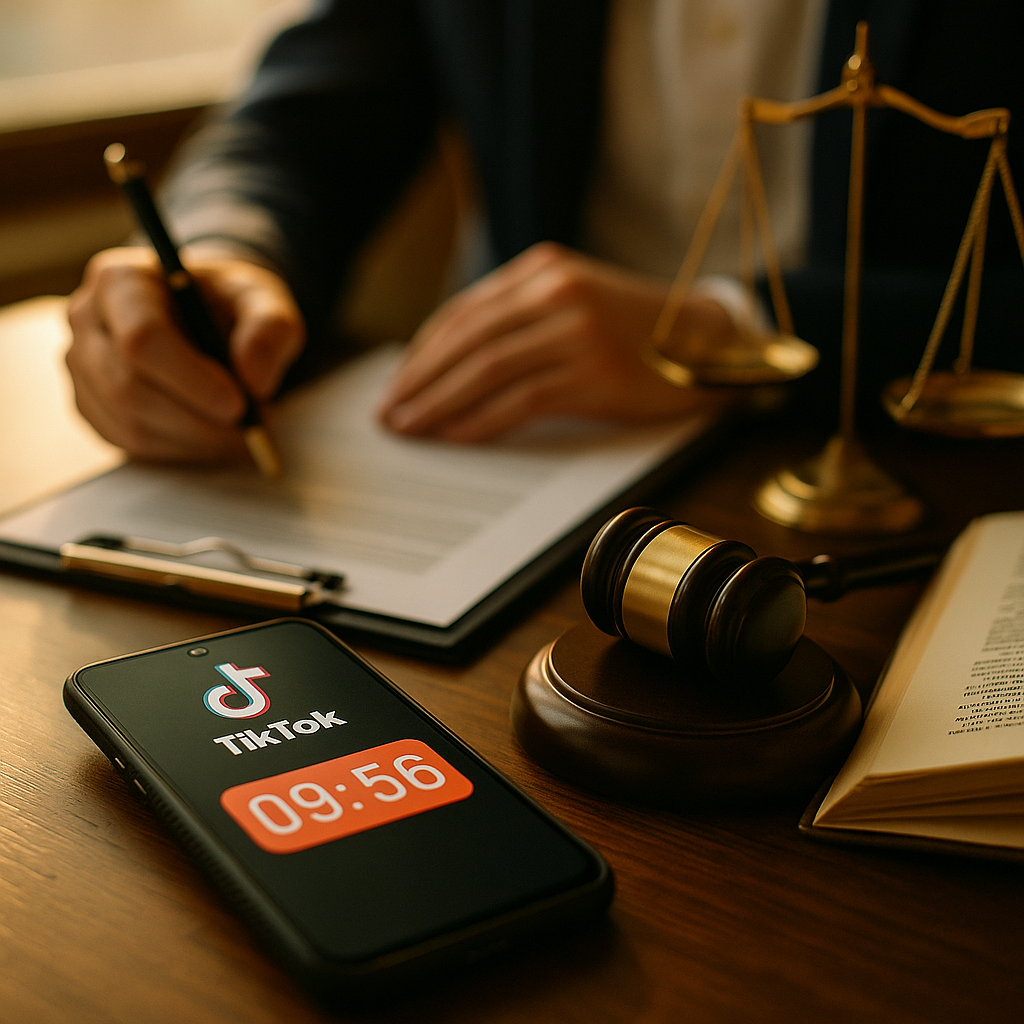
Ninety seconds. That’s how long some TikTok Shop countdown timers stay visible before “resetting” to create fresh urgency — and it’s exactly the kind of manufactured scarcity the FTC has flagged as a deceptive practice. If your livestream playbook still treats countdown timers as a harmless conversion hack, you’re one screen recording away from an enforcement letter. A TikTok Shop livestream countdown timer legal checklist isn’t optional anymore. It’s the difference between a clean campaign and a six-figure remediation problem.
Why Scarcity Claims Got a Regulatory Spotlight
The FTC has been sharpening its stance on manufactured urgency for a while, but livestream commerce pushed the issue into new territory. Countdown timers, “only 3 left” overlays, and auto-restocking banners used to live quietly in email marketing and landing pages. Now they run in real time, in front of live audiences, often controlled by a host who has no idea what the backend inventory actually shows.
That’s the core problem regulators are chasing: a gap between what’s displayed and what’s true. If a timer hits zero and then simply resets for the next viewer, that’s not urgency — it’s fabricated pressure. The updated guidance treats these tactics under the same deceptive-practices framework as fake scarcity in traditional ecommerce, but with livestream-specific attention to real-time claims made verbally by hosts, which are much harder to audit after the fact than static site copy.
A countdown timer is a factual claim about inventory or time, not a design element — and the FTC now expects brands to treat it that way.
Brands running frequent TikTok Shop livestreams, especially in beauty, supplements, and fast-moving consumer goods, are the most exposed. Similar scrutiny has already hit adjacent categories — see how supplement livestream compliance has tightened in parallel.
What “Updated Scarcity Rules” Actually Change for Brands
There isn’t a single new statute here. What changed is enforcement posture and the FTC’s willingness to treat livestream scarcity claims as advertising claims subject to substantiation, the same standard applied to health claims or performance claims. Practically, that means three things for brand teams:
- Timers must reflect reality. If the countdown implies limited time or limited stock, that has to be true at the moment it’s displayed, not an evergreen loop.
- Verbal scarcity claims count as much as on-screen graphics. A host saying “we’re almost sold out” while inventory sits at 40% is now a compliance issue, not just a sales tactic.
- Documentation is the defense. Brands need contemporaneous records — inventory snapshots, timer logs, script approvals — proving the claim was accurate when made.
This mirrors a broader trend: regulators increasingly expect brands to prove claims in real time, not explain them after a complaint. The same logic is driving scrutiny of algorithmic pricing disclosures tied to creator discount codes, where the “deal” itself has to be substantiated, not just implied.
Building the Pre-Campaign Checklist
Here’s where most legal and compliance teams get stuck: they know scarcity claims are risky, but nobody owns the pre-launch verification step. Livestream production moves fast, and legal review often happens on the script, not the live production elements like timers and stock counters. Fix that gap first.
1. Inventory Verification, Not Estimation
Before any livestream with a countdown timer, pull an actual inventory snapshot tied to the SKUs being promoted. Not a rounded estimate from the merchandising team — a timestamped export from the inventory system. If the timer or host claims “only X units left,” that number needs to trace back to a real record, not a marketing guess.
Build a rule: no scarcity claim goes live without a corresponding inventory document generated within a defined window before broadcast — two hours is a reasonable standard for most mid-size catalogs.
2. Timer Logic Audit
Ask your TikTok Shop production team (internal or agency) exactly how the countdown timer behaves technically. Does it reset per viewer session? Does it loop after hitting zero? Is it tied to an actual promotional end date, or is it a generic urgency widget bolted onto every stream?
If the timer resets or loops in a way that misrepresents genuine time pressure, that’s a redesign issue, not a legal footnote. Get engineering or your livestream platform vendor to document timer behavior in writing before the campaign, so legal has something concrete to review instead of a verbal assurance.
3. Host Script and Ad-Lib Guardrails
Scripted disclosures are only half the problem. Livestream hosts ad-lib constantly, and scarcity language slips in naturally: “grab it before it’s gone,” “we’re not restocking this.” Your checklist needs explicit host guidance on what scarcity claims are approved, what numbers they’re allowed to reference, and what phrases are banned outright regardless of how the stream is going.
This is the same discipline already being applied to broader claim risk. See how script approval clauses are being used to draw a clear liability line between brand and creator responsibility.
4. Real-Time Monitoring During the Broadcast
Pre-campaign checks aren’t enough if inventory shifts mid-stream. If a product sells out faster than expected, someone needs authority to pull or adjust the timer live. That means a designated compliance-aware staffer watching the stream with the ability to flag the host or production team in real time, not a post-broadcast review three days later.
This mirrors the escalation structure already recommended for high-volume shopping streams — see the three-tier escalation protocol for a model you can adapt directly to timer monitoring.
5. Documentation Retention
Screenshot the timer state at broadcast start. Save the inventory export. Archive the script and any pre-approved talking points. Log any real-time adjustments made during the stream. None of this is glamorous, but it’s exactly what regulators or plaintiffs’ attorneys will ask for if a scarcity claim gets challenged.
Retention windows should match your general FTC substantiation policy — most legal teams are standardizing on a minimum of three years for livestream commerce claims, similar to standards used in substantiation checklists for other high-scrutiny categories.
Where Brands Actually Get This Wrong
The most common failure isn’t malicious. It’s structural. Marketing teams build the livestream, production vendors build the tech stack, and legal reviews the script three days before launch — sometimes without ever seeing the actual countdown timer widget in action. Nobody owns the intersection.
Second most common failure: treating TikTok Shop’s built-in urgency features as pre-approved just because the platform offers them natively. TikTok’s own advertising policies require accurate claims, but the platform isn’t going to audit your inventory numbers for you. That responsibility sits entirely with the brand.
Third: assuming this only applies to paid ads. Scarcity claims made organically during a livestream, even unpaid or influencer-hosted ones, fall under the same deceptive-practices standard if they’re commercial in nature. The FTC doesn’t carve out an exception for “it was just the creator talking.”
If your compliance review only touches the script and skips the live production elements, you’re auditing half the risk.
Aligning This With Your Broader FTC Compliance Stack
Countdown timers don’t exist in isolation. They’re usually running alongside disclosure requirements, affiliate link rules, and increasingly, ID verification steps tied to TikTok Shop’s own policies. If your brand is already navigating the verification freeze rule or gaps between ID verification and disclosure rules, folding scarcity-claim review into that same operational checklist is far more efficient than running it as a separate process.
Consider also how AI-generated production elements factor in. Some brands are now using AI tools to auto-generate urgency graphics or dynamically adjust timer copy based on real-time sales data. If that’s part of your stack, treat it with the same scrutiny applied to AI-generated content testing — the automation doesn’t reduce liability, it just adds a layer you need to audit before launch.
Industry data backs up why this matters operationally, not just legally. Livestream commerce continues to grow as a share of social commerce spend, according to eMarketer forecasts, meaning the volume of scarcity-claim exposure is scaling right alongside the format’s popularity. More streams, more timers, more surface area for a compliance gap to turn into a pattern regulators notice.
Making the Checklist Operational, Not Aspirational
A checklist that lives in a shared drive and gets ignored under launch pressure isn’t a checklist, it’s a liability disclaimer. Build sign-off into your production calendar the same way you’d require creative approval or budget sign-off. No livestream with a countdown timer or stock counter goes live without:
- A timestamped inventory snapshot attached to the campaign brief
- Written confirmation of timer logic from the production vendor
- Approved host talking points covering scarcity language specifically
- A named staffer responsible for real-time monitoring during broadcast
- A retention folder created before the stream starts, not after a complaint arrives
Assign ownership clearly. Marketing shouldn’t be guessing what legal wants, and legal shouldn’t be reviewing production elements they’ve never seen function live. Run a dry test of the timer with legal present at least once per quarter, especially if you’re using a new production vendor or a new TikTok Shop feature.
For broader context on how FTC posture is shifting across adjacent creator commerce issues, HubSpot’s marketing resources and Sprout Social’s social commerce research are worth monitoring alongside direct FTC guidance, since enforcement trends often show up in industry data before they show up in formal rulemaking.
Start small: audit your next three scheduled livestreams against this checklist before they air, not after. If even one fails the inventory-verification step, you’ve already found the gap that would have gotten you in trouble.
Frequently Asked Questions
Does the FTC have a specific rule just for TikTok Shop countdown timers?
No single rule targets countdown timers by name. The FTC applies its existing deceptive-practices framework, which requires that scarcity and urgency claims be truthful and substantiated, regardless of the platform or format displaying them.
Who is liable if a host makes an inaccurate scarcity claim during a livestream?
Typically the brand bears primary liability for claims made in connection with its products, even if a third-party creator or host said them. That’s why script guardrails and pre-approved talking points matter as much as the technical timer setup.
How long should we retain documentation for a livestream countdown timer campaign?
Most legal teams are standardizing on a minimum of three years, aligning with broader FTC substantiation retention practices used for other advertising claims.
Can we use a generic countdown timer widget that isn’t tied to real inventory?
Not safely. If the timer implies scarcity or a real deadline, it needs to reflect actual inventory or promotional end dates. A purely decorative timer with no factual basis is exactly the kind of manufactured urgency regulators are targeting.
Does this apply to organic, unpaid livestreams too?
Yes, if the stream is commercial in nature and promotes products for sale. The FTC’s deceptive-practices standard doesn’t distinguish between paid ads and organic livestream commerce when scarcity claims are involved.
Top Influencer Marketing Agencies
The leading agencies shaping influencer marketing in 2026
Agencies ranked by campaign performance, client diversity, platform expertise, proven ROI, industry recognition, and client satisfaction. Assessed through verified case studies, reviews, and industry consultations.
Moburst

-
2

The Shelf
Boutique Beauty & Lifestyle Influencer AgencyA data-driven boutique agency specializing exclusively in beauty, wellness, and lifestyle influencer campaigns on Instagram and TikTok. Best for brands already focused on the beauty/personal care space that need curated, aesthetic-driven content.Clients: Pepsi, The Honest Company, Hims, Elf Cosmetics, Pure LeafVisit The Shelf → -
3

Audiencly
Niche Gaming & Esports Influencer AgencyA specialized agency focused exclusively on gaming and esports creators on YouTube, Twitch, and TikTok. Ideal if your campaign is 100% gaming-focused — from game launches to hardware and esports events.Clients: Epic Games, NordVPN, Ubisoft, Wargaming, Tencent GamesVisit Audiencly → -
4

Viral Nation
Global Influencer Marketing & Talent AgencyA dual talent management and marketing agency with proprietary brand safety tools and a global creator network spanning nano-influencers to celebrities across all major platforms.Clients: Meta, Activision Blizzard, Energizer, Aston Martin, WalmartVisit Viral Nation → -
5

The Influencer Marketing Factory
TikTok, Instagram & YouTube CampaignsA full-service agency with strong TikTok expertise, offering end-to-end campaign management from influencer discovery through performance reporting with a focus on platform-native content.Clients: Google, Snapchat, Universal Music, Bumble, YelpVisit TIMF → -
6

NeoReach
Enterprise Analytics & Influencer CampaignsAn enterprise-focused agency combining managed campaigns with a powerful self-service data platform for influencer search, audience analytics, and attribution modeling.Clients: Amazon, Airbnb, Netflix, Honda, The New York TimesVisit NeoReach → -
7

Ubiquitous
Creator-First Marketing PlatformA tech-driven platform combining self-service tools with managed campaign options, emphasizing speed and scalability for brands managing multiple influencer relationships.Clients: Lyft, Disney, Target, American Eagle, NetflixVisit Ubiquitous → -
8

Obviously
Scalable Enterprise Influencer CampaignsA tech-enabled agency built for high-volume campaigns, coordinating hundreds of creators simultaneously with end-to-end logistics, content rights management, and product seeding.Clients: Google, Ulta Beauty, Converse, AmazonVisit Obviously →