


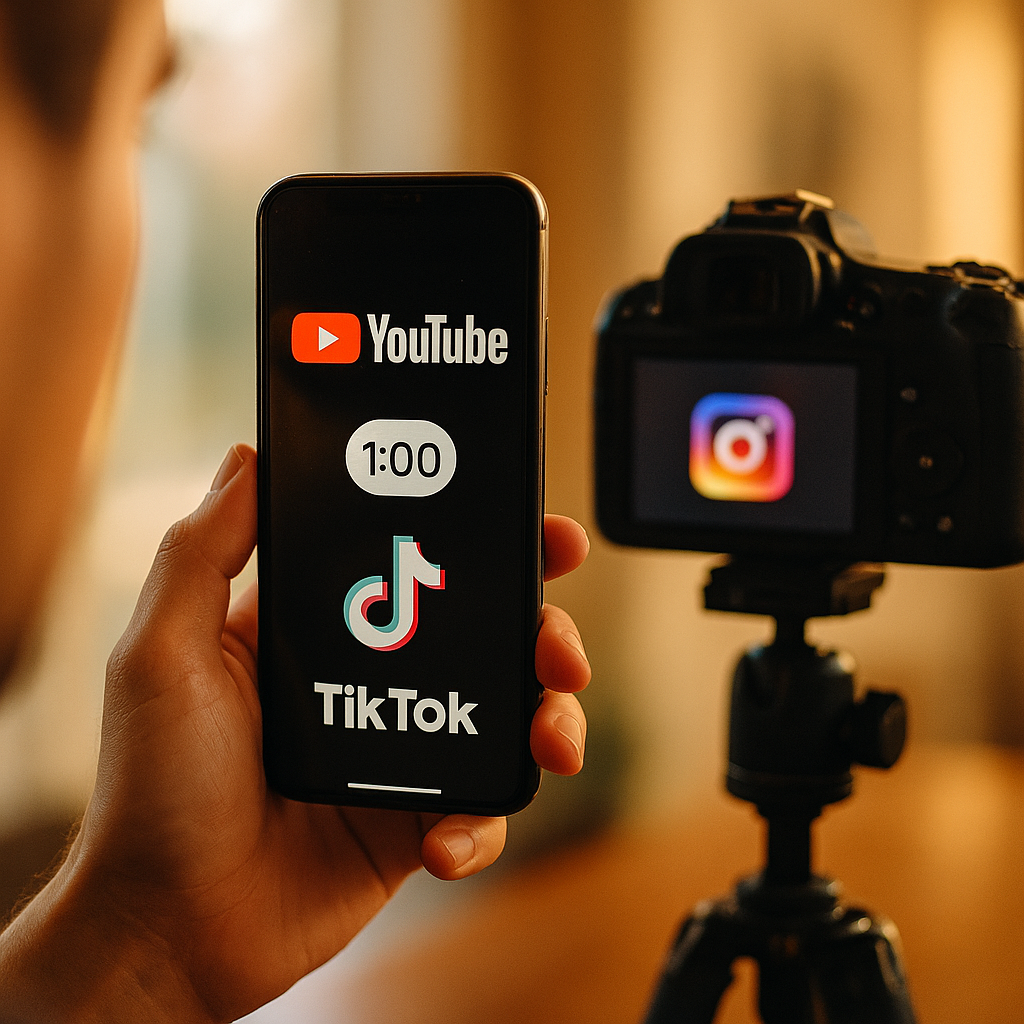
Three platforms, three timers. One lets a creator wait a full minute before saying the word “ad.” The other two demand disclosure before the video even loads its first pixel. If your team is running the same influencer disclosure playbook across YouTube, TikTok, and Instagram, there’s a strong chance you’re already out of compliance on at least one of them.
The YouTube verbal disclosure 60 seconds rule has quietly become one of the most misunderstood requirements in creator marketing, largely because it looks like flexibility when it’s actually a narrower, riskier lane than most brands realize.
Why One Platform Gives 60 Seconds and the Others Give Zero
YouTube’s guidance allows creators to make a clear, unambiguous verbal or visual disclosure of paid promotion any time within the first 60 seconds of a video, provided the video is longer than 60 seconds total. That’s the loophole brands love and the one the FTC has grown increasingly skeptical of. TikTok and Instagram don’t offer that runway at all. Both platforms require the paid partnership indicator, hashtag, or label to be visible from the first frame a viewer sees, no scrolling, no waiting, no “I’ll mention it after the intro.”
The logic behind the gap isn’t arbitrary. YouTube videos tend to be longer-form, and the platform’s own creator policies treat the first minute as an acceptable disclosure window because viewers are assumed to still be orienting themselves to the content. TikTok and Instagram, built on swipeable, sub-60-second consumption, don’t have that luxury. A viewer can see, judge, and scroll past a Reel in under three seconds. If the disclosure isn’t front-loaded, it functionally doesn’t exist for most of the audience.
A disclosure that appears at second 45 of a YouTube video may satisfy platform policy while still failing FTC “clear and conspicuous” standards if viewers skip ahead, autoplay past it, or watch on mute.
The FTC Doesn’t Grade on Platform Curve
Here’s the part that trips up even experienced marketing teams: platform compliance and FTC compliance are not the same thing. YouTube’s 60-second window is a platform policy, not a legal shield. The FTC’s Endorsement Guides require that a material connection be disclosed clearly and conspicuously, and “clearly and conspicuously” has consistently been interpreted to mean before or very close to the point where a reasonable consumer forms an impression of the product.
A verbal mention buried at second 58 of a 12-minute review, right as the creator is talking over B-roll, can technically satisfy YouTube’s own rule while still violating FTC guidance. That’s not a hypothetical. It’s the exact scenario the FTC’s enforcement priorities have flagged as “disclosure theater,” where compliance exists on paper but not in practice. We’ve covered this tension in depth in our breakdown of why paid partnership labels alone no longer satisfy regulators, and the same principle applies here: a technically-present disclosure isn’t automatically an adequate one.
Brands relying on the 60-second window as their compliance baseline are making a bet that platform policy and legal exposure line up. Right now, that bet is getting riskier every quarter.
What “Visible From First Frame” Actually Requires
TikTok and Instagram’s standard sounds simple, but the implementation details matter more than most briefs account for. On TikTok, the paid partnership label needs to be applied through the platform’s branded content toggle, which stamps the disclosure onto the video itself, not just the caption. Caption-only disclosures (like #ad buried under ten other hashtags) have never satisfied FTC standards, but they’re even less defensible under TikTok’s first-frame model because the label genuinely isn’t visible until a viewer taps to expand text.
Instagram works similarly. The “Paid partnership with [Brand]” tag needs to render at the top of the post or Reel immediately, not after a few seconds of hook footage. Creators who add the tag but structure their video so it’s covered by a filter, sticker, or text overlay for the first several seconds are technically breaking platform rules, even if they didn’t intend to.
For brands managing multi-platform campaigns, this creates an operational headache: the same creative can’t be repurposed identically across YouTube, TikTok, and Instagram without adjusting disclosure timing and placement for each. A YouTube Short, notably, follows TikTok and Instagram’s short-form logic, not YouTube’s own long-form 60-second rule, which means even within one platform, the disclosure standard shifts depending on format.
Where Brands Are Getting Burned
The most common failure pattern isn’t malicious. It’s operational drift. A brand builds a disclosure checklist for YouTube integrations, hands the same checklist to a TikTok Shop affiliate team, and nobody flags that the timing rule doesn’t transfer. Multiply that across dozens of creators and hundreds of assets, and you get inconsistent disclosure practices that regulators can point to as a pattern, not a one-off mistake.
A few recurring issues we’re seeing in brand audits:
- Repurposed long-form content: A YouTube video with a disclosure at the 40-second mark gets clipped into a TikTok or Reel without adding a first-frame label.
- Livestream carryover: Creators disclose once at the start of a livestream, then the clip gets saved and reposted as a standalone video without the disclosure attached. This is a growing risk area, similar to the gaps we detailed in our livestream compliance framework.
- Affiliate link ambiguity: Creators treat affiliate and gifted content as lower-risk than paid sponsorships, applying looser disclosure timing across all three platforms. Our unified disclosure standard piece covers why that distinction doesn’t hold up legally.
- Script control gaps: Brands that don’t specify disclosure placement in the creator brief leave timing entirely up to the creator’s judgment, which is how 58-second mentions happen in the first place.
None of these are hypothetical edge cases. They’re the actual line items showing up in agency compliance audits right now, and they’re exactly the kind of gap that turns into a five-figure remediation project once a regulator or platform trust-and-safety team flags it.
Building One Brief That Works Across All Three Platforms
The fix isn’t complicated, but it does require treating disclosure as a creative-brief requirement rather than a legal afterthought. A few practices worth locking into every influencer contract and content brief:
- Default to first-frame disclosure everywhere, even on YouTube. If your creative team builds every asset assuming the strictest standard applies, you never have to remember which platform gets which rule. The 60-second window becomes a buffer, not a requirement.
- Specify disclosure placement in the script, not just the brief. “Include a disclosure” is too vague. “State ‘this video is sponsored by [Brand]’ within the first five seconds, on camera” removes ambiguity. This is the same principle covered in our guide to script approval and FTC liability.
- Audit repurposed content separately. Every time a long-form YouTube asset gets clipped for Shorts, TikTok, or Reels, run it back through disclosure review. Don’t assume the original disclosure travels with the edit.
- Use platform-native tagging tools, not just verbal mentions. Verbal disclosure helps on YouTube but doesn’t replace the paid partnership toggle on TikTok or Instagram’s branded content tag. Layer both wherever possible.
- Document your compliance rationale per platform. If regulators ever ask why a YouTube video disclosed at second 40, you want a documented policy, not an improvised answer.
According to eMarketer data on creator content consumption, short-form video now accounts for the majority of time spent on TikTok and Instagram, reinforcing why those platforms enforce disclosure timing so aggressively: the viewing window itself is shrinking, and regulators know it.
The Bigger Compliance Pattern
This isn’t an isolated quirk. It’s part of a broader trend of platforms setting disclosure standards that diverge from each other while the FTC holds every brand to one baseline regardless of platform. We’ve seen the same tension play out with TikTok Shop verification rules and with age-verification requirements across state lines, covered in our age-verification checklist. The pattern is consistent: platform-specific rules are a floor, not a ceiling, and brands that treat them as the ceiling eventually get caught in the gap.
Tools like Sprout Social and platform-native compliance dashboards can help flag missing disclosure tags at scale, but no software catches a verbal disclosure that arrives too late in the runtime. That still requires a human review pass against a documented standard.
The brands winning on this aren’t the ones with the most lawyers. They’re the ones who built a single, strictest-common-denominator disclosure standard and applied it everywhere, turning platform-specific rules into a compliance floor rather than a moving target.
Frequently Asked Questions
Does YouTube’s 60-second rule apply to YouTube Shorts?
No. Shorts follow the same first-frame visibility logic as TikTok and Instagram Reels because they’re consumed the same way. The 60-second verbal disclosure window only applies to standard long-form YouTube videos over 60 seconds in length.
Can a brand rely on YouTube’s 60-second window as legal compliance with the FTC?
Not fully. YouTube’s window is a platform policy, not an FTC standard. The FTC requires disclosures to be clear and conspicuous before a viewer forms an impression of the endorsement, which in practice often means disclosing much earlier than the 60-second mark.
What happens if a disclosure is covered by a sticker or filter on Instagram or TikTok?
Both platforms consider the disclosure invisible if it’s obscured, even briefly, and this violates the first-frame visibility standard regardless of intent. Brands should require creators to confirm the label is unobstructed before publishing.
Do affiliate links follow the same disclosure timing rules as paid sponsorships?
Yes. The FTC treats affiliate commissions as a material connection requiring disclosure, and platform timing rules apply the same way whether the content is a paid partnership or an affiliate promotion.
How should brands handle disclosure when repurposing a YouTube video into a TikTok clip?
Treat the repurposed clip as new content requiring its own first-frame disclosure. The original YouTube disclosure timing doesn’t carry over, and platform trust-and-safety teams evaluate each upload independently.
The fastest way to close this gap is to stop briefing by platform rule and start briefing by strictest standard. Require first-frame disclosure on every asset, everywhere, and treat YouTube’s 60-second window as a legal safety margin rather than a target.
Top Influencer Marketing Agencies
The leading agencies shaping influencer marketing in 2026
Agencies ranked by campaign performance, client diversity, platform expertise, proven ROI, industry recognition, and client satisfaction. Assessed through verified case studies, reviews, and industry consultations.
Moburst

-
2

The Shelf
Boutique Beauty & Lifestyle Influencer AgencyA data-driven boutique agency specializing exclusively in beauty, wellness, and lifestyle influencer campaigns on Instagram and TikTok. Best for brands already focused on the beauty/personal care space that need curated, aesthetic-driven content.Clients: Pepsi, The Honest Company, Hims, Elf Cosmetics, Pure LeafVisit The Shelf → -
3

Audiencly
Niche Gaming & Esports Influencer AgencyA specialized agency focused exclusively on gaming and esports creators on YouTube, Twitch, and TikTok. Ideal if your campaign is 100% gaming-focused — from game launches to hardware and esports events.Clients: Epic Games, NordVPN, Ubisoft, Wargaming, Tencent GamesVisit Audiencly → -
4

Viral Nation
Global Influencer Marketing & Talent AgencyA dual talent management and marketing agency with proprietary brand safety tools and a global creator network spanning nano-influencers to celebrities across all major platforms.Clients: Meta, Activision Blizzard, Energizer, Aston Martin, WalmartVisit Viral Nation → -
5

The Influencer Marketing Factory
TikTok, Instagram & YouTube CampaignsA full-service agency with strong TikTok expertise, offering end-to-end campaign management from influencer discovery through performance reporting with a focus on platform-native content.Clients: Google, Snapchat, Universal Music, Bumble, YelpVisit TIMF → -
6

NeoReach
Enterprise Analytics & Influencer CampaignsAn enterprise-focused agency combining managed campaigns with a powerful self-service data platform for influencer search, audience analytics, and attribution modeling.Clients: Amazon, Airbnb, Netflix, Honda, The New York TimesVisit NeoReach → -
7

Ubiquitous
Creator-First Marketing PlatformA tech-driven platform combining self-service tools with managed campaign options, emphasizing speed and scalability for brands managing multiple influencer relationships.Clients: Lyft, Disney, Target, American Eagle, NetflixVisit Ubiquitous → -
8

Obviously
Scalable Enterprise Influencer CampaignsA tech-enabled agency built for high-volume campaigns, coordinating hundreds of creators simultaneously with end-to-end logistics, content rights management, and product seeding.Clients: Google, Ulta Beauty, Converse, AmazonVisit Obviously →