


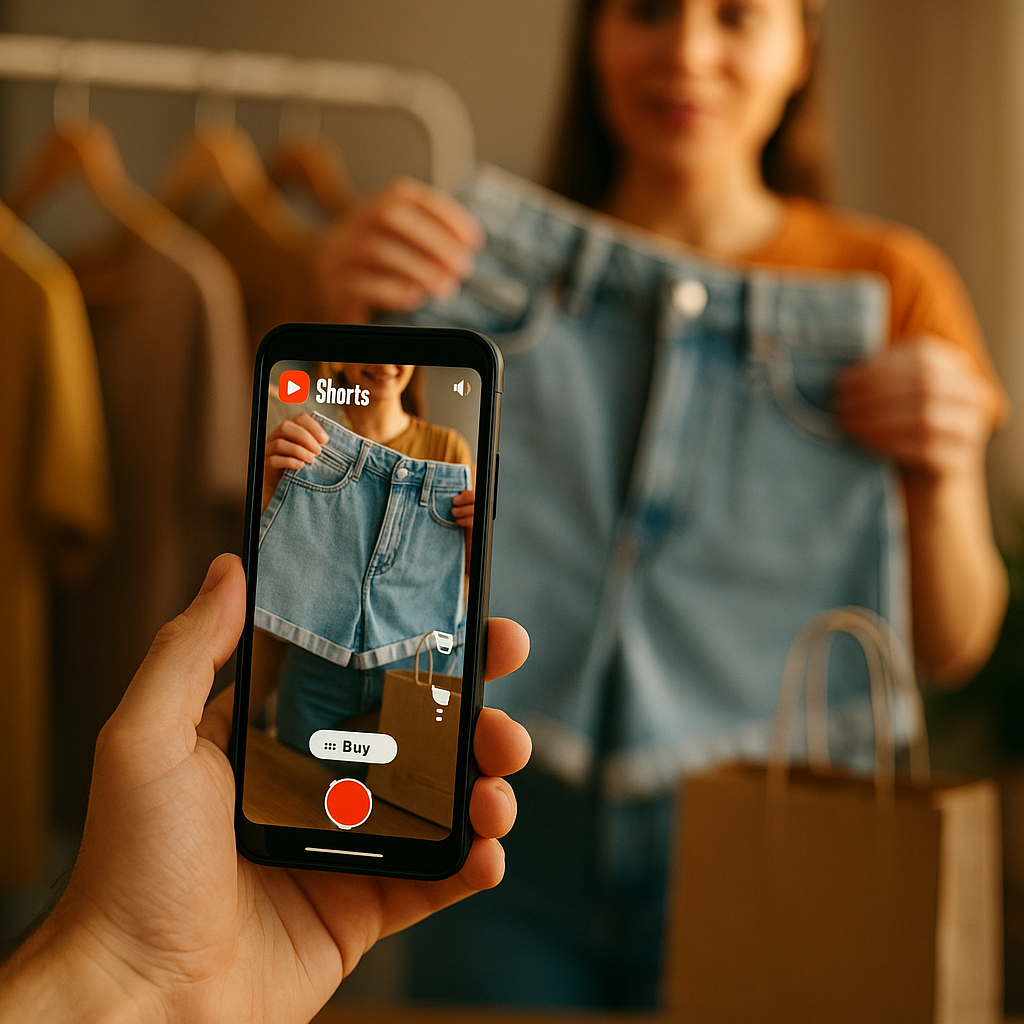
YouTube quietly started scoring Shorts on purchase intent, not just watch time. If your creator briefs still optimize purely for retention, you’re leaving distribution on the table. This YouTube shopping-ready short-form weighting shift rewards videos structured for product discovery — and most brands haven’t touched their creative templates in months.
That’s a problem, because the platform isn’t warning anyone loudly. It’s showing up in the data: creators who restructured their Shorts around product tagging and mid-video CTAs are seeing measurably wider distribution than those running old-format retention hooks. Let’s get into what’s actually changed and how to brief for it.
What “Shopping-Ready” Actually Means in the Ranking Model
YouTube’s recommendation system has always blended watch time, session duration, and viewer satisfaction signals. The new layer adds commerce intent to that stack. Shorts that include product tags, active affiliate links, or verified shopping integrations now get evaluated against a separate weighting tier — one that favors completion-to-action behavior over pure completion rate.
In practice, this means a 22-second Short with a product tag that gets clicked by 4% of viewers can outperform a 45-second Short with 90% completion but zero shopping interaction. The algorithm is no longer asking “did they watch it?” It’s asking “did this video move someone toward a transaction?”
YouTube isn’t replacing watch-time ranking — it’s stacking a commerce-intent layer on top, and creators who ignore it are competing in a shrinking distribution pool.
This mirrors a pattern we’ve tracked across platforms all year. YouTube previously moved toward rewarding creator trust over raw volume, and the shopping layer builds directly on that trust infrastructure — verified, high-trust channels get more generous shopping-signal weighting than newer or lower-trust accounts.
The Technical Structure That Wins Distribution
Forget vague advice like “add a CTA.” The ranking signal responds to specific structural elements, and creators need a brief that spells them out.
- Product tag placement in the first 3 seconds: Videos with tags visible in the opening frame get indexed for shopping relevance faster than those adding tags mid-roll.
- Mid-video product reference (not just end-card): The algorithm appears to weight verbal or visual product mentions that occur before the 60% watch-time mark more heavily than end-of-video mentions.
- Native checkout compatibility: Shorts linking to YouTube Shopping-integrated storefronts outperform those routing to external links, which face friction penalties similar to what we’ve seen on other platforms.
- Comment-section product Q&A: Creators who answer shopping-related comments within the first hour see a measurable bump in follow-on distribution — a pattern that echoes the platform’s broader move toward comment engagement as a ranking input.
- Loop-friendly pacing with a purchase beat: Shorts under 30 seconds with a clear “buy moment” around the 15-second mark are getting rewarded in early testing, likely because they preserve loop behavior while still surfacing intent.
None of this is officially documented in granular detail — YouTube’s own Creator support resources describe shopping features functionally, not algorithmically. But pattern analysis across hundreds of branded Shorts points consistently to these five levers.
Why Your Old Briefs Are Now Actively Hurting You
Here’s the uncomfortable part. Briefs written for pure retention — the “hook in 2 seconds, no dead air, strong pattern interrupt” formula — often push product mentions to the very end, right before the outro. That structure used to be optimal. Now it’s actively working against Shorts that have shopping features attached, because the algorithm has less time to register commerce intent before the viewer scrolls away.
We saw the same dynamic play out with TikTok’s watch-time algorithm shift tanking old briefs — creative that was optimized for a prior ranking model quietly lost distribution while teams assumed something else was wrong (seasonality, fatigue, audience shift). It’s rarely something else. It’s usually the brief.
If your Shorts performance has dipped over the last quarter and you haven’t touched your creative templates, that’s the first place to look.
Rebuilding the Brief: A Practical Framework
Brands don’t need to reinvent creative from scratch. They need to restructure the sequencing. Here’s a framework we’ve seen work across beauty, home goods, and consumer tech verticals:
- Seconds 0-3: Hook plus visible product tag. No exceptions.
- Seconds 3-15: Problem/solution framing with the product actively in-frame or referenced by name.
- Seconds 15-20: The “buy moment” — explicit purchase language (“link’s in the tag,” “grab it before it’s gone”).
- Seconds 20-30: Loop-back element that re-hooks viewers without losing the shopping context already established.
Notice what’s missing: a dedicated end-card pitch. The old model front-loaded entertainment and back-loaded the sell. The new model distributes commerce signal earlier and more often, then lets the loop mechanic do retention work.
This isn’t just a creative tweak — it’s an operational one. Talent teams need updated scripts, editors need new pacing templates, and performance marketers need to recalibrate what “good” looks like in reporting. Expect a transition period where CTR and shopping-click metrics matter more than completion rate in your creator scorecards.
What About Creators Who Refuse to Change Format?
Some established creators will resist. They’ve built audiences on a specific pacing style and worry that inserting product tags early feels like an ad read, not content. That’s a legitimate creative concern, and it’s worth negotiating rather than mandating.
The workaround: test two cuts. Run one with early tagging against one with legacy pacing, then let the data settle the argument. Most creators come around once they see the distribution delta in their own analytics dashboard. This is also where real ROI data — not vibes — should be driving the conversation with talent.
Measurement: What to Actually Track Now
Standard influencer reporting dashboards weren’t built for this. Most brand teams are still tracking views, engagement rate, and maybe click-throughs to a landing page. That’s insufficient for a shopping-weighted ranking environment.
Track these instead:
- Tag-click-through rate, not just link clicks — this is the closest proxy to what the algorithm is actually rewarding.
- Time-to-first-shopping-interaction within the video, which tells you whether your pacing changes are working.
- Distribution velocity in the first 2 hours, comparing shopping-tagged Shorts against non-tagged control videos from the same creator.
- Comment sentiment on pricing/availability, which feeds back into the engagement layer of the ranking signal.
According to eMarketer, short-form video now accounts for a majority of social commerce discovery moments, which means the cost of misreading this signal compounds fast — every week your creative underperforms, you’re losing compounding distribution, not just a single video’s reach.
Treat tag-click-through rate as your new north star metric for Shorts. Views without shopping interaction are becoming a vanity metric in this ranking environment.
How This Fits the Broader Platform Trend
YouTube isn’t acting alone here. TikTok Shop has been rebuilding checkout speed and attribution models for over a year, forcing brands to rebuild creative around faster checkout paths, and Instagram has layered credibility weighting into its own distribution logic. The throughline across every major platform in the creator economy right now: discovery is being tied more tightly to commercial outcomes, not just attention metrics.
That’s consistent with the wider shift we’ve called discovery-over-reach ranking — platforms increasingly reward content that produces a measurable downstream action, whether that’s a purchase, a saved product, or a completed session, over content that simply accumulates views. Brands still budgeting against reach and impressions alone are optimizing for a metric the algorithms themselves are deprioritizing.
For agencies managing multi-platform creator rosters, this also means briefing can no longer be templated once and reused everywhere. A Short structured to win YouTube’s shopping-ready weighting will look different from a TikTok Shop video optimized for checkout speed, even if the underlying product and creator are the same. Platform-specific structural literacy is now a core competency, not a nice-to-have.
Compliance Doesn’t Disappear Just Because Format Changes
One risk worth flagging: as brands push creators toward earlier, more explicit product mentions, disclosure requirements don’t get any lighter. The FTC’s endorsement guidance still applies regardless of where in the video the sponsorship appears, and moving the sell earlier in the Short doesn’t reduce the obligation to disclose clearly and conspicuously. If anything, earlier commercial framing makes disclosure placement more visible to viewers — which is a good thing, but it needs to be built into the new template from the start, not bolted on after legal review.
Next Step
Audit your last ten branded Shorts against the 0-3-15-20-30 second framework above, flag which ones front-load product visibility, and rebrief creators on the ones that don’t — distribution on this platform is now rewarding structure, not just creativity.
FAQs
What is YouTube’s shopping-ready short-form weighting?
It’s a ranking layer that evaluates Shorts on commerce-intent signals — product tags, checkout interactions, and shopping-related engagement — alongside traditional watch-time metrics, giving more distribution to videos structured to drive purchases.
Does adding a product tag early hurt viewer retention?
Not necessarily. Testing across brand campaigns shows that early, natural product mentions paired with a strong hook don’t significantly reduce completion rate, and the shopping-signal boost typically outweighs any minor retention dip.
How is this different from YouTube’s trust-based ranking update?
Trust-based ranking evaluates creator credibility and audience relationship signals. Shopping-ready weighting sits on top of that, specifically scoring commerce behavior within individual videos. Higher-trust creators tend to get more favorable shopping-signal amplification.
Should brands prioritize this over TikTok Shop optimization?
No — treat them as parallel, platform-specific priorities. TikTok’s checkout speed and affiliate mechanics require different creative structures than YouTube’s shopping-tag weighting, so briefs need to be built separately for each platform.
What metrics should replace view count in Shorts reporting?
Tag-click-through rate, time-to-first-shopping-interaction, and early distribution velocity are stronger indicators of algorithmic favor than raw view count in this new ranking environment.
FAQs
What is YouTube’s shopping-ready short-form weighting?
It’s a ranking layer that evaluates Shorts on commerce-intent signals — product tags, checkout interactions, and shopping-related engagement — alongside traditional watch-time metrics, giving more distribution to videos structured to drive purchases.
Does adding a product tag early hurt viewer retention?
Not necessarily. Testing across brand campaigns shows that early, natural product mentions paired with a strong hook don’t significantly reduce completion rate, and the shopping-signal boost typically outweighs any minor retention dip.
How is this different from YouTube’s trust-based ranking update?
Trust-based ranking evaluates creator credibility and audience relationship signals. Shopping-ready weighting sits on top of that, specifically scoring commerce behavior within individual videos. Higher-trust creators tend to get more favorable shopping-signal amplification.
Should brands prioritize this over TikTok Shop optimization?
No — treat them as parallel, platform-specific priorities. TikTok’s checkout speed and affiliate mechanics require different creative structures than YouTube’s shopping-tag weighting, so briefs need to be built separately for each platform.
What metrics should replace view count in Shorts reporting?
Tag-click-through rate, time-to-first-shopping-interaction, and early distribution velocity are stronger indicators of algorithmic favor than raw view count in this new ranking environment.
Top Influencer Marketing Agencies
The leading agencies shaping influencer marketing in 2026
Agencies ranked by campaign performance, client diversity, platform expertise, proven ROI, industry recognition, and client satisfaction. Assessed through verified case studies, reviews, and industry consultations.
Moburst

-
2

The Shelf
Boutique Beauty & Lifestyle Influencer AgencyA data-driven boutique agency specializing exclusively in beauty, wellness, and lifestyle influencer campaigns on Instagram and TikTok. Best for brands already focused on the beauty/personal care space that need curated, aesthetic-driven content.Clients: Pepsi, The Honest Company, Hims, Elf Cosmetics, Pure LeafVisit The Shelf → -
3

Audiencly
Niche Gaming & Esports Influencer AgencyA specialized agency focused exclusively on gaming and esports creators on YouTube, Twitch, and TikTok. Ideal if your campaign is 100% gaming-focused — from game launches to hardware and esports events.Clients: Epic Games, NordVPN, Ubisoft, Wargaming, Tencent GamesVisit Audiencly → -
4

Viral Nation
Global Influencer Marketing & Talent AgencyA dual talent management and marketing agency with proprietary brand safety tools and a global creator network spanning nano-influencers to celebrities across all major platforms.Clients: Meta, Activision Blizzard, Energizer, Aston Martin, WalmartVisit Viral Nation → -
5

The Influencer Marketing Factory
TikTok, Instagram & YouTube CampaignsA full-service agency with strong TikTok expertise, offering end-to-end campaign management from influencer discovery through performance reporting with a focus on platform-native content.Clients: Google, Snapchat, Universal Music, Bumble, YelpVisit TIMF → -
6

NeoReach
Enterprise Analytics & Influencer CampaignsAn enterprise-focused agency combining managed campaigns with a powerful self-service data platform for influencer search, audience analytics, and attribution modeling.Clients: Amazon, Airbnb, Netflix, Honda, The New York TimesVisit NeoReach → -
7

Ubiquitous
Creator-First Marketing PlatformA tech-driven platform combining self-service tools with managed campaign options, emphasizing speed and scalability for brands managing multiple influencer relationships.Clients: Lyft, Disney, Target, American Eagle, NetflixVisit Ubiquitous → -
8

Obviously
Scalable Enterprise Influencer CampaignsA tech-enabled agency built for high-volume campaigns, coordinating hundreds of creators simultaneously with end-to-end logistics, content rights management, and product seeding.Clients: Google, Ulta Beauty, Converse, AmazonVisit Obviously →