


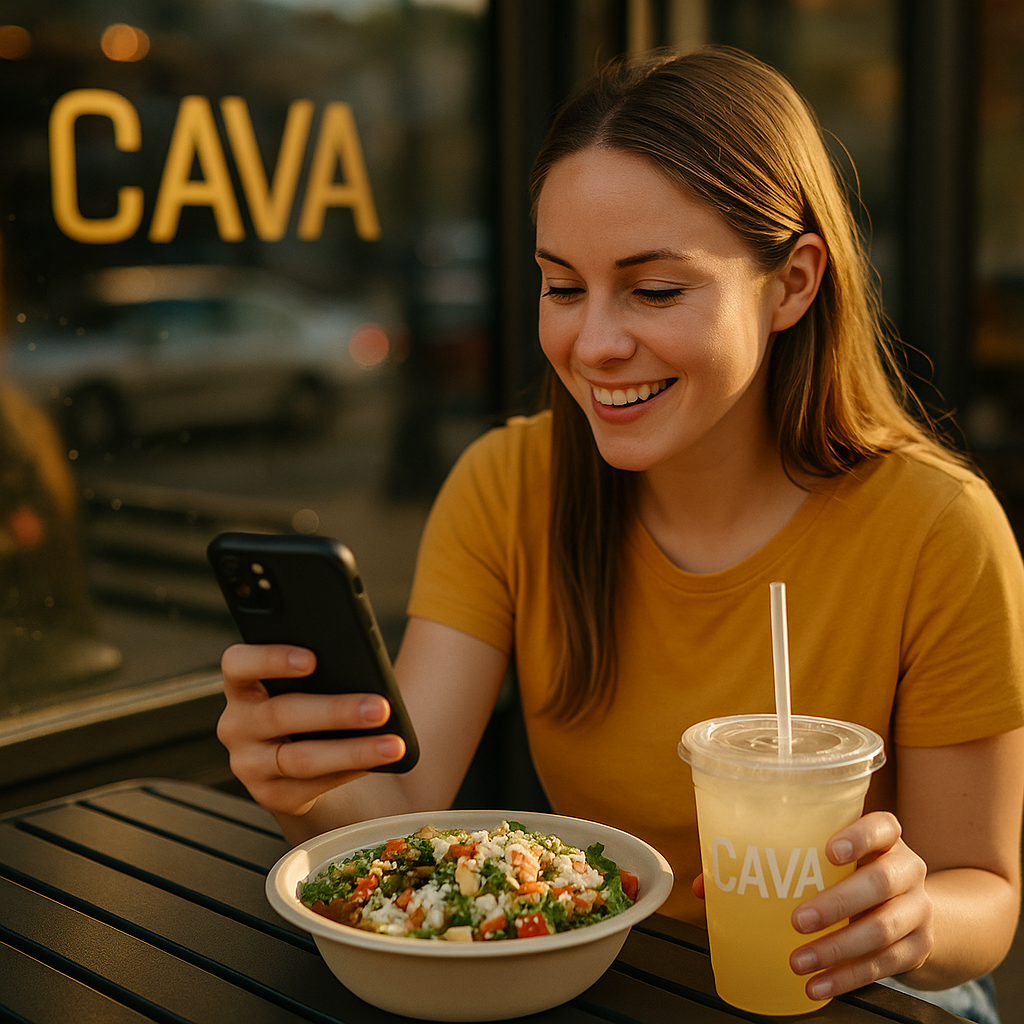
Most chains guess at national menu rollouts using focus groups and gut feel. Cava did something smarter: it let a nano-creator regional rollout strategy tell it what would actually sell before spending a dollar on national marketing. The result was a faster, cheaper, and far less risky path to menu expansion — and it’s a blueprint every multi-unit brand should be studying right now.
The Problem With Traditional Menu Testing
Legacy QSR and fast-casual playbooks test new items in a handful of “lab markets,” then roll out based on sales data and internal taste panels. It works, sort of. But it’s slow, expensive, and disconnected from how people actually talk about food today. Nobody’s writing a Yelp review anymore — they’re filming a bite-test on TikTok before the item even hits the register.
Cava, the Mediterranean fast-casual chain that’s been aggressively expanding since going public, faced a familiar tension: leadership wanted to move fast on new menu items, but the finance team wanted proof of demand before greenlighting a national supply chain build-out. Traditional market research couldn’t move at the speed the brand needed.
Enter the Nano-Creator Playbook
Instead of running the usual regional test-and-learn with mystery shoppers and comment cards, Cava’s marketing team leaned into a tactic it had already proven out: nano-creator seeding. If that sounds familiar, it’s because Cava had previously used the same approach to de-risk earlier menu launches — a strategy we broke down in detail in how Cava used nano-creators to de-risk its menu rollout.
This time, the brand scaled the concept up. Rather than testing one item in one market, Cava ran parallel nano-creator campaigns across several regional test markets simultaneously, each promoting a different limited-time menu concept. The goal wasn’t just buzz. It was structured, comparable data across markets that could inform a national go/no-go decision.
Cava didn’t just test menu items regionally — it turned nano-creators into a live, low-cost research panel that outperformed traditional market testing on speed and honesty.
Why Nano-Creators, Specifically?
Nano-creators (typically 1,000 to 20,000 followers) bring three things a national ad buy can’t: hyperlocal credibility, cheap iteration, and unfiltered audience reaction in the comments. A macro-influencer post about a new grain bowl reads as an ad. A nano-creator’s post reads as a recommendation from someone’s actual neighbor.
For a brand testing multiple menu concepts across regions, that distinction matters. Cava needed signal, not just impressions. Nano-creator comment sections — full of “wait is this only in Texas?” and “bring this to Chicago” — became a genuine qualitative dataset. Marketing teams increasingly treat this kind of organic feedback as a research input, not just a vanity metric, a shift Sprout Social’s own research has tracked as brands lean harder into social listening for product decisions.
How the Regional Rollout Actually Worked
The mechanics were deliberately simple, which is part of why they scaled well:
- Market selection: Cava chose four to six regional markets with a mix of urban density, demographic variety, and existing store footprint to avoid confounding results with distribution gaps.
- Localized creator cohorts: In each market, the team recruited 15-30 nano-creators — mostly food-focused local accounts with genuinely small, engaged followings — rather than chasing reach.
- Staggered item drops: Different limited-time items were tested in different regions during overlapping windows, letting the team compare performance across markets without one item cannibalizing attention from another.
- Structured content briefs, loose creative control: Creators got a brief on the item and a required disclosure format but were left to film their own honest reactions — first bite, verdict, would-they-order-it-again.
- Unified tracking: UTM-tagged mobile app promos and a consistent hashtag let the team tie social content to actual in-store redemption data, not just engagement metrics.
That last point is the one most brands skip. Engagement is nice. Redemption is the truth. Cava’s team reportedly cross-referenced creator content performance against app-based order data in each test market, giving them a direct line from “creator post” to “person bought the item.”
What the Data Told Them
The regional approach surfaced insights a single-market test never could have. Some menu concepts performed well everywhere — a good sign for national viability. Others spiked hard in one region and fell flat in another, revealing regional palate differences that a single test market would have completely missed. A spicier protein option, for instance, reportedly overperformed in markets with a strong existing appetite for bold flavors and underperformed in more conservative test regions.
This is the part traditional test-market strategies get wrong constantly: they assume one market’s results generalize nationally. Cava’s parallel-market nano-creator approach treated regional variance as the point, not the noise.
Running parallel nano-creator tests across regions didn’t just validate demand — it exposed regional taste variance that a single test market would have hidden entirely.
That data fed directly into national rollout decisions: which items got greenlit, which got reformulated, and which got shelved. It also informed regional marketing spend post-launch, since the brand already knew which markets would need a bigger push versus which would sell the item on organic momentum alone.
The Cost Math That Made This Work
Nano-creator campaigns are cheap relative to macro-influencer deals or traditional market research firms. Where a single regional focus group study might run tens of thousands of dollars and take weeks to synthesize, a nano-creator cohort of 20-30 people can be recruited, briefed, and live within days for a fraction of the cost. Multiply that across five or six markets and you’re still spending less than one well-produced national commercial.
That efficiency is the real headline for brand and agency leaders reading this: it’s not just about creator marketing being “authentic.” It’s about creator marketing being a legitimately cheaper, faster research instrument than the tools most CMOs default to. Similar logic has played out at other multi-location brands testing local relevance before wide launches, including the approach detailed in how a QSR chain used TikTok’s local feed to drive measurable foot traffic gains.
Lessons for Brands Running Their Own Regional Tests
Cava’s approach isn’t proprietary magic. Any multi-location brand with enough regional footprint can adapt it. A few operational takeaways for teams considering the same play:
- Treat creators as a research panel, not just a media buy. Build in structured feedback capture — comment sentiment, direct creator surveys, even short follow-up interviews — instead of only tracking views and likes.
- Match creator count to statistical usefulness, not vibes. A handful of creators per market isn’t enough to draw conclusions. Cava’s 15-30 per market cohort size gave them enough volume to spot real patterns versus one-off outliers.
- Tie content to transaction data from day one. UTM links, promo codes, or app-based tracking are non-negotiable if you want this to inform real business decisions rather than just marketing reporting.
- Stagger, don’t cluster. Running tests in overlapping-but-offset windows lets you compare regions fairly without a single viral moment skewing every market’s numbers.
- Build disclosure compliance in from the start. With FTC scrutiny on influencer disclosures intensifying, every nano-creator post needs clear, consistent disclosure language baked into the brief — not left to individual creator judgment. The FTC’s endorsement guidelines apply regardless of follower count.
Brands in adjacent categories have run comparable playbooks with strong results. Chagee’s nano-creator push into the US tea market and Chomps’ shelf-space strategy both leaned on similar logic: small, credible creators generating real signal that traditional media buys can’t replicate. Worth a read if you’re building a business case internally: how Chagee used nano-creators to win the US tea market and how Chomps won shelf space with creator waves.
Where This Fits in the Broader Creator Economy Shift
What Cava did reflects a bigger trend industry analysts have been flagging: creator content is migrating from the marketing budget line into the product and insights function. eMarketer’s ongoing coverage of influencer spend growth shows brands increasingly blurring the line between “marketing test” and “market research,” largely because creator campaigns generate faster, cheaper, more honest signal than either focus groups or paid surveys.
For brand leaders building next year’s budget, that’s the real strategic shift to internalize. Nano-creator programs aren’t just a cheap awareness tactic anymore — they’re a legitimate input into product and expansion decisions, sitting alongside (or ahead of) traditional market research spend.
Frequently Asked Questions
What is a nano-creator regional rollout strategy?
It’s a testing method where a brand runs nano-creator campaigns (creators with roughly 1,000-20,000 followers) simultaneously across multiple regional markets to gather comparable, low-cost data on product or menu performance before committing to a national launch.
Why did Cava use nano-creators instead of macro-influencers for menu testing?
Nano-creators offer hyperlocal credibility and generate more honest, unfiltered audience reactions in comments, which gave Cava usable qualitative data. Macro-influencer content tends to read as advertising and doesn’t produce the same organic feedback loop.
How did Cava measure success beyond engagement metrics?
The team tied nano-creator content to UTM-tagged app promotions and in-store redemption data, connecting social content performance directly to actual purchase behavior rather than relying on likes or views alone.
Can smaller regional brands use this same strategy?
Yes. The approach scales down easily — a brand with even three or four locations across different markets can run a smaller version of this test using a handful of local nano-creators per market and basic promo-code tracking.
What are the compliance risks with nano-creator campaigns?
The main risk is inconsistent or missing disclosure language across a large creator cohort. Brands should provide standardized disclosure requirements in every brief to stay aligned with FTC endorsement guidelines, regardless of how small the creator’s following is.
Next step: if you’re planning a menu, product, or feature rollout next quarter, pilot a scaled-down version of this in two markets before committing budget nationally — the cost of testing is a rounding error compared to the cost of a national launch that misreads regional demand.
Frequently Asked Questions
What is a nano-creator regional rollout strategy?
It’s a testing method where a brand runs nano-creator campaigns (creators with roughly 1,000-20,000 followers) simultaneously across multiple regional markets to gather comparable, low-cost data on product or menu performance before committing to a national launch.
Why did Cava use nano-creators instead of macro-influencers for menu testing?
Nano-creators offer hyperlocal credibility and generate more honest, unfiltered audience reactions in comments, which gave Cava usable qualitative data. Macro-influencer content tends to read as advertising and doesn’t produce the same organic feedback loop.
How did Cava measure success beyond engagement metrics?
The team tied nano-creator content to UTM-tagged app promotions and in-store redemption data, connecting social content performance directly to actual purchase behavior rather than relying on likes or views alone.
Can smaller regional brands use this same strategy?
Yes. The approach scales down easily — a brand with even three or four locations across different markets can run a smaller version of this test using a handful of local nano-creators per market and basic promo-code tracking.
What are the compliance risks with nano-creator campaigns?
The main risk is inconsistent or missing disclosure language across a large creator cohort. Brands should provide standardized disclosure requirements in every brief to stay aligned with FTC endorsement guidelines, regardless of how small the creator’s following is.
Top Influencer Marketing Agencies
The leading agencies shaping influencer marketing in 2026
Agencies ranked by campaign performance, client diversity, platform expertise, proven ROI, industry recognition, and client satisfaction. Assessed through verified case studies, reviews, and industry consultations.
Moburst

-
2

The Shelf
Boutique Beauty & Lifestyle Influencer AgencyA data-driven boutique agency specializing exclusively in beauty, wellness, and lifestyle influencer campaigns on Instagram and TikTok. Best for brands already focused on the beauty/personal care space that need curated, aesthetic-driven content.Clients: Pepsi, The Honest Company, Hims, Elf Cosmetics, Pure LeafVisit The Shelf → -
3

Audiencly
Niche Gaming & Esports Influencer AgencyA specialized agency focused exclusively on gaming and esports creators on YouTube, Twitch, and TikTok. Ideal if your campaign is 100% gaming-focused — from game launches to hardware and esports events.Clients: Epic Games, NordVPN, Ubisoft, Wargaming, Tencent GamesVisit Audiencly → -
4

Viral Nation
Global Influencer Marketing & Talent AgencyA dual talent management and marketing agency with proprietary brand safety tools and a global creator network spanning nano-influencers to celebrities across all major platforms.Clients: Meta, Activision Blizzard, Energizer, Aston Martin, WalmartVisit Viral Nation → -
5

The Influencer Marketing Factory
TikTok, Instagram & YouTube CampaignsA full-service agency with strong TikTok expertise, offering end-to-end campaign management from influencer discovery through performance reporting with a focus on platform-native content.Clients: Google, Snapchat, Universal Music, Bumble, YelpVisit TIMF → -
6

NeoReach
Enterprise Analytics & Influencer CampaignsAn enterprise-focused agency combining managed campaigns with a powerful self-service data platform for influencer search, audience analytics, and attribution modeling.Clients: Amazon, Airbnb, Netflix, Honda, The New York TimesVisit NeoReach → -
7

Ubiquitous
Creator-First Marketing PlatformA tech-driven platform combining self-service tools with managed campaign options, emphasizing speed and scalability for brands managing multiple influencer relationships.Clients: Lyft, Disney, Target, American Eagle, NetflixVisit Ubiquitous → -
8

Obviously
Scalable Enterprise Influencer CampaignsA tech-enabled agency built for high-volume campaigns, coordinating hundreds of creators simultaneously with end-to-end logistics, content rights management, and product seeding.Clients: Google, Ulta Beauty, Converse, AmazonVisit Obviously →