


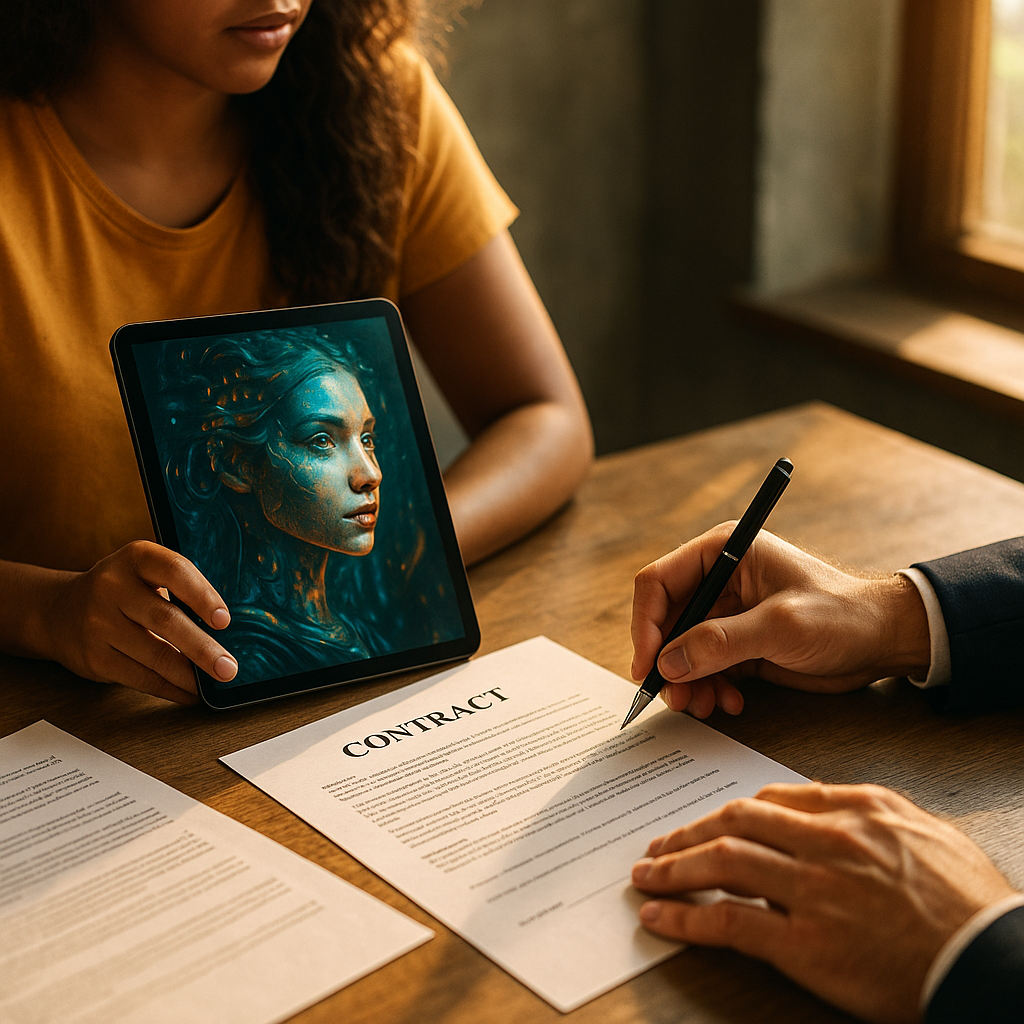
TikTok’s algorithm can now remix, recut, and re-caption a sponsored post without asking anyone’s permission first. If your creator contracts don’t have an AI remix consent clause, you’ve already lost control of the disclosure, the messaging, and possibly your FTC compliance. This isn’t a hypothetical risk anymore — it’s a Tuesday.
Brands spent years building disclosure workflows around static assets: a video goes up, it has a #ad tag, everyone moves on. That model assumed the sponsored post you approved is the sponsored post the audience sees. TikTok’s generative remix features broke that assumption quietly, and most legal teams haven’t caught up.
What Changed: TikTok Now Edits Content After Publish
TikTok has rolled out a suite of AI-native features — auto-dubbing, AI-generated highlight reels, “Smart” remix tools that splice creator clips into new compilations, and algorithmic thumbnail/caption variants tested for engagement. Some of this happens visibly to the creator. Much of it happens server-side, invisible until a brand’s monitoring team stumbles on a remixed clip circulating with none of the original disclosure intact.
We covered the mechanics of this in how AI remixing breaks disclosure rules — the short version is that when TikTok’s system trims a 60-second sponsored post into a 12-second highlight, it frequently drops the burned-in disclosure text along with the context that made the original post compliant.
An AI remix consent clause isn’t about stopping TikTok from remixing content — you can’t. It’s about assigning who’s liable when the remix breaks disclosure law, and making sure your contract triggers a response before regulators do.
Here’s the uncomfortable part: the FTC doesn’t care whose algorithm cut the clip. If the sponsored relationship isn’t clear to a reasonable consumer, the brand is exposed regardless of intent. FTC guidance has consistently held brands responsible for ensuring disclosures are “clear and conspicuous” in whatever form the content ultimately takes — including forms the brand never approved.
Why Existing Contracts Don’t Cover This
Most creator agreements still treat the deliverable as a fixed asset. Standard boilerplate says something like “Creator grants Brand a license to use the Content as delivered.” That language assumes one version of the content exists. It doesn’t anticipate a platform algorithmically generating derivative versions — new edits, new audio tracks, new captions — that neither party reviewed before publication.
Ask yourself: does your current contract even define what happens if TikTok’s system creates a dubbed version of a sponsored post in a language the creator doesn’t speak? Most don’t. That’s a real scenario now, and we’ve flagged the legal exposure around it in AI voice-cloned creator dubbing, where ten states already have laws that could apply.
The gap isn’t malicious. It’s just that contract templates were written for a platform environment that no longer exists.
The Five Elements Every AI Remix Consent Clause Needs
A workable clause has to do more than say “AI may be used.” It needs operational teeth. Based on patterns emerging across brand legal teams handling this well, here’s what belongs in the clause:
- Explicit scope of platform-generated derivatives. Name the mechanisms: auto-dubbing, algorithmic remix/highlight generation, AI-generated captions or thumbnails, and any future feature of similar function. Vague language like “platform modifications” invites disputes over what’s covered.
- A disclosure-persistence warranty. Require the creator (and require yourselves, frankly) to confirm that any derivative version maintains a compliant disclosure — and define what happens if it doesn’t. This should tie directly to your existing disclosure standard, not create a parallel one. See why paid partnership labels alone don’t satisfy FTC rules for the baseline you’re building on.
- A monitoring and takedown trigger. Specify who watches for non-compliant remixes (brand, creator, or a third-party monitoring tool) and how fast a takedown request must go out once one’s found. 48 hours is becoming a common standard; some legal teams push for 24.
- Allocation of liability for algorithmic derivatives. This is the clause’s core function. If TikTok’s system strips a disclosure from a remix and the FTC comes knocking, who’s responsible for the response — brand, agency, or creator? Silence here just means “whoever gets sued first.”
- A right to require re-disclosure or removal. Brands need contractual standing to compel a creator to re-post with corrected disclosure, or to demand platform-level removal, without renegotiating the entire agreement.
None of this needs to be adversarial. Most creators want the same protection — nobody wants their account flagged because an algorithm mangled a sponsored clip they had no part in editing.
Sample Clause Language (Starting Point, Not Legal Advice)
Something close to this tends to work as a first draft for legal review:
“Creator acknowledges that the Platform may algorithmically generate derivative versions of the Content, including but not limited to auto-dubbed, remixed, re-captioned, or highlight-compiled versions (‘AI Derivatives’). Creator consents to the existence of AI Derivatives but retains the right to request removal of any AI Derivative that omits or obscures required sponsorship disclosure. Brand and Creator agree to monitor for non-compliant AI Derivatives and to issue takedown or correction requests within [48] hours of discovery. Liability for any regulatory action arising from a non-compliant AI Derivative shall be allocated according to Section [X] (Indemnification).”
That last sentence is doing the real work. Everything before it is scope-setting; the indemnification tie-in is what actually protects you.
Where This Intersects Indemnification and Insurance
An AI remix clause without a corresponding indemnification update is mostly theater. If you’re not already reviewing how liability flows between brand, agency, and creator for AI-generated derivatives, this is the moment. The logic mirrors what we’ve seen brands build for automated ad systems — see indemnification clauses for autonomous bidding agents and liability riders for AI-driven media buying — the common thread being that when a machine takes an action neither party directly authorized, someone still has to own the consequence.
Insurance carriers are starting to ask about this too. Marketing E&O policies increasingly include questionnaires about AI-generated content exposure. If your creator contracts don’t address remix consent, you may be answering those questionnaires incorrectly without realizing it.
Does This Apply Beyond TikTok?
Yes, and it’s accelerating. Instagram Reels and YouTube Shorts are both testing similar auto-remix and AI-dub features. Platforms are pushing toward AI-assisted content transformation because it drives engagement and reduces production friction — for them. It shifts risk onto brands. We broke down the wider platform trend in platforms moving toward AI-verified disclosure standards, and the direction of travel is unambiguous: labels alone are being treated as insufficient, and platforms are experimenting with machine-readable disclosure metadata that survives edits.
Until that metadata standard is universal and reliable, your contract is the only enforcement mechanism you actually control.
If your brand runs sponsored content on more than one short-form platform, one AI remix clause covering “the Platform” generically won’t hold up. Draft per-platform annexes — TikTok’s remix mechanics differ meaningfully from YouTube’s or Meta’s, and courts will expect specificity.
What Your Monitoring Workflow Needs to Look Like
A clause is only as good as the monitoring behind it. Legal teams tend to underestimate the operational lift here. You need:
- A recurring sweep (weekly minimum, daily for high-spend campaigns) checking for AI-generated derivatives of live sponsored content.
- A documented audit trail showing when a derivative was found, what disclosure state it was in, and what action followed — this is the same discipline outlined in building an AI content audit protocol, just applied post-publish instead of pre-publish.
- A named owner. Not “marketing team” — a person or role, because ambiguous ownership is how these things slip through until a regulator or journalist finds them first.
Brands running influencer programs at scale are increasingly bringing in third-party monitoring tools that flag algorithmic derivatives automatically, similar to how social listening platforms already track brand mentions and sentiment. Repurposing that infrastructure for disclosure compliance is a logical next step, and cheaper than the alternative.
The Cost of Doing Nothing
Consider the numbers driving urgency here. eMarketer estimates creator/influencer marketing spend continuing double-digit annual growth, meaning more sponsored assets flowing through platforms with AI remix features turned on by default. Every one of those assets is a potential disclosure failure waiting for an algorithm to trigger it. The FTC has shown increasing appetite for enforcement actions tied to disclosure failures, and state-level deceptive advertising statutes add another layer — a pattern we’ve tracked closely in coverage like TikTok’s state deceptive-urgency law risk.
None of this requires a worst-case mindset. It requires treating contract language as infrastructure, not paperwork.
FAQs
Frequently Asked Questions
What is an AI remix consent clause?
It’s a contract provision that addresses how a platform’s algorithmic tools may alter, dub, remix, or recompile sponsored content after publication, and who is responsible if those alterations remove or obscure required disclosures.
Can brands actually stop TikTok from remixing sponsored content?
No. Platform-level remix features operate independently of brand or creator control. The clause doesn’t prevent remixing — it establishes liability allocation, monitoring obligations, and a takedown or correction process for when it happens.
Who is liable if TikTok’s AI removes a disclosure from a sponsored post?
Liability depends on the contract’s indemnification terms, but absent clear language, the brand typically carries the greatest regulatory exposure since FTC rules hold advertisers responsible for ensuring disclosures are clear regardless of how content was altered.
Does this apply to gifted or affiliate content too, not just paid sponsorships?
Yes. Any content subject to disclosure requirements is at risk if a platform’s AI remix tools strip that disclosure during automated editing, which is why standardizing disclosure language across gifted, affiliate, and paid posts matters — see our related coverage on a unified FTC disclosure standard.
How often should brands monitor for AI-remixed versions of their sponsored content?
Weekly at minimum for standard campaigns, daily for high-spend or high-visibility campaigns. Monitoring frequency should scale with campaign spend and regulatory risk exposure.
Should this clause be the same across TikTok, Instagram, and YouTube?
No. Each platform’s AI remix and dubbing mechanics differ, so contracts should include platform-specific annexes rather than one generic clause covering all platforms equally.
Next step: Pull your current creator contract template and check whether it even mentions algorithmic derivatives. If it doesn’t, that’s your first fix this quarter — not next year’s.
Top Influencer Marketing Agencies
The leading agencies shaping influencer marketing in 2026
Agencies ranked by campaign performance, client diversity, platform expertise, proven ROI, industry recognition, and client satisfaction. Assessed through verified case studies, reviews, and industry consultations.
Moburst

-
2

The Shelf
Boutique Beauty & Lifestyle Influencer AgencyA data-driven boutique agency specializing exclusively in beauty, wellness, and lifestyle influencer campaigns on Instagram and TikTok. Best for brands already focused on the beauty/personal care space that need curated, aesthetic-driven content.Clients: Pepsi, The Honest Company, Hims, Elf Cosmetics, Pure LeafVisit The Shelf → -
3

Audiencly
Niche Gaming & Esports Influencer AgencyA specialized agency focused exclusively on gaming and esports creators on YouTube, Twitch, and TikTok. Ideal if your campaign is 100% gaming-focused — from game launches to hardware and esports events.Clients: Epic Games, NordVPN, Ubisoft, Wargaming, Tencent GamesVisit Audiencly → -
4

Viral Nation
Global Influencer Marketing & Talent AgencyA dual talent management and marketing agency with proprietary brand safety tools and a global creator network spanning nano-influencers to celebrities across all major platforms.Clients: Meta, Activision Blizzard, Energizer, Aston Martin, WalmartVisit Viral Nation → -
5

The Influencer Marketing Factory
TikTok, Instagram & YouTube CampaignsA full-service agency with strong TikTok expertise, offering end-to-end campaign management from influencer discovery through performance reporting with a focus on platform-native content.Clients: Google, Snapchat, Universal Music, Bumble, YelpVisit TIMF → -
6

NeoReach
Enterprise Analytics & Influencer CampaignsAn enterprise-focused agency combining managed campaigns with a powerful self-service data platform for influencer search, audience analytics, and attribution modeling.Clients: Amazon, Airbnb, Netflix, Honda, The New York TimesVisit NeoReach → -
7

Ubiquitous
Creator-First Marketing PlatformA tech-driven platform combining self-service tools with managed campaign options, emphasizing speed and scalability for brands managing multiple influencer relationships.Clients: Lyft, Disney, Target, American Eagle, NetflixVisit Ubiquitous → -
8

Obviously
Scalable Enterprise Influencer CampaignsA tech-enabled agency built for high-volume campaigns, coordinating hundreds of creators simultaneously with end-to-end logistics, content rights management, and product seeding.Clients: Google, Ulta Beauty, Converse, AmazonVisit Obviously →