


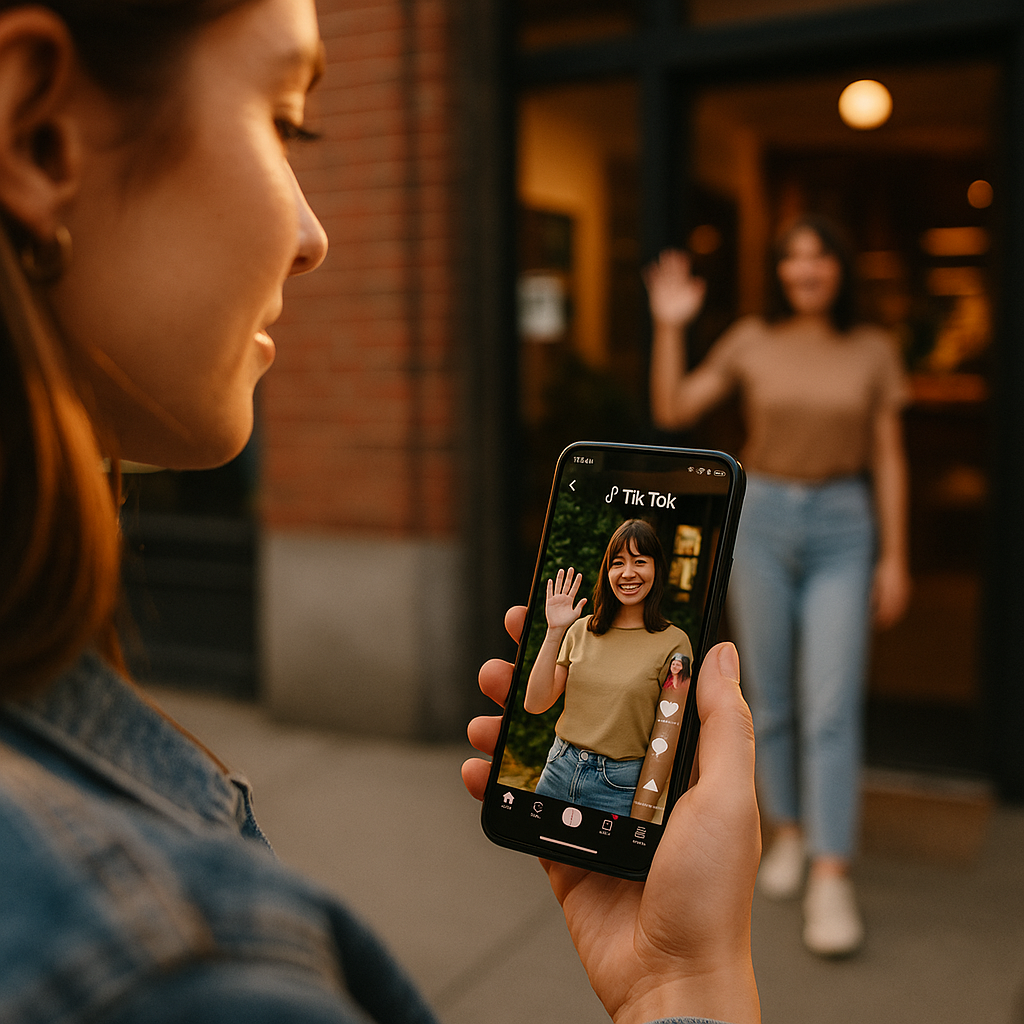
Sixty-nine percent of TikTok users say the app helps them discover local businesses they’d never have found otherwise, per TikTok’s own advertising platform data. If your brand still treats TikTok as a top-of-funnel awareness play, you’re leaving foot traffic on the table. The TikTok local feed now functions as a discovery engine for physical retail, and brands that ignore its geo-targeting mechanics are handing walk-in customers to competitors who bothered to structure their content for it.
The Local Feed Isn’t a Feature. It’s a Distribution Layer.
Most marketers still think of TikTok’s “Nearby” tab as a novelty, a place where hyperlocal restaurant videos live and not much else. That thinking is outdated. TikTok has quietly built local discovery into the core recommendation system, surfacing content based on proximity signals alongside its usual engagement and watch-time weighting.
This matters because the platform is no longer just ranking content on interest, it’s ranking on relevance to where you physically are. A user standing three blocks from your store is a different targeting cohort than someone scrolling from across the state, even if they follow identical accounts and watch identical content categories.
Geo-relevance is becoming a ranking signal in its own right, not just a filter applied after the fact. Brands that structure content around location from the start get compounding distribution advantages over those bolting on geotags as an afterthought.
We covered how this local discovery mechanism ties directly into live commerce conversion in our breakdown of local discovery and retail ROI, but the foot-traffic implications deserve their own playbook. Live commerce is one output. Store visits are another, and arguably the one most brick-and-mortar brands actually need.
What “Geo-Targeted Creator Content” Actually Means
Let’s be precise, because the term gets thrown around loosely. Geo-targeted creator content on TikTok isn’t just adding a location sticker to a video. It’s a structural approach involving four layers working together:
- Location tagging at the video level, tied to a verified business listing.
- Creator proximity, meaning the creator actually filmed on-site or within the service radius.
- Local language and reference cues, like neighborhood names, regional slang, or nearby landmarks mentioned in the audio or caption.
- Repetition cadence, publishing consistently enough that the algorithm builds a local relevance profile for your account.
Miss any one of these and you get a video that performs fine nationally but does nothing for the specific ZIP codes you actually care about. Nail all four and you start showing up in Nearby feeds for users who’ve never heard of your brand but happen to be within walking distance.
Why This Requires a Different Creator Vetting Process
Here’s the operational shift most brand teams miss: geo-targeted campaigns need creators vetted for location, not just niche fit. A beauty creator with 200K followers and great engagement rates is worthless for a local salon campaign if she lives four states away and has never set foot in your market.
This is a real vetting bottleneck, and it’s why local discovery has fundamentally changed how brands source talent. Our piece on geolocation-driven creator vetting goes deep on the sourcing side. The short version: you now need creators filtered by home base and travel radius before you even look at engagement metrics.
Agencies running multi-location campaigns (think regional restaurant chains or multi-city retail brands) are building creator databases segmented by metro area, not just by content category. It’s more operational overhead upfront, but it’s the only way to make geo-targeting actually work at scale.
Structuring the Content: A Practical Framework
So how do you actually brief creators for this? Skip the generic “make a fun video about our store” brief. Structure it around what the algorithm and the local audience both respond to.
1. Open with a location hook, not a product hook. “This hidden coffee shop in [neighborhood] is criminally underrated” outperforms “Try our new seasonal latte” for local discovery purposes. The algorithm and the viewer both need the location context immediately, before they decide whether to keep watching.
2. Use the actual storefront, not a lifestyle backdrop. Viewers need to recognize the exterior if they drive or walk past it. This sounds obvious, but a shocking number of local campaign briefs still ask creators to film in generic-looking interior spaces that could be anywhere.
3. Bake in a low-friction next step. “Open until 9pm” or “mention this video for 10% off” gives viewers a reason to act within hours, not add-it-to-a-someday-list. Foot traffic campaigns live and die on urgency, unlike awareness content that can afford a slower burn.
4. Layer geotags correctly. Tag the specific business location, not just the city. TikTok’s Nearby algorithm reportedly weighs precision here, and vague city-level tagging dilutes your relevance signal.
5. Repeat with variation, not repetition. One viral local video is a fluke. Ten consistent, varied local videos over a month is a pattern the algorithm can learn from and start distributing proactively.
Foot-traffic content isn’t judged by views. It’s judged by whether someone put down their phone and walked into your store within 48 hours. Brief for that outcome specifically, and measure it that way too.
Measurement: The Part Brands Consistently Botch
Views and likes tell you nothing about foot traffic. You need attribution structures that actually connect the local feed exposure to a physical visit, and most brand dashboards aren’t set up for this out of the box.
Practical measurement tactics that actually work:
- Unique in-store codes per creator. “Show this video at checkout” is low-tech but gives you hard attribution data.
- TikTok Shop local pickup tagging, where applicable, which ties directly into the same infrastructure covered in our TikTok Shop comparison guide.
- Foot traffic lift studies using mobile location data providers, similar to what brands run for out-of-home ad measurement.
- Point-of-sale timing correlation, checking whether sales spikes align with video posting windows in specific store locations.
None of these are perfect. All of them beat “the video got 40K views, so it probably worked,” which is still, embarrassingly, how a lot of local campaigns get reported up to leadership.
For brands running paid amplification behind organic geo-content, it’s worth benchmarking against broader platform data. eMarketer’s retail media research consistently shows local intent signals converting at higher rates than broad demographic targeting, which tracks with what we’re seeing anecdotally from TikTok Shop-enabled local campaigns.
Trust Signals Matter More at the Local Level
There’s a wrinkle here that trips up a lot of national brands running local pilots: TikTok’s broader shift toward trust-weighted distribution applies just as much to local content as it does to viral national content. A creator with inconsistent posting history or low audience trust scores won’t get the same local feed distribution boost, even with perfect geotagging.
This connects directly to the platform-wide changes we’ve tracked in our coverage of trust-based distribution requirements. Vetting for local relevance isn’t a substitute for vetting overall creator credibility, it’s an additional filter layered on top.
Practically, this means your local creator vetting checklist should now include: location verification, historical trust signals (consistency, comment sentiment, follower authenticity), and content-category fit. Skipping any one of these three weakens the whole campaign, no matter how good the individual video looks.
Budget Allocation: Stop Treating Local Like an Afterthought
Most brands still fund local creator campaigns out of leftover regional marketing budgets, treating them as a nice-to-have layered on top of national strategy. That’s backwards given what the data shows about intent-driven local discovery.
A better allocation model: dedicate a fixed percentage of total influencer spend (industry practitioners we’ve spoken with suggest starting around 15-20%) specifically to geo-targeted local content, with its own creator roster, its own briefing templates, and its own measurement dashboard. Don’t let it compete for scraps against your national awareness budget, because the KPIs and the creative requirements are fundamentally different animals.
Retail and restaurant brands running multi-location footprints should also consider tiered creator tiers by market size. A flagship-city creator roster looks different from a secondary-market roster, both in rate expectations and in follower thresholds worth targeting. For more on how HubSpot’s broader research on localized content marketing supports this segmented approach, their content strategy resources are a useful benchmark outside the TikTok-specific mechanics.
Compliance Doesn’t Disappear Because It’s Local
One more thing brand and legal teams tend to overlook: local creator content still needs FTC-compliant disclosure, same as any sponsored post. A local coupon-code partnership is still a material connection under FTC guidelines, and “mention this video for a discount” arrangements absolutely qualify as compensation requiring disclosure.
Smaller local creators, often newer to brand deals than national-tier talent, are more prone to skipping disclosure requirements simply out of inexperience. Build disclosure checks into your local creator onboarding the same way you would for a six-figure national partnership. Regulatory risk doesn’t scale down just because the campaign budget does.
FAQs
Frequently Asked Questions
How does TikTok’s local feed differ from its main For You feed?
The local feed, often accessed through the Nearby tab, weighs proximity signals heavily alongside standard engagement metrics. Content that performs well nationally may see little local feed traction if it lacks location tagging, on-site filming, or consistent geo-relevance signals over time.
What size following does a local creator need to drive real foot traffic?
Follower count matters far less than proximity and audience trust. A creator with 5,000 engaged local followers who actually lives in the target market typically outperforms a 100,000-follower creator with no geographic connection to the store.
How long does it take to see foot traffic results from geo-targeted content?
Most brands see initial visit lift within one to two weeks of consistent posting, though building a reliable local algorithm relevance profile generally takes four to eight weeks of sustained, varied content from location-verified creators.
Can national brands run geo-targeted local campaigns effectively?
Yes, but they need market-by-market creator rosters rather than a single national talent pool. Multi-location brands should treat each metro area as its own micro-campaign with dedicated creators, briefs, and attribution tracking.
Do we still need FTC disclosure for local, low-budget creator deals?
Absolutely. Any material connection, including free products or discount arrangements, requires clear disclosure under FTC guidelines regardless of campaign size or creator follower count.
Next step: Audit your last ten local creator briefs against the four structural layers above (location tagging, creator proximity, local cues, and posting cadence). If even one is missing, that’s your fastest fix before your next campaign cycle.
Frequently Asked Questions
How does TikTok’s local feed differ from its main For You feed?
The local feed, often accessed through the Nearby tab, weighs proximity signals heavily alongside standard engagement metrics. Content that performs well nationally may see little local feed traction if it lacks location tagging, on-site filming, or consistent geo-relevance signals over time.
What size following does a local creator need to drive real foot traffic?
Follower count matters far less than proximity and audience trust. A creator with 5,000 engaged local followers who actually lives in the target market typically outperforms a 100,000-follower creator with no geographic connection to the store.
How long does it take to see foot traffic results from geo-targeted content?
Most brands see initial visit lift within one to two weeks of consistent posting, though building a reliable local algorithm relevance profile generally takes four to eight weeks of sustained, varied content from location-verified creators.
Can national brands run geo-targeted local campaigns effectively?
Yes, but they need market-by-market creator rosters rather than a single national talent pool. Multi-location brands should treat each metro area as its own micro-campaign with dedicated creators, briefs, and attribution tracking.
Do we still need FTC disclosure for local, low-budget creator deals?
Absolutely. Any material connection, including free products or discount arrangements, requires clear disclosure under FTC guidelines regardless of campaign size or creator follower count.
Top Influencer Marketing Agencies
The leading agencies shaping influencer marketing in 2026
Agencies ranked by campaign performance, client diversity, platform expertise, proven ROI, industry recognition, and client satisfaction. Assessed through verified case studies, reviews, and industry consultations.
Moburst

-
2

The Shelf
Boutique Beauty & Lifestyle Influencer AgencyA data-driven boutique agency specializing exclusively in beauty, wellness, and lifestyle influencer campaigns on Instagram and TikTok. Best for brands already focused on the beauty/personal care space that need curated, aesthetic-driven content.Clients: Pepsi, The Honest Company, Hims, Elf Cosmetics, Pure LeafVisit The Shelf → -
3

Audiencly
Niche Gaming & Esports Influencer AgencyA specialized agency focused exclusively on gaming and esports creators on YouTube, Twitch, and TikTok. Ideal if your campaign is 100% gaming-focused — from game launches to hardware and esports events.Clients: Epic Games, NordVPN, Ubisoft, Wargaming, Tencent GamesVisit Audiencly → -
4

Viral Nation
Global Influencer Marketing & Talent AgencyA dual talent management and marketing agency with proprietary brand safety tools and a global creator network spanning nano-influencers to celebrities across all major platforms.Clients: Meta, Activision Blizzard, Energizer, Aston Martin, WalmartVisit Viral Nation → -
5

The Influencer Marketing Factory
TikTok, Instagram & YouTube CampaignsA full-service agency with strong TikTok expertise, offering end-to-end campaign management from influencer discovery through performance reporting with a focus on platform-native content.Clients: Google, Snapchat, Universal Music, Bumble, YelpVisit TIMF → -
6

NeoReach
Enterprise Analytics & Influencer CampaignsAn enterprise-focused agency combining managed campaigns with a powerful self-service data platform for influencer search, audience analytics, and attribution modeling.Clients: Amazon, Airbnb, Netflix, Honda, The New York TimesVisit NeoReach → -
7

Ubiquitous
Creator-First Marketing PlatformA tech-driven platform combining self-service tools with managed campaign options, emphasizing speed and scalability for brands managing multiple influencer relationships.Clients: Lyft, Disney, Target, American Eagle, NetflixVisit Ubiquitous → -
8

Obviously
Scalable Enterprise Influencer CampaignsA tech-enabled agency built for high-volume campaigns, coordinating hundreds of creators simultaneously with end-to-end logistics, content rights management, and product seeding.Clients: Google, Ulta Beauty, Converse, AmazonVisit Obviously →