


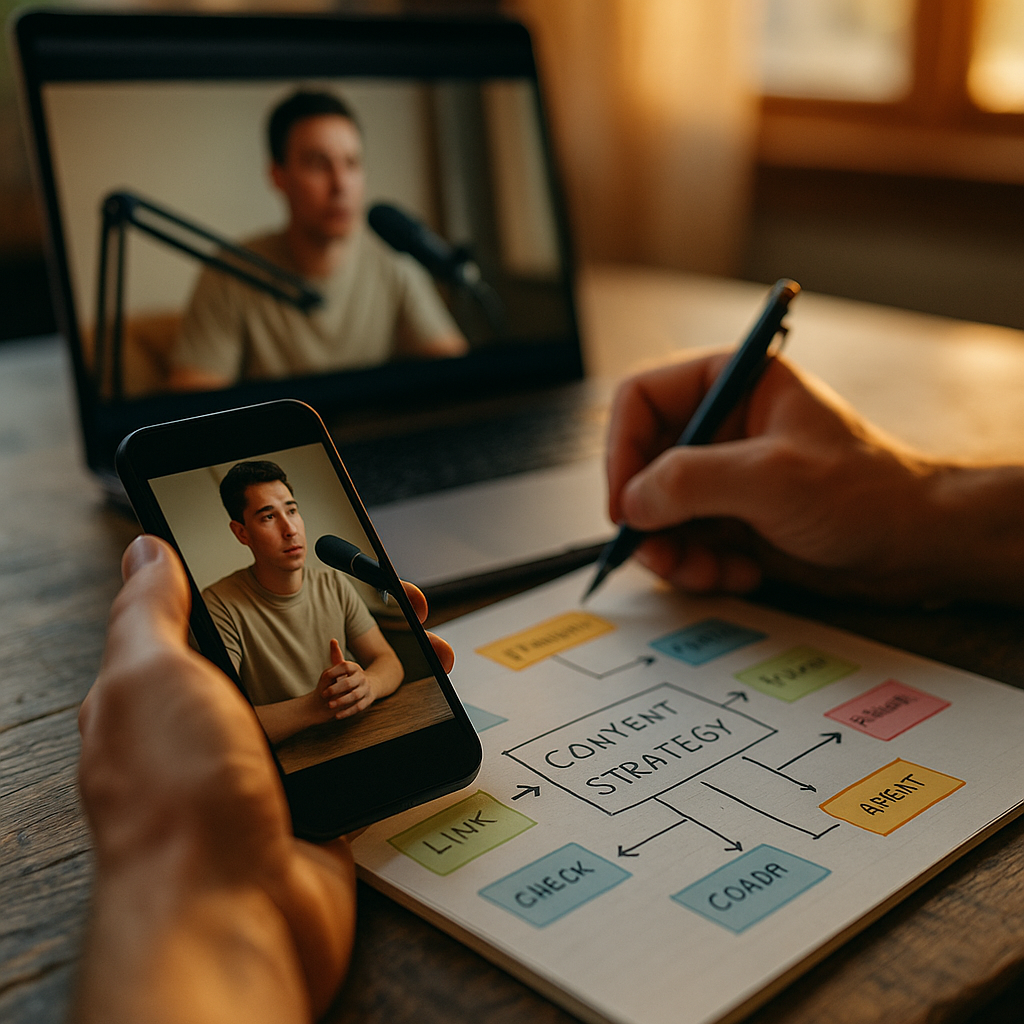
Nielsen puts it plainly: over 80% of TV viewers use a phone at the same time. That’s not a distraction problem. That’s a distribution opportunity most brands still brief creators as if it doesn’t exist. A real second-screen content strategy treats the phone as the primary screen and the TV as ambient context, not the other way around.
Most creator briefs assume full attention. Wrong assumption. If your creative director is still writing briefs for a single, focused viewing session, they’re optimizing for a viewer who barely exists anymore.
The Behavior Brands Keep Misreading
Second-screen viewing isn’t new. What’s changed is the intent behind it. Viewers aren’t just checking texts during commercial breaks anymore — they’re actively searching for what’s on screen, comparing prices, reading reviews, and following creators who are reacting to the same show in real time. eMarketer has tracked this shift for years, and the pattern holds across demographics: younger viewers do it constantly, older viewers do it during live events and sports.
Here’s the part brands miss: the phone isn’t competing with the TV for attention. It’s completing the loop the TV started. A viewer sees a product placement, picks up their phone, and searches. If your creator content isn’t positioned to intercept that exact moment, a competitor’s will be.
The phone isn’t a distraction from the TV screen — it’s the conversion device. Brands that brief creators for TV-adjacent moments capture demand that would otherwise evaporate in sixty seconds.
This connects directly to what we’ve covered in co-viewing strategy — the audience isn’t choosing between screens, they’re running both simultaneously, and brands need content built for that split attention rather than fighting it.
Briefing Creators for a Split-Attention Viewer
Standard creator briefs are built around a single continuous narrative arc: hook, story, payoff. That structure assumes uninterrupted focus. Second-screen viewers don’t give you that. They glance, they scroll, they come back. Your brief needs to account for re-entry points, not just a strong opening.
Three things change when you brief for this behavior:
- Modular pacing over linear storytelling. Break the content into self-contained beats of 3-5 seconds so a viewer who looks away for a moment can re-orient instantly without losing the thread.
- Repetition of the core message. Say the product name and value prop more than once, at different points, in different phrasing. A single-mention hook works for a fully attentive viewer. It fails for someone glancing up from Instagram.
- Text-forward visual cues. On-screen text and captions matter more here than in a standard UGC brief, because sound is often off or competing with a live TV audio feed in the background.
Brands already doing this well have borrowed heavily from formats built for sound-off consumption. If you haven’t looked at the sound-off story format, it’s a useful reference point for how to build clarity without relying on audio delivery.
Timing the Drop: Sync, Don’t Just Schedule
The highest-performing second-screen creator content isn’t posted on a general schedule — it’s timed to real broadcast windows. Award shows, live sports, reality TV finales, major streaming premieres. These are the moments when second-screen behavior spikes hardest, and they’re predictable enough to plan against months in advance.
Practical approach: identify the three to five biggest cultural TV moments relevant to your audience over the next quarter. Brief creators to have content ready to publish within the live window, not the day after. A reaction video posted twelve hours late is content marketing. The same video posted during the broadcast is a second-screen capture play.
This is the same logic behind repurposing live-stream content — the live moment generates the raw material, but the real value comes from how fast and how precisely you can package it for the audience that’s already engaged elsewhere.
What to Actually Put in the Brief
Vague direction produces vague content. If you want creators to nail second-screen timing and format, the brief needs specifics, not vibes. Here’s what a workable second-screen brief section should include:
- Target broadcast window: exact date, time, and platform (linear TV, streaming premiere, live sports feed).
- Content ready state: filmed and edited before the event, with a placeholder for a live reaction insert if applicable.
- Hook repetition points: where in the video the product or CTA needs to reappear (at minimum, opening 3 seconds and again at the midpoint).
- Caption density: full on-screen text for every spoken line, not just key phrases.
- Cross-post cadence: whether the creator posts once during the window or drops a follow-up within the hour to catch the post-broadcast search spike.
Brands running influencer programs at scale should treat this like any other structured format brief. The multi-format creator brief approach applies well here — one shoot, cut for the live moment, the immediate aftermath, and evergreen reuse later.
Compliance Doesn’t Take a Break Because the Content Is Fast
Speed is the whole point of second-screen content, but speed is exactly where disclosure mistakes happen. A creator rushing to post during a live broadcast window is more likely to skip or bury the #ad disclosure, especially if they’re improvising a reaction on top of pre-shot brand content.
Brief this explicitly. Require the disclosure in the first frame of on-screen text, not buried in a caption nobody reads during a live event. The FTC’s endorsement guidance doesn’t relax standards for speed or spontaneity — a rushed post is still a sponsored post, and enforcement doesn’t care that it was timed to a Super Bowl commercial break.
Fast content and compliant content are not mutually exclusive. Build the disclosure requirement into the brief’s timing template, not as an afterthought bolted on after editing.
If your team needs a compliance framework for time-pressured formats, the structure used in the countdown format brief translates directly — build the disclosure into the storyboard before the clock starts, not after.
Measuring What Actually Happened Across Two Screens
This is where most brands fall down. You can’t measure second-screen impact with standard view-through metrics, because the conversion action often happens on a different device, minutes after the content was watched. A viewer sees your creator’s reaction clip, opens a search app, checks a retailer, and buys later that night on desktop. Your attribution model, if it only tracks in-platform clicks, will never see that.
What to track instead:
- Branded search lift during and immediately after the broadcast window, using Google Trends or Search Console data as a proxy.
- Site traffic spikes timed to the exact broadcast window, cross-referenced against your creator posting schedule.
- Promo code redemption timing — if a unique code was seeded to the creator, check redemption timestamps against the live window, not just total volume.
- Engagement velocity in the first 15 minutes post-publish, which tends to be dramatically higher for second-screen-timed content than for evergreen posts.
Sprout Social and Statista both publish regular engagement benchmark data that’s useful for setting realistic velocity targets by platform — worth pulling before you set KPIs with a creator agency, so nobody’s chasing a number that was never realistic for the format.
Where This Is Headed
As connected TV ad inventory grows and streaming platforms build in more shoppable overlays, the line between “TV content” and “phone content” is going to blur further. Brands that build second-screen thinking into their standard creator brief template now, rather than treating it as a one-off campaign tactic, will have a real operational edge over competitors still briefing for a single-screen world that stopped being the default years ago.
Next step: audit your next three creator briefs. If none of them specify a broadcast window, repetition points, or disclosure timing for split-attention viewers, you’re briefing for a viewer who no longer exists.
FAQs
What is a second-screen content strategy?
A second-screen content strategy is a briefing and distribution approach that accounts for viewers using a phone while watching TV simultaneously, designing creator content to capture attention and intent during that split-screen moment rather than assuming full, undivided focus.
Why should brands care about second-screen viewing behavior?
Because the majority of TV viewers are already on their phones during broadcasts, and that phone activity often includes searching for or buying products related to what’s on screen. Brands that don’t brief creators for this moment miss a high-intent window competitors are already capturing.
How is a second-screen brief different from a standard creator brief?
It specifies exact broadcast timing, requires repeated product mentions instead of a single hook, prioritizes on-screen text over audio-dependent delivery, and builds in a plan for immediate post-broadcast follow-up content.
Does second-screen content increase FTC compliance risk?
It can, mainly because the fast turnaround around live events pressures creators to skip proper disclosure. Brands should require disclosure in the opening on-screen frame and build it into the brief’s timing template rather than leaving it to creator discretion.
How do you measure the impact of second-screen creator content?
Standard view-through metrics undercount second-screen impact because conversion often happens later on a different device. Track branded search lift, site traffic spikes timed to the broadcast window, promo code redemption timing, and early engagement velocity instead.
Visible FAQ HTML (duplicate for schema)
Top Influencer Marketing Agencies
The leading agencies shaping influencer marketing in 2026
Agencies ranked by campaign performance, client diversity, platform expertise, proven ROI, industry recognition, and client satisfaction. Assessed through verified case studies, reviews, and industry consultations.
Moburst

-
2

The Shelf
Boutique Beauty & Lifestyle Influencer AgencyA data-driven boutique agency specializing exclusively in beauty, wellness, and lifestyle influencer campaigns on Instagram and TikTok. Best for brands already focused on the beauty/personal care space that need curated, aesthetic-driven content.Clients: Pepsi, The Honest Company, Hims, Elf Cosmetics, Pure LeafVisit The Shelf → -
3

Audiencly
Niche Gaming & Esports Influencer AgencyA specialized agency focused exclusively on gaming and esports creators on YouTube, Twitch, and TikTok. Ideal if your campaign is 100% gaming-focused — from game launches to hardware and esports events.Clients: Epic Games, NordVPN, Ubisoft, Wargaming, Tencent GamesVisit Audiencly → -
4

Viral Nation
Global Influencer Marketing & Talent AgencyA dual talent management and marketing agency with proprietary brand safety tools and a global creator network spanning nano-influencers to celebrities across all major platforms.Clients: Meta, Activision Blizzard, Energizer, Aston Martin, WalmartVisit Viral Nation → -
5

The Influencer Marketing Factory
TikTok, Instagram & YouTube CampaignsA full-service agency with strong TikTok expertise, offering end-to-end campaign management from influencer discovery through performance reporting with a focus on platform-native content.Clients: Google, Snapchat, Universal Music, Bumble, YelpVisit TIMF → -
6

NeoReach
Enterprise Analytics & Influencer CampaignsAn enterprise-focused agency combining managed campaigns with a powerful self-service data platform for influencer search, audience analytics, and attribution modeling.Clients: Amazon, Airbnb, Netflix, Honda, The New York TimesVisit NeoReach → -
7

Ubiquitous
Creator-First Marketing PlatformA tech-driven platform combining self-service tools with managed campaign options, emphasizing speed and scalability for brands managing multiple influencer relationships.Clients: Lyft, Disney, Target, American Eagle, NetflixVisit Ubiquitous → -
8

Obviously
Scalable Enterprise Influencer CampaignsA tech-enabled agency built for high-volume campaigns, coordinating hundreds of creators simultaneously with end-to-end logistics, content rights management, and product seeding.Clients: Google, Ulta Beauty, Converse, AmazonVisit Obviously →