


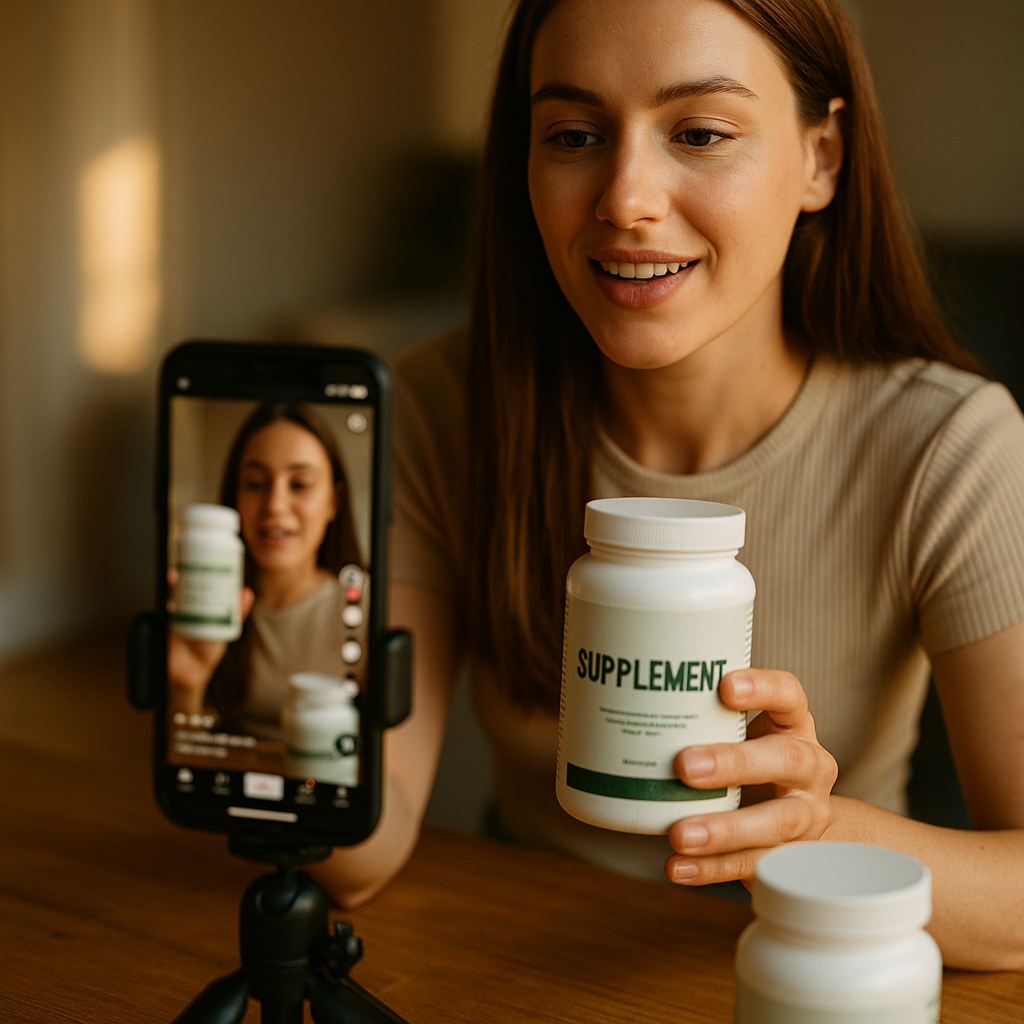
Traditional e-commerce converts at roughly 2-3% on a good day. One supplement brand, buried in a saturated category with skeptical buyers, hit 9.2% conversion by moving its funnel into TikTok Shop demos. No rebrand. No new formula. Just a different way of showing the product working. That’s the core of this TikTok Shop demos case study, and it’s worth studying if you’re still routing paid traffic to a static PDP.
The Problem: A Good Product Nobody Trusted Enough to Buy
The brand — we’ll call it by its category since the operator asked for anonymity, a mid-size gut-health supplement company doing low eight figures in annual revenue — had the classic DTC problem. Solid product, decent reviews, respectable Instagram following. But their website conversion rate sat at 1.8%, well below the e-commerce benchmarks most brands quote as “healthy.”
Supplements are a hard sell online. Buyers have been burned before. Amazon reviews are gamed, influencer posts feel scripted, and claims about gut health, energy, or sleep are inherently hard to verify from a product photo and three bullet points. The brand’s ad creative was competent but forgettable: lifestyle shots, a founder-story video, the usual carousel of before/after testimonials that read as staged because, well, they were.
Their CAC had crept up 40% year-over-year. Paid social was getting more expensive and less effective at the same time — a combination that kills mid-size brands faster than almost anything else.
Why the Static PDP Was the Real Bottleneck
Here’s the thing nobody wants to admit: the product detail page is often the weakest link in the supplement funnel, not the ad. You can nail targeting and creative and still lose the sale the moment someone lands on a page that looks like every other supplement page on the internet. Ingredient list, dosage chart, a few stock-photo lifestyle images. It doesn’t demonstrate anything. It just describes.
Supplement buyers want to see the scoop, the mix, the texture, the person’s actual face while they try it for the first time. That’s demo territory, not description territory. And demo territory is exactly where TikTok Shop lives.
The Pivot: Building a TikTok Shop Demo Engine
The brand’s marketing lead made a deliberate bet in early 2026: shift a meaningful chunk of the paid and organic content budget away from static ads and traditional site traffic, and into TikTok Shop, using demo-style content as the primary conversion mechanism.
The approach had three parts.
- Nano and micro-creator seeding. Instead of a handful of expensive influencer partnerships, the brand sent product to roughly 150 creators in the 5,000-50,000 follower range, prioritizing people who already posted about gut health, morning routines, or wellness stacks.
- Unboxing-to-consumption format. Every brief asked for the same basic arc: open it, mix it, drink it, react honestly. No script for the reaction. That authenticity is what separates a TikTok Shop demo from a traditional ad — viewers can tell the difference within seconds.
- Live shopping demos. Twice a week, the brand ran TikTok Shop livestreams where a host mixed the product on camera, answered live comments about taste and ingredients, and pointed viewers directly to the in-stream checkout.
This isn’t a new idea in isolation. Brands like Chagee built a US tea category using nearly identical livestream mechanics, and Vessi’s approach to TikTok Shop demos as a referral engine showed the same pattern working in footwear. What made this supplement brand’s execution notable was the sheer discipline of the format consistency across 150+ creators.
The brand didn’t change its product or its price. It changed the moment of proof — moving it from a written claim on a PDP to a filmed demonstration inside the same interface where the purchase happens.
The Numbers: What Actually Tripled
Over a 90-day test period, the brand tracked conversion separately across three channels: the traditional e-commerce site (Shopify), paid social driving to that site, and TikTok Shop.
The results:
- Traditional site conversion rate: 1.8% (largely unchanged from baseline)
- TikTok Shop conversion rate: 5.9% across all shoppable video and livestream traffic
- TikTok Shop conversion rate on livestream specifically: 9.2%, nearly triple the traditional benchmark
- Average order value: down slightly on TikTok Shop (about 8% lower than site AOV), offset by volume
- Blended CAC: down 27% quarter-over-quarter
- Brief for authenticity, not accuracy. Give creators boundaries (compliance, key differentiators) but let the reaction be real. Over-scripted demos underperform.
- Treat livestream as a distinct channel, not an experiment. The brand’s twice-weekly cadence built a returning audience. One-off livestreams don’t get the same compounding effect.
- Don’t expect AOV parity. TikTok Shop buyers convert faster but often spend slightly less per order initially. Volume and lower CAC need to do the heavy lifting on the P&L.
- Build the compliance layer before scaling, not after. Retrofitting claim review across 150 creators after a takedown notice is far more expensive than a checklist up front.
- Measure channel-specific conversion, not blended. The brand’s decision-making depended entirely on isolating TikTok Shop performance from site performance. Blended metrics would have hidden the real story.
-
2

The Shelf
Boutique Beauty & Lifestyle Influencer AgencyA data-driven boutique agency specializing exclusively in beauty, wellness, and lifestyle influencer campaigns on Instagram and TikTok. Best for brands already focused on the beauty/personal care space that need curated, aesthetic-driven content.Clients: Pepsi, The Honest Company, Hims, Elf Cosmetics, Pure LeafVisit The Shelf → -
3

Audiencly
Niche Gaming & Esports Influencer AgencyA specialized agency focused exclusively on gaming and esports creators on YouTube, Twitch, and TikTok. Ideal if your campaign is 100% gaming-focused — from game launches to hardware and esports events.Clients: Epic Games, NordVPN, Ubisoft, Wargaming, Tencent GamesVisit Audiencly → -
4

Viral Nation
Global Influencer Marketing & Talent AgencyA dual talent management and marketing agency with proprietary brand safety tools and a global creator network spanning nano-influencers to celebrities across all major platforms.Clients: Meta, Activision Blizzard, Energizer, Aston Martin, WalmartVisit Viral Nation → -
5

The Influencer Marketing Factory
TikTok, Instagram & YouTube CampaignsA full-service agency with strong TikTok expertise, offering end-to-end campaign management from influencer discovery through performance reporting with a focus on platform-native content.Clients: Google, Snapchat, Universal Music, Bumble, YelpVisit TIMF → -
6

NeoReach
Enterprise Analytics & Influencer CampaignsAn enterprise-focused agency combining managed campaigns with a powerful self-service data platform for influencer search, audience analytics, and attribution modeling.Clients: Amazon, Airbnb, Netflix, Honda, The New York TimesVisit NeoReach → -
7

Ubiquitous
Creator-First Marketing PlatformA tech-driven platform combining self-service tools with managed campaign options, emphasizing speed and scalability for brands managing multiple influencer relationships.Clients: Lyft, Disney, Target, American Eagle, NetflixVisit Ubiquitous → -
8

Obviously
Scalable Enterprise Influencer CampaignsA tech-enabled agency built for high-volume campaigns, coordinating hundreds of creators simultaneously with end-to-end logistics, content rights management, and product seeding.Clients: Google, Ulta Beauty, Converse, AmazonVisit Obviously →
The livestream number is the headline, but it’s the shoppable video conversion rate — 5.9% across hundreds of individual creator posts, not one viral hit — that proves this wasn’t a fluke. Consistency at that scale is a format effect, not a lucky break.
Category context matters here too. eMarketer’s social commerce estimates have consistently shown TikTok Shop outperforming other social platforms on conversion for consumable and wellness products specifically, categories where seeing the product used answers more objections than reading about it ever could.
Why Demos Beat Descriptions for Supplements Specifically
Ask yourself what actually convinces you to try a new supplement. It’s rarely the ingredient panel. It’s watching someone you find credible use it, react to the taste, and say something like “okay this actually doesn’t taste chalky” — the kind of detail no brand copywriter would think to include because it sounds too small to matter. Small details are exactly what build trust in a skeptical category.
This mirrors what worked for a skincare brand that cut CPA 34% with shoppable UGC. Different category, same mechanism: proof beats persuasion when the buyer has been burned before.
What the Brand Got Wrong Before It Got This Right
It’s worth being honest about the false starts, because most brands trying to replicate this will hit the same walls.
First attempt: the brand tried using its existing influencer roster, mostly mid-tier creators with 200,000+ followers who’d worked with dozens of supplement brands before. Conversion was mediocre. Audiences had seen these creators shill products too many times to find it credible. The fix was moving down-market to smaller, more niche creators whose endorsement still felt like a genuine recommendation rather than a paid placement — a lesson that echoes what worked for Liquid Death’s nano-creator strategy and Ryobi’s seeding-first channel build.
Second mistake: over-scripting the demos. Early briefs included suggested talking points about ingredients and benefits. Creators sounded like they were reading ad copy, because they basically were. Conversion on scripted content ran roughly 40% below unscripted demo content in the brand’s internal tracking. The brief got shorter. The results got better.
Third issue: compliance. Supplement claims are heavily regulated, and TikTok Shop’s speed and volume make it easy for a creator to say something legally risky in an unscripted moment. The brand built a lightweight compliance checklist — no disease claims, no “cures,” no unverified statistics — and required creators to review it before posting. This matters more than most brands realize; the FTC’s endorsement guidelines apply just as much to a 30-second TikTok Shop demo as they do to a traditional ad, and enforcement attention on supplement claims specifically has only increased.
Operational Lessons for Brands Considering This Shift
A few things worth stealing directly from this playbook:
This isn’t unique to supplements. The same demo-first logic drove results for Chagee’s nano-creator approach to the tea market and for CPG brands navigating retail pressure, like Feastables’ shelf-space push through nano-creators. Whenever the buying decision hinges on sensory or experiential proof, a demo format inside a shoppable environment tends to outperform a description-based one.
What’s Next: Scaling Without Diluting the Format
The brand is now expanding creator volume to roughly 400 partners and testing whether the demo format holds up at scale, or whether saturation starts to erode authenticity (a real risk once an audience starts recognizing the format as an ad pattern rather than genuine content). They’re also testing TikTok Shop’s affiliate tools to shift more of the creator economics from flat fees to performance-based commission, a move that should improve marginal ROI if conversion holds.
The bigger question for the category: how long before every supplement brand runs the same playbook, and the format itself stops feeling authentic? That’s the risk with any tactic that works this well this fast. First movers get the trust premium. Late movers get diminishing returns on a saturated format.
Next step: If your PDP conversion is stuck below 3% and your category depends on sensory proof, run a 30-day TikTok Shop pilot with 15-20 nano-creators before committing budget to a full livestream program. Isolate the channel’s conversion data early, and let that number, not the platform hype, decide whether you scale.
Frequently Asked Questions
What conversion rate can supplement brands realistically expect from TikTok Shop demos?
Based on this case, shoppable video content converted at roughly 5.9%, with live shopping demos reaching 9.2%. Results vary by category and creator quality, but wellness and consumable brands tend to see above-average lift because the format resolves sensory objections that text and images can’t.
How many creators does a brand need to run a TikTok Shop demo program?
This brand started with 150 nano and micro-creators before scaling to 400. A pilot can work with as few as 15-20 creators if they’re well-matched to the niche, since consistency of format matters more than raw volume in the early testing phase.
Are TikTok Shop demos compliant with supplement advertising regulations?
They can be, but only with a proactive compliance process. Brands should require creators to avoid disease claims, unverified statistics, and “cure” language, and should review FTC endorsement guidance before scaling unscripted content across a large creator roster.
Does TikTok Shop livestream commerce work for categories outside supplements?
Yes. The same demo-first mechanics have driven results in tea, footwear, and skincare, among other categories where buyers need to see or experience the product before trusting a purchase decision.
Is average order value lower on TikTok Shop compared to a traditional website?
In this case, yes, AOV ran about 8% lower on TikTok Shop. Brands typically offset this with higher conversion volume and lower blended customer acquisition cost, rather than expecting per-order economics to match the traditional site.
FAQPage Schema
Top Influencer Marketing Agencies
The leading agencies shaping influencer marketing in 2026
Agencies ranked by campaign performance, client diversity, platform expertise, proven ROI, industry recognition, and client satisfaction. Assessed through verified case studies, reviews, and industry consultations.
Moburst
